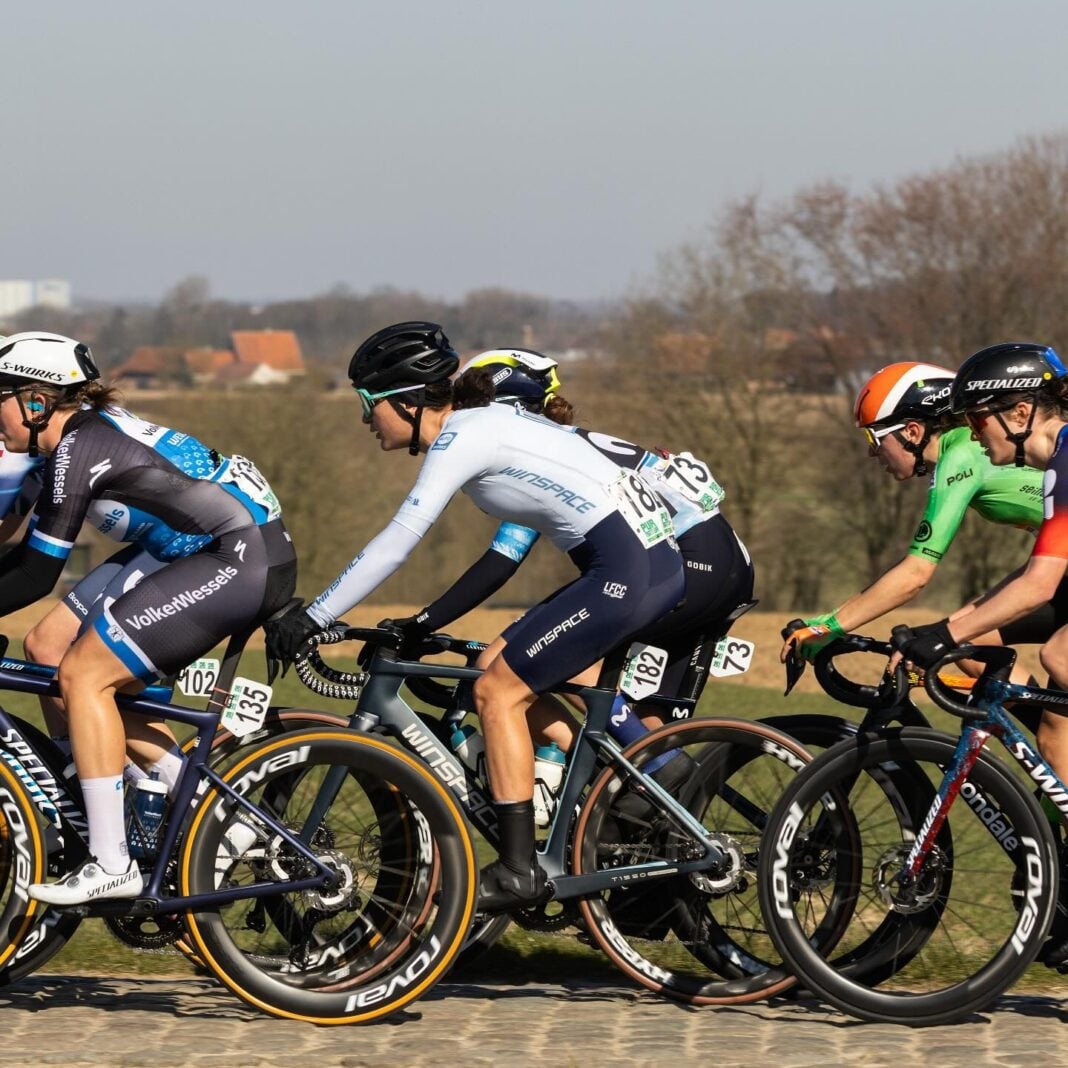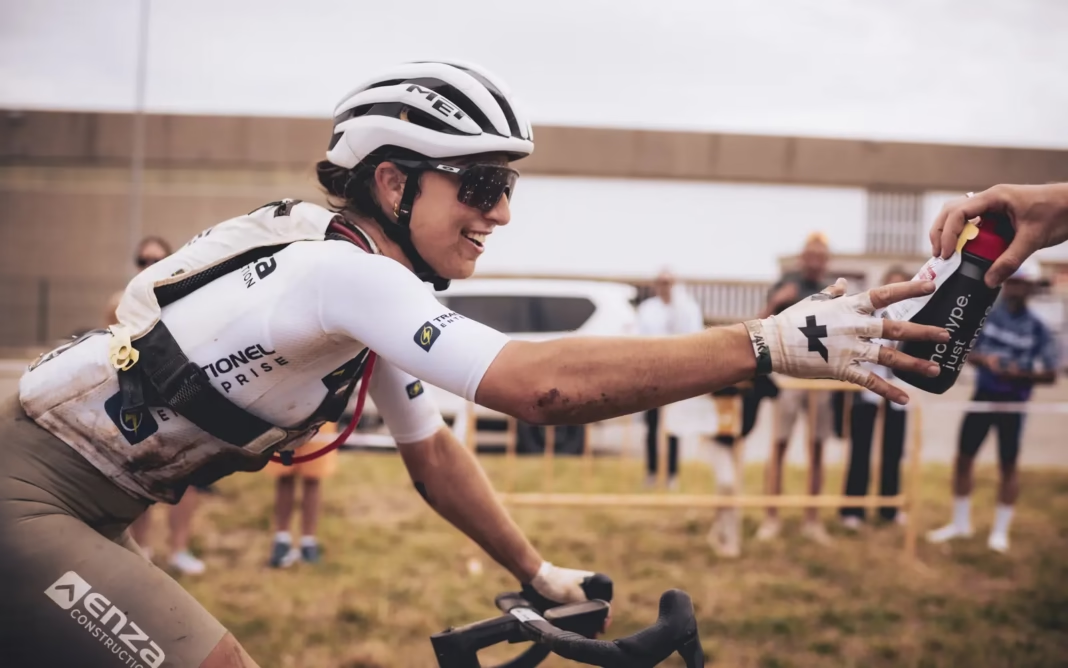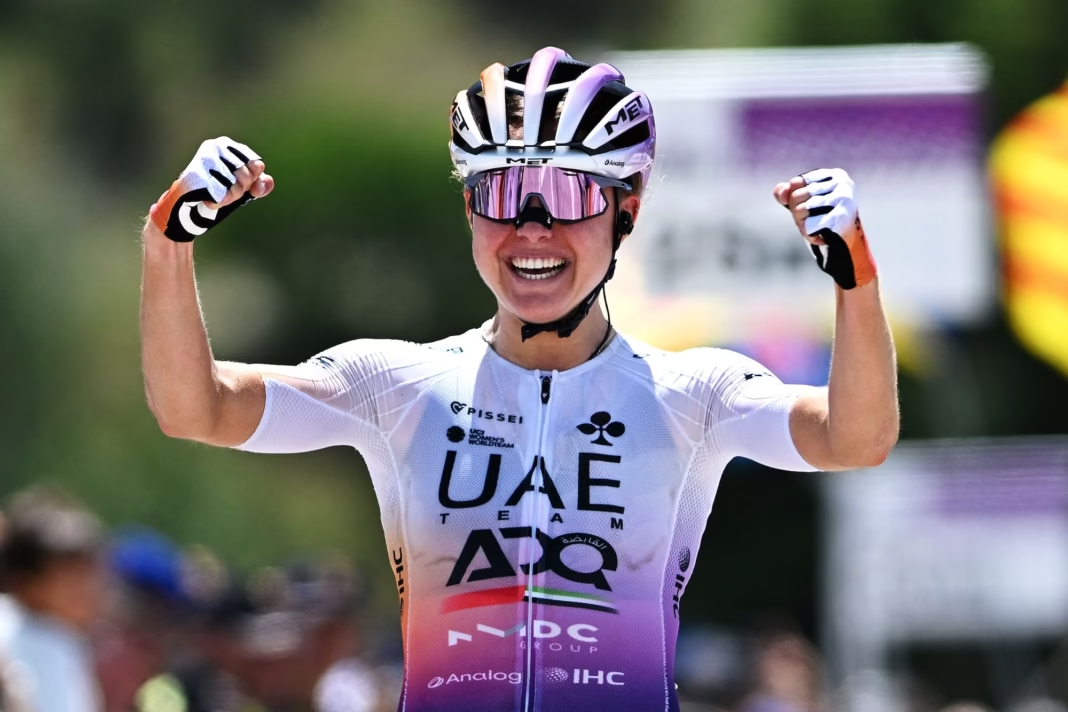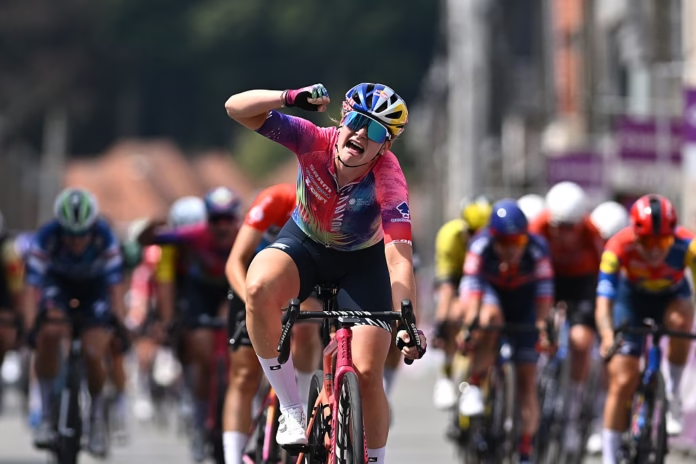
Baloise Ladies Tour has carved out a very clear place on the women’s calendar by offering a short stage race that looks simple on paper but rarely behaves that way once the racing starts. It is a race built around speed, time gaps and constant pressure rather than major mountain selection. That gives it a different identity from the bigger Grand Tours, but not a lighter one. For sprinters, rouleurs and strong classics-style riders, it is one of the most useful multi-day tests of the season.
The structure is central to that appeal. Flat or near-flat stages keep the fast riders heavily involved, but the presence of a prologue and a mid-race time trial means raw sprint speed is never enough on its own. Small gaps matter, bonus seconds matter, and the ability to stay consistently near the front matters even more. That is why the Baloise Ladies Tour so often rewards riders who can handle both bunch-race chaos and short efforts against the clock.
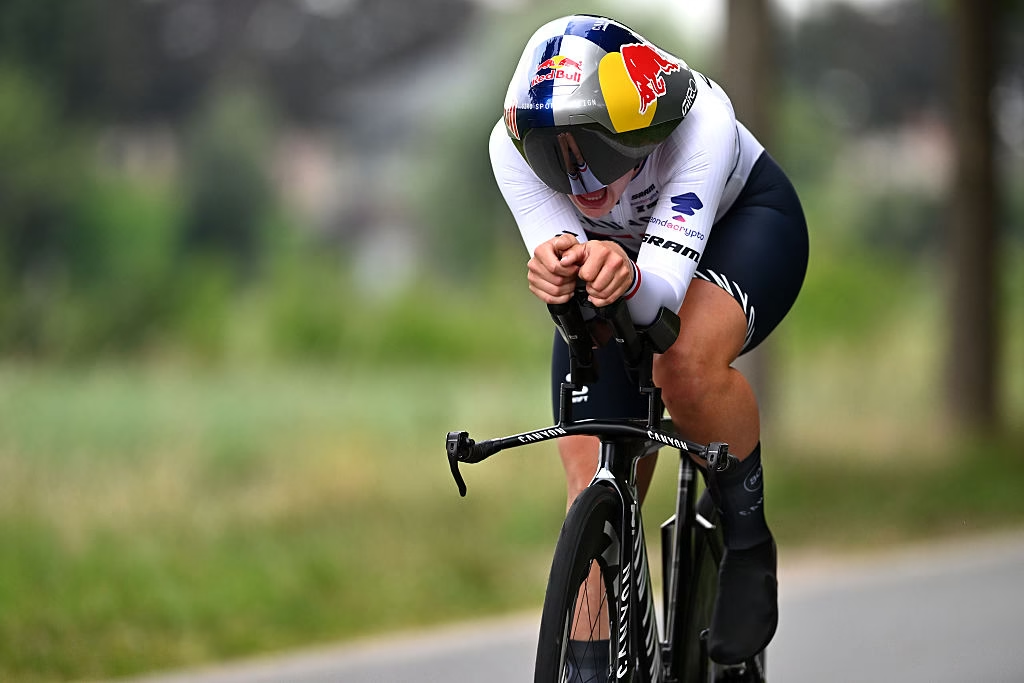 Photo Credit: Getty
Recent winners reflect that balance well. Zoe Bäckstedt won the 2025 edition through a combination of time trial strength, race aggression and control across multiple days, while Lorena Wiebes dominated the 2024 race with the sort of sprint authority that can turn a flat stage race into a personal showcase. Before that, Lucinda Brand won the 2023 edition, another reminder that this is a race where versatility matters more than one standout specialist skill.
For 2026, the race again looks designed to stay tight. A short prologue in IJzendijke opens the week, the road stages then move through West Flanders, East Flanders, Limburg and Antwerp, and a Saturday double day in Maaseik could prove decisive. That format should keep the overall classification open throughout. There may be several chances for the sprinters, but the race is unlikely to be decided by bunch finishes alone.
Previous Winners
2025
Zoe Bäckstedt
2024
Lorena Wiebes
2023
Lucinda Brand
2026 Baloise Ladies Tour route
The 2026 Baloise Ladies Tour runs from Wednesday 15th July to Sunday 19th July and again uses the format that suits it so well, a prologue, three road days, a time trial and a final flat stage. The race opens in IJzendijke in Zeeland before moving into Belgium for stages in Oostende, Zulte, Maaseik and Mechelen. That spread across Belgium and the Netherlands helps give the race variety even without major climbing. Wind, exposed roads, technical circuits and timing all become part of the selection.
What makes this edition especially interesting is the Maaseik double stage on Saturday. That day compresses the GC battle and gives riders two very different efforts to manage inside a few hours, first the individual time trial, then the afternoon road stage. In a race where the margins are often tight, that kind of design can reshape everything very quickly. It should also mean the final day in Mechelen starts with less certainty than a typical flat closing stage.
Prologue
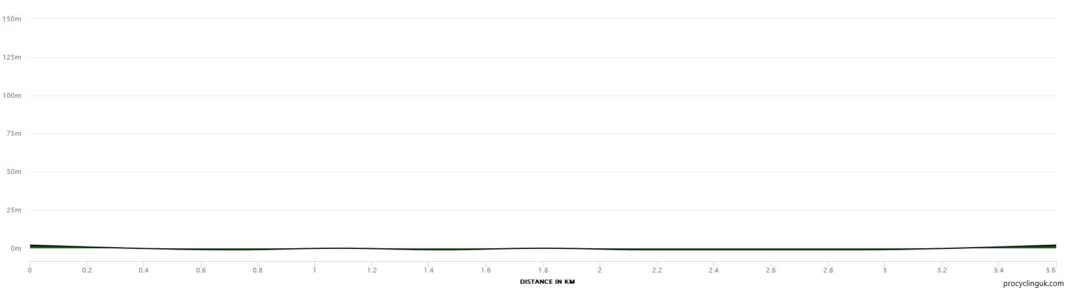
The opening test in IJzendijke is only 3.9 kilometres long, but that is enough to create the first meaningful gaps and immediately hand an advantage to the best short-distance specialists. Prologues of this type are never about winning the race outright, but they can force rivals to chase from the start and give strong rouleurs an ideal way into the leader’s jersey.
Stage 1
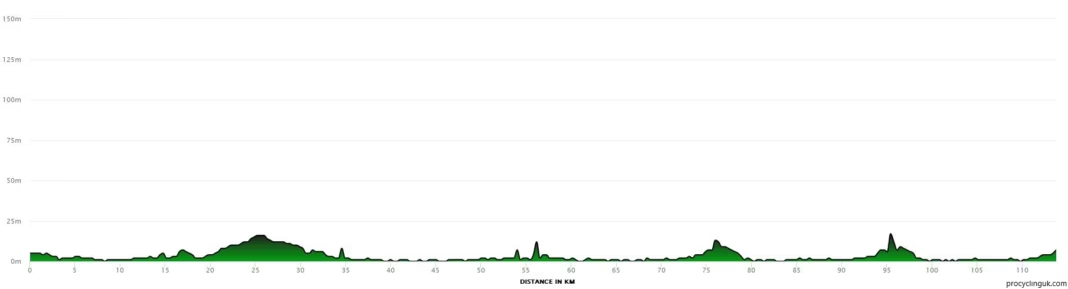
From Oostende to Knokke-Heist, Stage 1 looks like one of the clearest sprint opportunities of the week. That usually means a nervous day on the Belgian coast rather than a calm one. Flat roads and fast teams should point heavily towards a bunch finish, but positioning and any wind exposure could still decide who reaches the finale with a clean chance.
Stage 2
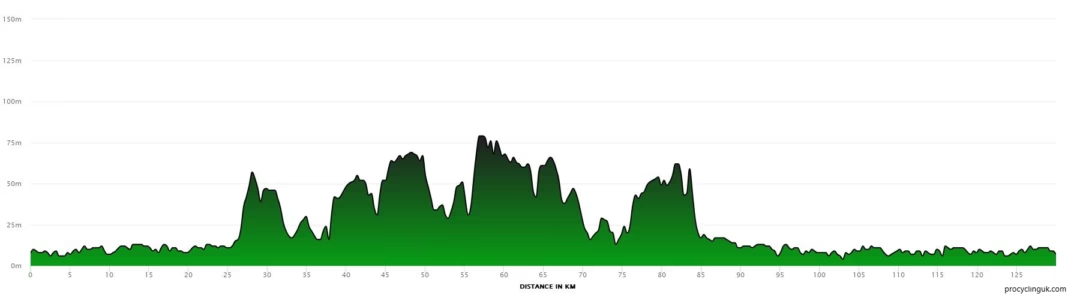
The Zulte stage appears flatter than it may feel in the race. Even modest rises and repeated local circuits can be enough to disrupt the rhythm and encourage attacks from teams that do not want to hand another simple sprint chance to the fastest riders. This looks like a day where the sprinters should still fancy their chances, but they may need to work harder for them.
Stage 3a
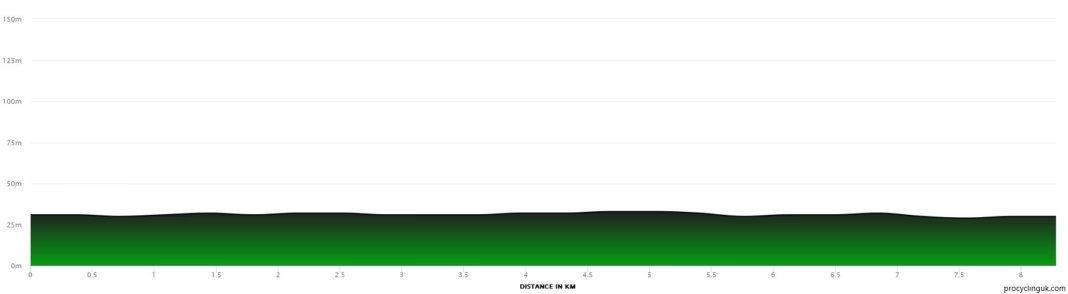
The morning time trial in Maaseik is short at just over eight kilometres, which makes it all about clean pacing and immediate power. There is nowhere to hide in a test like this. Strong time trial riders can take useful time, while pure sprinters or riders carrying minor fatigue from the opening road stages may suddenly find themselves on the back foot in the general classification.
Stage 3b
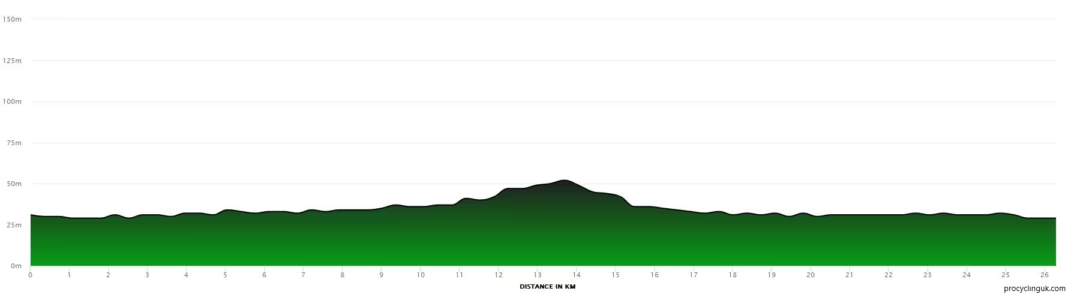
The afternoon road stage in Maaseik comes after the time trial, which gives it a very different feel from a normal flat sprint day. Riders and teams have to recover quickly, reset mentally and race again with the GC already altered. That creates room for opportunism. It may still end in a sprint, but the double-stage format means the strongest teams can use the second part of the day far more aggressively than usual.
Stage 4
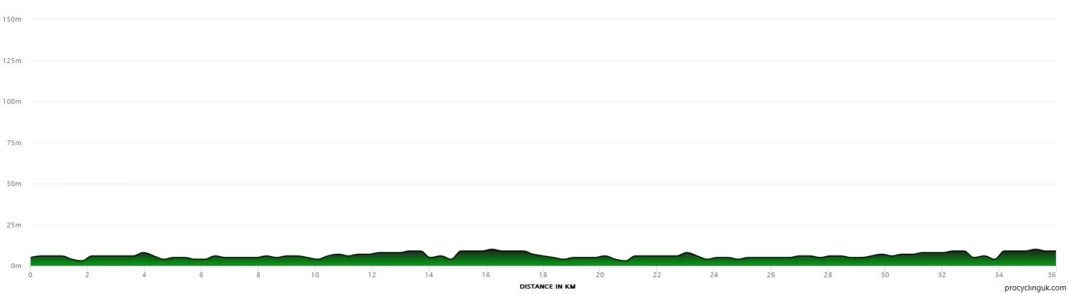
The final stage in Mechelen is short and flat, which should keep the pressure high from the start. That kind of closing stage can favour the sprinters, but if the GC gaps remain tight after Maaseik it may also encourage late attacks from teams that still see an opening. Either way, it looks like a finale where every second will still matter.
2026 Baloise Ladies Tour live TV coverage
Race Date: Wednesday 15th July to Sunday 19th July 2026
Each stage will be available on Pickx with no geo-locking
2026 Baloise Ladies Tour startlist

2026 Baloise Ladies Tour Contenders
 Photo Credit: Getty
The obvious place to begin is still Zoe Backstedt, but not only because she is the defending winner. Her record here is unusually complete for a rider still so young: one start, one overall win, one podium, one top-10 and three stage wins. That tells you she can handle the rhythm of the race across several days, not just land one perfect result. Canyon SRAM also have the sort of support that suits a race where time can be won through positioning, short efforts and repeated stress rather than one long climb. Maike van der Duin gives them another fast option if the sprint is reduced or messy, while Maria Martins can be useful if the race stays together and the final kilometre becomes more about timing than control. If Backstedt is close on GC after the early stages, she is exactly the sort of rider who can turn one sharp late move or one well-ridden technical day into another overall challenge.
For pure stage-winning threat, few riders stand out more clearly than Charlotte Kool. Seven stage wins from five starts is a serious race-specific record, and while she has not converted that into an overall podium, that is not really the point of her presence here. Fenix-Premier Tech can build the week around repeated sprint opportunities and still have options if the route turns harder than expected. She will aim to avoid the crash she had last year, which then affected her Tour de France Femmes. Millie Couzens has a top-10 here from two starts. She has already shown strong 2026 form with 7th and 8th at Setmana Ciclista Valenciana, while Marthe Truyen, Evy Kuijpers and Marion Norbert Riberolle all have top-10 history at this race. That matters because if the sprint days become selective, Fenix are not left with only one plan.
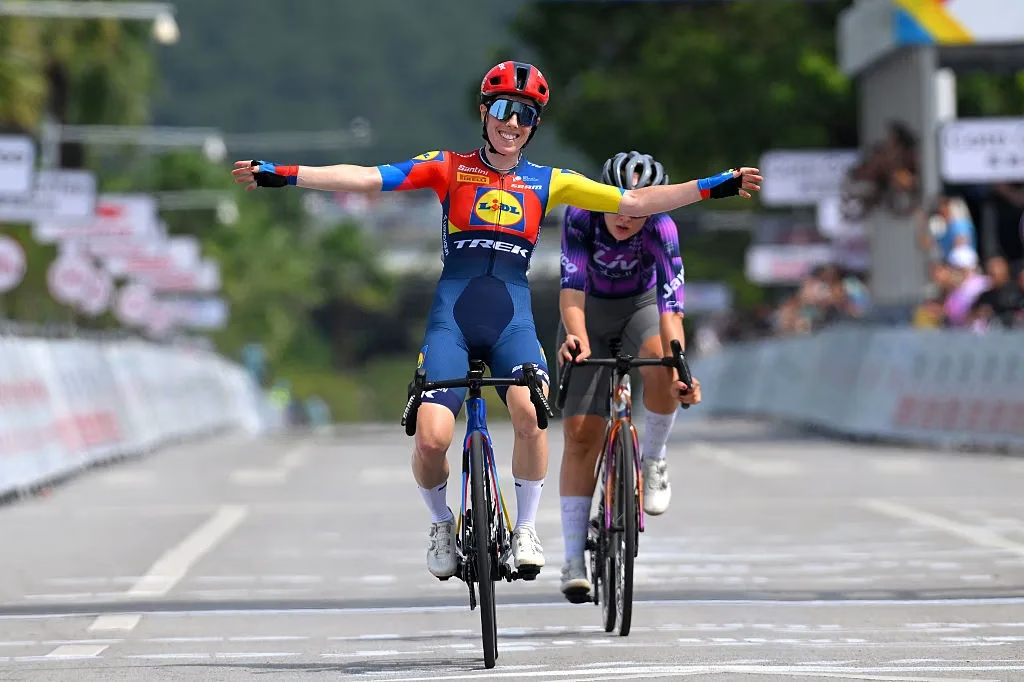 Photo Credit: Getty
Two starts, two podiums and two top-10s makes Anna Henderson one of the safest proven picks in the field. That sort of consistency usually means a rider understands the hidden details of the race: where to fight for position, when time bonuses matter, and how not to lose the event through one careless moment. Lidl-Trek also bring a line-up with enough speed and depth to support more than one scenario. Clara Copponi can be the sprint card if the race stays fast and controlled, Fleur Moors brings the sort of instinct that matters in reduced finishes, and Ava Holmgren and Felicity Wilson-Haffenden add youthful depth if the racing becomes more aggressive than the pure sprinters want. If GC is decided by repeated small gains rather than one big split, Henderson is the rider who can keep stacking good days together.
There is no single dominant race-history card for Team SD Worx-Protime here, but the squad still carries obvious danger because of the way it can bend the race. Femke Markus has two top-10s from four starts and gives them the kind of reliability that matters when stages are shaped by constant positioning battles. The headline presence, though, is Lotte Kopecky, because even without a major record here, she changes the logic of every finale. She will be a big GC threat as she can win from a reduced sprint, force a split, or make rival teams chase earlier than they want. If the route leans sprint-heavy, Barbara Guarischi gives them a fast, experienced option, while Marie Schreiber has a top-10 from two starts and can be useful if the race becomes more aggressive and harder to control.

A young finisher with a race record already behind her, Nienke Veenhoven gives Team Visma | Lease a Bike a proper card for the faster days. One stage win and a top-10 from two starts is a strong return, especially in a race where quick reactions and timing often matter as much as a long lead-out. Margaux Vigié also has a top-10 from two appearances, which gives Visma another rider who can stay present when the race becomes selective or chaotic. The interesting layer is the youth around them. Viktória Chladonová and Imogen Wolff are still developing, but in a race that rewards fearless positioning and repeated short efforts, they can be valuable late-race support if the team is trying to keep Veenhoven protected for the sprint.
The course proof for AG Insurance-Soudal comes through Marthe Goossens, and it is strong enough to treat her as more than a passing mention. A podium and top-10 from her only start tells you she can handle the specific rhythm of this race, not just the broad profile. The team also have several riders who can influence the finish if stages become reduced or tactical. Alexandra Manly offers sprint strength and experience, Gladys Verhulst-Wild is quick enough to matter if the finale is messy, and Marith Vanhove gives them another option if the race breaks into smaller groups before the finish. If Goossens arrives in similar shape, AG Insurance-Soudal can realistically chase both stage results and a strong overall placing.
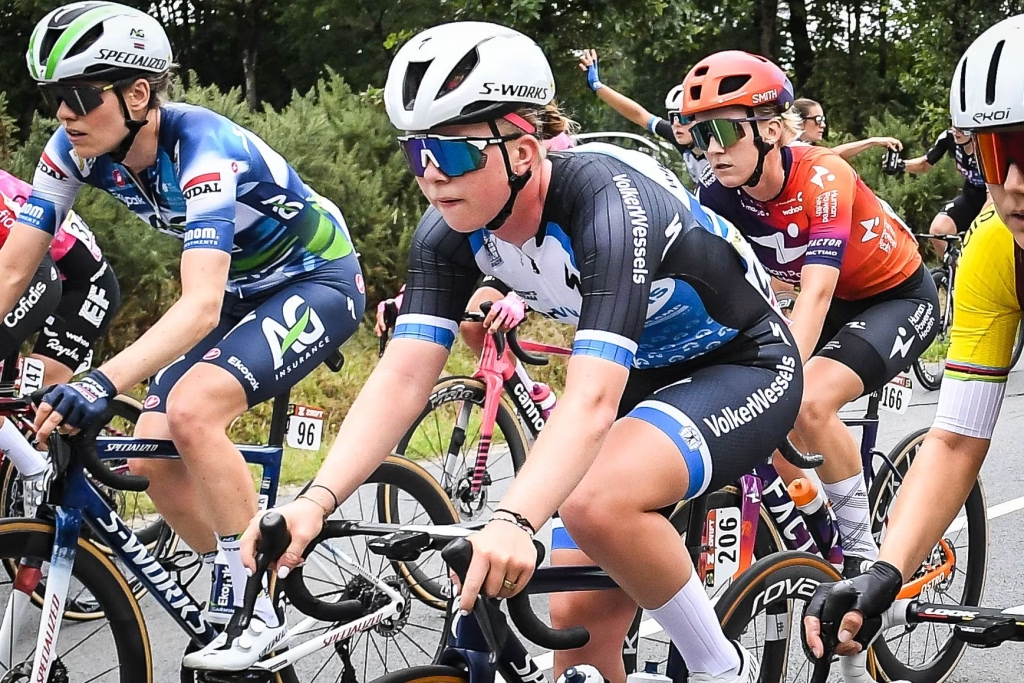
Outsider sprint structures are often where this race gets interesting, and VolkerWessels Cycling Team have enough previous evidence to be taken seriously. Lonneke Uneken has a stage win and a top-10 from three starts, making her their clearest finishing card if the race comes down to a fast group. Maaike Boogaard also has a top-10 from two starts and can be relevant if the finish is more selective or if a late move survives. For a team like VolkerWessels, the key is not controlling the race. It is staying calm when the bigger squads start fighting for position, then using the gaps they leave behind.
A race that is hard to control can suit Uno-X Mobility, particularly because they have several riders who can survive a stressful finale and still finish. Anniina Ahtosalo is the obvious fast option if the bunch comes in together, while Linda Zanetti is the type of rider who can still land a result if the final group is reduced and the sprint becomes more physical. Alberte Greve and Francesca Pellegrini give the team young, aggressive options for stages where a late move can stick, which matters in a race where not every day is necessarily controlled by the biggest sprint trains.
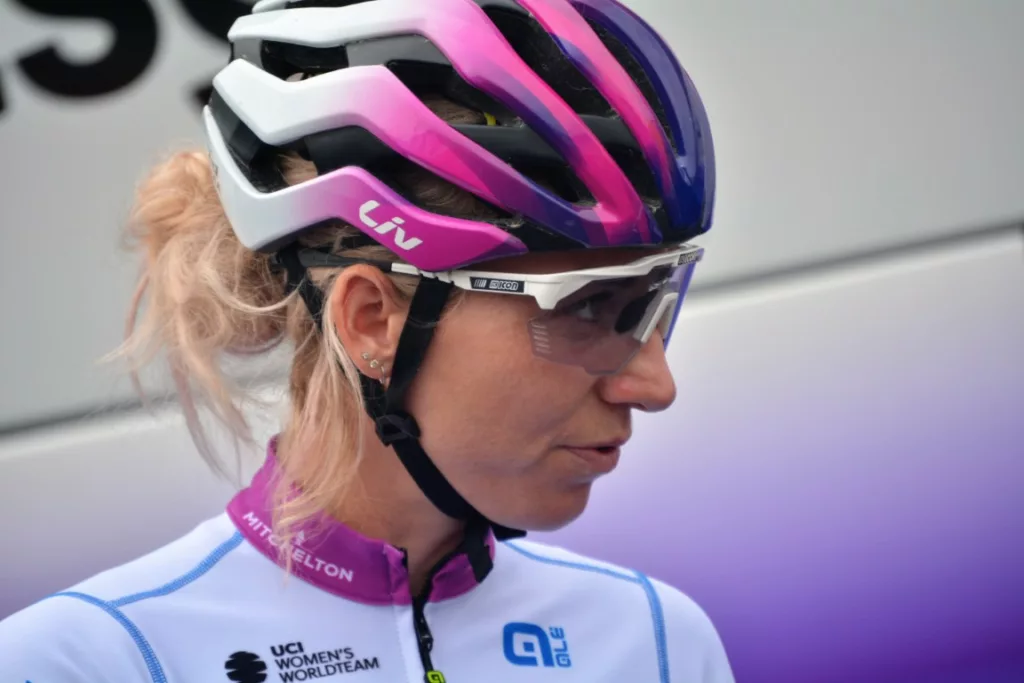
Experience keeps Nina Kessler in the conversation before you even get to team strength. Two top-10s and a stage win from five starts makes her one of the more proven riders in the field for NEXETIS, especially if the race becomes tactical and the bigger teams start watching each other. NEXETIS will not control the race in the same way as the WorldTour teams, but that can be freeing. If Kessler slips into the right move, she has the experience to turn positioning and timing into a result rather than relying on a perfect lead-out.
Among the smaller squads, there are still riders who can matter if the race becomes scrappy rather than fully controlled. Helena Bieber has a top-10 from two starts, which is a useful race-specific marker for Carbonbike Giordana Sofré, especially if the finish is reduced or the bunch arrives disorganised. Hitec Products-Fluid Control can look to riders like April Tacey and Julia Borgström if the stages become aggressive and positioning-heavy, while DAS-Hutchinson have Tiffany Keep and Mieke Docx as riders who can make a breakaway stage more interesting. These are not the obvious favourites, but races like this often reward riders who simply keep appearing in the right part of the race when the bigger teams start running out of helpers.
Top 3 Prediction
⦿ Zoe Backstedt
⦿ Lotte Kopecky
⦿ Anna Henderson
-
 Photo Credit: quentinphotographiebe
 -
 Photo Credit: Getty