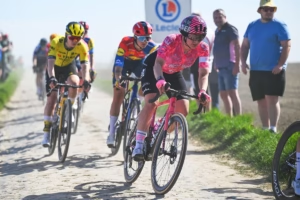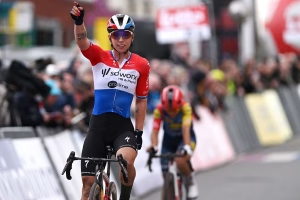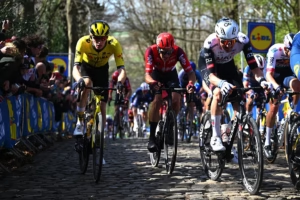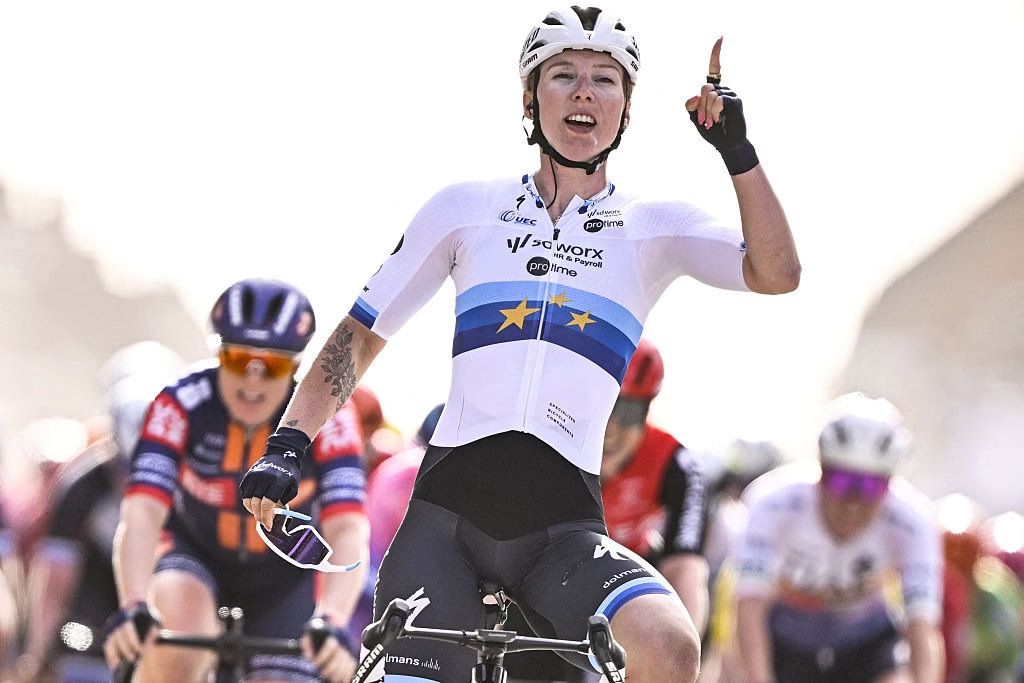
The race formerly known as Gent-Wevelgem returns in 2026 under its new title, In Flanders Fields Women, but the core identity remains unmistakable. This is still one of the most tactically complex races of the spring, built on exposed roads, gravelly Plugstreets, and the repeated challenge of the Kemmelberg. It sits in that awkward space between a Classics sprint and a selective attritional test, which is exactly why it so often produces different kinds of winners.
The women’s race has developed into one of the defining WorldTour fixtures of the Flemish spring because it asks more than a simple question of speed. Riders must survive long periods of tension before the race truly ignites, then respond to repeated pressure across sectors and climbs that can split the field in very different ways depending on the wind, the pace, and the willingness of teams to commit. In some years, the strongest sprinters survive everything and decide the race in Wevelgem. In others, aggression on the hills and Plugstreets turns the finale into a race of survival.
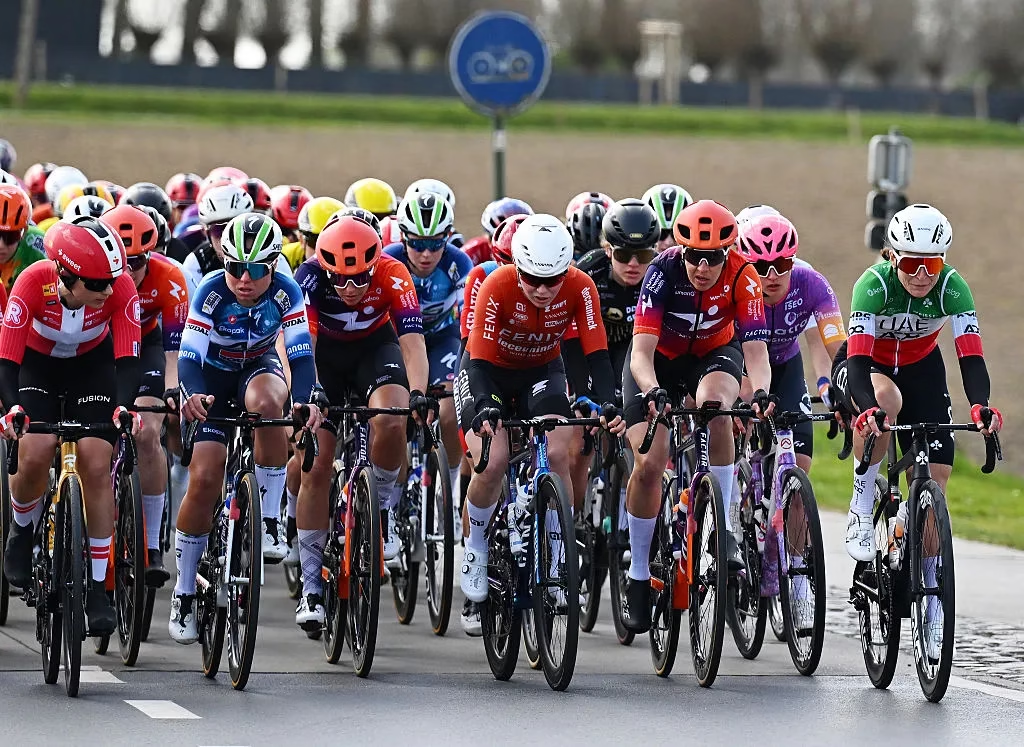
Recent editions underline that balance. Lorena Wiebes won in 2024 and again in 2025 from reduced sprint scenarios, proving that elite speed can still prevail if the race is controlled correctly. By contrast, Marlen Reusser’s 2023 victory came from a devastating long-range solo move, showing how quickly the race can tip towards strength and initiative if the field hesitates behind. That tension between control and chaos remains central to the event, and it is what makes In Flanders Fields one of the most readable yet most difficult races to manage.
The 2026 edition continues that familiar pattern. While the men’s event has shifted to a new start in Middelkerke, the women’s race keeps Wevelgem at its core and once again heads into the Heuvelland for the decisive phase. The final 80 kilometres remain where the race will be won or lost, with the Plugstreets softening legs, the hills forcing selection, and the repeated approaches to the Kemmelberg punishing any rider who arrives out of position.
Previous Winners
2025
Lorena Wiebes
2024
Lorena Wiebes
2023
Marlen Reusser
2026 In Flanders Fields Women route
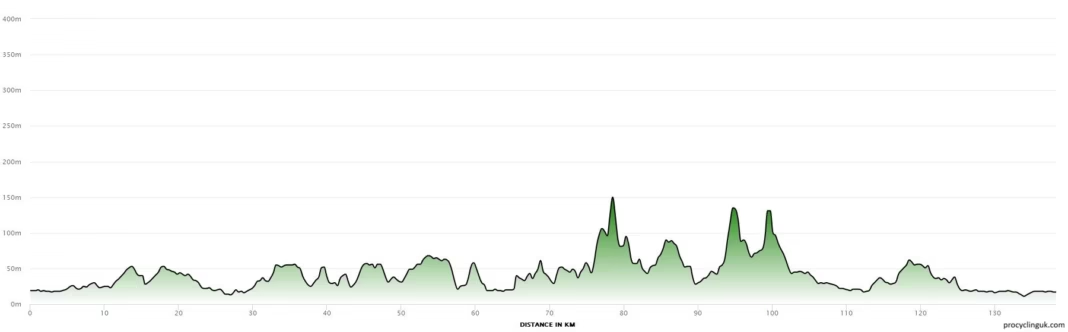
The route keeps the familiar structure that has made this race such a staple of the Belgian spring. After the opening kilometres, the peloton is drawn towards the decisive middle and late sectors, where the Plugstreets and the Heuvelland climbs begin to reshape the race. The unpaved Plugstreets are not especially steep, but they can create splits through rhythm disruption and positioning, particularly if conditions are dry and fast or the bunch enters them under pressure.
From there, the race builds towards the hills, with Monteberg, Scherpenberg, Baneberg and the repeated ascents of the Kemmelberg providing the sharpest selection points. The Kemmelberg remains the climb that defines the event, steep, cobbled, and difficult to enter well if riders are not already near the front. The finale back into Wevelgem is flat, which means the race can still come back together after the climbs, but only if enough teams retain both numbers and confidence. That is what keeps the tactical question open right to the line.
2026 In Flanders Fields Women live TV coverage
Race Date: Sunday 29th March 2026
United Kingdom
Live coverage is available via HBOMax and TNT Sports
International broadcasters
In Europe, coverage is available via HBOMax. In Belgium, the race is typically broadcast via Sporza. In the United States, coverage is available via FloBikes. Australian viewers will get coverage via SBS.
2026 In Flanders Fields Women startlist

2026 In Flanders Fields Women Contenders
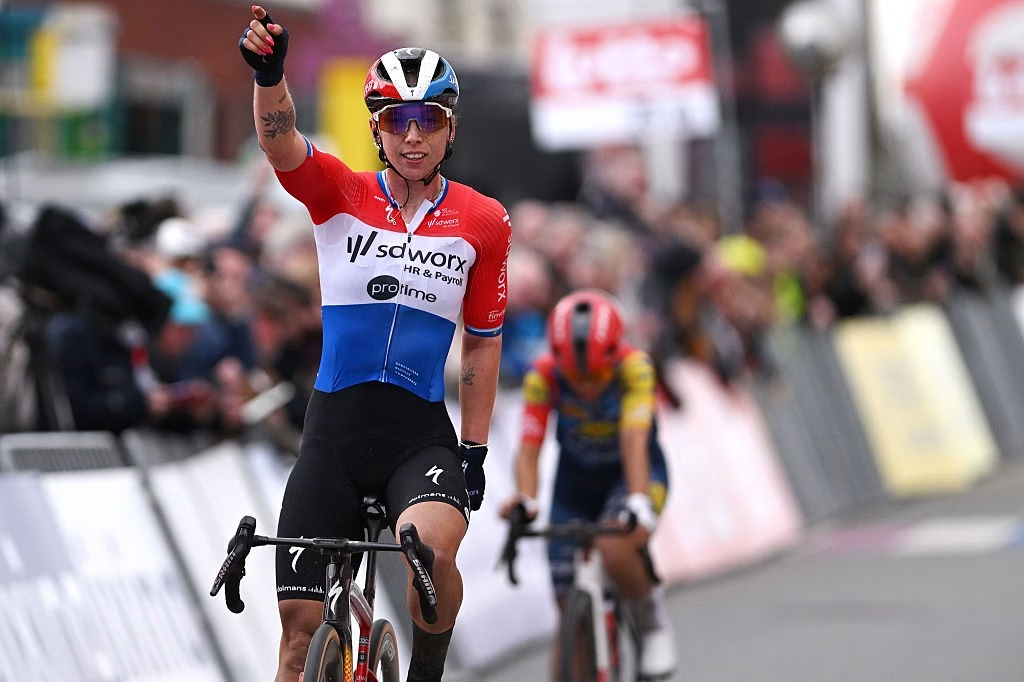
A race with this kind of history inevitably bends around Lorena Wiebes, because she has already won twice here and remains the rider most likely to convert if she reaches the line in the front group. The key difference in 2026 is that she arrives off an aggressive early-season marker, attacking and winning at IXINA Leeuw Oetingen, which is exactly the sort of “I’m already sharp” signal that matters ahead of a fast Flemish one-day. Team SD Worx-Protime have the depth to keep her out of trouble through the nervous middle phase, with Femke Gerritse and Barbara Guarischi as the type of riders who can keep the train intact when the bunch is stretched. The presence of Marta Lach also matters, because she gives SD Worx a second finishing option if the sprint becomes reduced or if Wiebes is forced into an awkward launch.
If you want the most obvious rival sprint set-up, it comes from Lidl-Trek, because Elisa Balsamo has both the history and the finishing speed to win here again. One win, three podiums and five top 10s shows she knows exactly how this race is won, not just by sprinting fastest, but by surviving the positioning stress and launching from the right place. The supporting cast makes Lidl harder to disrupt. Emma Norsgaard is a second sprint card who has already made the top 10 twice in this race, and she also comes in with early 2026 form from the Australian block that suggests she is already racing with confidence. Lucinda Brand adds resilience and positioning skill for a race that can become chaotic, while Fleur Moors is the kind of rider who can land a big result if the sprint trains fragment and the winner comes from timing rather than structure. It is worth noting that Anna Henderson is on the start list here, but she was a non-starter at Nokere Koerse, which matters if you are expecting her to be a guaranteed late-race support rider.

Pure sprint speed becomes decisive if the bunch stays together, and that keeps Charlotte Kool firmly in the conversation. She has a podium and two top 10s here, and her best scenario is a fast, controlled run-in where she is delivered into the final 200 metres with a clean line. The question is always what the day costs her before the finale, and Fenix-Premier Tech have enough depth to help with that. Christina Schweinberger is a consistent performer here with two top 10s and tends to thrive when the sprint is messy and physical rather than perfectly controlled. The other reason this team is interesting is Millie Couzens, who has already shown strong early-season legs with 7th and 8th at Setmana Ciclista Valenciana, results that suggest she can survive a harder rhythm and still finish well if the front group is reduced.
Canyon SRAM can win this race with a slightly different sprint profile, because Chiara Consonni does not need a perfect lead-out to deliver a big result. Two top 10s and a podium show she is already comfortable with the demands of this race, and her strength is that she can sprint well from the kind of messy, reduced bunch finish that often happens when the wind has kept the peloton nervous all afternoon. The supporting cast is also built for keeping her in the right places. Zoe Backstedt is a genuine asset in races like this, and she has already shown early 2026 road form with 3rd on the opening stage of the UAE Tour, while also handling the tougher day on Jebel Hafeet well enough to back up that she is not just a pure power rider. If the race fractures, Chloé Dygert gives Canyon another powerful option who can survive the front split and still be relevant in how the finale is shaped.
 Photo Credit: Gregoire Crevier
Liv AlUla Jayco look like a team that becomes more dangerous the messier the sprint is, because Letizia Paternoster has both the course history and the early-season form to take seriously. A podium and two top 10s in only four appearances suggests she reads this race well, and her 2nd on stage 2 of Setmana Ciclista Valenciana plus 10th at Omloop het Nieuwsblad this spring point to a rider who is already racing at a high level. The other key name is Georgia Baker, who is at her best when the sprint is improvised rather than textbook. If the pace is hard enough to thin the group before the finish, Ruby Roseman-Gannon can also come into play, especially given her ability to hold position and finish strongly when the bunch is reduced.
FDJ United-SUEZ arrive with a clear sprint card in Ally Wollaston, and her early 2026 results make her one of the most convincing form riders in the field. Winning the Cadel Evans Great Ocean Road Race and taking a Tour Down Under stage is exactly the kind of form line that matters for In Flanders Fields, because it shows she can sprint at the end of a hard one-day and deliver speed after repeated pressure. The depth behind her helps keep the team relevant if the race becomes selective. Vittoria Guazzini is the type of rider who can keep the bunch stretched and the team positioned, which matters as much as chasing early moves, while Elise Chabbey offers an attacking threat if the race becomes tactical and a strong group gains freedom.
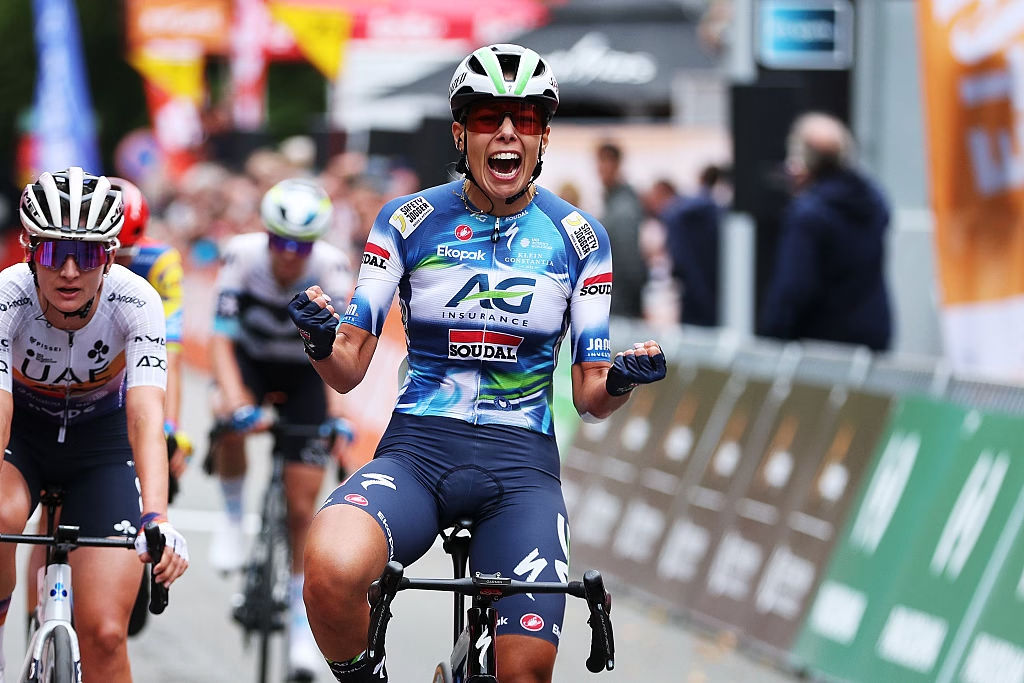
AG Insurance-Soudal come into the race with multiple riders who can still land a top result when the sprint is selective rather than pure. Shari Bossuyt has a top 10 in her limited appearances here and suits the chaotic, physical version of this race. Gladys Verhulst-Wild is another rider with a top 10 history here and is a clear threat if she survives into the front group. The rider who can tie that together is Ilse Pluimers, because she can cope with a harder tempo and still be present in the final selection, which matters if the race fractures and a smaller group goes to the line.
UAE Team ADQ look like a team with multiple ways to influence the finale, especially if the wind makes the race more selective. Elisa Longo Borghini has a top 10 in her history here and brings the kind of power that helps you survive in the front split when the pace rises. If the sprint group is reduced but still sizeable, Eleonora Gasparrini is the rider with the finishing speed to turn survival into a result. The depth is what gives UAE options. Lara Gillespie, Silvia Persico and Karlijn Swinkels all have top 10 history here, and Gillespie’s recent form line is strong as well after finishing 3rd at Nokere Koerse last season and continuing to show she can sprint after hard racing. In a race where positioning and timing decide the split, having several riders capable of being there late is a major advantage.

Human Powered Health have a useful blend for In Flanders Fields Women because they can aim at a reduced sprint without needing the race to be perfectly controlled. Maggie Coles-Lyster already has a top 10 at this race in her limited history, which matters because it shows she can handle the positioning fight and still finish when the bunch is thinned by repeated stress. The other rider who can make this team more than a one-card punt is Kathrin Schweinberger, because she tends to cope well when the sprint becomes messy and physical rather than textbook. If the pace is high and the group is reduced, Lily Williams is another rider who can appear late simply by being resilient and well positioned, and that is often how results are earned here when the big trains lose riders and the finale turns into improvisation.
Movistar are a team that can still shape the finale even if they are not the headline sprint train, largely because they arrive with riders who know how to survive the chaos and still be present when the real selection happens. Floortje Mackaij is the obvious reference point, with a win and two top 10s in this race’s history, which speaks to her ability to read the wind, choose the right moments, and put a teammate into position. If the sprint is reduced and tactical, Arlenis Sierra becomes the finisher who can still deliver speed from imperfect wheels, especially when the run-in is scrappy and riders are launching late. The other interesting card is Cat Ferguson, because early 2026 has shown she can win races and ride confidently in aggressive finales, and that matters in a race where belief and positioning can be just as important as raw sprint speed.

Team Picnic PostNL are always relevant when the sprint is chaotic rather than perfectly controlled, because Rachele Barbieri is exactly the kind of finisher who can win from a messy lead-in where gaps open suddenly and the launch is delayed. The other name that gives them extra depth is Pfeiffer Georgi, not as a pure sprint card, but as the rider who can keep the team safe and present through the hardest phases. If the race fractures and a smaller group goes clear, Georgi is the kind of rider who can be there, contribute, and still finish strongly. Josie Nelson adds another angle because her 2026 form has already looked sharp, and if the bunch is reduced and the sprint becomes a fatigue contest rather than a pure speed contest, riders like Nelson can suddenly move from outsider to genuine factor.
Team Visma | Lease a Bike are more of a “survive and profit” team in this start list, but that can be exactly the right approach for In Flanders Fields Women when the wind and positioning battles strip the race down to a smaller front group. Nienke Veenhoven is the most obvious sprint option if the finish is reduced and the group is not fully organised, while Lieke Nooijen gives them a rider who can handle the harder rhythm and still be present if the race becomes selective. The depth also matters for staying out of trouble. Riders like Daniek Hengeveld can be valuable simply because they help keep the team in the front part of the bunch when the race is stretched and split-prone.
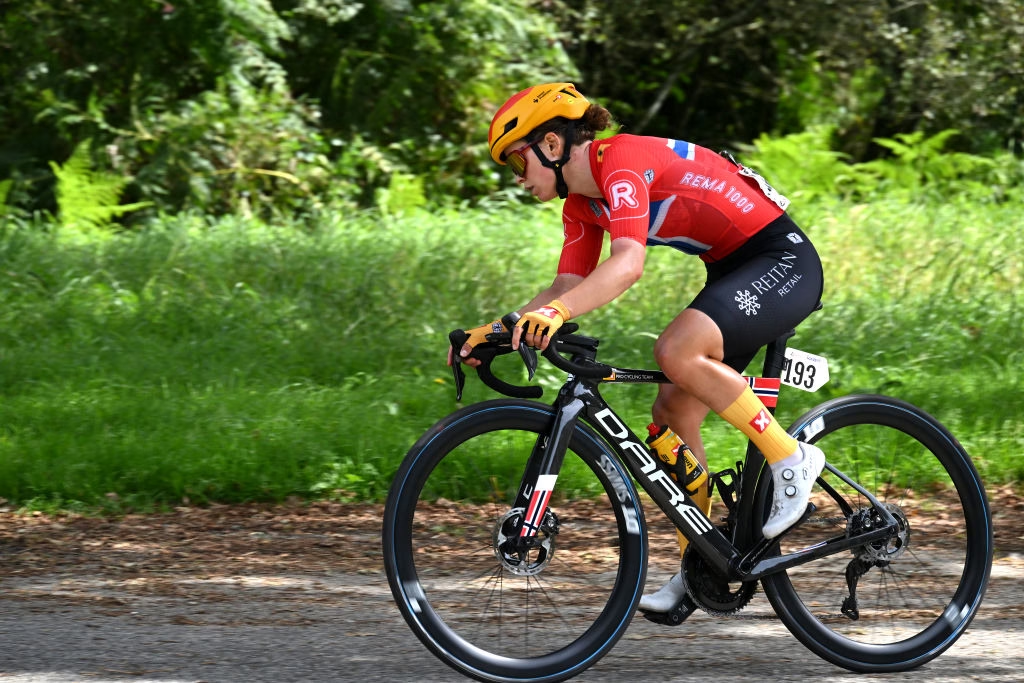
Uno-X Mobility have a clear reason to feel confident in a selective sprint scenario because Susanne Andersen already has a top 10 at this race. That kind of result is the strongest sign of course fit you can have in a race where positioning and timing often decide who is even allowed to contest the sprint. If the pace is high and the run-in is chaotic, Andersen is exactly the type who can stay calm, hold the right wheel, and launch late. The other riders in the line-up are more about supporting that plan and surviving the chaos, but in a race like this, simply arriving in the right group is half the job.
VolkerWessels Cycling Team are outsiders for the win, but they do have a rider who can become relevant if the sprint is messy and the bigger teams lose control. Lonneke Uneken is the obvious finisher in that scenario, because she can sprint well from imperfect positions and does not need a long lead-out to find a result. If the race fractures and regroups, teams like VolkerWessels often benefit simply by staying calm and present when others burn matches fighting the wrong battles. Scarlett Souren and Sabrina Stultiens also fit the “hard race, survive, then profit” profile, which can be enough to turn a race like this into a meaningful result even without being the team that dictates the finale.
Top 3 Prediction
⦿ Lorena Wiebes
⦿ Elisa Balsamo
⦿ Eleonora Gasparrini