The Women’s Surf Coast Classic is still a new fixture, but it already carries the feel of a race that matters. Launched in 2025 as a point-to-point opener to the Geelong week, it immediately delivered a credible test of early-season organisation and sprint control, played out against the exposed roads and ocean backdrop between Lorne and Torquay. The inaugural edition set a clear template, hard racing through the middle of the day, then a rapid, high-pressure run-in that rewarded the teams best able to manage positioning and timing.
Last year’s first edition ended as the course was designed to, with a reduced but controlled bunch sprint deciding the winner. Ally Wollaston took the victory ahead of Chloé Dygert and Georgia Baker, an early-season podium that underlined both speed and composure after a demanding route. Wollaston later described the win as “a real collective effort”, while Dygert noted the finale suited her, saying, “the faster and harder, the better for me”. Baker, meanwhile, highlighted the stress of the finale, calling the final five kilometres “super fast”.
 Photo Credit: Getty
The 2026 edition retains that same sporting identity. It is not a pure sprinters’ procession, because the terrain asks questions early, but it is still a race that tends to funnel towards a sprint unless teams fully commit to splitting the field. With the calendar placing it in the build-up to the elite weekend, the Surf Coast Classic also functions as a revealing form marker, especially for riders aiming to convert strong legs into results before the Women’s WorldTour season fully gathers pace.
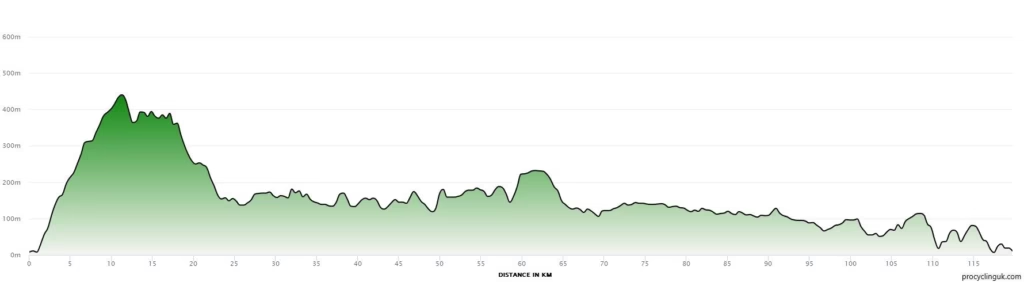
The 118km route begins in Lorne and immediately leans into its defining challenge, a 10km uphill drag inland towards Dean Marsh that invites early pressure and exposes anyone short of condition. From there, the race rolls across the Surf Coast Shire and country townships, with fast sections that can amplify any wind and make teamwork essential. The final approach into Torquay is slightly downhill and technical in places, where a few critical corners can decide who reaches the front before the finishing straight. After crossing Spring Creek and dropping down Anderson Street, riders turn left onto The Esplanade for a sprint finish by the beach.
Previous Winners
2025
Ally Wollaston
2024
Not Held
2023
Not Held
2026 Women’s Surf Coast Classic profile
2026 Women’s Surf Coast Classic live TV coverage
Race Date: Wednesday 28th January 2026
- Live coverage: 00:00–03:00 GMT
2026 Women’s Surf Coast Classic startlist

2026 Women’s Surf Coast Classic Contenders
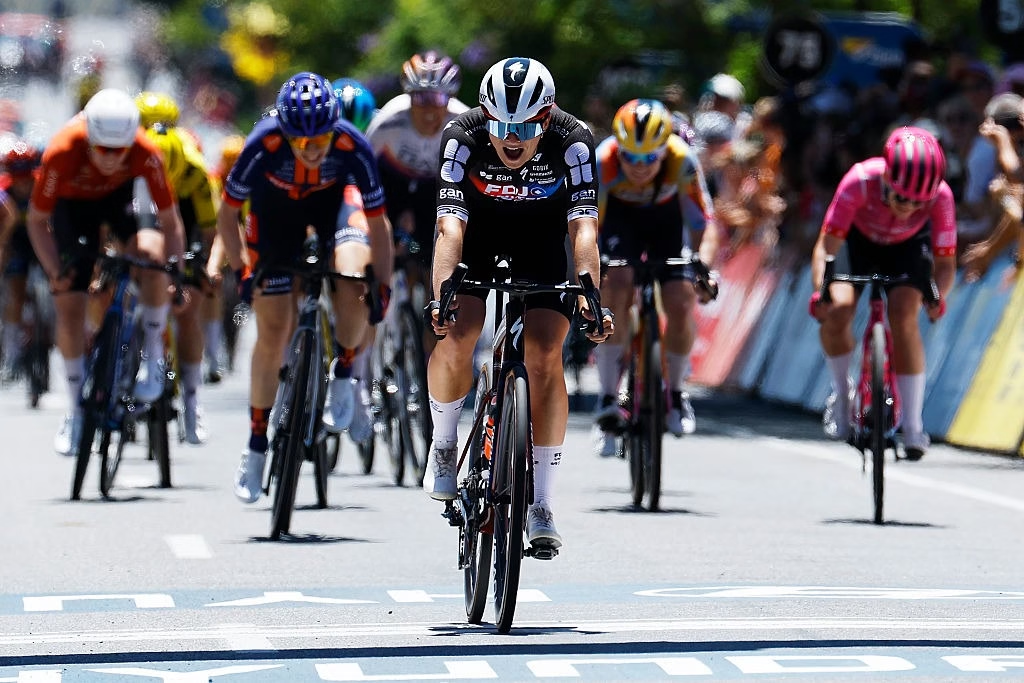
Sprint outcomes remain central to FDJ United‑SUEZ’s chances, and Ally Wollaston looks like one of the most dependable finishers for the Surf Coast Classic style of sprint – fast, slightly chaotic and rarely perfectly organised. She underlined her form by winning both of the first two stages at the Tour Down Under and wearing the leader’s ochre jersey until the final day. The team also have depth that fits a rolling day: Sofia Bertizzolo can still deliver if the final is messy and wheels are hard to follow, while Marie Le Net becomes more dangerous the harder the race is in the final hour, because she can survive repeated surges and still produce speed. If the late escape is genuinely on, Amber Kraak is the rider who can force the issue; she was on the front foot in Australia, keeping the pace high in support of Wollaston and showing she is prepared to commit fully to a long move.
A straightforward bunch sprint is the outcome that suits Fenix‑Premier Tech best, because Charlotte Kool is the pure benchmark finisher on this start list if the peloton arrives intact. The rolling nature of the course does not remove that threat; it simply shifts the question onto whether the race is kept under control long enough to give her a clean launch. The extra layer comes from Julie De Wilde, who can win when the sprint is reduced, or the final kilometre becomes more chaotic than a traditional lead‑out allows, while Xaydee Van Sinaey is the rider who can exploit hesitation late on, the kind of move that forces sprinters’ teams to burn matches earlier than they want. None of the trio has yet recorded a podium this year, but their collective potential keeps Fenix prominent.
The clearest sprint direction within EF Education‑Oatly comes through Noemi Rüegg, who should be treated as the team’s primary finisher on this parcours. A flatter race gives her a cleaner route to a result, especially if the finale is reduced rather than fully controlled, and she has the composure to surf wheels when sprint trains start to disintegrate; she arrives here off a stellar Tour Down Under, where she won the decisive third stage and the overall title after finishing second the day before. The interesting tactical card is Magdeleine Vallieres, more likely to animate the late kilometres than wait for a pure sprint, particularly if the bunch begins to stall and the race is there for a committed attacker – she brings the confidence of a newly crowned world champion.
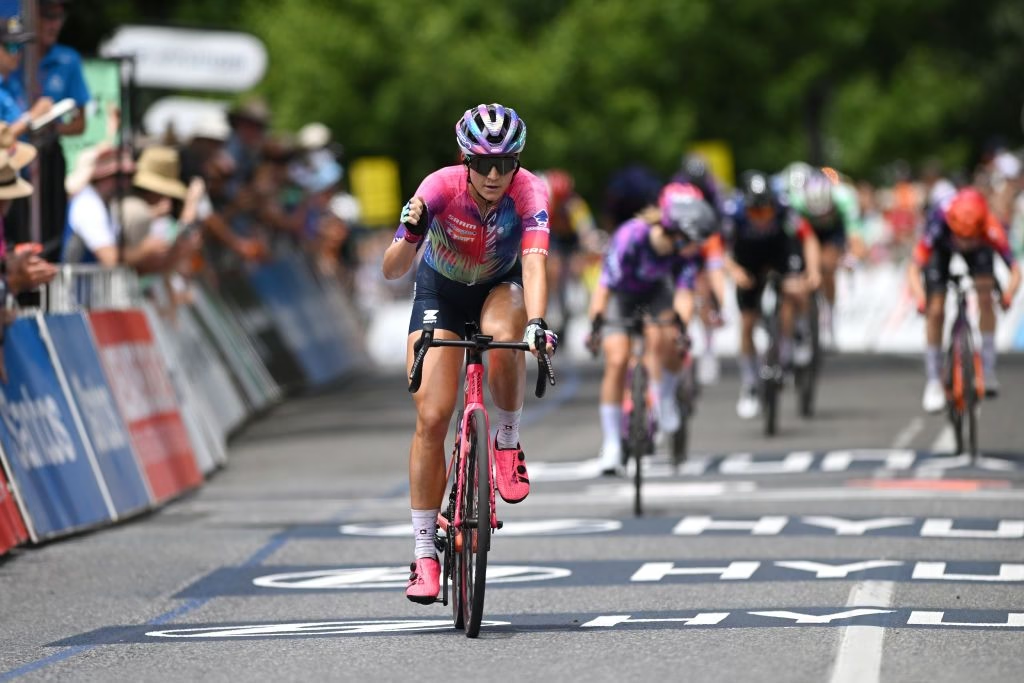
More than most, Canyon SRAM looks suited to the in‑between outcome, a race that ends in a sprint but not a comfortable one. Soraya Paladin is the most natural finisher here, particularly if the final selection is smaller than a full peloton and the sprint becomes a positioning battle rather than a pure drag race; she was quietly consistent in South Australia, always in the front group, but has yet to stand on a podium this season. The other lever is Chloé Dygert, whose value is how quickly she can make the race feel uncomfortable on rolling roads, turning the final hour into a sustained test that leaves fewer riders with a clean sprint; she underlined that capability at this event last year, finishing second after launching a long‑range attack.
Speed and race craft make AG Insurance‑Soudal Team a credible factor in the finale, with Alexandra Manly the obvious sprint card if the bunch stays together. On a course like this, the trick is arriving at the last kilometre with legs and position, and Manly has the attributes to do that when the finish is messy rather than perfectly controlled; she opened her season with a silver medal at the Australian criterium championships, finishing behind Ruby Roseman‑Gannon. If the late‑escape scenario begins to develop, Julie Van De Velde and Nicole Steigenga are the riders most likely to lean into it – Steigenga was their best finisher on the opening stage of the Tour Down Under, placing fourteenth on a chaotic day – either by slipping into the move that forces a chase, or by keeping the tempo high enough to make the sprint more selective.
For Lidl‑Trek, the shape of the race points directly to Emma Norsgaard as the key finisher, and on a day where a sprint is the most likely outcome, that gives them a simple and dangerous plan. The rolling terrain does not blunt her as much as it blunts more lead‑out‑dependent sprinters, because she can still win from a sprint that is not perfectly lined out; she has yet to stand on a podium this year, but her consistency and finishing record speak for themselves. The supporting cast matters more for keeping control and position than for offering a second sprint route, with Ricarda Bauernfeind and Amanda Spratt useful in the fight for wheels and keeping the team calm as the pace repeatedly surges – Spratt’s fifth place at the Australian criterium nationals and seventh overall at the Tour Down Under underline her form.
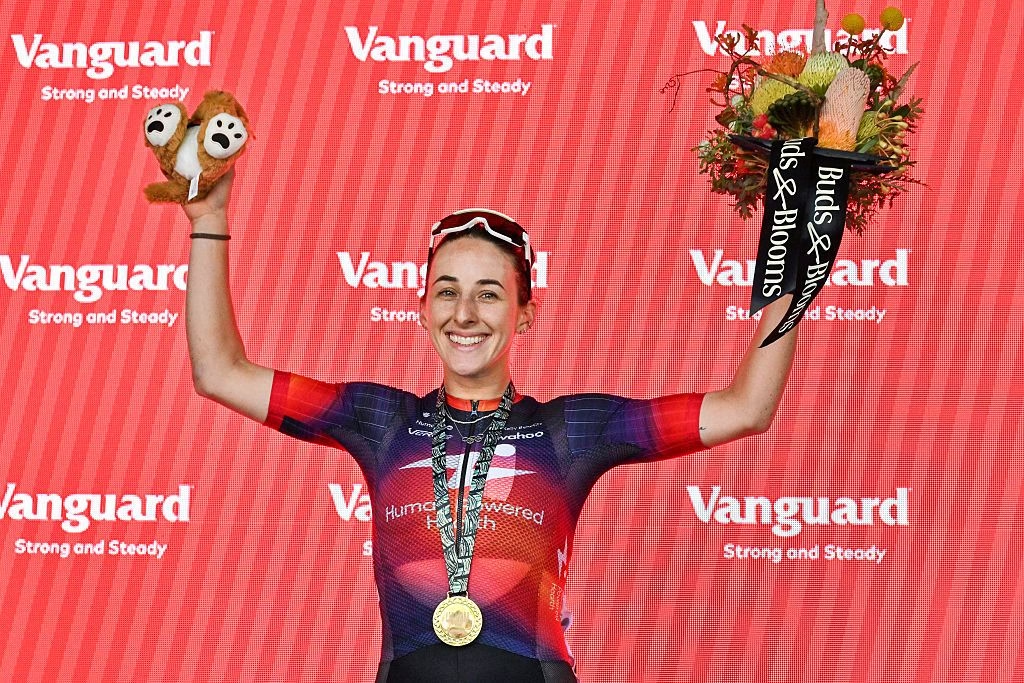
A race that is likely to sprint but could still reward a late move plays neatly into Human Powered Health’s strengths. Maggie Coles‑Lyster is the clear sprint card, especially if the finish comes from a reduced bunch and the final 500 metres is about timing rather than perfect lead‑out structure – she proved that by winning the Santos Tour Down Under Women’s one‑day race in Tanunda after recovering from a crash and then outsprinting Rüegg and Marta Lach. What makes the team more than a simple sprint play is Katia Ragusa, who is exactly the kind of rider who can commit to a late attack on rolling roads and make the chase uncomfortable. If the pace is high enough to thin the group without fully breaking it, Marit Raaijmakers is the steady rider who can still be present in the front group and profit from a sprint where some of the pure fast riders have already been removed.
A fast finish on rolling roads is exactly the kind of Australian one‑day race that suits Liv AlUla Jayco, because they can arrive at the finale with more than one rider who can win. Ruby Roseman‑Gannon and Georgia Baker are both strong in reduced, slightly chaotic sprints, and that flexibility matters when the final kilometres are dictated by who holds position rather than who has the longest, cleanest lead‑out; Roseman‑Gannon comes in hot after winning her third Australian criterium title and finishing second in the road race, while Baker has been visible at the front throughout January, even if she has yet to take a top‑five finish. The added benefit is that having multiple finishers lets Liv race more patiently, covering late moves without panicking, then committing fully only when the sprint is certain.
The best route for Movistar is to target a reduced‑group sprint or a selective finale, and that puts the focus firmly on Olivia Baril and Carys Lloyd as their most credible finish options. On a rolling course, both can benefit from a hard last hour that removes some of the pure sprinters, then turns the finish into a smaller‑group contest where positioning, endurance and timing matter as much as top‑end speed. Baril has already shown promise with a top‑ten finish on the opening stage of the Tour Down Under, while Lloyd picked up eleventh place at the Tanunda one‑day race and is gaining confidence in her first races at this level.
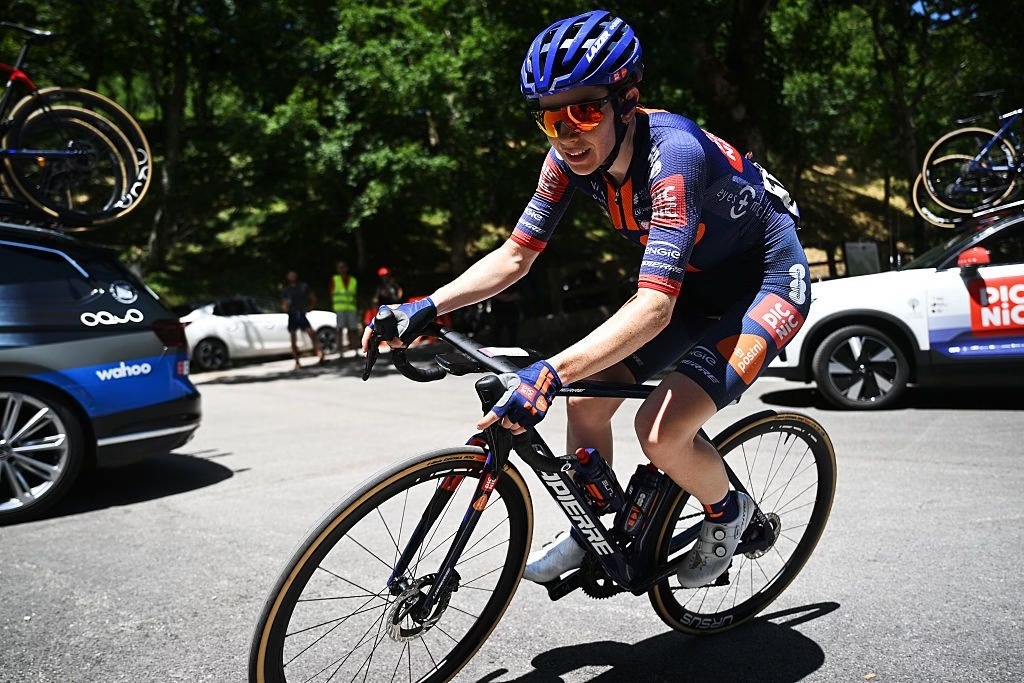 Photo Credit: Getty
A race like this often rewards teams that race opportunistically rather than trying to out‑control the biggest sprint squads, and Team Picnic PostNL have the riders to do exactly that. Josie Nelson is the most plausible finisher if the sprint is reduced and messy – she proved that with second and third places on the opening two stages of the Tour Down Under – while Lucie Fityus and Juliana Londono are the names to watch if the winning move goes late on the rollers, particularly when the peloton starts to hesitate and the chase becomes a negotiation rather than a commitment.
The sprint firepower and organisation of Team SD Worx‑Protime still make them central to how the finale is shaped, even without needing the course to be hard. Marta Lach is the clearest finishing threat if the sprint is straightforward; she was third at Tanunda and again near the front in the Willunga opener. Femke Gerritse gives them another rider who can still deliver when the run‑in is chaotic and the launch points are imperfect – she finished third on stage 1 behind Wollaston and Nelson and fifth overall – and if the race is being decided by who holds wheels rather than who dominates the lead‑out, SD Worx are usually well placed to capitalise.
A reduced sprint is the most realistic path for Team Visma | Lease a Bike, with Martina Fidanza the rider most likely to convert it if the finish is fast and disorganised rather than fully controlled. The rolling terrain also creates an opening for a more aggressive play, and Sarah Van Dam – who finished fifth overall at the Tour Down Under – is the rider most likely to go searching for that late move if the bunch begins to stall and the sprint teams start watching each other instead of riding.
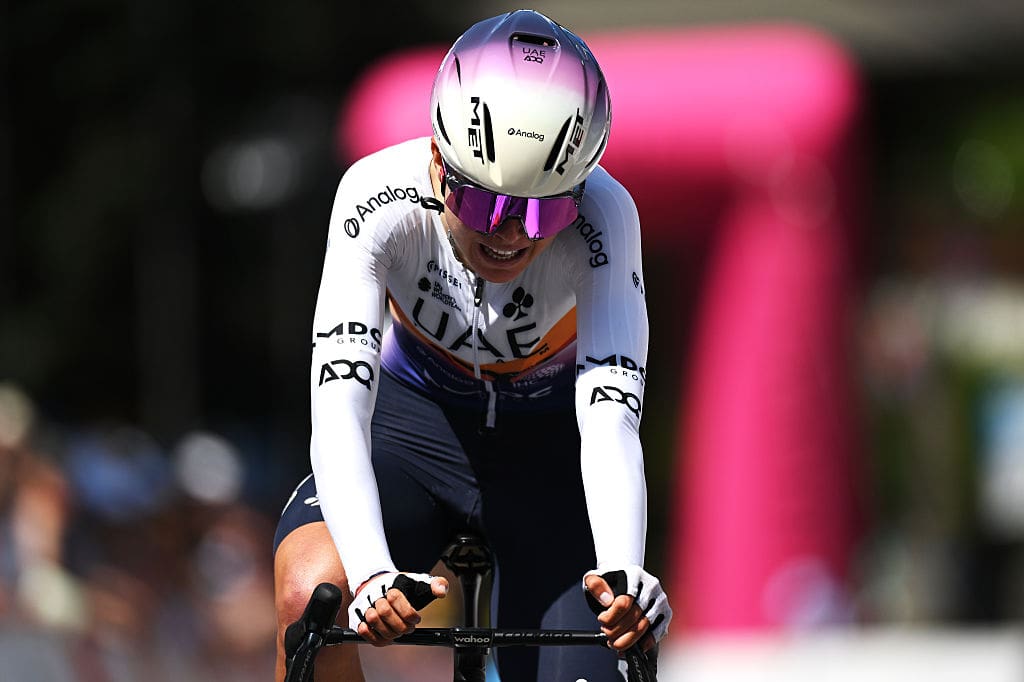
For UAE Team ADQ, the primary threat on this terrain should come through Paula Blasi, especially if the race is shaping into a hard, rolling sprint where durability matters as much as speed; she climbed strongly at the Tour Down Under, wearing the Queen of the Mountains jersey after stage 2, finishing fourth on that stage and going on to stand on the final podium in third overall. The team can also influence the late‑attack scenario through Dominika Wlodarczyk, who fits the profile of a rider capable of turning hesitation into a move that forces a full‑blooded chase; she finished fifth on the same stage and combined with Blasi and Mavi Garcia to animate the final climb on stage 3 before ending the race in fourth overall. If the sprint is reduced and the final is selective rather than clean, UAE’s best chance is often to make it uncomfortable first, then trust Blasi to still have the legs to finish.
A key detail for Uno‑X Mobility is that their most credible win route here sits with Alessia Vigilia, who should be treated as their primary threat on this parcours. The rolling nature of the course can suit a rider who is comfortable racing aggressively late – she lit up the Corkscrew climb at the Tour Down Under, only to be caught inside the final kilometre – and if the finish is reduced rather than a full sprint train showdown, she becomes even more relevant. Francesca Pellegrini is also in the mix if it comes down to a sprint, slightly smaller and more chaotic than a traditional bunch finish; she narrowly missed a top‑ten at Trofeo Llucmajor earlier this month, giving Uno‑X a second way to stay in contention deep into the finale.
Top 3 Prediction
⦿ Ally Wollaston
⦿ Paula Blasi
⦿ Josie Nelson