The Women’s Tour of Flanders remains the race that most clearly defines the cobbled spring. It is the Monument where power, positioning, resilience and tactical timing all have to align, because the route gives the peloton nowhere to hide for long. Unlike the flatter Belgian Classics, where team control can often smooth out the day until the final kilometres, Flanders keeps forcing decisions through its repeated climbs and cobbled sectors until only the strongest and smartest riders are left in contention.
The race has also become a reliable measure of the very best rider in the spring. Since the women’s event found its modern place on the top calendar, the winners’ list has been filled by riders who could shape races rather than simply survive them. That has been especially true in recent years, with Lotte Kopecky and Elisa Longo Borghini using different but equally authoritative methods to win, one through explosive power and control on the climbs, the other through timing, endurance and the ability to hold off the strongest rivals in the closing phase.

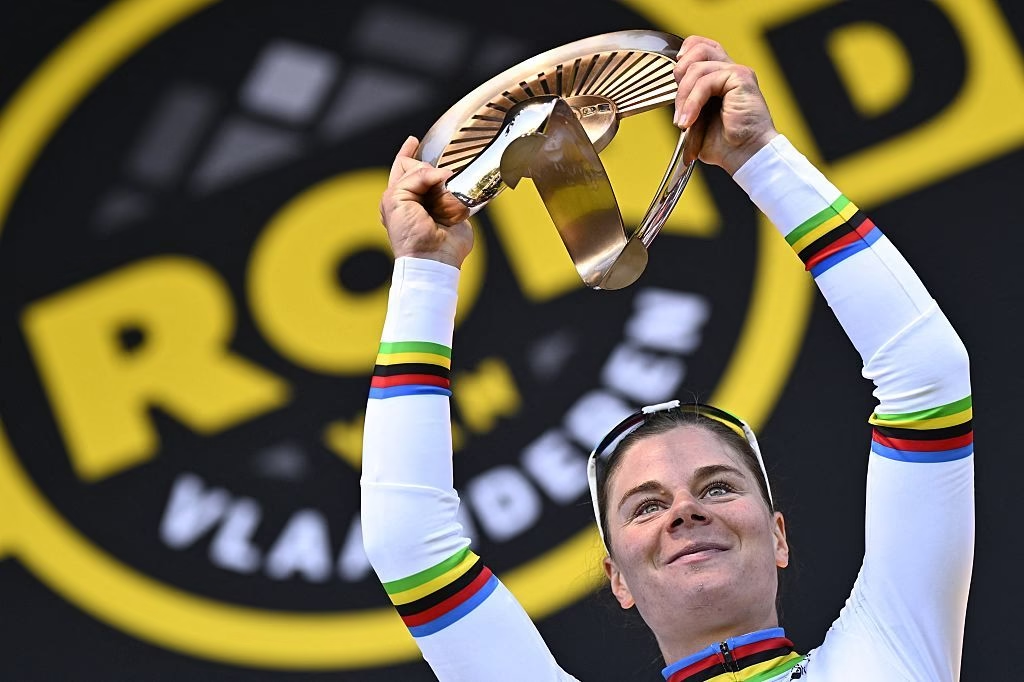
Last year’s edition again showed how selective the race has become. Kopecky took a record third victory after a hard, attritional finale that reduced the race to a small front group, underlining once more that the Women’s Tour of Flanders rarely comes down to one single move. Instead, it is usually the cumulative pressure of the course that creates the winning moment, whether that is on the Koppenberg, the final Oude Kwaremont, or the drag out of the Paterberg.
The 2026 route appears slightly lighter on paper than some recent editions, but the decisive logic remains unchanged. The key sectors are still there, and the race will still revolve around the same central question: who can hold position, absorb repeated accelerations, and still have enough left to attack or respond on the final pairing of Oude Kwaremont and Paterberg. That is what makes Flanders unique. The winning rider does not simply get through the course, she bends it to her strengths.
Previous Winners
2025
Lotte Kopecky
2024
Elisa Longo Borghini
2023
Lotte Kopecky
2026 Women’s Tour of Flanders route
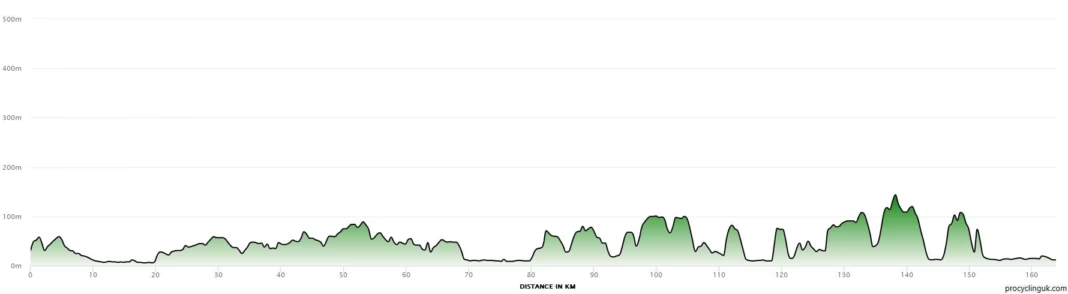
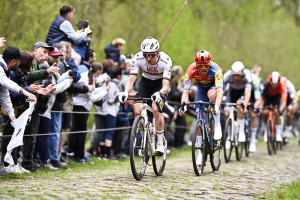
The route once again centres on Oudenaarde and the Flemish Ardennes, where cobbled roads and steep climbs repeatedly reshape the race. Even when the first half of the course looks manageable, the tension rarely disappears, because every major sector demands a strong position before entry and commitment on exit. The race can be won through one huge effort, but more often it is the accumulation of those efforts that strips the field down.
The Molenberg, Koppenberg, Oude Kruisberg, Oude Kwaremont and Paterberg remain the features that matter most. Each climb asks a slightly different question, but the final combination of Oude Kwaremont and Paterberg is where the race usually finds its true hierarchy. The Kwaremont rewards sustained strength over rough cobbles, while the Paterberg demands a final explosive effort on brutal gradients. If a rider exits that pairing with daylight, the run-in to Oudenaarde is often long enough to make it count. If several contenders remain together, the race becomes a study in nerve and timing all the way to the line.
2026 Women’s Tour of Flanders live TV coverage
Race Date: Sunday 5th April 2026
United Kingdom
Live coverage is available via HBOMax and TNT Sports
International broadcasters
In Europe, coverage is available via HBOMax. In Belgium, the race is typically broadcast via Sporza. In the United States, coverage is available via FloBikes.
2026 Women’s Tour of Flanders startlist

2026 Women’s Tour of Flanders Contenders
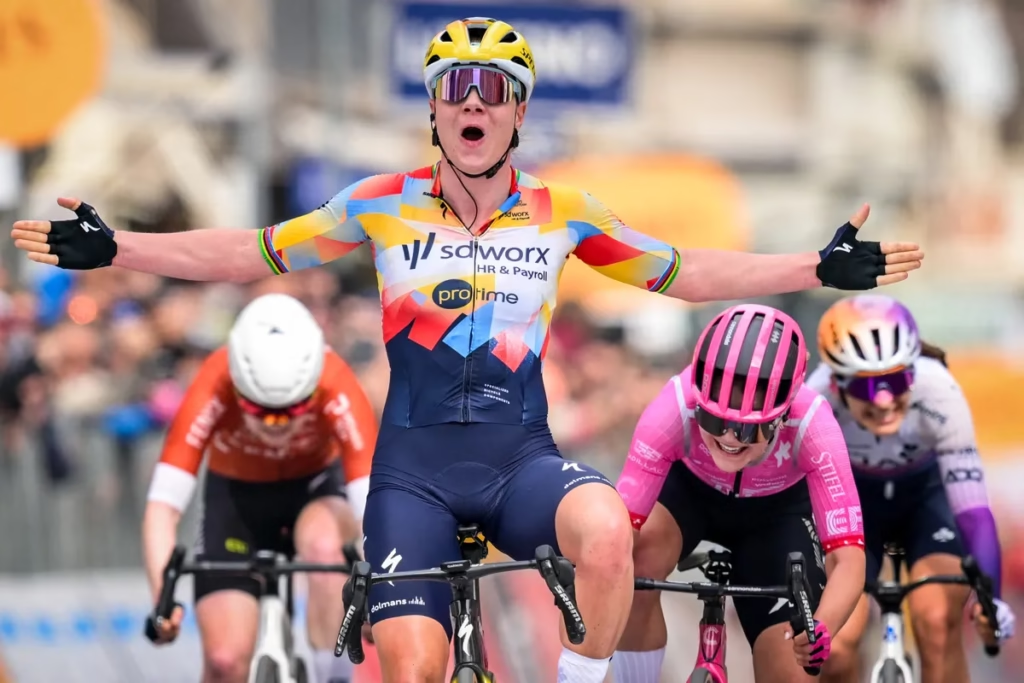 Photo Credit: Getty
Lotte Kopecky arrives as the rider everyone else has to solve, because she can win Tour of Flanders Women from more than one scenario and she is already racing like a Monument leader in 2026. The Milan San Remo win showed the top-end level is there, and the follow-up win at Nokere Koerse underlined that she can still finish off a hard day when the finale is chaotic and physical. Team SD Worx-Protime also have the right kind of depth to keep her in control of the race rather than reacting to it, with Mischa Bredewold as the obvious rider to light up the middle phase and force selections, while Femke Gerritse and Barbara Guarischi are exactly the kind of classics engines that keep a team in position before the Kwaremont and Paterberg start doing damage. The wildcard is Lorena Wiebes, because she showed at In Flanders Fields that she can climb better than most pure sprinters when the race is raced hard, and if she crests the Paterberg in the front group she becomes a threat that changes how everyone races the final 10 kilometres.
The cleanest “make it selective and win it” plan sits with Demi Vollering, because her 2026 spring has already shown she can impose herself when the race turns into repeated accelerations. Winning Omloop het Nieuwsblad is the kind of form indicator that translates directly to Tour of Flanders Women, because it is a race of timing, positioning and hard efforts rather than one long climb. The Strade Bianche result looks modest on paper, but the combination of being sent the wrong way and then puncturing is exactly the sort of day that destroys a placing without telling you much about the legs. FDJ United-SUEZ are also built to make Vollering’s attacks stick rather than simply soften the race, with Elise Chabbey the obvious rider to press on the moments when others hesitate and Franziska Koch the kind of workhorse who can keep the pressure high between the key climbs. If Vollering hits the Kwaremont and Paterberg with a clear intent to go long, that is the team most likely to be able to support the move.
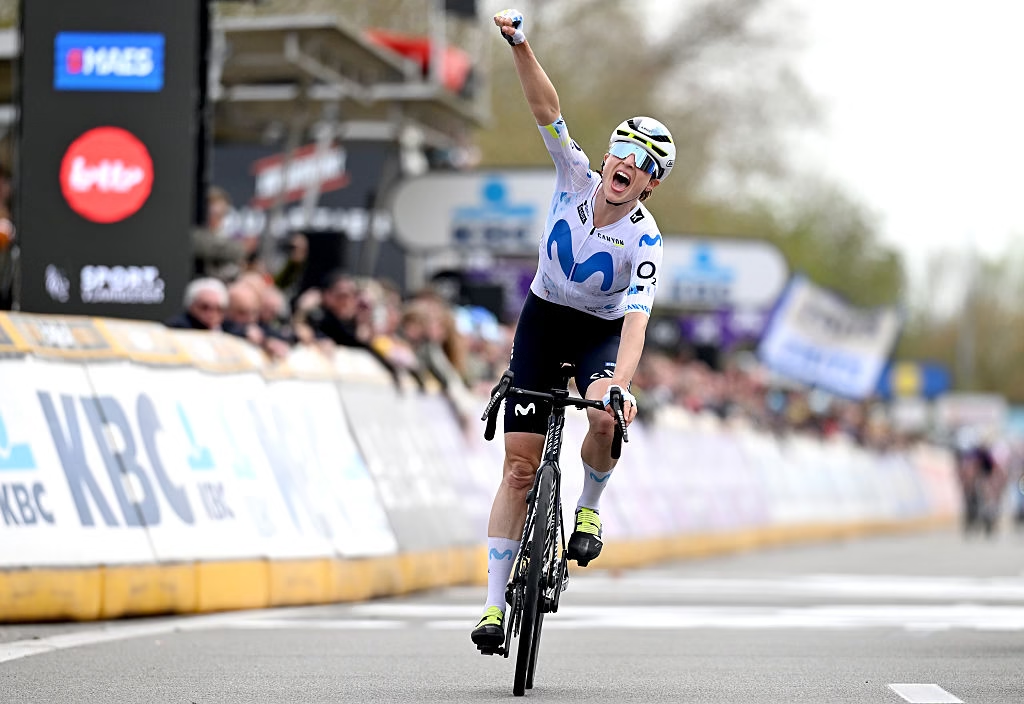 Photo Credit: Getty
A lot of the tactical tension runs through Movistar, because they can threaten the race from different angles rather than committing to one script. Marlen Reusser winning Dwars door Vlaanderen is the most direct form marker of all, because it shows she is already capable of turning a hard classics day into a decisive move and then sustaining it to the line. In Flanders, that engine becomes particularly valuable in the long sections between climbs where groups form, hesitate, and then either commit or die. Liane Lippert remains a serious second card, because she thrives on repeated punchy efforts and can still finish strongly if she crests the Paterberg in a small group. The third element is Cat Ferguson, because her early 2026 wins have given her the confidence to race aggressively rather than simply survive, and that matters in Flanders where the winners are often the riders who go when everyone else is still thinking. If the race comes back together into a reduced sprint, Arlenis Sierra is also a usable finisher, particularly in the kind of tired, disorganised finale where lead-outs no longer exist.
The biggest unknown with the most obvious upside is Pauline Ferrand-Prevot, because she has already shown she can deliver Monument-level performances and she tends to be at her best when the race becomes brutal rather than controlled. Tour of Flanders Women is the sort of race where one decisive acceleration on the Kwaremont can reshape everything, but it is also a race where the best riders keep pushing after the Paterberg rather than waiting for a regroup, and Ferrand-Prevot fits that instinctive, committed style.
Marianne Vos misses the race after the death of her father.
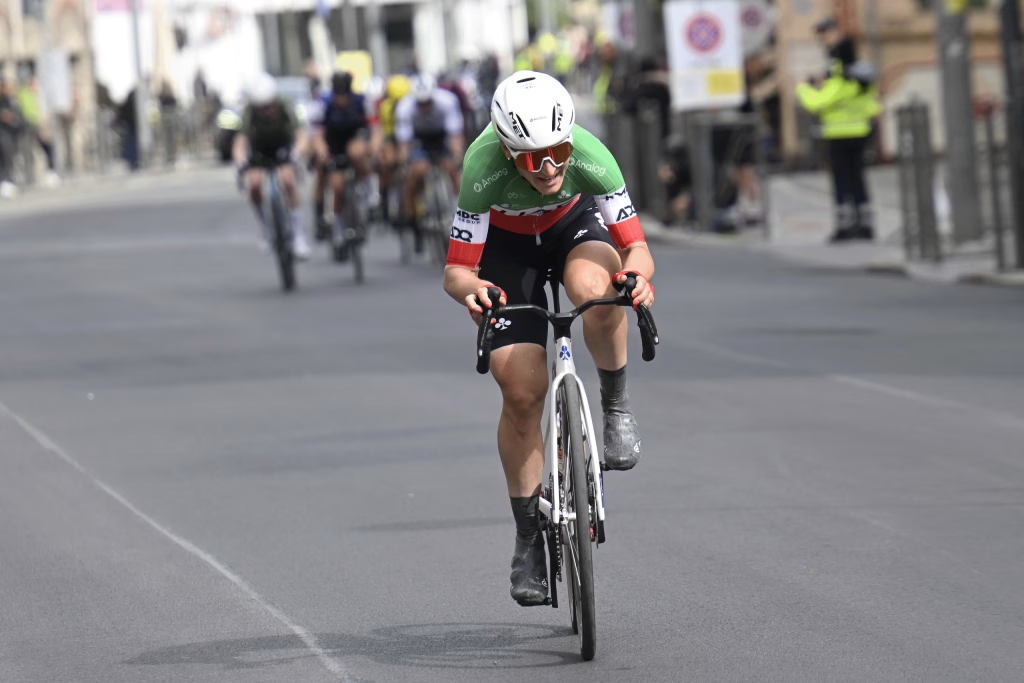 Photo Credit: Getty
The one rider who can force the race into a selection simply by racing it honestly is Elisa Longo Borghini, and her Trofeo Oro in Euro win is a proper marker that she is ready to do exactly that. UAE Team ADQ are also built for a hard Tour of Flanders Women, because they can keep riders in the mix across multiple phases of the race rather than relying on one late attack. Illness prevented her from starting Milan-San Remo and whilst she should be recovered it’s not ideal preparation. Silvia Persico is the kind of rider who can survive the Kwaremont and still be relevant if the finale becomes tactical, while Karlijn Swinkels and Eleonora Gasparrini give the team options depending on whether the race ends in a small-group fight or a reduced sprint. The key for Longo Borghini is not just making the selection on the climbs, it is making sure the group that crests the Paterberg is small enough and committed enough that it cannot be dragged back on the flat run-in.
A consistent threat to any version of this race is Puck Pieterse, because she is strong enough to survive the big moments and aggressive enough to take the race on when others are riding defensively. Fourth at Milan San Remo is a strong signal that she is already operating at the very top end of one-day racing in 2026, and her best route in Flanders is to make the race jagged, repeated accelerations over the smaller climbs and cobbled sectors, then a committed move on the Kwaremont or just after the Paterberg, where hesitation behind is fatal. Fenix-Premier Tech can also back that with support riders who help her stay present in the chaos, which matters as much as raw climbing in a race where position decides who even gets to start the decisive effort.
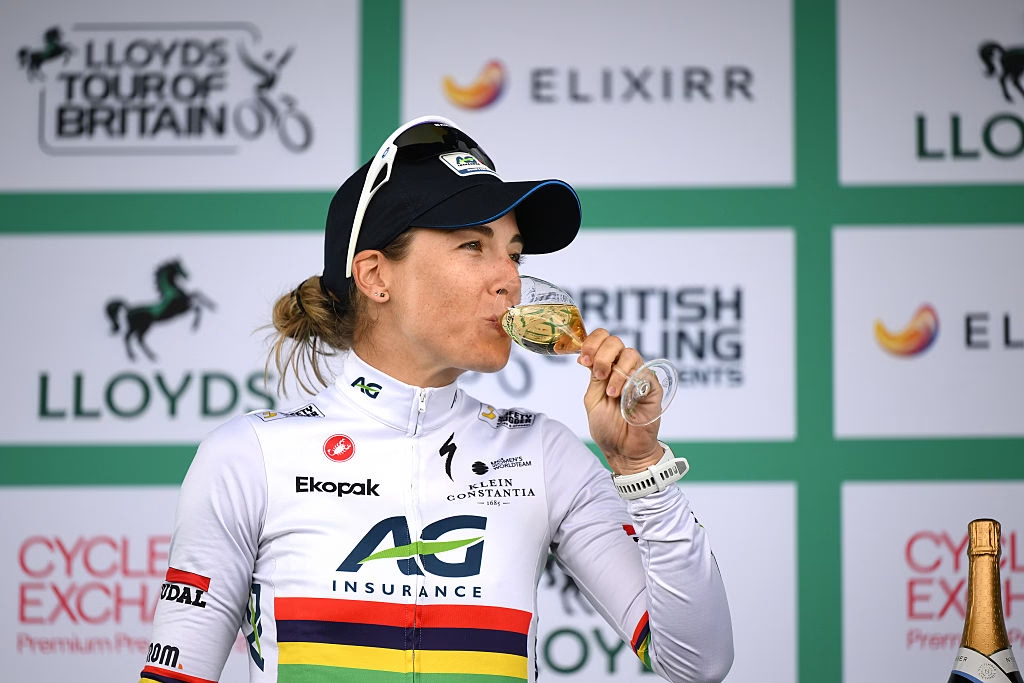
A team that can quietly turn this into a survival contest is AG Insurance-Soudal, because they have multiple riders who suit the “hard race, reduced group, sprint from fatigue” outcome. Justine Ghekiere is the obvious climbing asset if the race is raced aggressively on the Kwaremont, while Kim Le Court has the all-round engine to stay present when the race fractures and reforms. If it becomes more selective than expected, Letizia Borghesi is the rider who can still finish strongly from a reduced group, and that can be enough for a major result if the biggest names have already burned each other down.
The most realistic Lidl-Trek winning route depends on whether they can get a fast finisher over the Paterberg in the front group, and there are two names who make that plausible. Shirin van Anrooij has already shown in 2026 that she can handle the hardest one-day terrain, with top 10s at both Strade Bianche and Trofeo Alfredo Binda, and she has the punch to race the Kwaremont and Paterberg aggressively rather than simply follow. Lucinda Brand is the rider who gives them resilience and calm in the most chaotic phases, and her 2nd at the Giro dell’Appennino Elite is a useful reminder that she can still deliver a big result when she is not riding purely in support. If the race does come back together into a reduced sprint, Elisa Balsamo remains a threat, but the safest way to win Flanders is usually to arrive in Oudenaarde with fewer riders and fewer sprint trains, which makes van Anrooij and Brand particularly important.
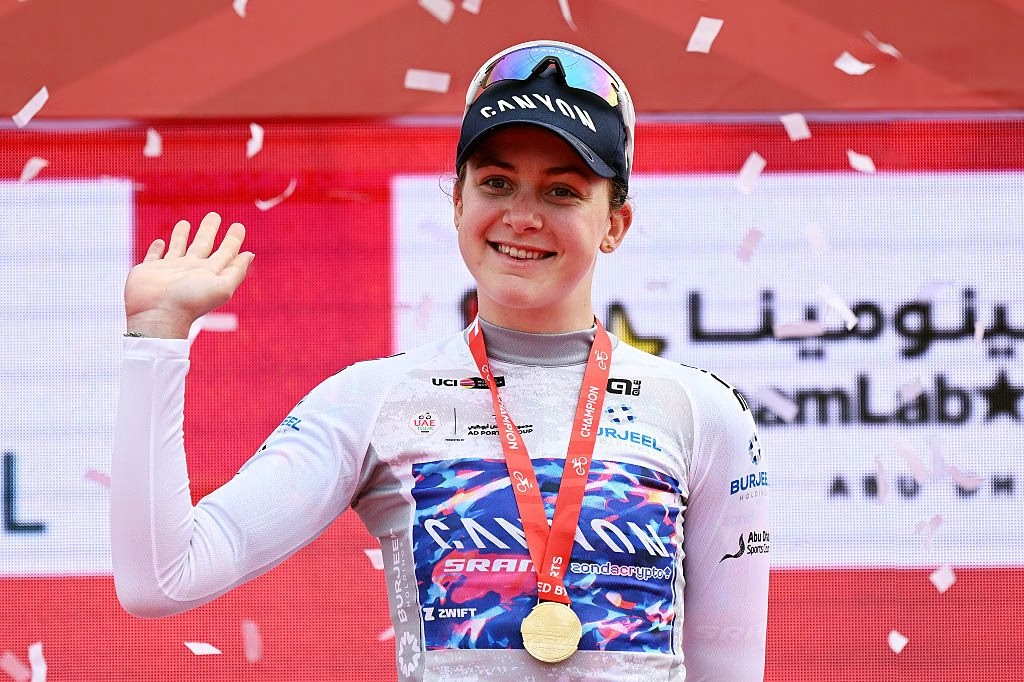
The Canyon SRAM card is interesting because it sits in the gap between pure climbers and pure sprinters, and that can be exactly where Tour of Flanders Women results are made when the finale is messy. Zoe Backstedt is a genuine asset in the chaotic phases where positioning and resilience decide who even gets to contest the finale, and she can still be relevant if a second group regains contact and the finish becomes tactical rather than clean. With riders like Chloe Dygert also capable of contributing to the hard tempo work between the key sectors, Canyon have a real chance to be present deep into the race even if they are not the team dictating the final selection.
If the race becomes attritional and the favourites start burning through teammates early, VolkerWessels Cycling Team can quietly move from “survive and hope” to “be in the right group when it matters”. The most plausible route to a result is through Lonneke Uneken, because she is the kind of finisher who can profit if the finale is disorganised and the sprint comes from a larger-than-expected group after a hard day. The other key is simply having riders who cope with the cobbles and repeated efforts well enough to stay in contact. Eline Jansen is a useful name in that sense, because Tour of Flanders Women often delivers one or two results for riders who are not in the pre-race spotlight but get everything right on positioning and survival, then find a clean run when others are boxed in or exhausted.
 Photo Credit: Getty
A reduced sprint from a second group is not the most likely Tour of Flanders Women outcome, but it is a real one if the favourites look at each other after the Paterberg and the chase behind commits properly. That is where EF Education-Oatly can become more than a supporting presence, because Noemi Rüegg gives them a genuine finisher if she survives the decisive climbs in contact. The key for EF is not controlling the race early, it is keeping Rüegg protected and calm through the long run of sectors so she reaches the Kwaremont-Paterberg sequence with enough left to stay in the right split. If she is still there in the finale, she is fast enough to turn a messy sprint into a major result.
A reduced sprint or a regrouped finish is the scenario where Liv AlUla Jayco can really matter, because they have multiple riders who can still be quick after a hard day rather than needing a textbook lead-out. Ruby Roseman-Gannon is the clearest finisher if she survives into the decisive groups, and she tends to be at her best when the sprint is messy and riders are launching from imperfect wheels. Letizia Paternoster adds another fast option if the group is slightly larger and the finish is more conventional, while Quinty Ton is the rider who can still be relevant if the race is raced hard enough to remove some of the pure sprinters but not hard enough to leave only climbers. If the favourites hesitate after the Paterberg and a second group is given a chance to return, Liv are one of the teams most likely to have a finisher left with the speed and composure to turn that into a result.
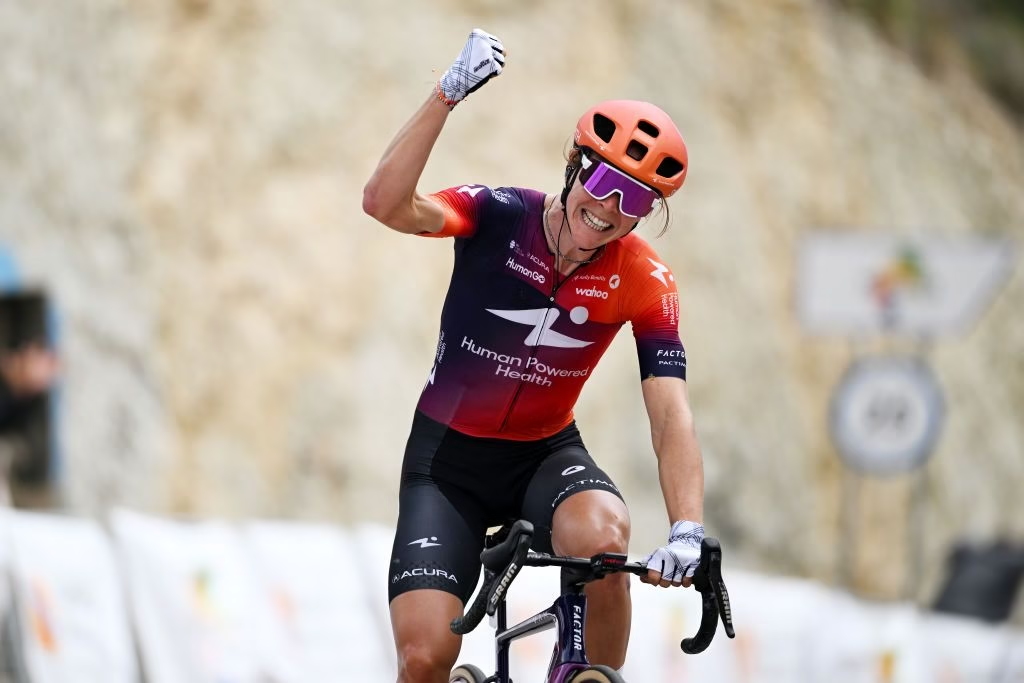
A different kind of threat comes from Human Powered Health, because their best pathway is not about a clean sprint, it is about lasting longer than others in an attritional race and then profiting when the shape breaks down. Thalita de Jong is exactly the rider who can do that, because she tends to keep appearing in the right group when the race becomes a grind rather than a punchy battle. If the favourites are fighting each other into the red on the Kwaremont and Paterberg, riders like de Jong can suddenly be racing for a top result simply by having paced the day better and staying composed when others start paying for their efforts.
If the race does hesitate after the Paterberg, Team Picnic PostNL are the kind of team that can turn that into a real opportunity, largely because Pfeiffer Georgi suits the hard, ugly work that keeps a move alive. She is not reliant on a perfect set-up or a single explosive acceleration, she is at her best when the finale becomes a commitment test and riders have to keep pushing even when it hurts. In a Tour of Flanders Women where the front group starts watching each other and a chasing group is given a chance, Georgi is the rider most likely to drive the move and still have enough left to deliver a result at the end.
Top 3 Prediction
⦿ Marlen Reusser
⦿ Demi Vollering
⦿ Lotte Kopecky