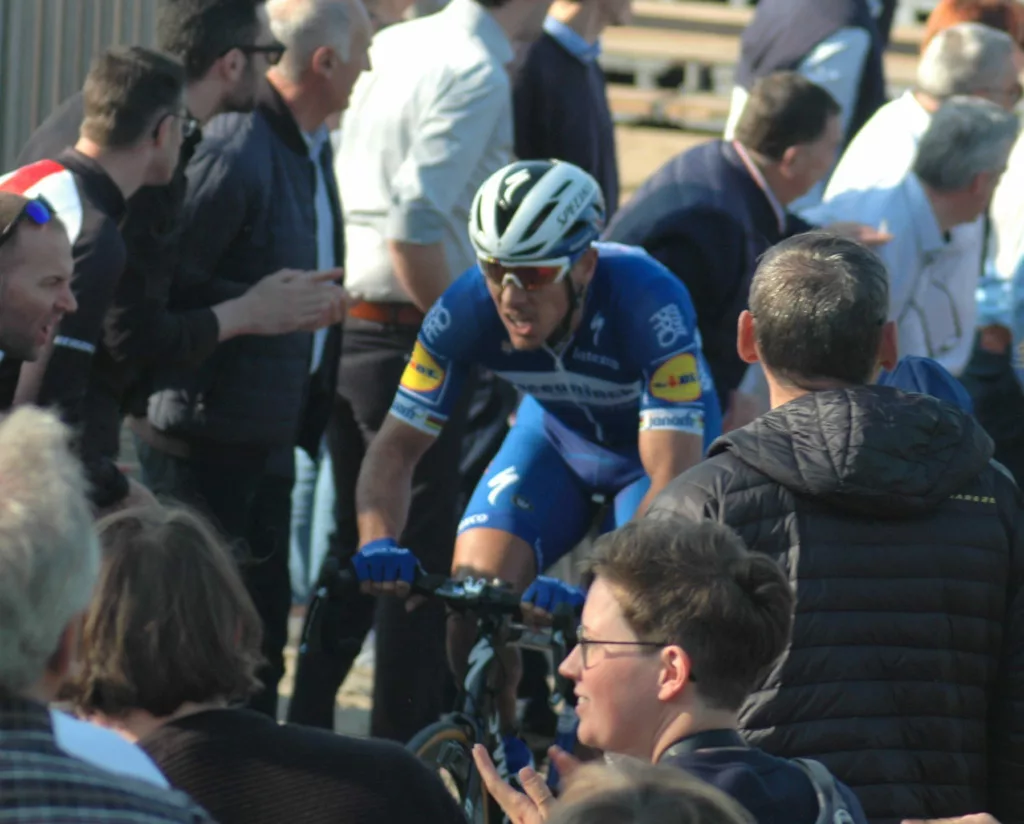
Philippe Gilbert was one of the most versatile Classics riders of the modern era. He could win uphill in the Ardennes, survive and attack on the cobbles, and finish off reduced groups with the sort of punch that made him dangerous across very different one-day races. That range is what makes his record so impressive. He won four of cycling’s five Monuments, took the World Championships in 2012, and built a one-day palmarès that stretched from Liège-Bastogne-Liège to the Tour of Flanders and Paris-Roubaix. That is why he remains one of the key figures in men’s cycling history.
Rider history
Despite being Belgian, Gilbert began his professional career with FDJ in 2003. In those early seasons he built his reputation steadily rather than explosively, but by 2005 he had already won enough French races to take the Coupe de France. The following year brought his first major Classic win at Omloop Het Nieuwsblad, and by 2008 his spring range was becoming clearer as he finished 3rd at Milan-San Remo, won Omloop Het Nieuwsblad again and added Le Samyn.
The move to Silence-Lotto ahead of 2009 pushed Gilbert into a much bigger role. That year he won his first Monument at Giro di Lombardia, then repeated that win in 2010 while also taking his first Amstel Gold Race and Vuelta a España stages. By then, he was already developing into one of the sport’s most dangerous all-round one-day riders, someone who could be a threat in the Ardennes, in sprinty semi-Classics and even in tougher long-distance Monuments.
Then came 2011, one of the great one-day seasons of the modern era. Gilbert won Strade Bianche, Brabantse Pijl, Amstel Gold Race, La Flèche Wallonne and Liège-Bastogne-Liège, becoming only the second rider after Davide Rebellin to complete the Ardennes treble in a single season. He also added Clásica de San Sebastián, Grand Prix Cycliste de Québec, the Belgian national road race and time trial titles, a Tour de France stage and the overall UCI World Tour title. It was the sort of campaign that made him feel almost unbeatable whenever the road pitched upwards late in a race.
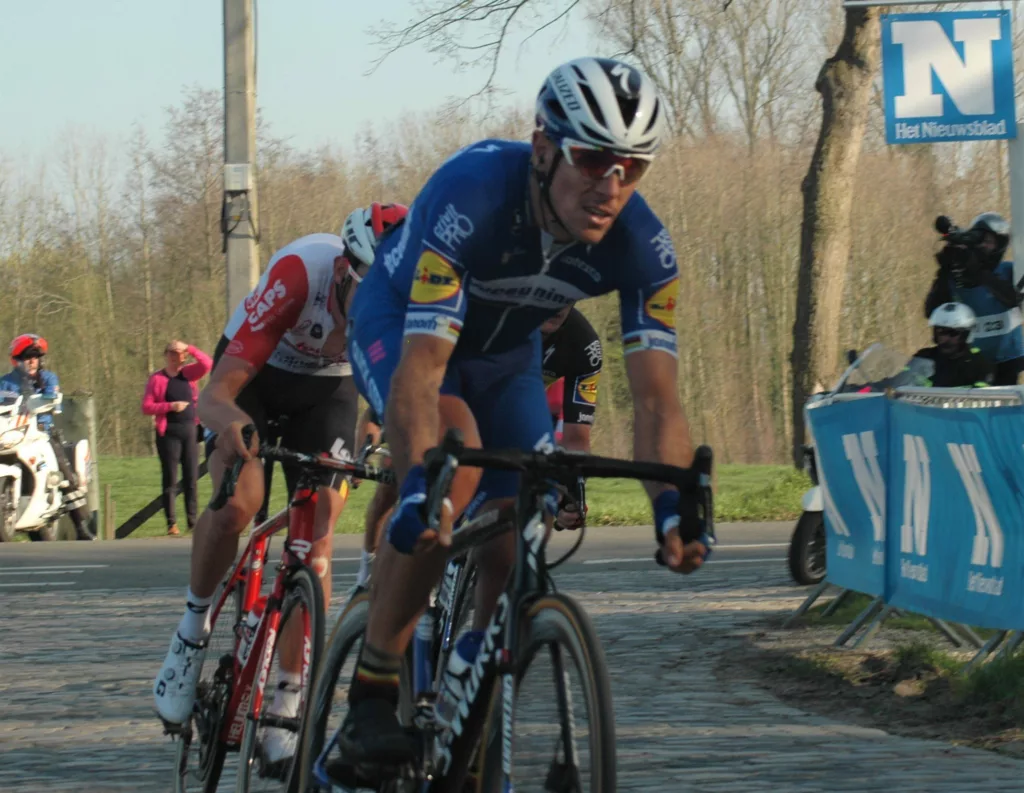
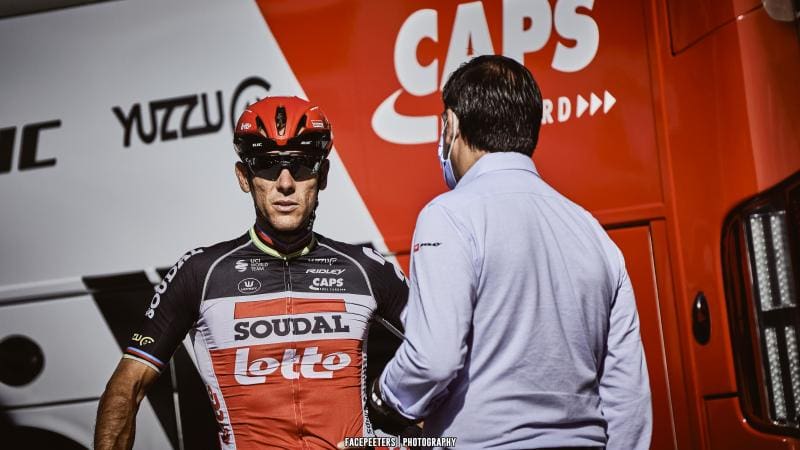
His move to BMC in 2012 did not bring the same spring dominance, but he still salvaged the year by winning the World Championships. The rainbow jersey year that followed was quieter by his standards before his form in the Classics returned in 2014 with wins at Brabantse Pijl and Amstel Gold Race. Then came another major career turn. After moving to Quick-Step for 2017, Gilbert looked rejuvenated, winning the Tour of Flanders and then taking a fourth Amstel Gold Race title two weeks later. In 2019, he added Paris-Roubaix, leaving only Milan-San Remo missing from a full Monument set.
That breadth is what sets Gilbert apart. He was not a pure cobbles rider in the mould of Tom Boonen, nor purely an Ardennes puncheur. He was a genuine Classics all-rounder, capable of winning on very different terrain across a very long period. Few riders of his era could claim that.
Greatest race victory
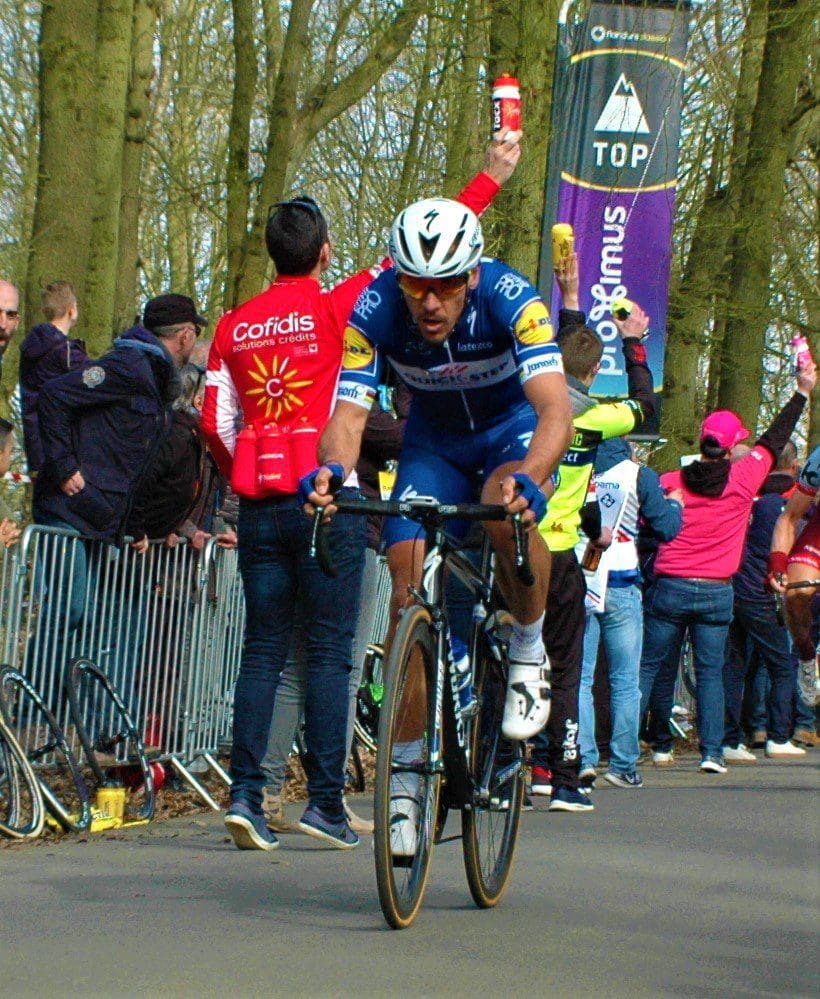
2017 Tour of Flanders
There is a strong case for several Gilbert wins here, especially given how extraordinary his 2011 campaign was, but the 2017 Tour of Flanders stands out because of the terrain, the distance of the solo and the timing within his career. By then, he was already a former world champion and Monument winner, but he had never won Flanders. After moving to Quick-Step, he grabbed that chance in spectacular style. Gilbert attacked on the second ascent of the Oude Kwaremont and went clear with 55 kilometres still to race.
The context made it even more dramatic. The elite group that formed earlier had included Tom Boonen in his final Tour of Flanders, while behind Gilbert the chase was repeatedly disrupted. Sep Vanmarcke crashed, Boonen suffered a mechanical, and later Peter Sagan clipped a spectator’s jacket and crashed on the Oude Kwaremont, bringing down Greg Van Avermaet and Oliver Naesen as well. All of that helped shape the finale, but it does not diminish what Gilbert had to do in front. He still had to sustain a huge effort alone over the final climbs and across the run-in to Oudenaarde.
By the finish, Gilbert had held on by 28 seconds over Van Avermaet, with Niki Terpstra taking 3rd. It was a win built on audacity, endurance and timing, and it gave him one of the few major cobbled victories that had previously been missing from his record. For a rider often defined by the Ardennes, winning Flanders in that manner felt like the clearest possible demonstration of just how complete he really was.
Spring Classics palmarès
Monuments
Liège-Bastogne-Liège
2011
Paris-Roubaix
2019
Tour of Flanders
2017
Giro di Lombardia
2009, 2010
Classics
La Flèche Wallonne
2011
Amstel Gold Race
2010, 2011, 2014, 2017
Omloop Het Nieuwsblad
2006, 2008
Strade Bianche
2011
Brabantse Pijl
2011, 2014