
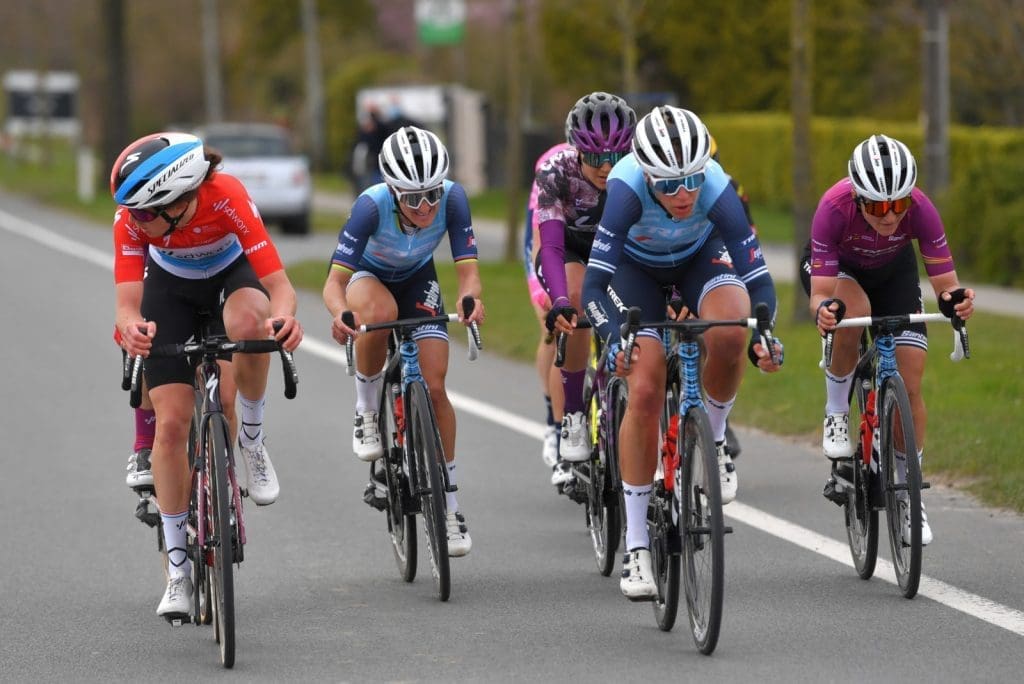
Gent-Wevelgem Women has never sat neatly in just one category, and that is a large part of its appeal. It is not as relentlessly selective as the Tour of Flanders, and it does not carry the same straightforward sprint expectation as Scheldeprijs. Instead, it lives in a more interesting middle ground, where wind, gravel, climbing and positioning all matter, but none of them alone is guaranteed to decide the race.
That balance has helped make it one of the most compelling races of the spring. The Kemmelberg remains the signature climb, the Plugstreets have added another layer of fatigue and symbolism, and the long run to Wevelgem continues to leave tactical room for races to change shape late on. Some editions have rewarded solo aggression. Others have ended in reduced-group sprints or larger bunch finishes. Gent-Wevelgem Women has become valuable precisely because it does not lock itself into one script.
If you want the broader beginner context around the modern race identity, Beginner’s guide to In Flanders Fields 2026 – formerly known as Gent Wevelgem is the natural companion read.
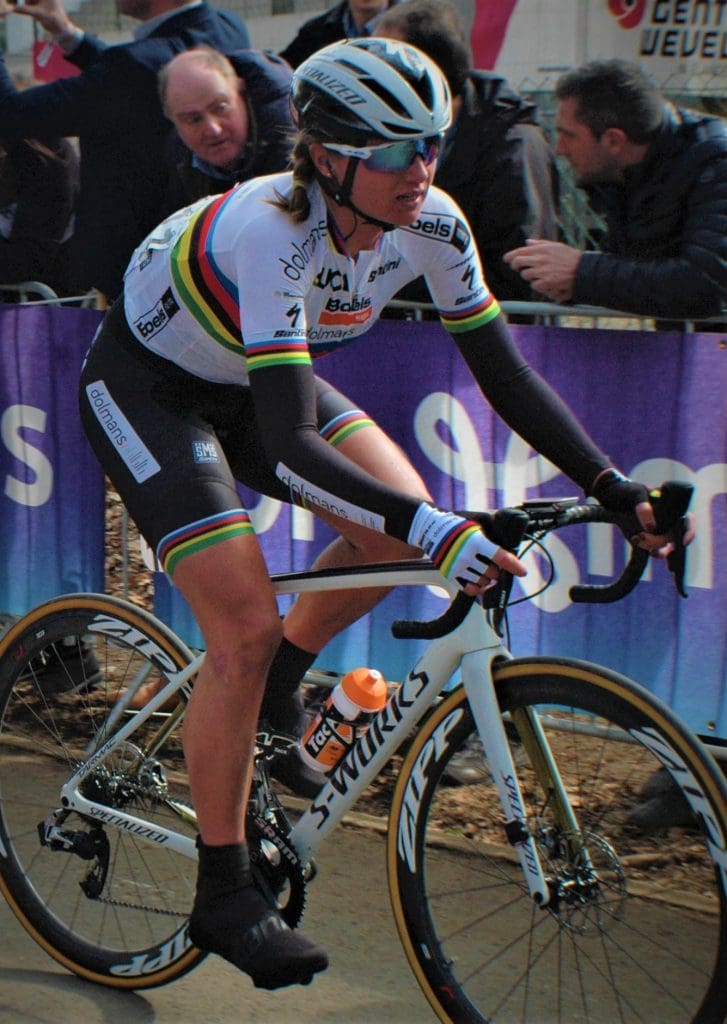
How Gent-Wevelgem Women began
Gent-Wevelgem Women started in 2012, which gives it a shorter history than some of the older spring Classics, but not a lightweight one. From the beginning, it was closely tied to the men’s event and to the First World War landscape around Ypres and Heuvelland. That setting has always mattered. Even before the more recent rebrand, this was a race shaped by geography and memory as much as by the sporting challenge itself.
The first edition immediately established a tone that still feels familiar now. Lizzie Armitstead attacked from distance and won solo, showing that the race was never going to be just a waiting game for the fastest finisher. That mattered because it set the race up as one that could reward ambition just as much as patience.
How the route evolved
Over time, the route has become more layered. Since 2017, the women have taken on a more substantial hilly circuit that includes repeated visits to the key climbs of Heuvelland. The Kemmelberg remains the focal point, but it is the combination of climbs that really shapes the race. Monteberg softens the legs, Baneberg adds another sharp effort, and the Kemmelberg itself forces the clearest selection.
The Plugstreets have also helped give the race a stronger modern identity. These gravel sectors are not there simply as a novelty. They tie the event more directly to the landscape of the First World War and they change the physical feel of the race. Even when the surface is relatively smooth, the Plugstreets sap momentum and leave riders carrying a different kind of fatigue into the decisive part of the day. By the time the women hit the key climbs afterwards, the race already feels harder than the profile alone suggests.
The 2026 route reinforces that identity again. The women start from Wevelgem for the first time, cover 134.9km, take on the three Plugstreets before tackling Monteberg, Kemmelberg Belvedère, Scherpenberg, Baneberg and Kemmelberg Ossuaire, then race back to the traditional finish on Vanackerestraat. It is a route that still leaves room for a sprint, but only after a long series of efforts that can empty teams and isolate the fastest riders.
The riders who shaped Gent-Wevelgem Women history
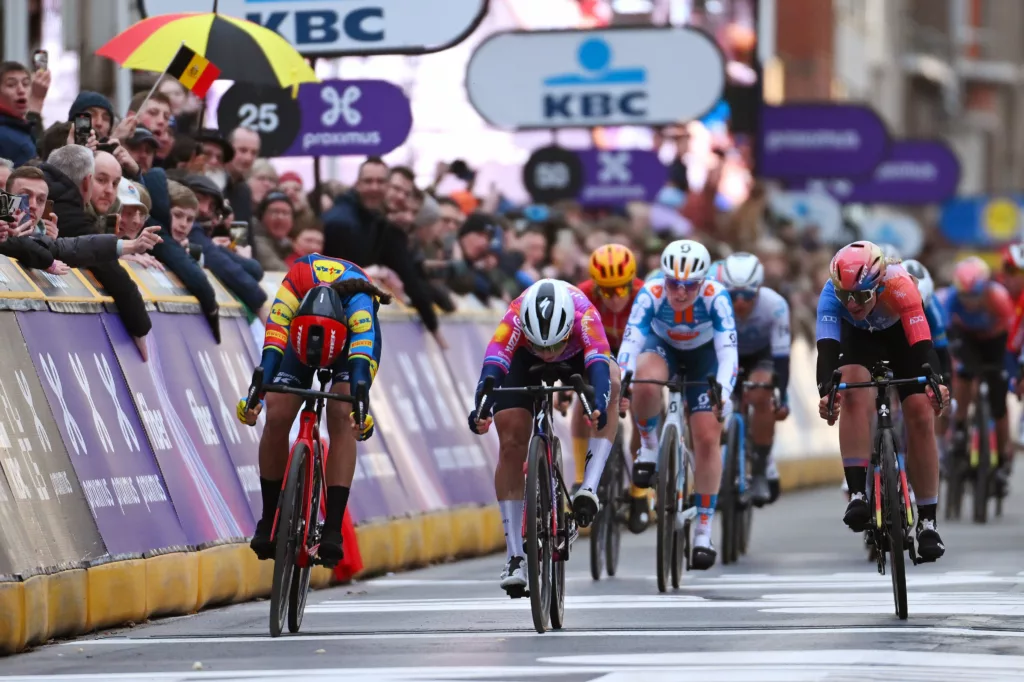
The winners list says a great deal about what this race demands. Lizzie Armitstead won the first edition through long-range aggression. Floortje Mackaij won in 2015 from a smaller move that held off the chasers. Chantal van den Broek-Blaak did something similar in 2016. Those early editions gave the race a reputation as something more selective and more open than a standard semi-Classic sprint.
Then the pattern shifted. Lotta Lepistö won in 2017, Marta Bastianelli in 2018 and Kirsten Wild in 2019, all part of a period when the race increasingly tilted back towards fast finishers who could survive the climbs. That did not make the race simpler. It just meant the selection was often not quite severe enough to remove the best sprinters from contention.
The more recent winners have deepened that identity rather than changing it. Jolien D’Hoore won in 2020, Marianne Vos in 2021 and Elisa Balsamo in 2022, all riders with the speed to finish the job after a hard day. Marlen Reusser’s 2023 win then interrupted that run with a more unusual result, before Lorena Wiebes won in both 2024 and 2025. That sequence makes one thing very clear: Gent-Wevelgem Women usually rewards complete riders, not just pure climbers or pure sprinters.
The greatest Gent-Wevelgem Women edition
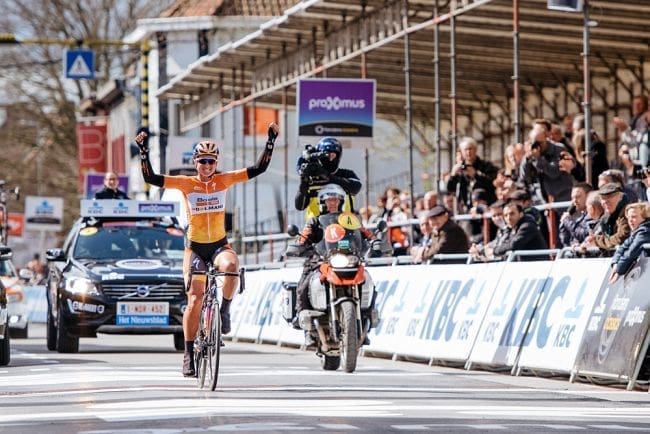
There is still a strong case for 2016 as the edition that best captures how brutal Gent-Wevelgem Women can be when the conditions and team tactics line up.
That race split early in heavy wind, with the bunch already under pressure before the decisive climbing had really begun. By the first ascent of the Kemmelberg there was a front group of 28 riders, and crucially, it included all six Boels-Dolmans riders. That numerical advantage shaped the entire race. Other teams were represented, but none could control the front in quite the same way.
The second half of the race became a lesson in pressure and patience. Attacks from Ellen van Dijk and Olga Zabelinskaya forced the group to keep spending energy. More riders were dropped over the Monteberg. Then, once Lizzie Armitstead’s move had been brought back, Boels-Dolmans played the next card. Chantal van den Broek-Blaak attacked into the crosswinds with 10km to go and, with teammates sitting on the chase behind, was able to turn a tactical advantage into a decisive solo victory.
What made that edition so memorable was not simply that Blaak won. It was the way the race had already been softened and reduced long before the final attack. The wind created the first separation, the climbs deepened it, and team strength finished the job. It remains one of the clearest examples of Gent-Wevelgem Women at full intensity.
The defining section of Gent-Wevelgem Women
The Belvedère side of the Kemmelberg remains the climb most closely associated with the women’s race. It is short, steep, cobbled and always feels decisive, even when it does not produce the winning move outright. Riders who come into it even slightly out of position can lose crucial ground there, and because the road only levels out after a sharp effort, there is rarely an easy way back immediately afterwards.
Yet the defining stretch of modern Gent-Wevelgem Women is broader than the Kemmelberg alone. The combination of the Plugstreets and the climbs is what really shapes the event. The gravel takes away smoothness and rhythm, the climbs ask for repeated accelerations, and the long road back to Wevelgem leaves just enough space for the race to reorganise itself again. That is what makes it such a nuanced Classic. It is a race of repeated stress rather than one single knockout blow.
Gent-Wevelgem Women previous winners
- 2012 – Lizzie Armitstead
- 2013 – Kirsten Wild
- 2014 – Lauren Hall
- 2015 – Floortje Mackaij
- 2016 – Chantal van den Broek-Blaak
- 2017 – Lotta Lepistö
- 2018 – Marta Bastianelli
- 2019 – Kirsten Wild
- 2020 – Jolien D’Hoore
- 2021 – Marianne Vos
- 2022 – Elisa Balsamo
- 2023 – Marlen Reusser
- 2024 – Lorena Wiebes
- 2025 – Lorena Wiebes
Who has won Gent-Wevelgem Women the most times?
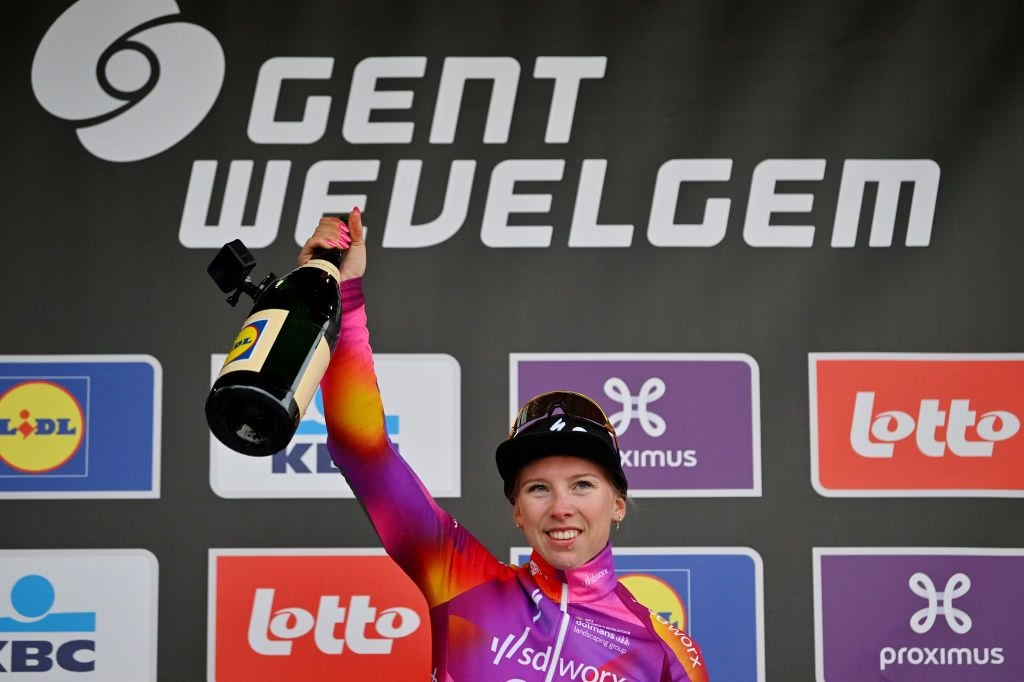
As of the 2026 edition, Kirsten Wild and Lorena Wiebes share the record with two wins each. That gives the next edition an added layer, because Wiebes has the chance to become the first woman to win the race three times. It is also a useful reminder that, for all the route complexity, this race still gives elite fast finishers a real opportunity to build a legacy here.
-
 Photo Credit: Getty



Why Gent-Wevelgem Women matters so much
Gent-Wevelgem Women matters because it occupies a distinctive place in the spring. It is not a pure climbing race and it is not just a flat run for sprinters. Instead, it asks riders to handle everything that makes northern racing difficult: exposure, constant fighting for position, repeated changes of pace, awkward surfaces and the need to judge effort over a route that can still bring different types of riders back together.
That is why the race continues to matter. It has enough route complexity to reward aggression, enough flat road to keep the fast finishers interested, and enough historical atmosphere to feel like more than just another WorldTour one-day race. In 2026, even under its updated identity, that remains exactly what makes Gent-Wevelgem Women such an important and compelling part of the calendar.
For the wider historical picture, A brief history of Gent-Wevelgem Women and the Beginner’s guide to In Flanders Fields 2026 – formerly known as Gent Wevelgem are the best internal follow-ons.

