
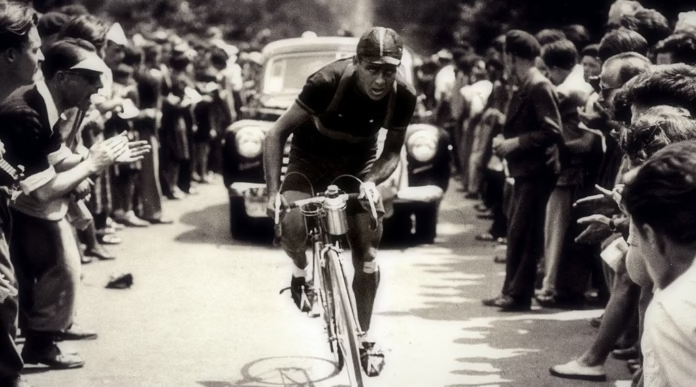
Raymond Impanis is one of those riders who can be slightly obscured by the bigger legends who came either side of him. He did not build the same sweeping Monument total as Rik van Looy, and he is not remembered with quite the same mythic force as some later Belgian icons, yet for well over a decade he was one of the most reliable and resilient presences in the Spring Classics. He won the Tour of Flanders, Paris-Roubaix, Gent-Wevelgem and Flèche Wallonne, took Dwars door Vlaanderen twice when it was still run in a different format, and repeatedly finished close to the front in the biggest races of the calendar.
That is what makes him so interesting. Impanis was not simply a rider who had one great spring or one extraordinary peak. He was a rider who kept returning to the decisive moments of the Classics year after year. In a sport that often remembers only the biggest winners, that consistency can be underrated. In Impanis’ case, it is central to why he deserves a place among the great Spring Classics riders.
Rider history
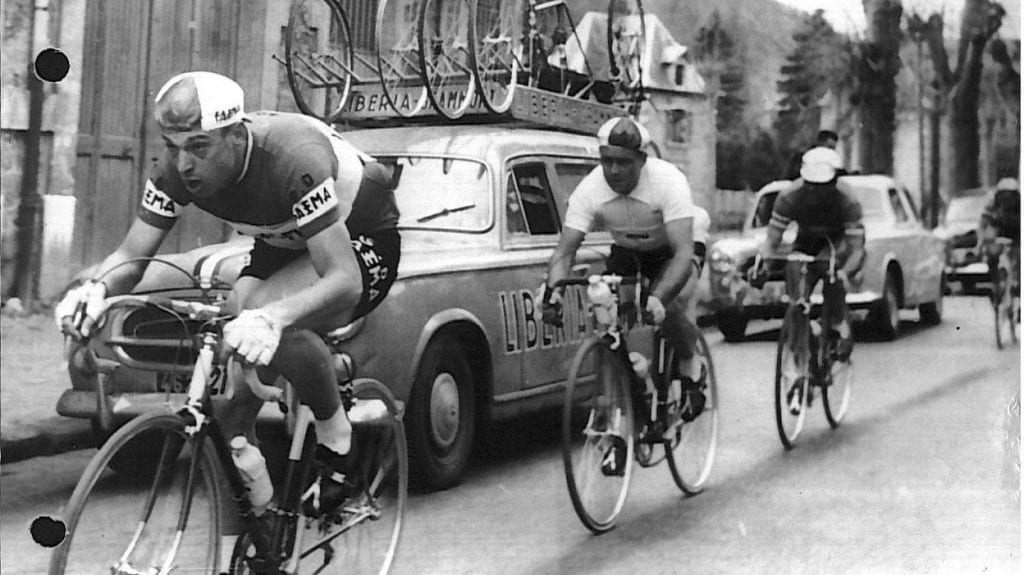
Born in Berg on 19th October 1925, Raymond Impanis quickly became surrounded by folklore. The best-known version of his story claimed he was a foundling taken in by a baker, with the surname Impanis supposedly linked to the Latin for bread. The truth was less theatrical. He was the son of the local baker Georges Impanis, even if the myth proved durable enough to help create his enduring nickname, the Baker from Berg.
His early route into cycling was dramatic enough without any added legend. During the war years he crashed into a telegraph pole while racing and badly damaged his right arm, an injury serious enough to leave him with long-term weakness. Even so, he emerged as one of the most impressive young riders in Belgium. In 1946 he won the Tour of Belgium for independents, taking three stages and the overall by more than 20 minutes. That performance was enough to earn him a professional contract with Alcyon-Dunlop.
He turned professional in 1947 and immediately showed he belonged at the highest level. In his first season he finished 2nd in Liège-Bastogne-Liège, 4th in Paris-Roubaix, won a Tour de France time trial stage by nearly five minutes and ended that Tour in 6th overall. In the context of the period, that was an exceptional opening year. Younger riders were not usually expected to arrive and influence the biggest races so quickly.
The follow-up seasons confirmed that this was not an early spike. He finished 2nd again in Liège-Bastogne-Liège in 1948, 4th in the Tour of Flanders the same year, then won Dwars door Vlaanderen in 1949 when the race was still decided across multiple stages. By the turn of the decade he had become one of the most familiar names in the upper reaches of the Belgian Classics.
His real breakthrough into major spring-winning status came in the early 1950s. He won Gent-Wevelgem in 1952 and retained the race in 1953, then produced the defining season of his career in 1954. That year he won Ronde van Vlaanderen and Paris-Roubaix in the same spring, one of the hardest doubles in one-day racing, and also finished 2nd in Liège-Bastogne-Liège. It was the year in which he moved from perennial contender to one of the central Classics figures of his era.
Impanis remained a major force after that peak. He finished 3rd overall at the 1956 Vuelta a España, won Flèche Wallonne in 1957, stayed competitive in the Monuments into the late 1950s and added a second Paris-Nice title in 1960. By the early 1960s, with a new generation coming through and Van Looy increasingly dominating the northern races, his own biggest victories became rarer. He still remained close enough to the top level to finish 2nd in Gent-Wevelgem in 1961 before retiring at the end of the 1963 season.
Rider type
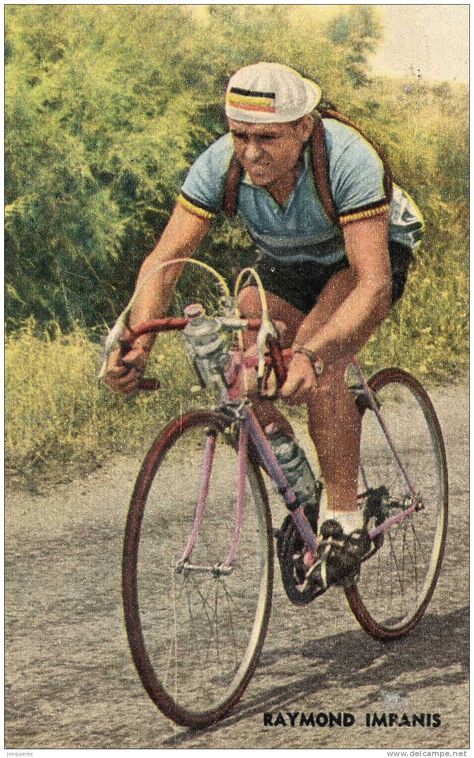
Impanis is best described as a Flandrian specialist, but that label only captures part of his value as a rider. His greatest results came on hard northern roads, in races shaped by weather, positioning, cobbles and repeated attrition, yet he was never a narrow specialist in the modern sense.
He could time trial, he could last through Grand Tours, and he could still win beyond the strictly Flemish mould. The key trait that bound everything together was durability. He was one of those riders who could absorb a hard race and still remain competitive when the crucial move or sprint came. That quality made him dangerous in almost any Spring Classic that demanded resilience rather than only explosive brilliance.
Why Raymond Impanis matters in Spring Classics history
Part of Impanis’ importance lies in the fact that he sits between better-known generations. He belongs to the period after the war, before Van Looy and Merckx fully reshaped Belgian cycling, yet he was strong enough to remain a benchmark as the sport evolved around him. He was one of the key figures in the transition towards the modern Spring Classics landscape.
He also matters because of his consistency. Plenty of riders can point to one or two standout wins. Far fewer can say they remained part of the Classics conversation for well over a decade. Impanis did exactly that. He was repeatedly on the podium, repeatedly in the top 10, and repeatedly close to victory in the sport’s hardest one-day races.
That kind of long-term relevance is one of the clearest markers of greatness in the Spring Classics. A rider does not keep turning up in those races, across so many years, unless he has an unusual combination of strength, resilience and race intelligence.
Greatest race victory
If one race best captures Impanis at his peak, it is the 1954 Tour of Flanders. There is a perfectly reasonable case for Paris-Roubaix in the same year, but the Ronde tells the fuller story of what made him such a formidable rider.
That edition of the Tour of Flanders was flatter than the race modern fans are used to, with only five named climbs, but it was still brutally selective. Impanis punctured before the Edelareberg and was forced to chase back alone without the kind of team support modern leaders would expect. Once he regained contact near the front after the Kloosterstraat, he attacked immediately. Only François Mahé could follow him.
The pair stayed clear to Wetteren, where Impanis won the sprint to claim one of the biggest victories of his career. Only 37 of the 230 starters reached the finish. It was a Monument win built on recovery from misfortune, immediate aggression once back at the front, and enough finishing power to complete the job. In other words, it contained almost everything that defined him as a rider.
His Spring Classics victories
Monument wins
Tour of Flanders – 1954
Paris-Roubaix – 1954
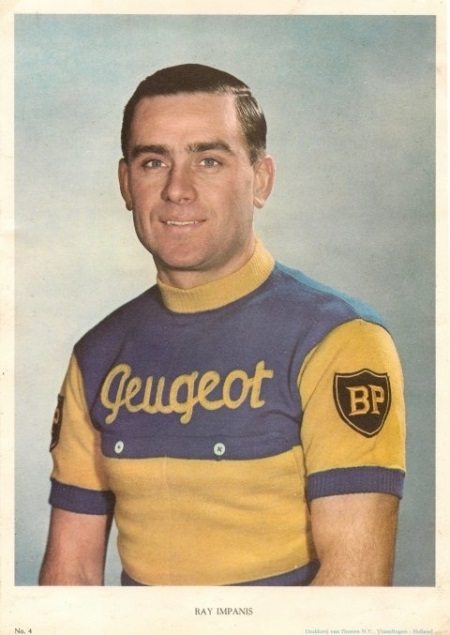
The centrepiece of Impanis’ spring palmarès is the 1954 Flanders-Roubaix double. Winning either race is enough to define a career. Winning both in the same season places a rider in very select company. It demands not only strength, but range. A rider has to master the cumulative pressure and tactical complexity of Flanders, then survive the brutality and chaos of Roubaix as well.
That alone would be enough to secure Impanis’ place in Spring Classics history.
Other major Spring Classics wins
Gent-Wevelgem – 1952, 1953
Flèche Wallonne – 1957
Dwars door Vlaanderen – 1949, 1951
These races show the breadth of his spring relevance. Gent-Wevelgem underlined his quality on hard Belgian roads and his ability to finish after a selective day. Flèche Wallonne proved he could also win beyond the narrow northern template, on hillier terrain and in a different kind of race. Dwars door Vlaanderen, won twice in its earlier stage-race format, ties him even more closely to the roots of the Flemish spring.
Taken together, those victories make the bigger point. Impanis was not just peaking for a Monument or two. He was repeatedly shaping the entire spring.
-
 Photo Credit: Getty

The near misses that strengthen the case
One reason Impanis needs a fuller historical treatment is that his palmarès alone does not completely show how often he was there. He finished 2nd in Liège-Bastogne-Liège three times, was 4th in Paris-Roubaix in 1947, 4th in the Tour of Flanders in 1948, 2nd at Flèche Wallonne in 1950, and kept adding top-10 finishes in races such as Milan-San Remo, Paris-Roubaix, Omloop Het Volk and the Tour of Flanders across several seasons.
Those results matter because they show his level was not built on a brief window of brilliance. He was a rider who spent years living close to the front of the biggest one-day races in Europe. That repeated contention is one of the strongest arguments for his place among the greats.
Why he still stands among the great Spring Classics riders
Raymond Impanis may not always be the first name that comes up when modern fans list the greatest Spring Classics riders, but he should be much closer to that conversation than he often is. Two Monument wins, a Flanders-Roubaix double, two Gent-Wevelgem titles, a Flèche Wallonne victory, two Dwars door Vlaanderen wins and a long run of elite placings build a profile far stronger than a short summary suggests.
He also fits naturally into the wider history of the spring on ProCyclingUK, alongside pieces on Rik van Looy, Men’s Amstel Gold Race and Men’s Liège-Bastogne-Liège. Impanis was not the most mythologised rider of his age, even if his nickname carried a myth of its own. But when you look closely at the record, and at the consistency beneath it, he clearly belongs among the great Spring Classics riders.

