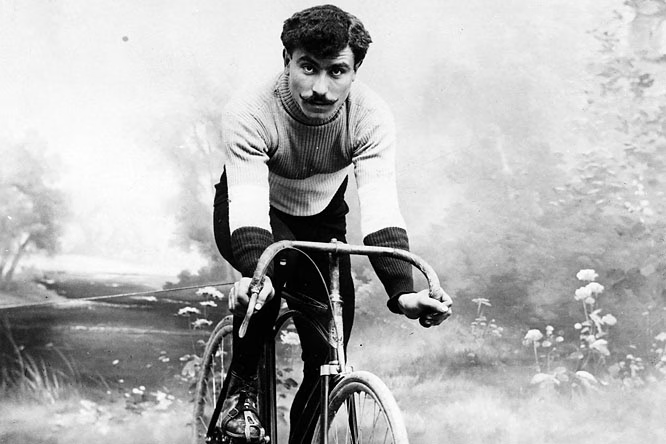
Few moments in cycling history have been repeated as often, or simplified as heavily, as Octave Lapize’s alleged outburst in the 1910 Tour de France. The line most people know is neat, theatrical and easy to remember: Lapize, broken by the mountains, turns on the organisers and calls them assassins. It is one of the most famous quotations in the sport.
The difficulty is that the story has become cleaner than the evidence allows.
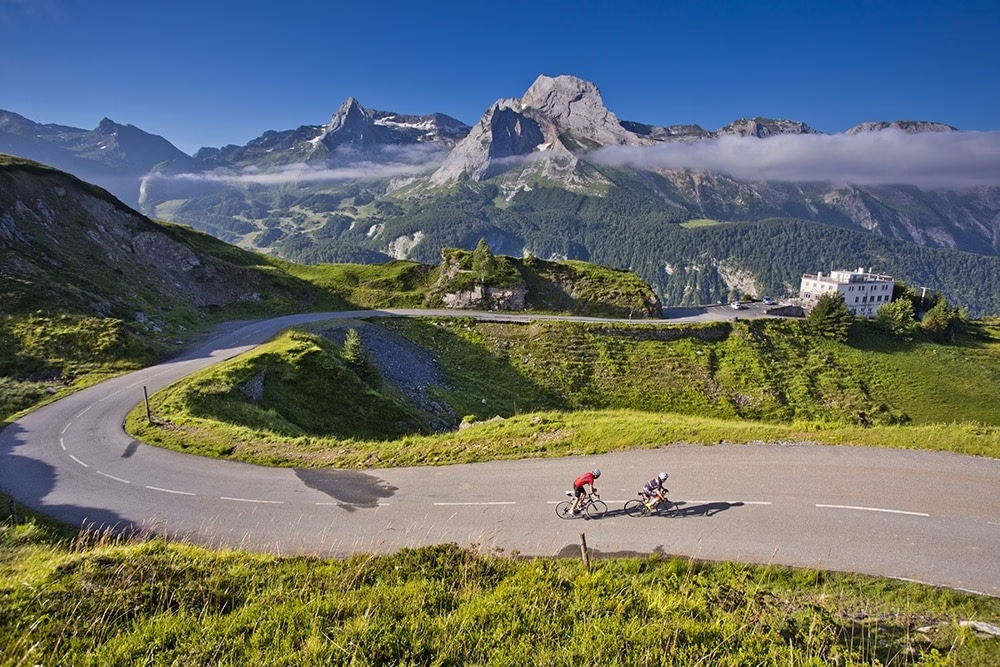
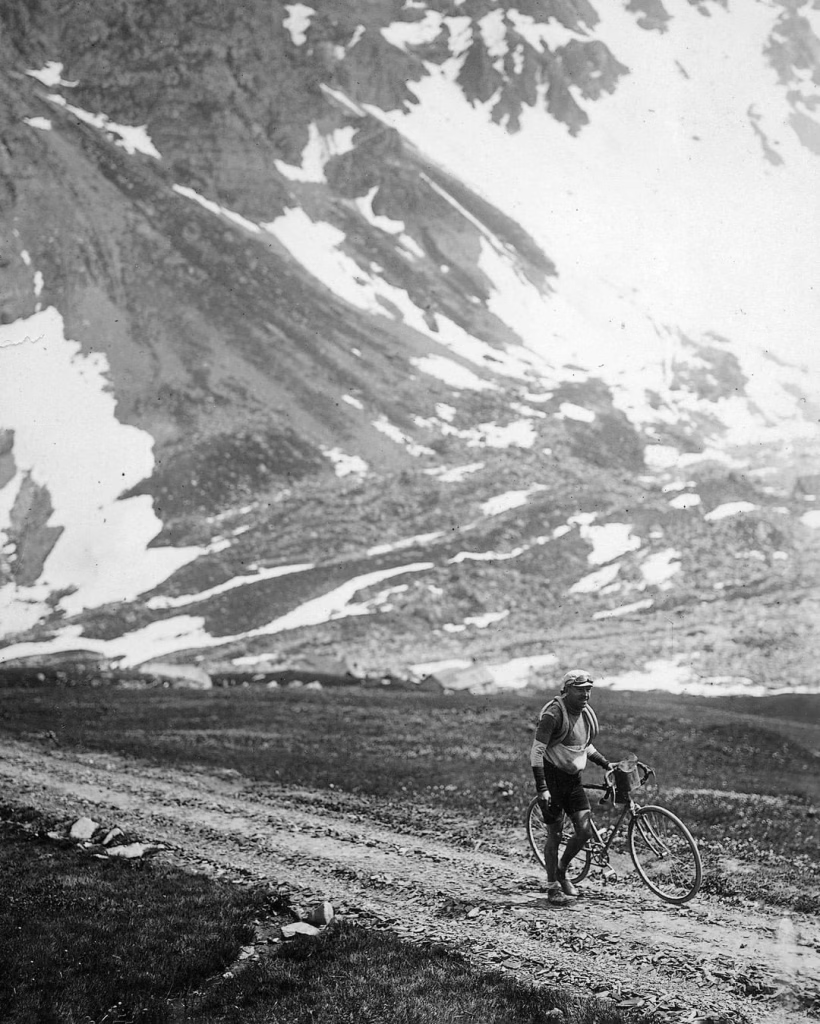
Stage 10 of the 1910 Tour, from Luchon to Bayonne on 21 July, was one of the foundational days of mountain mythology. Over 326 kilometres, the riders faced the Peyresourde, Aspin, Tourmalet and then the long final sequence of the Soulor, Tortes and Aubisque. It was the Tour’s first serious venture into the high Pyrenees, and contemporary reports make clear just how overwhelming the day felt to the riders.
Lapize and Gustave Garrigou were among the key figures throughout, while François Faber, the defending champion, suffered badly. By the time the race reached the final mountains, the stage already had the shape of something historic. What happened next became one of the most famous stories the Tour has ever produced.
What was really said?
This is where the story becomes more complicated.
The most valuable evidence comes from Victor Breyer, who was present on the mountain and wrote about the stage in L’Auto two days later. In that account, Lapize stopped during the climb, exhausted and furious, and said: “Vous êtes des criminels! Vous entendez? Dites-le de ma part à Desgrange; on ne demande pas à des hommes de faire un effort pareil.” In English, that is: “You are criminals! Do you hear? Tell Desgrange that from me; you do not ask men to make such an effort.”
That version matters for two reasons. First, it gives us the fullest near-contemporary account. Second, it places the exchange on the Soulor side, before the Aubisque itself, not neatly at the summit of the Aubisque as later retellings prefer.
The more familiar “assassins” version appears to owe much to Breyer’s own later retelling. Writing decades afterwards, in 1950, he gave the moment a more dramatic edge and shifted the wording toward “Vous êtes des assassins!” That is the version that proved far easier for cycling memory to keep.
There is also a separate account from Alphonse Steinès, another important witness to the stage, who reported that Lapize said “Desgrange est un assassin” – “Desgrange is a murderer” – but placed that comment not on the mountain itself, but later in Bayonne after the stage.
That is really the heart of the problem. There is not one single, perfectly stable version of the line. There are several, and they do not quite agree on the wording, the location or even the immediate target of Lapize’s anger.
-
 Photo Credit: A.S.O./Charly López

How the myth grew
Once a story like that enters cycling folklore, it rarely stays still.
The strongest version for later writers was always going to be the shortest and most dramatic one. “Criminels” became “assassins”. A longer complaint became a single legendary exclamation. A moment on the Soulor side became a cleaner, more symbolic scene on the Aubisque. The result was not a complete invention, but a sharpening of the original into something closer to fable.
That helps explain why the story has been repeated so often in the same simplified form. It works too well not to be. A rider breaking under the weight of the Tour’s first great mountain experiment and lashing out at the organisers with one unforgettable word is exactly the sort of scene cycling history loves.
The problem is that it is almost certainly too tidy.
Why the confusion matters
This is not just a pedantic argument about one quotation.
Lapize’s outburst sits right at the centre of how the 1910 Tour has been remembered. That stage helped establish the Pyrenees as the place where the Tour became something larger and darker and more heroic. The words attributed to Lapize have become part of that transformation. They are not just a quote. They are one of the building blocks of Tour mythology.
That is why the distinction between “criminals” and “assassins”, or between the Soulor and the Aubisque, matters more than it might first appear. The myth is stronger when it is placed on the Aubisque and reduced to a single dramatic accusation. The history is messier, but also more revealing. It shows how quickly even eyewitness accounts can shift once a sporting moment becomes legendary.
A story built on truth, then reshaped
The enduring power of the Aubisque story comes from the fact that it is not false so much as over-shaped.
Lapize clearly was furious. He clearly felt that the organisers had pushed the riders into something brutal and almost absurd. And later in the year, he reportedly described the Luchon-Bayonne stage itself as an assassination, which only helped the stronger version of the legend take hold.
So the myth did not appear from nowhere. It grew out of a real exhaustion, a real complaint and a real mountain stage that changed the way the Tour was understood. But as the story was retold, details were tightened, locations were shifted, and language was made more dramatic.
What remains clear is that Lapize’s words, whatever exact form they took in the moment, captured the shock of the Tour’s first encounter with the high Pyrenees. The Aubisque became the symbolic home of that story, even if the best contemporary evidence suggests the key exchange happened a little earlier and in a slightly less theatrical form.
That does not make the episode less interesting. It makes it more so. The story of Lapize’s outburst is not just a story about suffering in the mountains. It is also a story about how cycling turns suffering into legend.