
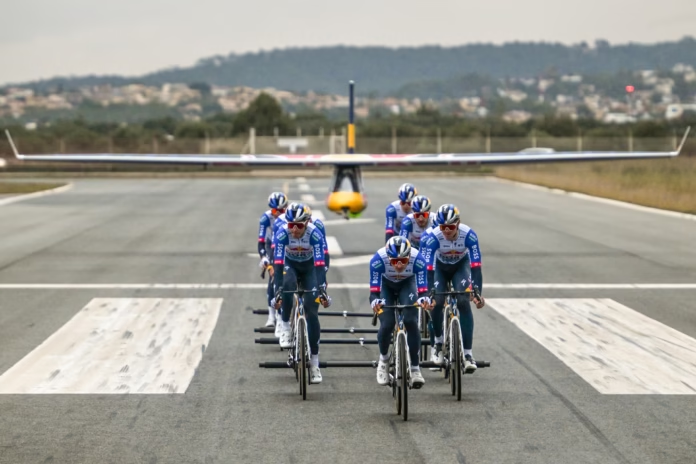
Red Bull-BORA-hansgrohe have rewritten the limits of what is physically possible. In a world first, a nine-rider peloton towed a glider into the air using nothing but leg power, teamwork, and a specially engineered harness system that pushed cycling and aviation into truly uncharted territory.
The project, called Peloton Takeoff, took place at Son Bonet airfield in Mallorca and required the riders to accelerate a glider, piloted by Andy Hediger, to 54 km/h along a 1500 metre runway. Connected by a 150 metre tow cord, the team peaked at 6500 seated watts and averaged 650 watts for 90 seconds – the kind of effort that, as Head of Engineering Dan Bigham put it, “is not far from what it takes to win a race”.
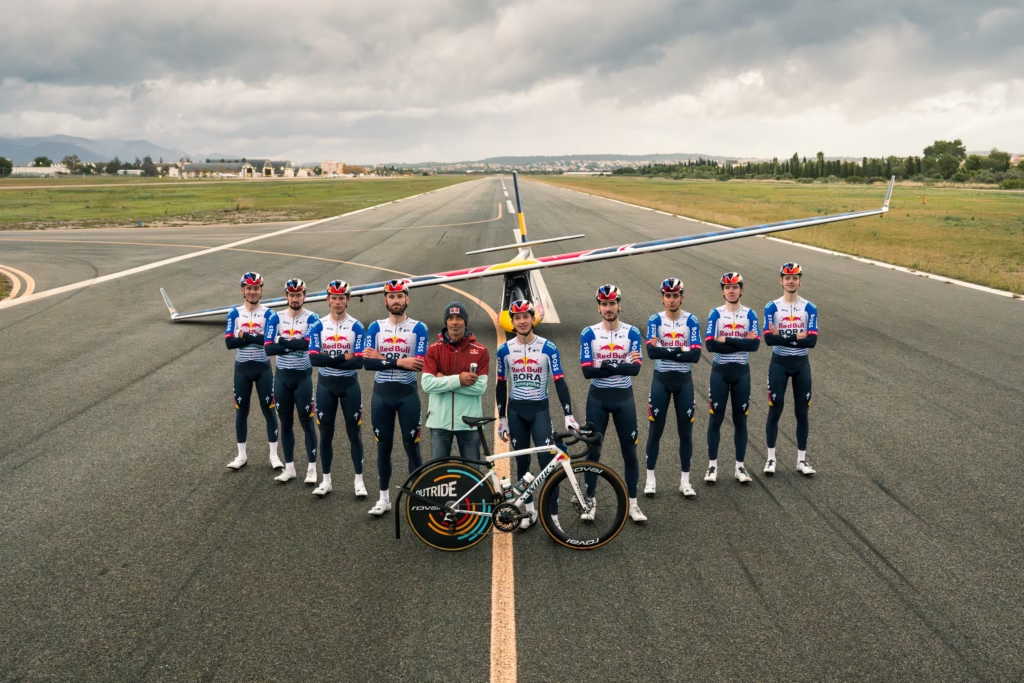 Photo Credit: Charly López
A peloton built for power
Tour de France podium finisher Florian Lipowitz led the formation, joined by Callum Thornley, Davide Donati, Nico Denz, Jordi Meeus, Tim Van Dijke, Laurence Pithie, Gijs Schoonvelde and Adrien Boichis. The riders had already tested the concept during a demanding trial in Austria, though even then, Lipowitz admitted he doubted the project was feasible.
“When I first heard about this project, I didn’t think it was possible. Launching a plane? It seemed impossible,” he said. “Nothing like this has ever been done in road cycling.”
The nine-rider group pulled with such force that Hediger lost sight of them almost immediately after takeoff. Staying synchronised was critical, as the riders couldn’t see the plane behind them and had to maintain even tension across the harness to avoid destabilising the glider.
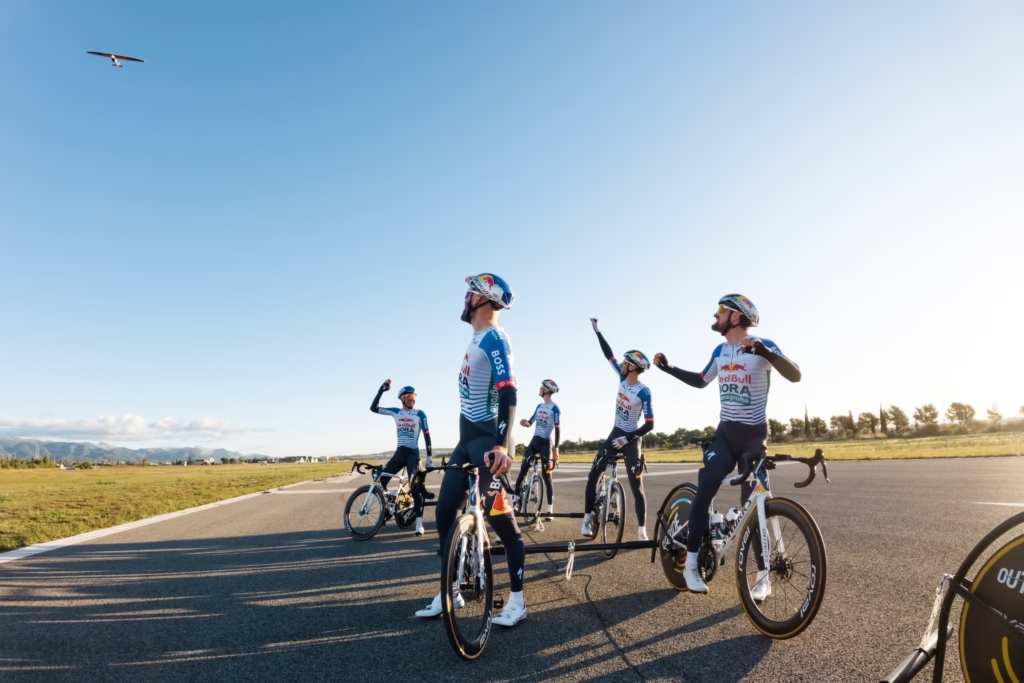 Photo Credit: Predrag Vuckovic
The engineering behind a world first
Where the riders supplied the power, the Red Bull-BORA-hansgrohe engineering team delivered a harness system built from scratch for this project. It had to be aerodynamic, strong enough to withstand an enormous load, and flexible enough to distribute power evenly across nine riders.
Bigham described the development of the harness as “game-changing for the sport”.
“The harness was a critical element, something that simply did not exist before. We spent countless hours developing it, and that work allowed us to make history with Peloton Takeoff.”
Modelling predicted the riders would need around 500 watts each to launch the glider, but the squad exceeded expectations, giving Hediger enough altitude to climb to around 100 metres.
For Hediger, the pilot, the challenge was not physical but mental. Flying at near-minimum speed while relying entirely on human-produced tension required absolute precision. “Being towed by manpower was a special feeling,” he said. “To combine aviation with cycling, and see Red Bull bring this idea to life, was something unique.”
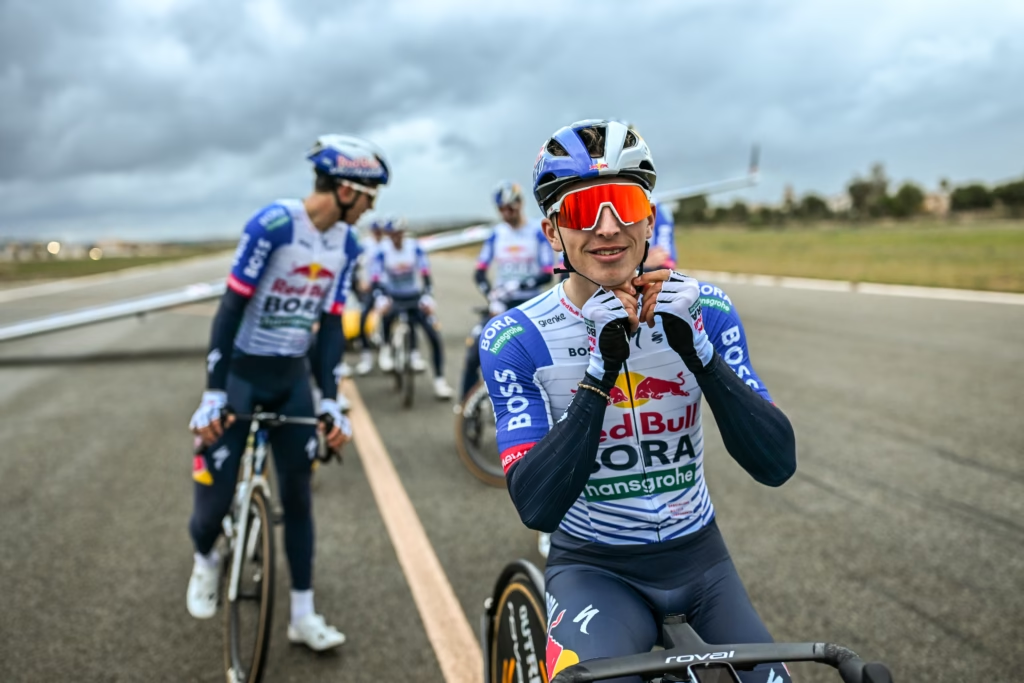 Photo Credit: Predrag Vuckovic
Cycling teamwork at its most extreme
Although cycling is often viewed through the lens of individual victories, Peloton Takeoff highlighted the intricate teamwork behind every major performance. The riders had to deliver not just power, but coordination and trust. As Bigham noted, the effort resembled a race-winning move, only scaled up to a level the sport had never seen before.
The project also created a new space for cross-disciplinary research, merging aerodynamics, physics, biomechanics, and flight science. It demonstrated that with precise modelling, extreme teamwork, and creative engineering, cyclists can achieve feats previously reserved for motors or winches.
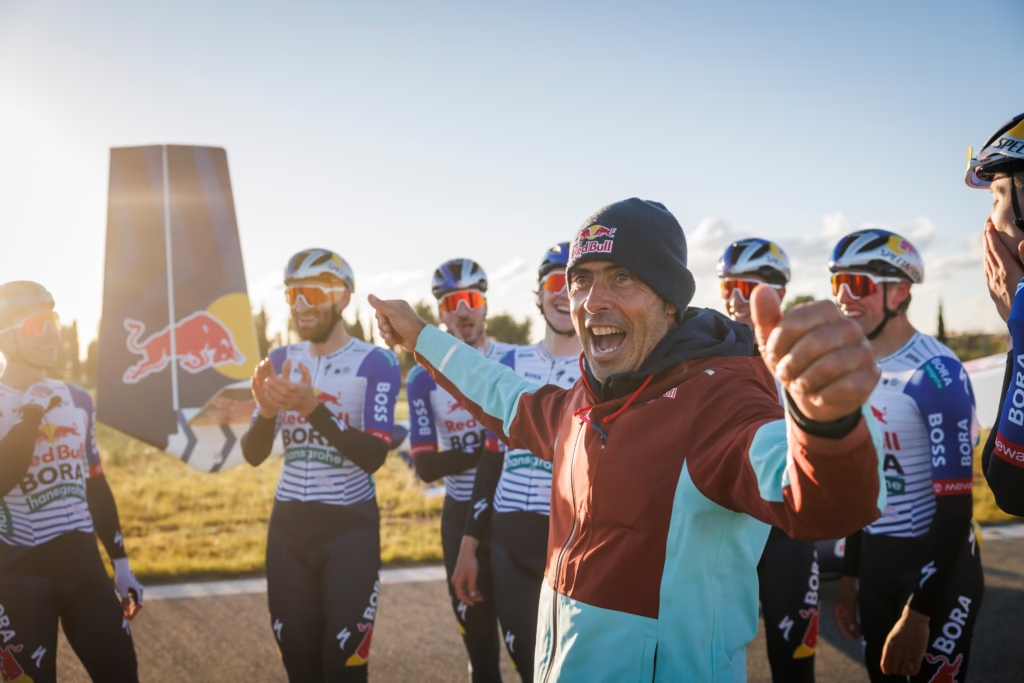 Photo Credit: Samo Vidic
A moment that widens the horizon of what cycling can be
Peloton Takeoff will stand not just as a stunt but as a statement of how innovation, science, and athletic performance can redefine the perceived limits of the sport. It sits comfortably alongside Red Bull’s history of pushing human performance into new frontiers: a reminder that cycling still has unexplored corners, and that sometimes those corners involve a runway, a glider, and nine riders pulling in perfect unity.

