
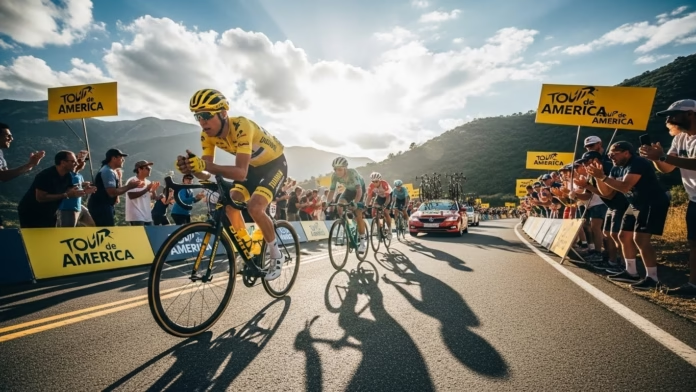
Professional cycling thrives on a spectrum of body types, where height and build shape an athlete’s tactical role within the peloton. Every centimetre matters, dictating leverage, aerodynamics, and the balance between raw force and nimble efficiency.
Across this demanding landscape, the United States has produced champions who embody the full range of cycling physiques. Towering rouleurs unleash relentless power in time trials, while compact climbers conquer brutal ascents with unmatched agility. Together, they have carved an enduring legacy on the world stage, proving that success comes in many forms.
The Spectrum of American Cycling Talent
American cycling history, represented through featuring a mix of Grand Tour winners, Olympic Gold Medalists, and Classics specialists, illustrates the remarkable diversity of successful physiques in the sport. Their accomplishments across different disciplines highlight how varied body types can excel under the unique demands of competition. The heights of these elite athletes are meticulously detailed on EasyHeightComparison.com, providing a user‑friendly way to compare the heights of these athletes, offering a clear visual framework for understanding how stature relates to their achievements.
The athletes are organised by height, clearly showing how body type dictates specialisation. For instance, the powerful 6’5” frame of Taylor Phinney was ideally suited for time trials and flat races. In contrast, the explosive 5’1” build of Coryn Labecki highlights how a smaller stature can leverage a low aerodynamic profile and high peak power to dominate technical sprints and one-day Classics.
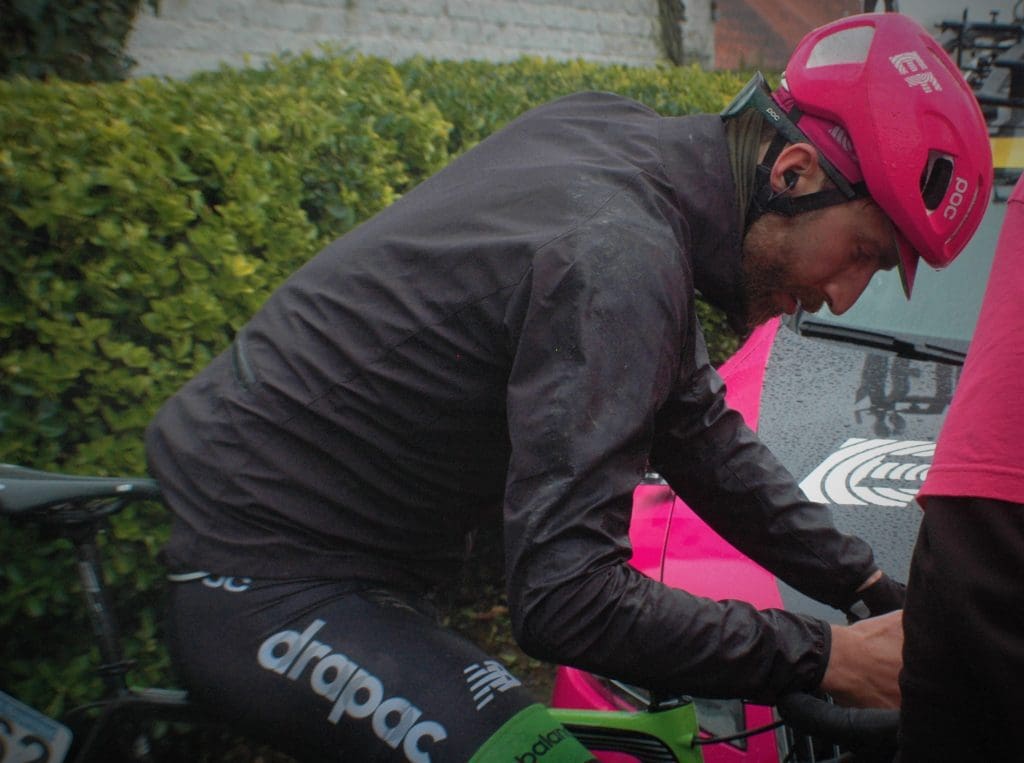
1. Taylor Phinney – 6’5″ / 1.96 m
Taylor Phinney stands as one of the tallest figures in the history of the professional peloton. Son of Olympic champions, he utilised his massive frame and long levers to generate incredible wattage on flat terrain, making him a formidable force in prologues and the cobbled classics.
His height presented aerodynamic challenges, but he overcame them with a unique, flat-backed riding position that became his trademark. Although career-altering injuries limited his longevity, his ability to pilot his imposing stature through chaotic European roads remains a testament to his natural athletic gifts.
Notable Achievements
- 3x Olympian (2008, 2012, 2016)
- Giro d’Italia Stage Winner (2012)
- 3x U.S. National Time Trial Champion
- Dubai Tour (2014)
- World Championship medals on the track.
2. George Hincapie – 6’3″ / 1.91 m
A giant of the sport in both stature and reputation, George Hincapie served as the road captain for arguably the most dominant teams in cycling history. His tall, powerful build was perfectly suited for the punishing cobblestones of Northern Europe, where raw power and bike handling are paramount.
Over a career spanning two decades, Hincapie evolved from a pure classics specialist into a versatile super-domestique capable of protecting leaders in the high mountains. His physical durability allowed him to set a record for Tour de France starts, proving that taller riders could endure the gruelling demands of Grand Tours.
Notable Achievements
- Gent-Wevelgem Winner (2001)
- 17 Tour de France starts (U.S. Record)
- 3x U.S. National Road Race Champion
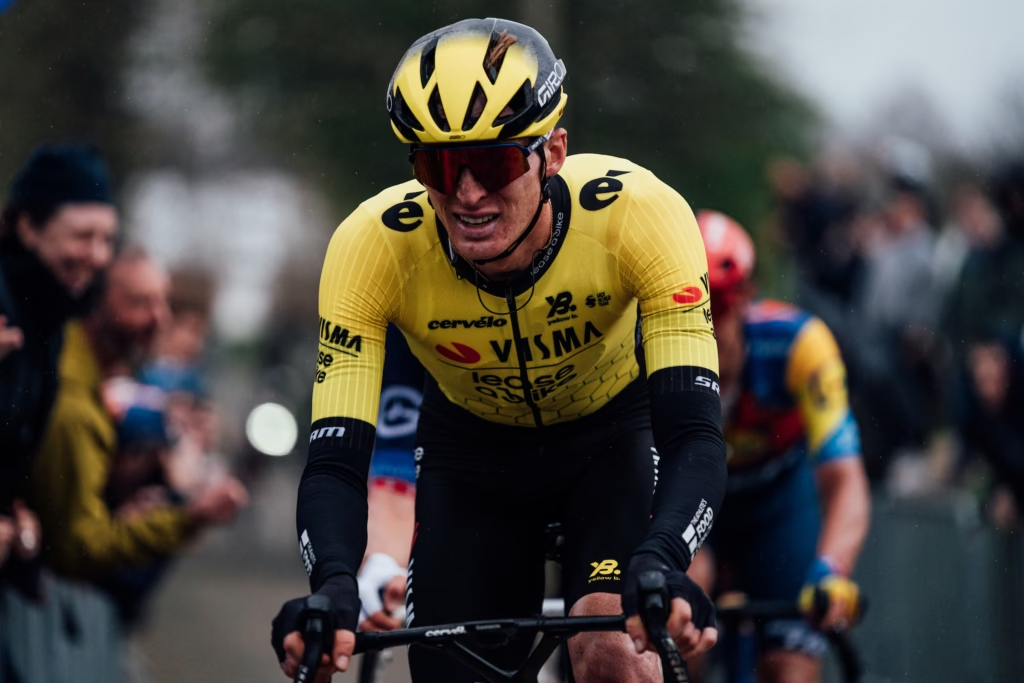
3. Matteo Jorgenson – 6’3″ / 1.90 m
Matteo Jorgenson represents the modern evolution of the tall cyclist, combining the raw power of a rouleur with the lean physiology of a climber. Despite his height, which typically hinders performance in the high mountains, he has cultivated an exceptional power-to-weight ratio that allows him to compete for General Classification titles.
His breakout performances in 2024 showcased his versatility, winning cold, wet stage races and one-day classics alike. Jorgenson has redefined what is expected of riders over six feet tall, proving they can excel on the steepest gradients of the Tour de France alongside smaller, traditional climbers.
Notable Achievements
- Paris-Nice Winner (2024)
- Dwars door Vlaanderen Winner (2024)
- 8th Overall, Tour de France (2024)
4. Tejay van Garderen – 6’1″ / 1.86 m
Tejay van Garderen emerged as America’s next great Grand Tour hope in the early 2010s, possessing the classic build of a time-trial specialist who could climb. At 6’1″, he had the aerodynamic leverage to crush races against the clock while maintaining enough agility to limit losses in the mountains.
His smooth pedalling style and disciplined approach made him a consistent contender in stage races for nearly a decade. While he often battled against more explosive climbers, his ability to manage his effort and utilise his height in time trials secured him high overall finishes in the world’s biggest races.
Notable Achievements
- Best Young Rider (White Jersey), Tour de France (2012)
- Tour of California Winner (2013)
- Giro d’Italia Stage Winner (2017)
- two editions of the USA Pro Cycling Challenge (2013, 2014)
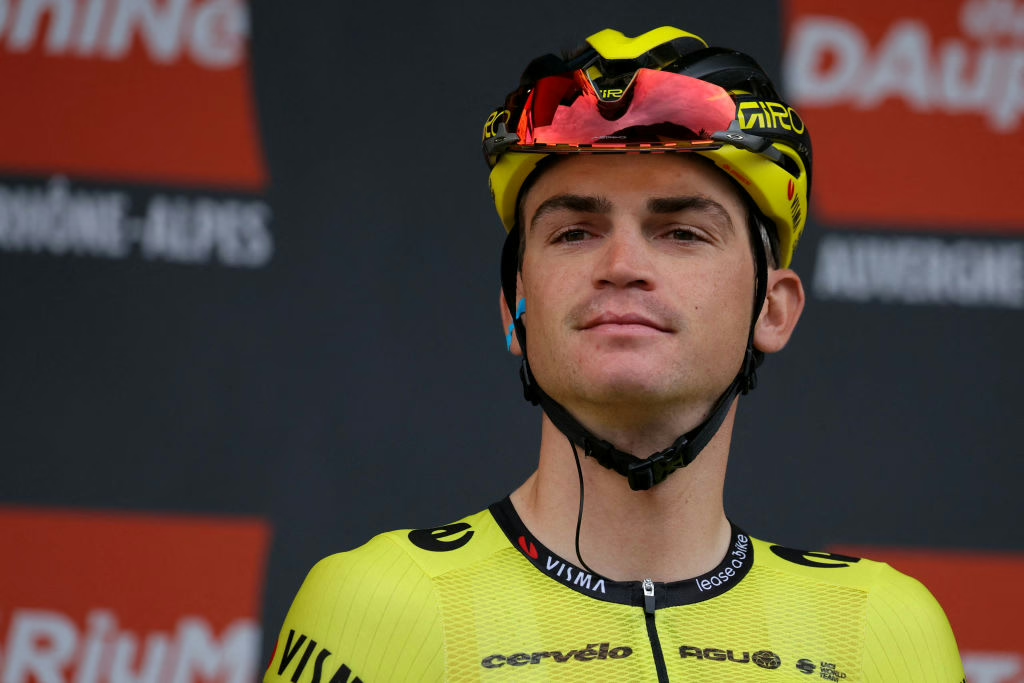
5. Sepp Kuss – 5’11” / 1.82 m
Known as the “Eagle of Durango,” Sepp Kuss possesses a physiology that defies the typical climber archetype. While not short, his extremely lean build allows him to float up the steepest gradients with seemingly effortless cadence, making him one of the best pure climbers of his generation.
For years, he buried himself as a loyal lieutenant for teammates, using his steady tempo to dismantle rival teams in the high mountains. His 2023 Vuelta a España victory was a celebration of his unique talent, proving that a selfless climber could eventually ascend to the top step of the podium.
Notable Achievements
- Vuelta a España Winner (2023)
- Tour de France Stage Winner (2021)
- Key super-domestique for victories in all three Grand Tours
6. Greg LeMond – 5’10” / 1.78 m
Greg LeMond is the pioneer of American cycling, and his average height belied a physiological engine that was anything but ordinary. He famously introduced aerodynamic handlebars to the sport, using science and equipment to maximise the efficiency of his 5’10” frame to win the closest Tour de France in history.
LeMond was a complete rider, capable of winning bunch sprints, time trials, and mountain stages. His adaptability was his greatest weapon, allowing him to recover from a near-fatal hunting accident to return and dominate the sport against physically larger and stronger rivals.
Notable Achievements
- 3x Tour de France Winner (1986,1989,1990)
- 2x World Road Race Champion (1983, 1989)
- Sports Illustrated Sportsman of the Year (1989)
7. Lance Armstrong – 5’10” / 1.77 m
Lance Armstrong revolutionised the sport with a high-cadence climbing style that relied on aerobic capacity rather than muscular torque. His 5’10” build was transformed following his battle with cancer, returning to the sport significantly lighter and leaner, optimised specifically for the demands of the Tour de France.
He was known for an obsessive focus on weight and aerodynamics, treating his body like a machine tuned for July. While his legacy is permanently tarnished by doping scandals, his physical transformation and racing style during that era fundamentally changed how riders approached training and body composition.
Notable Achievements
- World Road Race Champion (1993)
- Clásica de San Sebastián Winner (1995)
- (7 Tour de France titles stripped)

8. Chloe Dygert – 5’9″ / 1.75 m
Chloe Dygert is a powerhouse whose height gives her a significant advantage in generating raw wattage on the track and in time trials. Taller than many of her rivals, she utilises her long levers to turn massive gears, often breaking opponents through sheer sustained power.
Her career has been defined by resilience, bouncing back from horrific crashes to reclaim World titles. Dygert’s physiology allows her to dominate the solitary discipline of the time trial, where her ability to hold an aerodynamic tuck and maintain threshold power is virtually unmatched in the women’s peloton.
Notable Achievements
- Olympic Gold (Team Pursuit, 2024)
- 2x World Time Trial Champion (2019, 2023)
- 8x World Track Champion
9. Kristin Armstrong – 5’8″ / 1.73 m
Kristin Armstrong is a testament to longevity and the art of the time trial. At 5’8″, she possessed the ideal biomechanics for the discipline—strong enough to push big gears but compact enough to maintain a slippery aerodynamic profile. Her focus was absolute precision in preparation and execution.
She famously retired and un-retired multiple times, proving that her engine did not diminish with age. Armstrong’s ability to suffer in the “race of truth” allowed her to secure three consecutive Olympic Gold medals, a feat that required maintaining peak physical condition well into her forties.
Notable Achievements
- 3x Olympic Gold Medalist (Time Trial: 2008, 2012, 2016)
- 2x World Time Trial Champion
- Oldest female cycling Olympic Gold Medalist
10. Levi Leipheimer – 5’7″ / 1.71 m
Levi Leipheimer built his career on consistency and time-trialling prowess, despite being smaller than the typical “engine” riders. His compact 5’7″ frame allowed him to hide from the wind effectively and excel on long, steady climbs where power-to-weight ratios are the deciding factor.
He was a master of stage races, often winning by accumulating small margins in time trials and defending defensively in the mountains. Leipheimer’s riding style was calculated and steady, utilising his smaller stature to conserve energy before expending it in disciplined, measured efforts against the clock.
Notable Achievements
- Olympic Bronze Medalist (Time Trial, 2008)
- Tour de Suisse Winner (2011)
- 3x Tour of California Winner

11. Kristen Faulkner – 5’6″ / 1.68 m
Kristen Faulkner is a relative newcomer who transitioned from venture capital to professional cycling, bringing a tenacious, aggressive racing style. Her 5’6″ height places her in the middle of the pack, but her engine is extraordinary, allowing her to launch solo attacks that larger pelotons struggle to chase down.
Her breakout performance at the 2024 Olympics displayed her incredible versatility, winning gold on both the track and the road. Faulkner represents a new wave of American talent that combines tactical intelligence with the physical durability to survive hard races and the explosive power to finish them alone.
Notable Achievements
- 2x Olympic Gold Medalist (2024 Road Race & Team Pursuit)
- two-time U.S. National Road Race Champion (2024, 2025)
- Giro d’Italia Donne Stage Winner
12. Coryn Labecki – 5’1″ / 1.55 m
Coryn Labecki (née Rivera) is the quintessential sprinter-puncher, proving that height is no barrier to greatness. Standing just 5’1″, she relies on explosive acceleration and fearless bike handling to navigate the chaotic final kilometres of bunch sprints, often darting through gaps that taller riders cannot fit through.
Her victory at the Tour of Flanders was historic, showing that a compact rider could conquer the brutal Belgian cobbles through grit and tactical savvy. Labecki utilises her low centre of gravity to corner aggressively, turning her lack of height into a distinct advantage in technical, twisty race finishes.
Notable Achievements
- Tour of Flanders Winner (2017)
- RideLondon Classique Winner (2018)
- 70+ National Titles
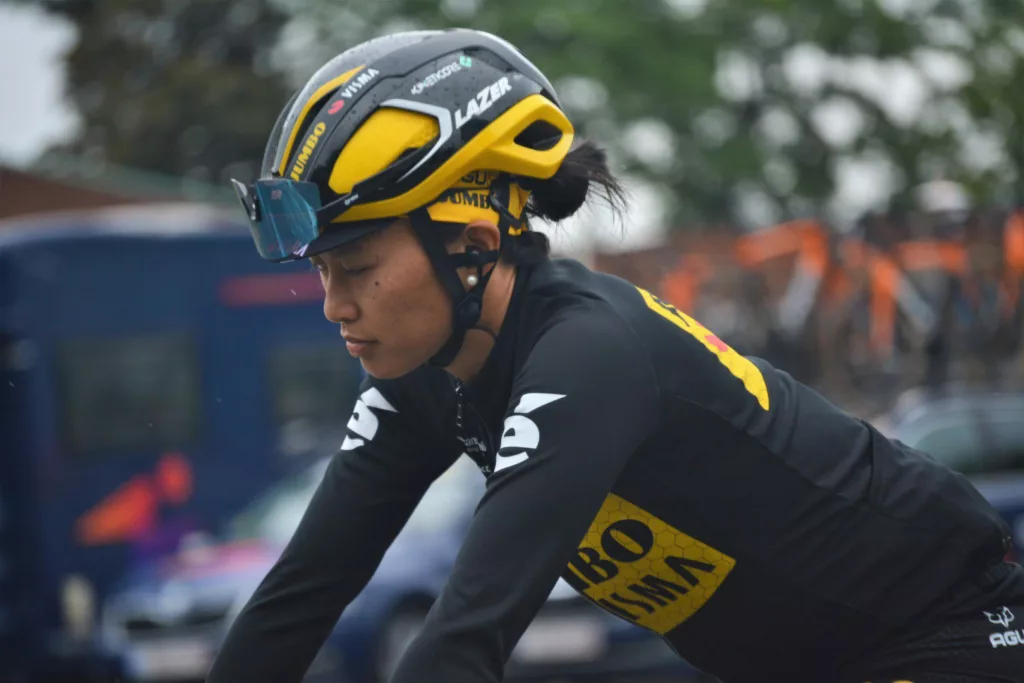
Achievements in Grand Tour Success: Tall Versus Short
The history of American cycling demonstrates a clear split in specialisation based on height when it comes to the biggest stage races. Tall riders like Taylor Phinney (6’5″) and George Hincapie (6’3″) found their greatest success in the demanding one-day Classics, where absolute power and durability are critical. Their height and associated weight became a significant liability on the steepest mountain gradients of the Tour de France.
In contrast, the only American Grand Tour winners (Greg LeMond, Sepp Kuss) and consistent podium contenders (Levi Leipheimer) have heights clustered around the average cyclist’s stature (5’7″ to 5’11”). Sepp Kuss’s victory in the 2023 Vuelta a España was fundamentally enabled by his low mass, allowing him to achieve the essential requirements to drop rivals on high mountain finishes, proving that gravity ultimately favours the lighter engine.
Achievements in The Gender Divide: Height and Power Application
When comparing the successful heights of the male and female athletes on this list, a key difference emerges in how power is applied. The elite American women (Dygert, Armstrong, Faulkner) are, on average, slightly taller than the lightest male Grand Tour specialists (Leipheimer, Labecki). This relative height advantage in the women’s peloton often translates directly into raw power, a major asset in events like the Time Trial (Kristin Armstrong) and the Track (Chloe Dygert).
Furthermore, the 5’1″ stature of Coryn Labecki, while small, gives her a powerful tactical advantage in sprinting, where her low centre of gravity and fast acceleration allow her to achieve a higher acceleration rate than taller rivals, utilising every joule of energy efficiently in the final meters of a race.
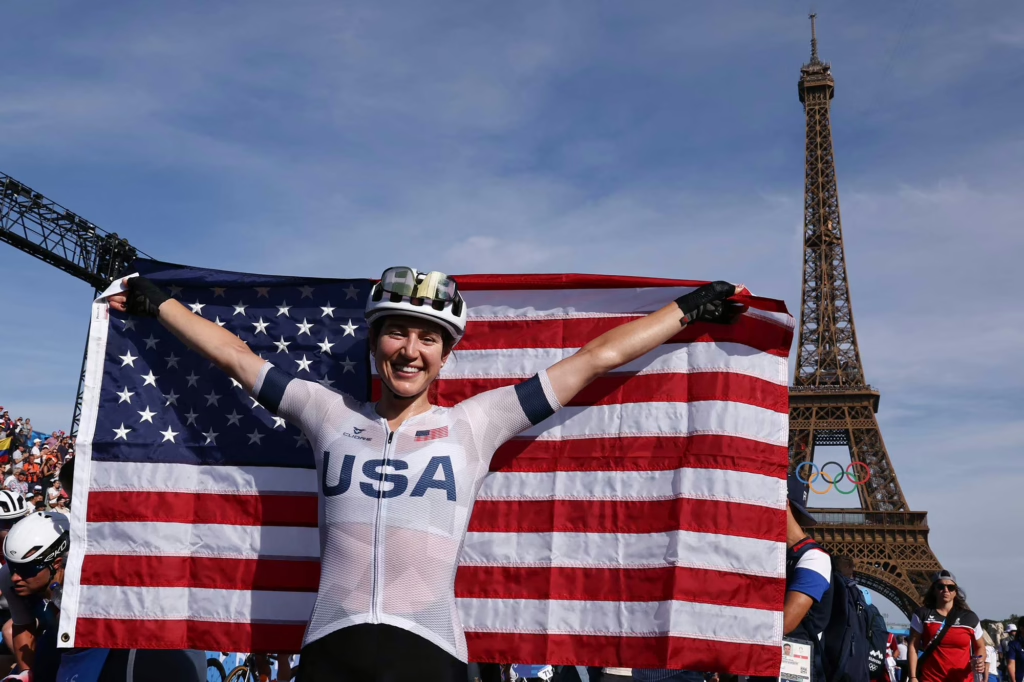
Frequently Asked Questions
Which American cyclist on this list is the tallest, and which is the shortest?
Taylor Phinney is the tallest at 6’5”. Coryn Labecki is the shortest at 5’1”.
How does a rider’s height affect their ability to win a Grand Tour like the Tour de France or Vuelta?
Taller riders (like Phinney) have a power advantage but are hindered by gravity on steep climbs due to their higher mass. Shorter riders or very light riders (like Sepp Kuss) have a crucial advantage because their superior Watts Per Kilogram ratio allows them to climb faster.
Which rider on this list holds the most Olympic Gold Medals, and what was their height?
Kristin Armstrong holds the most Olympic Gold Medals (three) for a single cycling discipline (Individual Time Trial). Her height is 5’8”.
What is the biggest advantage the shorter riders, like Coryn Labecki, have over the taller riders in a race?
Labecki’s smaller stature provides a massive advantage in aerodynamics (less drag) on the flats, a low center of gravity for superior cornering, and the ability to generate explosive peak power in chaotic bunch sprints.
Why is George Hincapie considered a Classics specialist, while Sepp Kuss is a climbing specialist?
Hincapie’s height gave him the necessary raw power and muscle mass to conquer the flat, wind-swept, and cobbled terrain of the Classics. Kuss’s lean, lighter physique is optimised for gravity resistance in the high mountains.
Do the achievements of Greg LeMond prove that height is less important than technology in cycling?
Yes. LeMond (5’10”) proved height is secondary to innovation. He famously used aerobars and an aero helmet to dramatically reduce his drag, gaining critical seconds over rivals who relied purely on brute force.
-
 Photo Credit: Cor Vos
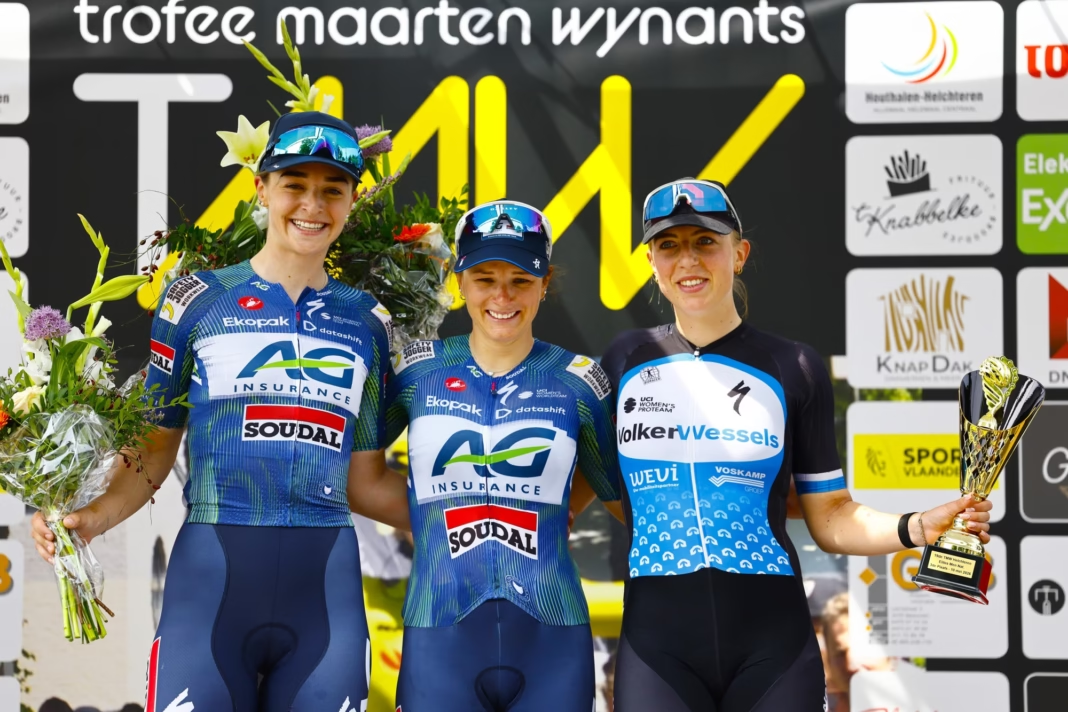
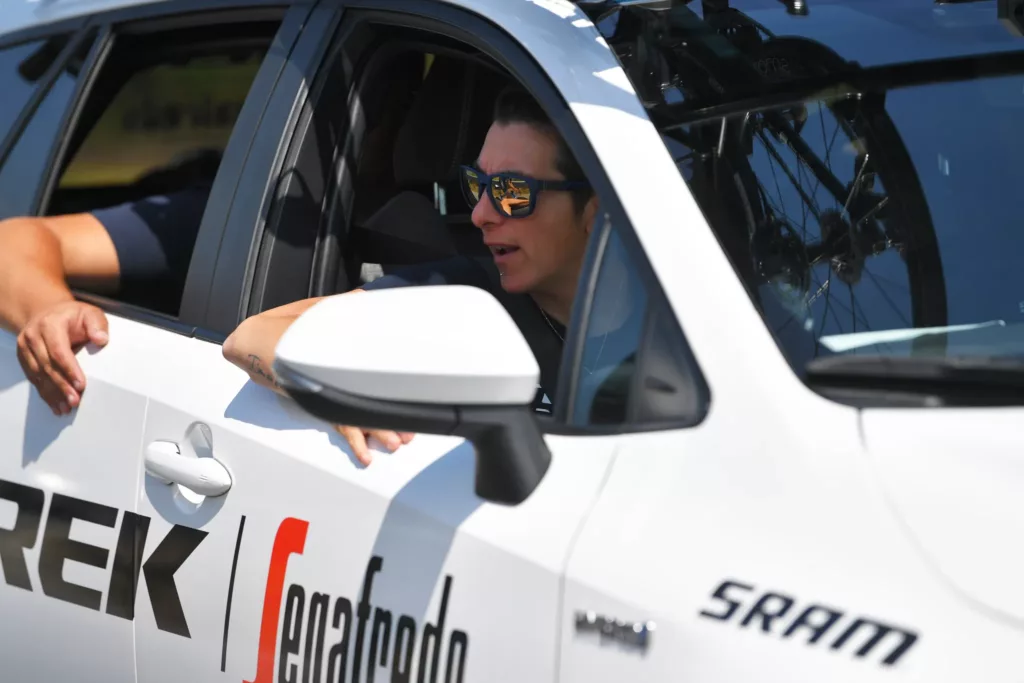
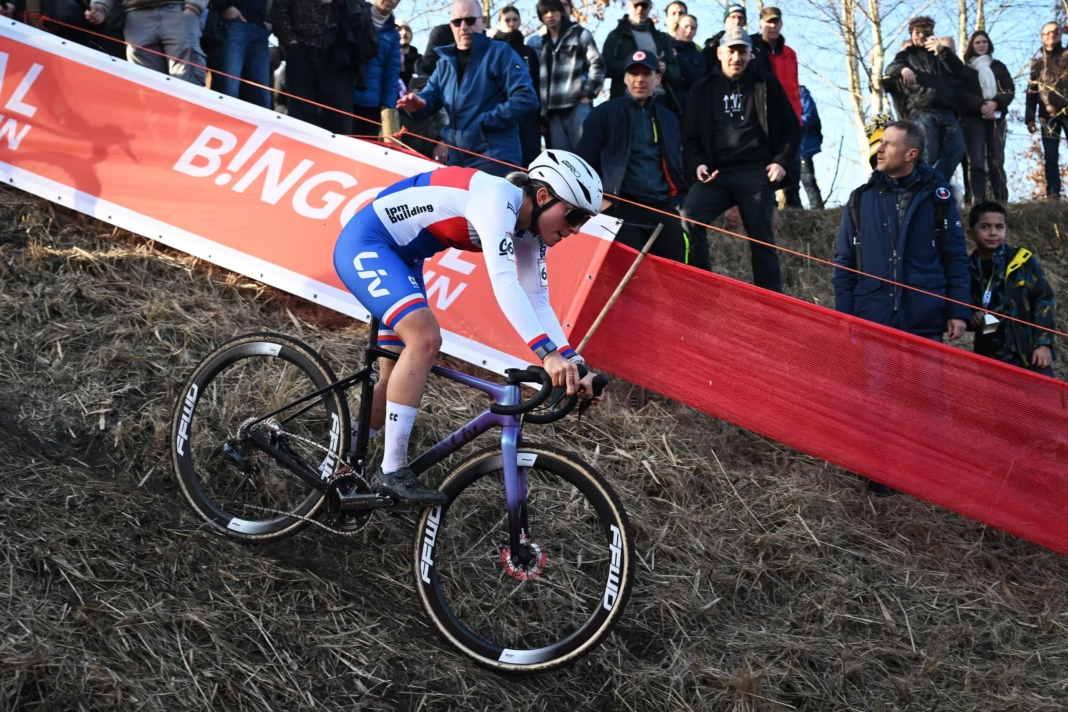
How does Chloe Dygert use her height to dominate the Time Trial discipline?
Dygert uses her height to achieve two things: first, to generate enormous absolute power (watts) from her large muscle groups, and second, to maintain a sustained, compact aerodynamic position that minimises wind resistance over long distances.

