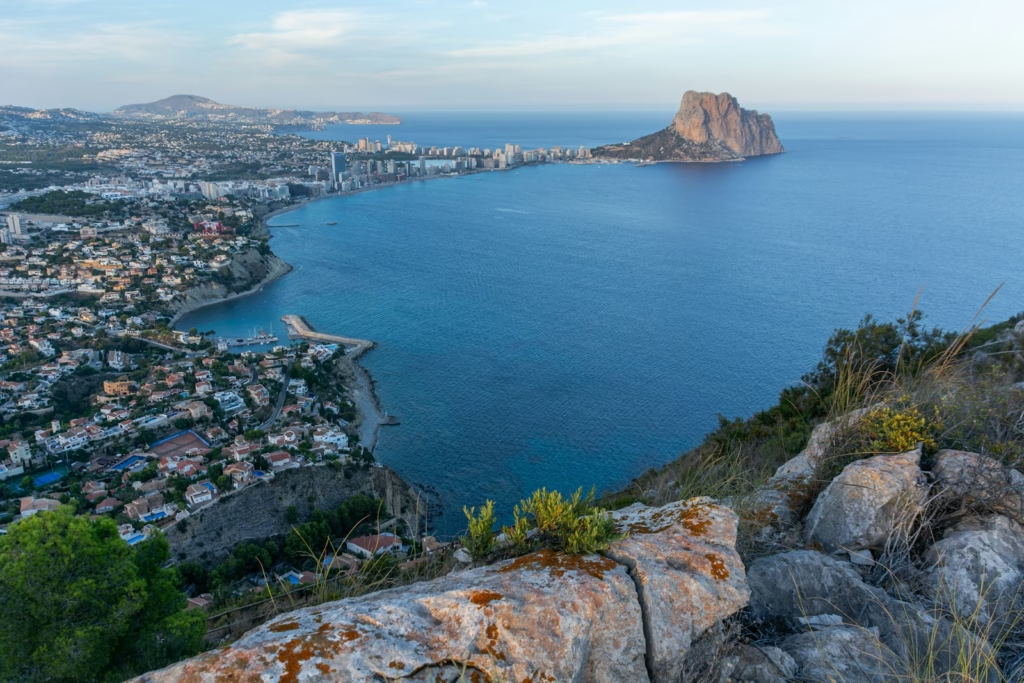
Calpe has a particular clarity in the early morning. The Mediterranean sits flat and metallic, the light clean and precise, and the bulk of the Peñón de Ifach casts a long shadow across the town. It feels calm before the work begins. Cafés open quietly, riders roll past in singles and pairs, and the mountains inland wait with a patience that suggests they are in no hurry at all.
From the coast, the Costa Blanca does not look especially demanding. The drama reveals itself gradually, kilometre by kilometre, as the road pulls you away from the sea and into a landscape shaped by vineyards, limestone ridges and dry, open valleys. This is riding defined by accumulation rather than shock. One climb blends into the next, with short rolling connectors in between, and effort settles into the body almost without notice.
Leaving Calpe and turning inland
The first kilometres out of Calpe are forgiving. Roads are smooth, traffic light early in the day, and the pace easy enough to encourage conversation, even if you are riding alone. The sea remains in view for longer than expected, a blue reference point that slowly slips away as the road begins to rise.
Inland, the scenery changes quickly. Citrus groves give way to vineyards, stone walls replace apartment blocks, and the air warms as shelter from the coast disappears. The gradients creep up rather than announce themselves. It is easy to ride too hard here, mistaking momentum for comfort.
Coll de Rates and the rhythm of the Costa Blanca
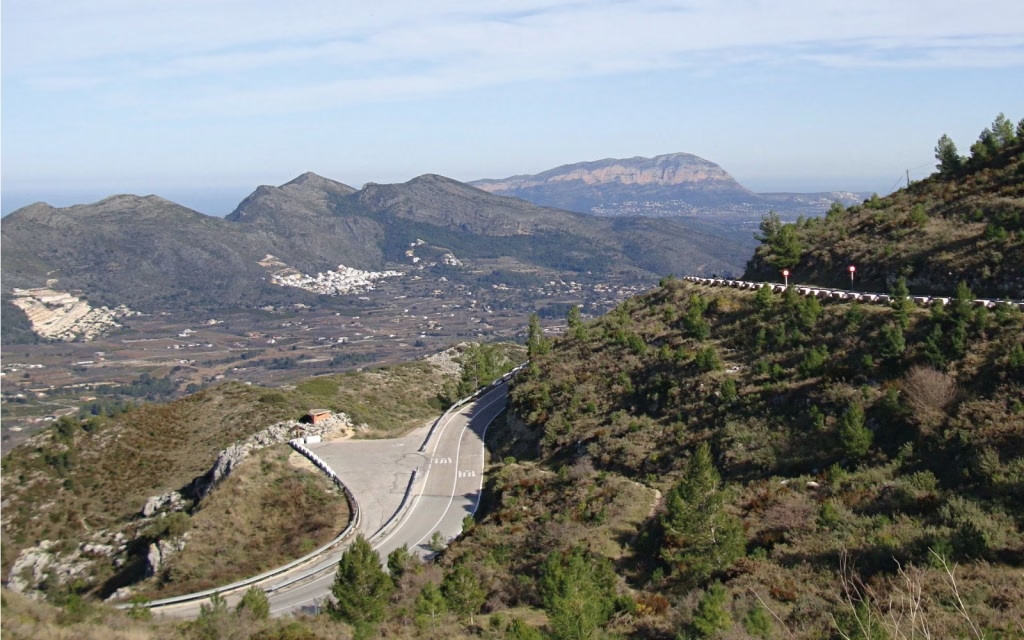
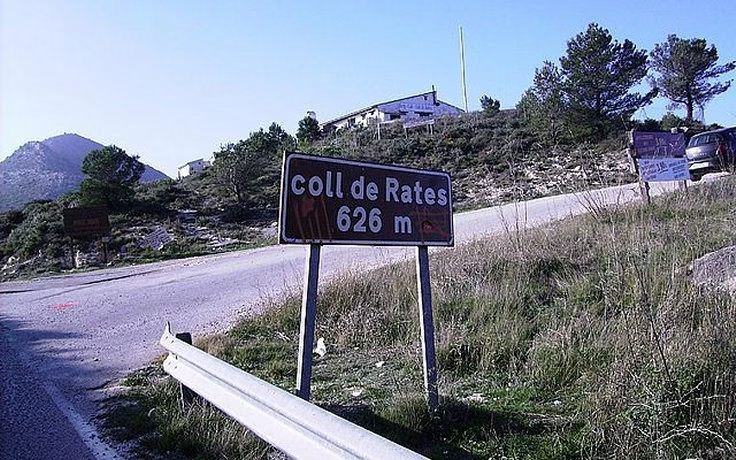
Coll de Rates is often the first real test, and for good reason. Approached from the Jalón Valley side, it is long enough to demand focus, but steady enough to reward rhythm. The road climbs through terraced vineyards, the gradient rarely doing anything dramatic, but never quite letting you off the hook either.
This is a climb that encourages patience. The surface is generally excellent, the corners flowing, and the views opening gradually as you gain height. Villas dot the hillsides, almond trees line the road, and the sense of space increases with every turn. It is easy to understand why Coll de Rates has become a staple for riders training here. It offers effort without brutality, a climb that settles you into the day rather than breaking it apart.
Deeper into the hills towards Bernia
Beyond Rates, the riding becomes quieter and more introspective. Roads narrow, traffic thins, and the Costa Blanca reveals a less polished side. Puerto de Bernia carries you further into the mountains, its appeal lying as much in atmosphere as in gradient.
The climb unfolds gently at first, winding through dry scrubland and pine forest. The road surface remains good, but the exposure increases. Views stretch across the valley, ridgelines stacking into the distance, the coast now a suggestion rather than a presence. This is riding that asks for attention rather than aggression. The effort is constant, but rarely overwhelming.
Xorret de Catí and a change of tone
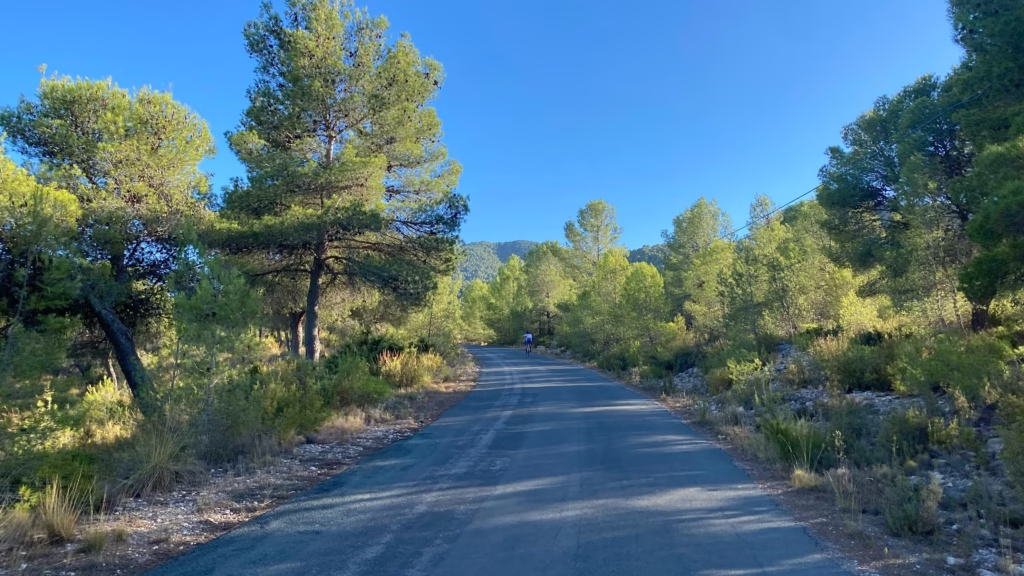
Xorret de Catí changes the conversation entirely. Where earlier climbs invited rhythm, this one demands resolve. Short, steep and unapologetic, it arrives without ceremony and wastes little time testing your gearing.
The road pitches up hard, with the steepest ramps concentrated in the final kilometres. There is little chance to settle. Each section feels like its own negotiation, cadence breaking down, breathing loud and deliberate. The surface is good, but the gradient dominates everything else.
Xorret de Catí has a reputation that precedes it, and rightly so. It is not long, but it is uncompromising. Riding it in the middle of a longer day sharpens the experience. Fatigue has already set in, and the climb makes no allowance for it.
The long pull of the Sierra de Aitana
For riders willing to push deeper inland, the Sierra de Aitana offers a different kind of challenge. Puerto de Tudons is a sustained effort that often works best as a long, standalone day from Calpe, or as the centrepiece of a carefully planned loop.
The road climbs steadily, weaving through forested slopes and open sections where the scale of the mountains becomes apparent. The gradient is rarely extreme, but the length accumulates. This is a climb where time passes slowly, measured in breathing and cadence rather than kilometres.
Nearby, Vall d’Ebo offers a more remote feel. The road rolls and climbs through sparsely populated terrain, quiet and expansive. It is the kind of place where the sound of freewheels carries further, and where effort feels amplified by isolation.
Not all of this fits neatly into one ride, and that is part of the appeal. The Costa Blanca allows you to choose how deep you go. You can link climbs, turn back early, or commit fully and accept the consequences later.
Rolling back towards the coast
The return towards Calpe brings a gradual release. Descents are fast but generally predictable, corners opening out, visibility good. The air cools slightly as altitude is lost, and the smell of the sea returns long before it comes back into view.
Fatigue sits deep in the legs now, the kind that dulls urgency but sharpens focus. The final kilometres flatten out, traffic reappears, and the rhythm of coastal life resumes. The mountains retreat behind you, but they do not disappear. They linger, a reminder of what the day required.
Why Calpe keeps riders coming back
Calpe works because of balance. Serious climbing sits close to the coast. Roads are well-maintained, drivers are used to cyclists, and the weather is reliably kind. You can ride hard here without theatrics, letting the terrain do the talking.
The Costa Blanca rewards planning and restraint. It offers climbs of every character, from steady and scenic to brutally steep, and allows riders to shape each day according to appetite and condition. It is riding that feels purposeful, clear, and endlessly repeatable.
Practical information
Location
Calpe is located on Spain’s Costa Blanca, in the province of Alicante. The town sits between the Mediterranean coast and a dense network of inland mountain roads that provide direct access to some of the region’s most popular climbs.
Riding
Riding around Calpe combines coastal roads with inland climbs of varying character. Coll de Rates offers a steady, rhythm-based ascent through the Jalón Valley, while Puerto de Bernia adds scenic depth and quieter roads. Xorret de Catí is short and extremely steep, with its hardest ramps coming late. Longer efforts, such as Puerto de Tudons and routes through Vall d’Ebo, suit extended or standalone days and reward careful pacing. Road surfaces are generally excellent throughout the region.
When to go
The Costa Blanca is rideable year-round, but late autumn through spring offers the most comfortable conditions. Summers can be hot, particularly inland, making early starts essential. Winter temperatures are mild, though higher elevations can feel cool on long descents.
Accommodation
Hotel Bahía Calpe is a bike-friendly hotel located in the centre of Calpe, well positioned for rolling straight onto coastal and inland routes. It offers a dedicated bike storage room and a workshop area suitable for basic maintenance and day-to-day bike care, making it a practical base for riders spending multiple days exploring the Costa Blanca.
Staying in Calpe allows easy access to a wide range of climbs without long transfers, while the hotel’s cyclist-focused facilities simplify daily routines, from early starts to post-ride bike care.
Want more Spanish ride ideas like this? Head to our Cycling in Spain hub for the best bases, must-ride climbs, and practical trip planning tips across Mallorca, Girona, Calpe, the Canaries, and beyond.