

Cyclocross operates on a different rhythm to road racing. The calendar is shorter, the races are more frequent, and the consequences of small mistakes are magnified. There is no long season to recover form and no quiet phase to rebuild confidence. Every weekend feeds directly into the next, often with the same riders, the same rivals, and only a few days to reset.
For viewers coming from road cycling, or for those who dip in during the Christmas period, cyclocross can initially feel chaotic. Races are short, gaps appear and disappear quickly, and dominance can look fragile. That unpredictability is not accidental. It is built into the structure of the sport. Start positions, course conditions, and repeated head-to-head racing mean that results are never isolated events. Each race reshapes the next.
At its core, elite cyclocross is about repetition under pressure. Riders are asked to deliver near-maximal efforts week after week, across radically different courses, while managing fatigue, confidence, and risk. Technical precision matters as much as physical condition, and momentum can swing on a single error in a single lap.
This guide explains how elite cyclocross works, how the main competitions fit together, and how to read results beyond who wins on a given Sunday. It is designed for readers who already understand the basics but want to know what actually drives the sport beneath the surface.
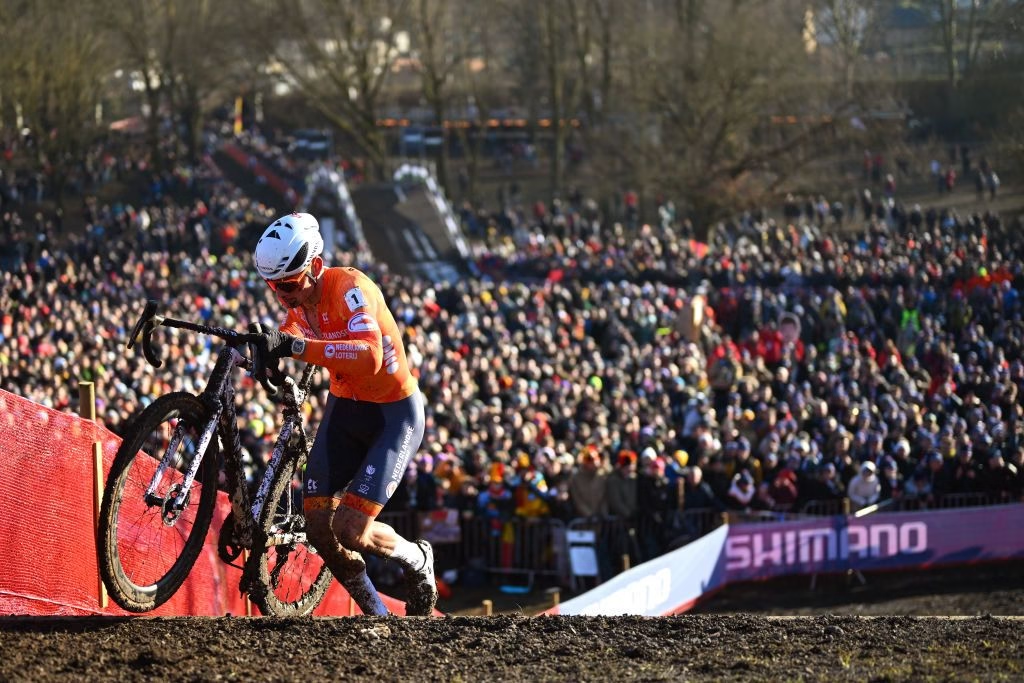
What elite cyclocross actually is
Elite cyclocross sits under the UCI umbrella, but it does not operate as a single unified competition in the way the road WorldTour does. There is no one table that defines success, and no obligation for top riders to race every major event. Instead, the season is built around a combination of overlapping race series, standalone international races, and championships, each with its own logic and rewards.
The core of the elite season runs from October through to late January. Racing is densest between November and the New Year, when riders can race almost every weekend, sometimes twice in the same week. The calendar is geographically concentrated, with Belgium and the Netherlands forming the heart of the sport. That concentration matters. Courses are close together, crowds are large, and the level of competition remains consistently high.
Unlike road racing, teams play a limited tactical role. Riders race in trade team colours and benefit from shared equipment support, mechanics, and logistics, but decisions are often made at rider level. Scheduling, race priorities, and even equipment choices are frequently individual calls rather than collective strategies. This increases variability and makes the sport more responsive to form and confidence.
Championships sit slightly apart from the regular calendar. National championships, European championships, and the World Championships are single-day targets where the normal rhythm of series racing is suspended. Riders may alter their entire winter programme to peak for one race, knowing that a championship result carries more lasting weight than a series podium.
For viewers, this structure explains why cyclocross feels less predictable than road racing. Success is not defined by a single season-long objective, but by how riders navigate multiple, sometimes competing goals.
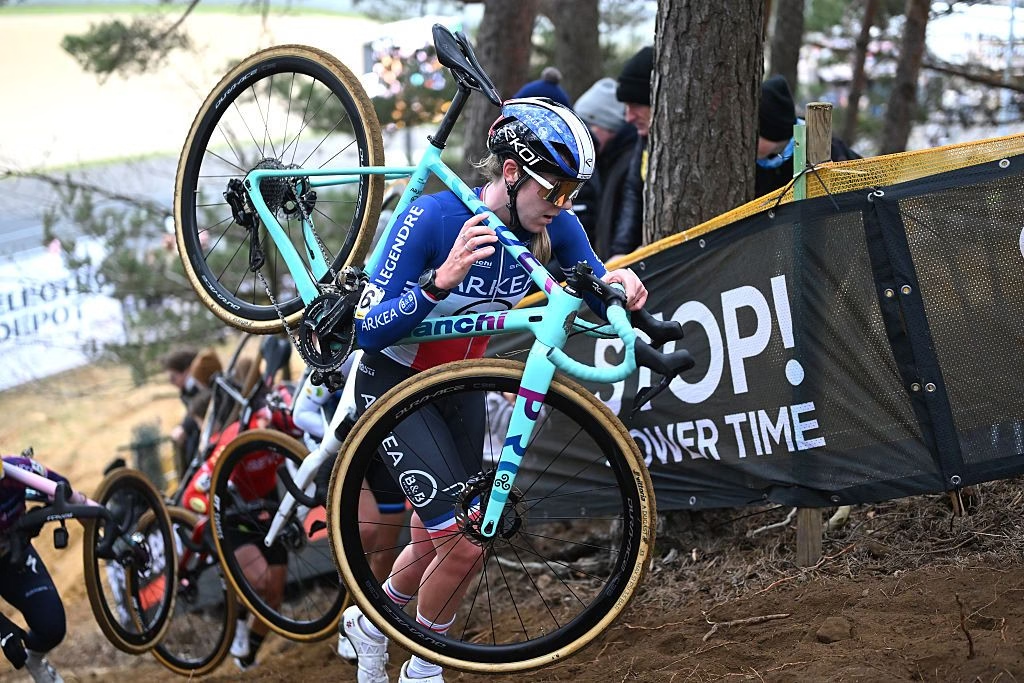
Understanding the main cyclocross competitions
There is no single competition that defines an elite cyclocross season. Instead, success is spread across several overlapping race series, each rewarding different traits. Understanding which competition a race belongs to is often the key to understanding how it will be raced.
Broadly, elite cyclocross revolves around three major series: the UCI Cyclocross World Cup, Superprestige, and the X2O Badkamers Trofee. Alongside these sit national championships, continental championships, and the World Championships, which operate under their own logic.
UCI Cyclocross World Cup
The World Cup is the most internationally visible cyclocross series. It typically features around a dozen rounds staged across multiple countries and awards an overall title based on cumulative placings.
World Cup races attract the widest range of riders, including those who race selectively or combine cyclocross with road programmes. The fields are deep, the courses are generally balanced, and the points on offer are the highest available in regular competition. Strong World Cup results influence UCI ranking and start position across the season.
Because of this, World Cup races are often raced aggressively from the opening lap. Riders are less inclined to manage effort conservatively, particularly early in the winter, because strong results can shape months of racing to come. Some riders target the overall competition, while others focus on selected rounds that suit their strengths or travel plans.
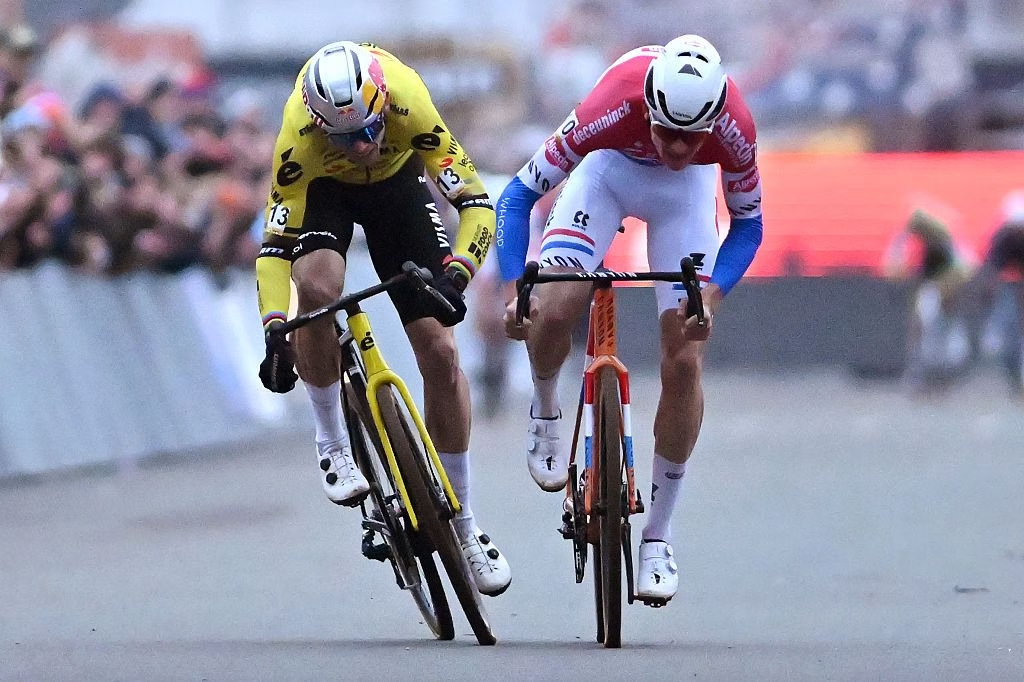
Superprestige
Superprestige is a long-established Belgian series, usually made up of around eight rounds held at traditional venues. It is decided on points, with the same riders returning week after week.
This format rewards consistency and damage limitation. Riders who deliver steady podiums often outperform those who win once but falter elsewhere. As a result, Superprestige races can appear more controlled, with riders focused on minimising losses rather than forcing decisive moves at all costs.
X2O Badkamers Trofee
The X2O Badkamers Trofee operates on cumulative time rather than points. Every second gained or lost carries forward to the next race.
This fundamentally changes behaviour. Riders may defend small advantages aggressively, or take risks late in races to claw back seconds even if the race win itself is out of reach. For viewers, it is often the most tactical series, where late-race decisions can have consequences weeks later.
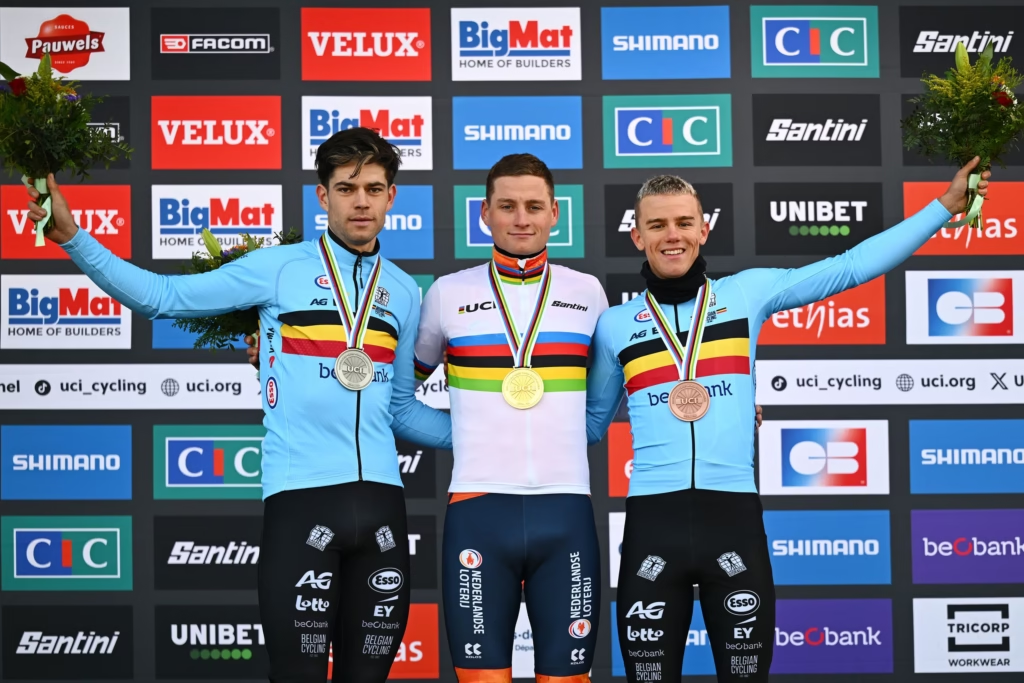
Championships
Championships sit outside the series structure. National championships, European championships, and the World Championships are single-day races where previous results carry no direct advantage.
Many riders build their winter around these events. A World Championship medal can define a career in a way no series title does, which explains why some riders appear quieter in December before peaking sharply in late January.
 Photo Credit: Getty
How courses shape racing
Cyclocross courses vary more dramatically than road routes, and that variation is central to how races unfold. The same group of riders can produce completely different racing depending on surface, layout, and weather.
Sand-heavy courses, common in coastal Belgium and the Netherlands, reward sustained power, balance, and repeated accelerations. These races often produce larger time gaps, particularly in dry conditions, with riders gradually distanced rather than dropped in one move.
Muddy courses increase unpredictability. Traction is limited, line choice becomes critical, and mistakes are frequent. Time gaps can open suddenly through crashes or missed lines, and races often reshuffle deep into the field. Technical skill and composure often matter more than raw power.
Fast, frozen courses shift the emphasis again. Speeds are higher, margins are tighter, and starts become decisive. Riders who miss the front group early may struggle to regain contact, even if they are physically strong.
Weather amplifies everything. The same venue can favour different riders from one year to the next. This explains why form lines in cyclocross are often fragile and why dominance is usually conditional rather than absolute.

The cyclocross points system explained
Cyclocross uses UCI points, but their role differs from road racing. Points are primarily used to determine start position, and in cyclocross that can shape a race before the first corner.
Riders with higher UCI rankings earn better grid positions. On narrow courses where overtaking is difficult, starting position is often decisive. World Cup races award the highest points, followed by other UCI-classified events, which means early-season results matter disproportionately.
A simple scenario illustrates this. A rider starting on the first row is far more likely to exit the opening lap in the top five, avoiding crashes and conserving energy. That strong result then protects their ranking and start position the following week. A rider starting from the fifth row must take risks immediately, increasing the chance of mistakes and limiting their ceiling even on a good day.


This dynamic explains why riders often fight hard for ninth or tenth place. Those positions may look minor, but they can materially improve the next race.
For viewers, a useful rule of thumb is that riders racing hard late on for minor placings are often racing for next week as much as for today.

