
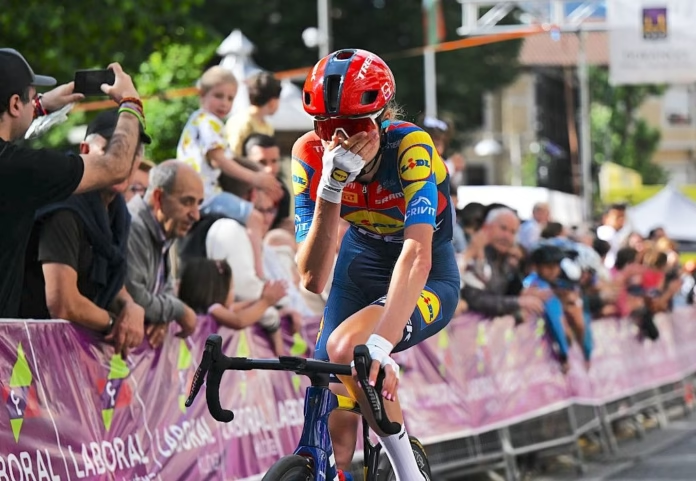
A breakout season in the Women’s WorldTour is rarely about sudden discovery. More often, it is the point at which a rider’s underlying profile becomes impossible to ignore. That usually happens not through one headline result, but through repetition: finishing races rather than animating them, holding form across blocks instead of isolated days, and being trusted in moments that actually decide outcomes.
As the 2026 season approaches, several riders sit precisely in that space. They are no longer prospects in the abstract, but neither are they yet treated as reference points by the peloton. Some have already delivered standout results without being fully backed. Others have been consistently visible without converting that visibility into defining placings.
This article looks at eight riders who are one step away from changing how they are raced against. For each, the focus is on what they have already shown, what separates them from similar riders, what kind of racing suits them best, and what would need to change in 2026 for that step forward to become visible on results sheets rather than just in performances.
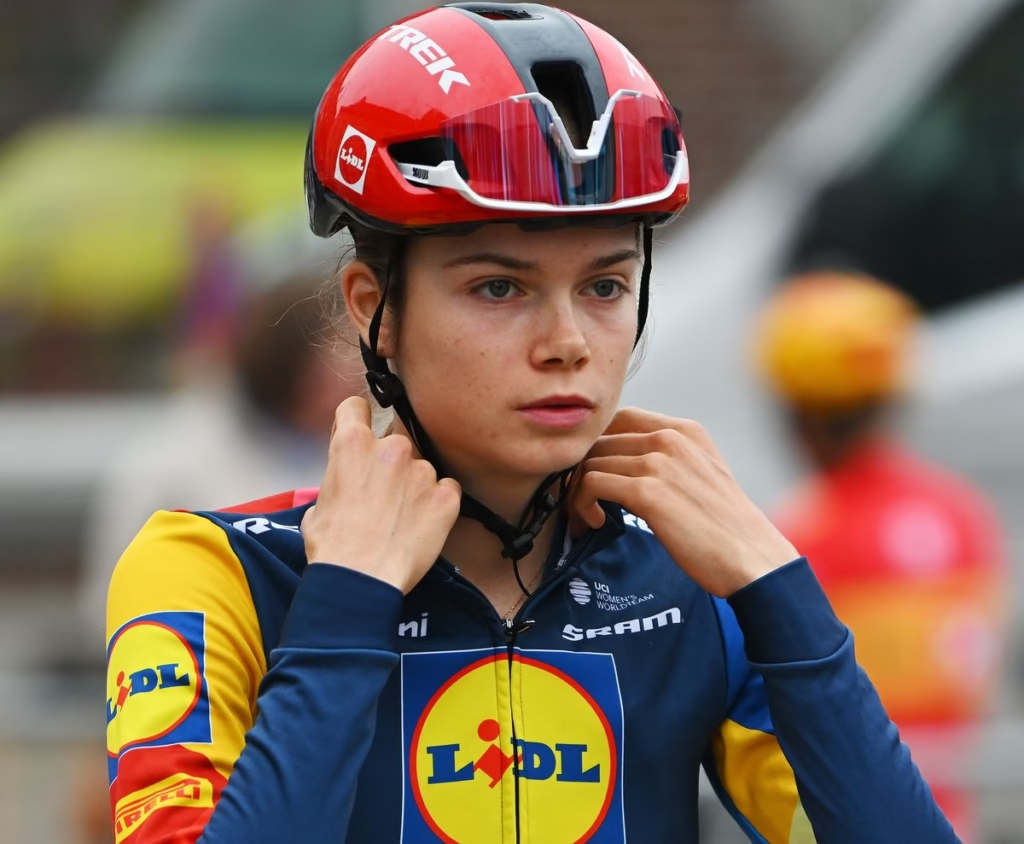
Isabella Holmgren
Holmgren is the clearest example in this group of a breakout being relative rather than absolute. By the end of 2025, she was already delivering results that many riders would consider a career peak. Seventh overall at the Giro d’Italia Women, after a steady and controlled ride across the race, placed her firmly inside the upper tier of stage-race performers. What matters more is how she arrived there. There were no extreme time losses, no survival days disguised as success. She rode the race as someone who understood how to manage risk, fatigue, and positioning over eight days.
Her background is a significant part of that story. Holmgren’s development across cyclocross and mountain biking is not just a footnote, it actively shapes how she races on the road. She is accustomed to technical stress, repeated accelerations, and making decisions while already deep into fatigue. That translates into an efficiency that stands out at WorldTour level, particularly among younger riders. She wastes little energy early, holds position instinctively, and tends to become more visible as races become harder rather than less.
What separates Holmgren from other riders at a similar age is not raw power, but reliability under pressure. In 2025, she showed she could absorb bad moments without imploding and still extract a result. That is often the dividing line between riders who flirt with GC relevance and those who sustain it.
Type of races suiting her
Holmgren is best suited to stage races with mixed or rolling terrain, particularly those where time gaps remain controlled and outcomes are decided through accumulation rather than one decisive mountain stage. Races that reward consistency, positioning, and the ability to limit losses play directly to her strengths.
She is also well-suited to technical one-day races where repeated efforts reduce the field and tactical awareness matters as much as absolute power. In those scenarios, her background shows clearly. She reads situations well and remains composed when others become reactive.
What a successful 2026 looks like
A successful 2026 for Holmgren is not about proving she belongs at WorldTour level. That case has already been made. The step forward comes when she is treated as a rider teams plan around rather than accommodate.
Practically, that means entering at least one major stage race as a clearly defined GC leader, with teammates riding explicitly to support her positioning and protect her from unnecessary risk. It also means resisting the temptation to use her everywhere. Holmgren’s ceiling appears highest when she arrives fresh rather than over-exposed, and a slightly narrower, more intentional calendar could convert strong top ten GC rides into podium contention at the right race.
If, by the end of 2026, she has moved from being a rider who surprises with maturity to one who is expected to contend whenever the terrain suits, that represents a genuine breakout, even if the results do not initially come with victories attached.
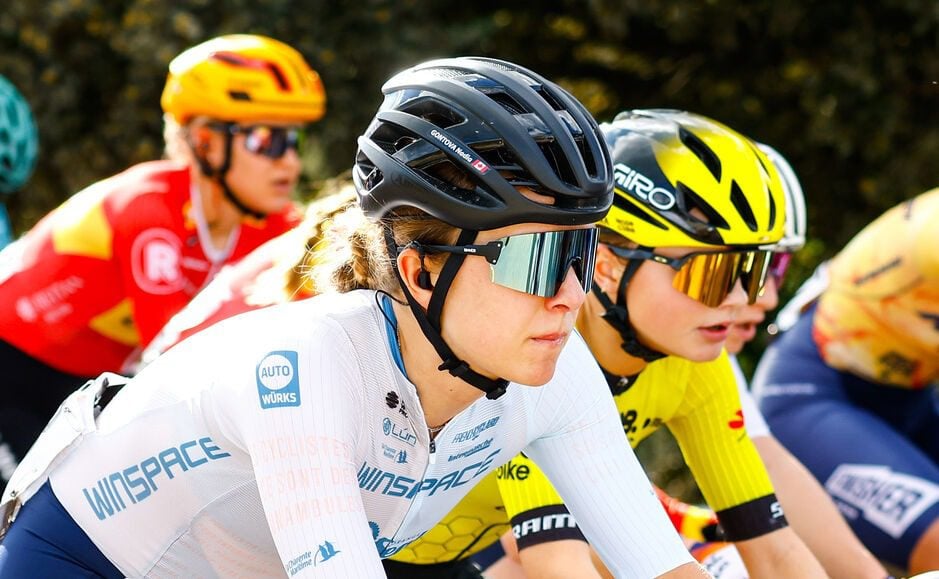 Photo Credit: Sprint Cycling Agency
Nadia Gontova
Gontova’s trajectory into the WorldTour has been built through accumulation rather than acceleration. She has not arrived with a single result that forces immediate attention, but her progression across the last few seasons shows a rider who adapts quickly to rising levels and carries form across different race environments. By 2025, she had moved from being a strong continental-level stage racer into a rider capable of surviving and contributing in the biggest events, underlined by a solid overall finish at the Tour de France Femmes.
What distinguishes Gontova from many riders on a similar path is her resilience. She rarely fades dramatically when races become longer or harder, and she appears comfortable riding at a high threshold over consecutive days. That profile is often undervalued early on, but it tends to translate well as race exposure increases. Her results suggest a rider who learns through repetition and becomes more efficient as the demands rise.
There is also an adaptability in how she has developed. Racing extensively in North America before transitioning more fully into European stage races has given her experience in different race dynamics. She is not dependent on one type of terrain or race structure to function. That adaptability becomes increasingly important as she steps into a WorldTour calendar that is both deeper and less forgiving.
Type of races suiting her
Gontova is best suited to stage races with sustained climbing and limited extreme summit finishes. Races where the general classification is shaped by repeated hard days, transitional stages, and selective climbs play to her strengths. She appears most effective when she can ride consistently near her limit rather than needing a single peak effort.
She also suits transitional stages where early commitment is rewarded. In races where hesitation in the peloton allows time gaps to form, Gontova has shown a willingness to commit fully rather than ride conservatively for survival.
What a successful 2026 looks like
A successful 2026 for Gontova is defined by role progression rather than raw results. Moving to Liv AlUla Jayco gives her access to a higher concentration of WorldTour racing, but access alone does not guarantee development. The step forward comes if the team identifies specific one-week stage races where she is encouraged to ride for her own general classification, even if the initial objective is modest.
Practically, that means entering races with the freedom to pace efforts for GC rather than spending key stages in support roles that sap her best days. It also means being trusted to make tactical decisions when races fracture, rather than defaulting to defensive riding. If she finishes 2026 having delivered a series of steady top 20 GC performances, with one or two deeper results where she actively shapes the race, her position within the WorldTour hierarchy will look very different.
The key indicator will not be a single standout finish, but whether she becomes a rider teams expect to see in the mix across an entire stage race rather than simply finishing it.

Anne Knijnenburg
Knijnenburg’s development path is one of the more distinctive in the current peloton, and it continues to shape how she races. Before committing fully to cycling, she competed at national level in middle-distance running and later in duathlon. That background is not incidental. It explains the aerobic depth, durability, and willingness to commit early that now define her presence in road races.
Since switching disciplines, Knijnenburg has built a reputation as one of the most aggressive riders in the bunch. For much of 2024 and the first half of 2025, that aggression came with limited reward. She was frequently visible in long-range moves that looked impressive but ultimately went nowhere. What changed in 2025 was not her riding style, but the outcome. Her overall victory at the Tour of Chongming Island showed that, when the race structure aligns with her strengths, she can convert initiative into a result that holds across multiple days.
That win mattered because it required control as well as aggression. Knijnenburg did not simply attack her way into a jersey. She managed bonus seconds, paced efforts across stages, and defended a narrow margin under pressure. It was the clearest indication so far that her engine and racing instincts can be shaped into something repeatable rather than purely expressive.
What separates Knijnenburg from other strong engines in the peloton is her comfort operating at a high workload for extended periods. She does not need the race to slow down to function. If anything, she improves as races become attritional.
Type of races suiting her
Knijnenburg is best suited to flat to rolling races where breakaways have a genuine chance of succeeding, particularly when teams hesitate over responsibility. Stage races with bonus seconds, intermediate sprints, and multiple opportunities to gain small margins suit her well, because they reward repeated initiative rather than a single decisive climb.
She is also effective in hard one-day races where sustained pressure gradually thins the field and the decisive move comes from riders willing to commit early rather than wait for a final acceleration.
What a successful 2026 looks like
A successful 2026 for Knijnenburg is about turning a recognisable racing style into a dependable source of results. She does not need to change how she races, but she does need clearer alignment between her aggression and team objectives.
The most practical step forward is targeted leadership in races that suit her profile. That means identifying stage races and one-day events where breakaways are historically decisive, and building a plan around her attacking rather than treating it as opportunistic animation. When her moves are backed tactically, either through counter-attacks, disruption behind, or selective support, they become far harder to neutralise.
If she finishes 2026 with multiple races where she has converted activity into classification results, whether overall, points, or mountains, her position in the peloton will shift. At that point, she stops being a rider who animates races and becomes one who forces other teams to respond. That transition, more than any single victory, would mark a genuine breakout.
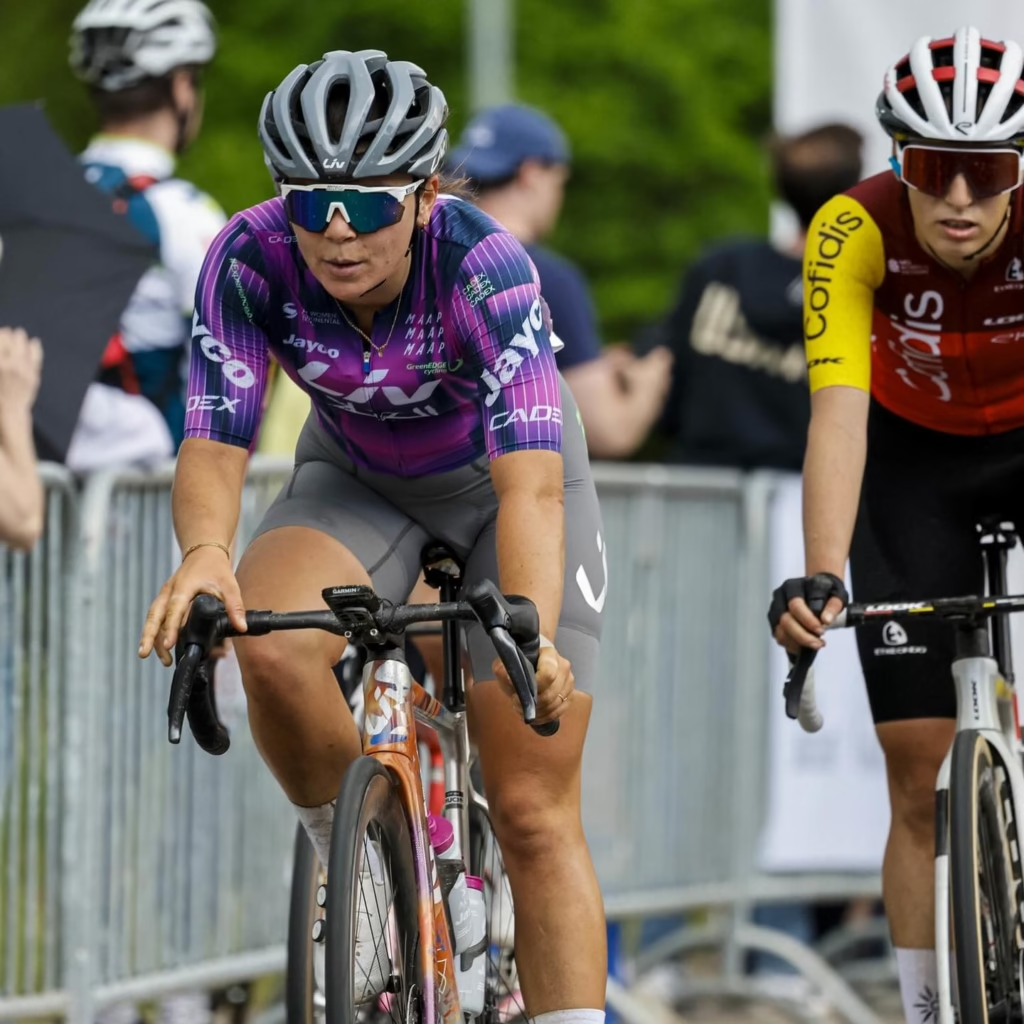 Photo Credit: Sprint Cycling Agency
Noa Jansen
Jansen’s rise has been steady rather than spectacular, but that is precisely why her next step matters. Her results across the last two seasons point to a rider who is learning how to finish races consistently at a higher level, even when circumstances are not ideal. Injury disrupted part of her 2025 season, yet she still produced a string of solid placings across one-day races and stages, often in events that exposed weaknesses in positioning and resilience rather than pure power.
What stands out is how rarely she disappears. Jansen tends to remain present when races become selective, even if she is not yet dictating the outcome. That ability to stay in the race is often the precursor to a breakthrough once responsibility increases. She reads situations reasonably well, does not panic when races fracture, and appears capable of repeating hard efforts late into events.
Another separating factor is her adaptability. Jansen does not rely on one fixed scenario to perform. She can survive lumpy terrain, handle reduced sprints, and manage the demands of stage racing without sharp drop-offs. That breadth is valuable, but it can also blur roles if not managed carefully.
Type of races suiting her
Jansen is best suited to lumpy one-day races and selective sprint finishes where the group has already been reduced. She looks comfortable in races where the decisive moment comes after repeated efforts rather than a single explosive move. Stage races with rolling terrain also suit her, particularly when consistency across several days is rewarded, and pure climbing dominance is less decisive.
She is less reliant on a fully controlled sprint and more effective when races arrive at the finale already fractured.
What a successful 2026 looks like
A successful 2026 for Jansen is defined by clarity and expectation. Moving into a full WorldTour environment increases opportunity, but it also increases the risk of being absorbed into a support-heavy role that limits progression. The step forward comes when she is given races where the objective is unambiguous: she is protected into the finale and expected to ride for her own result.
That does not require a wholesale leadership shift. It can begin with specific one-day races or selected stage finishes where the team commits to positioning her late and allows her to finish without obligation to cover for others. Over a season, that clarity builds confidence and sharpens decision-making.
If Jansen finishes 2026 having converted regular presence into repeatable top 15s and occasional top 10s in the right races, her status changes. At that point, she is no longer a rider who survives hard racing, but one who is expected to contribute to outcomes. That is the line between development and breakout at this level.
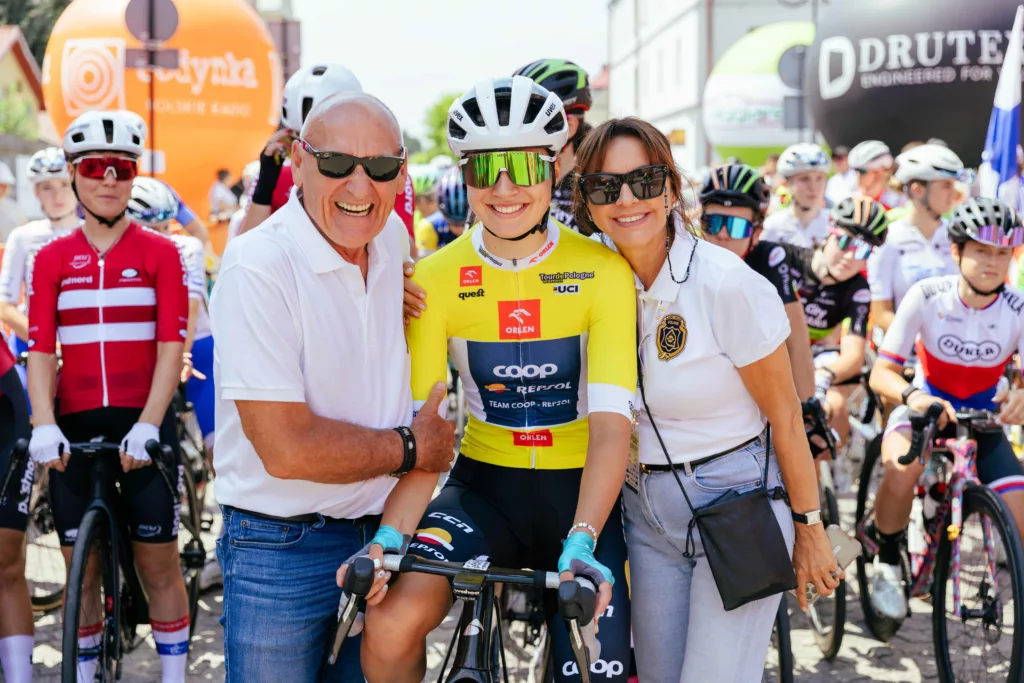
Stina Kagevi
Kagevi arrives into the WorldTour with one of the clearest performance identities in this group. Her pathway has been built around effort against the clock, and the results back that up. As a junior and U23 rider, she established herself as a genuine time trial specialist, with podium-level performances at European championships and national titles that point to both power and technical control. Those are not skills that need translation. They already function at elite level.
What makes Kagevi particularly interesting is that her time trial ability is not isolated. Riders who excel against the clock often bring with them a broader capacity for sustained effort, and her early elite seasons have shown that she can hold a high pace well beyond a ten or twenty-minute effort. That gives her value beyond the obvious results sheet entries and opens multiple development paths if the environment allows it.
The move to EF Education-Oatly in 2026 represents a shift from proving capability to applying it in more complex race scenarios. The risk is not whether she can perform, but whether she is used narrowly or allowed to expand.
Type of races suiting her
Time trials are the most direct opportunity for Kagevi, particularly in stage races where even small gaps can reshape the general classification. Beyond that, she is well-suited to hard flat stages, exposed and windy races, and rolling terrain where sustained power can stretch the peloton.
She is also a natural fit for long-range breakaways on stages that lack obvious GC pressure. In those situations, her ability to settle into a high, controlled pace makes her difficult to bring back if the group behind hesitates.
What a successful 2026 looks like
A successful 2026 for Kagevi is about becoming more than a specialist who appears briefly on the calendar. The step forward comes when her strengths are integrated into race plans rather than held in reserve.
Practically, that means entering stage races where she is encouraged to defend an overall placing rather than riding purely in the service of others once the time trial is complete. It also means being given freedom on selected stages to join breakaways or shape the race when conditions suit her power profile. Those experiences matter because they teach when to spend energy and when to hold it, a crucial skill for riders moving beyond singular disciplines.
If she finishes the season having influenced races on multiple terrains, not just on the start ramp of a time trial, she will have expanded her role significantly. At that point, she becomes a rider teams need to account for across a race week rather than a single day.
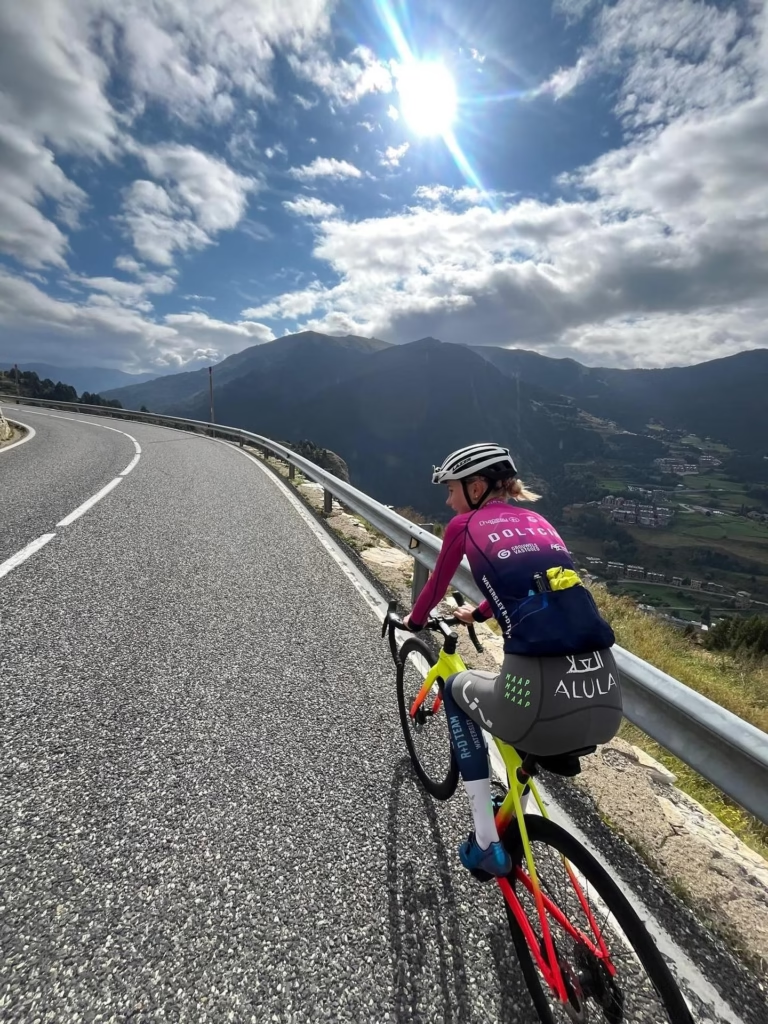
Sidney Swierenga
Swierenga’s entry into the professional ranks comes with a level of attention that is both understandable and potentially misleading. Her junior results in 2024 and 2025 were exceptional, including dominant performances in North American stage races and a Nations Cup win in Europe, and she did them in a way that suggested more than just early physical development. She raced with intent, patience, and an unusual ability to judge effort across multi-day events.
What separates Swierenga from many highly rated juniors is her background outside cycling. A strong endurance runner before fully committing to the bike, she developed an aerobic base that shows clearly in how she rides. She is comfortable sustaining hard efforts, does not panic when races stretch out, and appears to recover well between stages. Those traits tend to scale positively as distances increase and race complexity rises.
The decision to place her with Liv AlUla Jayco’s Continental set-up for her first professional season is an important one. It reduces immediate pressure while still offering access to competitive racing. That context matters. Riders with Swierenga’s profile often progress best when the early professional years are used to build race craft rather than chase validation.
Type of races suiting her
Swierenga is best suited to stage races and selective one-day races where sustained climbing and repeated efforts shape the outcome. She looks more comfortable in races that develop gradually than in chaotic bunch sprints, and her best junior results came when she could express endurance rather than rely on a single explosive moment.
She is also likely to benefit from races with smaller, less controlled pelotons, where initiative and commitment are rewarded and where tactical mistakes are less immediately punished than at full WorldTour level.
What a successful 2026 looks like
A successful 2026 for Swierenga is measured in development rather than results alone. The key step is learning how to convert strong legs into efficient racing against experienced elites, without losing the aggression that has defined her success so far.
In practical terms, that means being given leadership opportunities in smaller stage races and selective one-day events, where she can race for outcomes rather than simply gain exposure. It also means being allowed to make mistakes, because those moments often teach more than conservative riding ever could. The team can support this by setting clear objectives for individual races, whether that is targeting a stage, riding for a youth or secondary classification, or simply testing how she responds to leadership over several days.
If she finishes 2026 with a clearer sense of when to commit, how to position herself late in stages, and how to manage effort across a full professional calendar, the season will have done its job. At that point, her transition to WorldTour racing becomes a question of timing rather than capability.
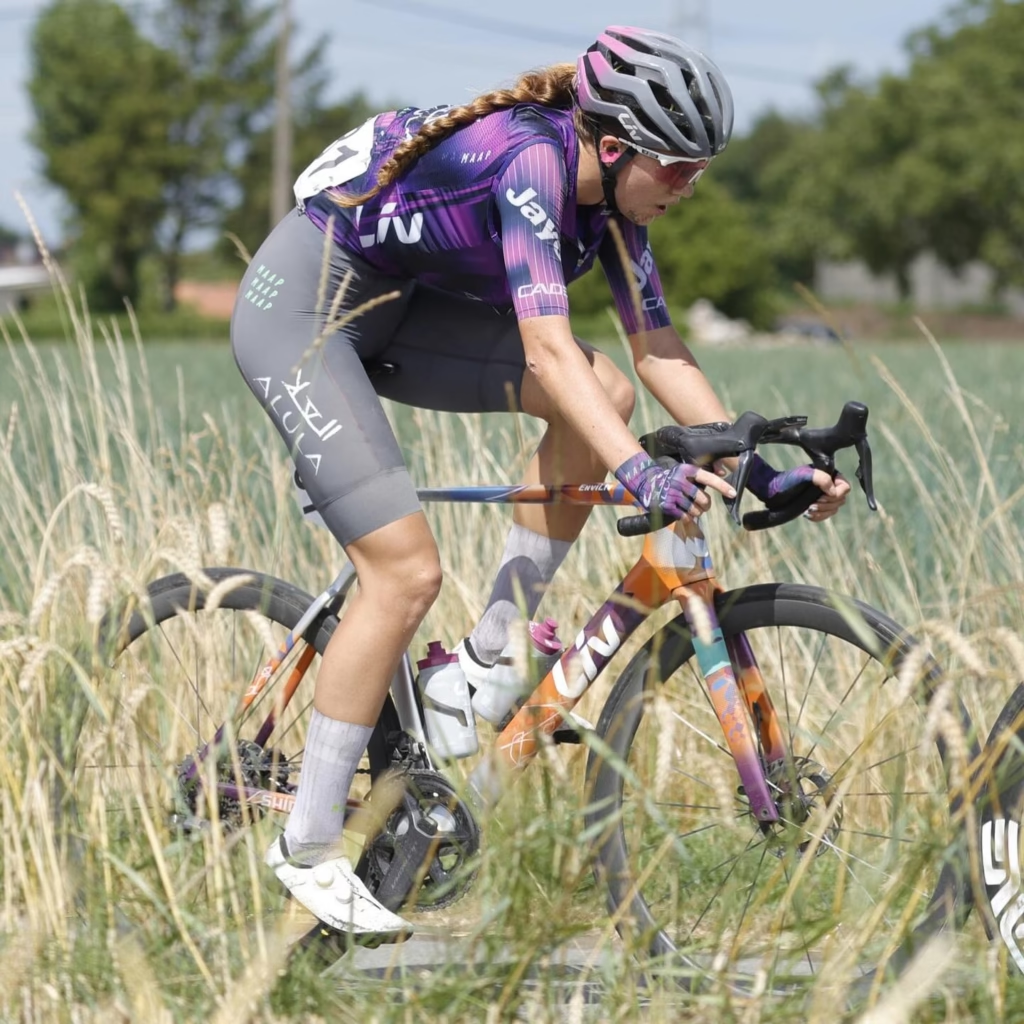 Photo Credit: Sprint Cycling Agency
Mackenzie Coupland
Coupland’s move onto the main Liv AlUla Jayco roster for 2026 marks a clear shift in how she will be viewed internally and externally. This is no longer a development season by default. It is the point where potential begins to be measured against responsibility. Her pathway has been deliberate, built through progressive exposure to stage racing and classification battles rather than a rush towards headline moments, and the underlying indicators suggest she is ready for that step.
What separates Coupland from many riders at this stage is her breadth. She has shown she can handle stage races, contribute across classifications, and remain effective over consecutive days without sharp drop-offs. Results such as her performances at the Tour de l’Avenir and Giro Toscana underline a rider who understands how to manage energy across a race week, not just survive it. She does not rely on one standout skill, but on a steady ability to be in the right place repeatedly.
That versatility, however, can become a double-edged sword. Riders who can do many things well are often used everywhere without being prioritised anywhere. The challenge for Coupland in 2026 is ensuring that her adaptability becomes a strength rather than a reason to dilute her opportunities.
Type of races suiting her
Coupland is best suited to stage races with mixed terrain, particularly those where consistency, positioning, and opportunism matter as much as pure climbing ability. Races that feature rolling stages, reduced group finishes, and time gaps created through activity rather than summit finishes play to her strengths.
She also fits well in races where secondary classifications, such as mountains or youth jerseys, remain in play across several days, allowing an active rider to build a result through repeated engagement.
What a successful 2026 looks like
A successful 2026 for Coupland is about ownership. The step forward comes when she is given clear responsibility within a race rather than being deployed reactively. That could mean entering a stage race with a defined objective, whether that is riding for a top 15 overall, targeting a classification, or being given freedom on specific stages to shape the race.
From a team perspective, the most meaningful support comes through clarity. If expectations are set before the race, Coupland can pace efforts and choose moments to commit without hesitation. Over a season, that clarity sharpens race craft and builds confidence. One well-executed stage race, where she is allowed to carry responsibility from start to finish, could alter how she is used going forward.
If she ends 2026 having moved from being a reliable contributor to a rider whose objectives are planned into the race strategy, that shift alone represents a breakout, even if it arrives without a single defining victory.
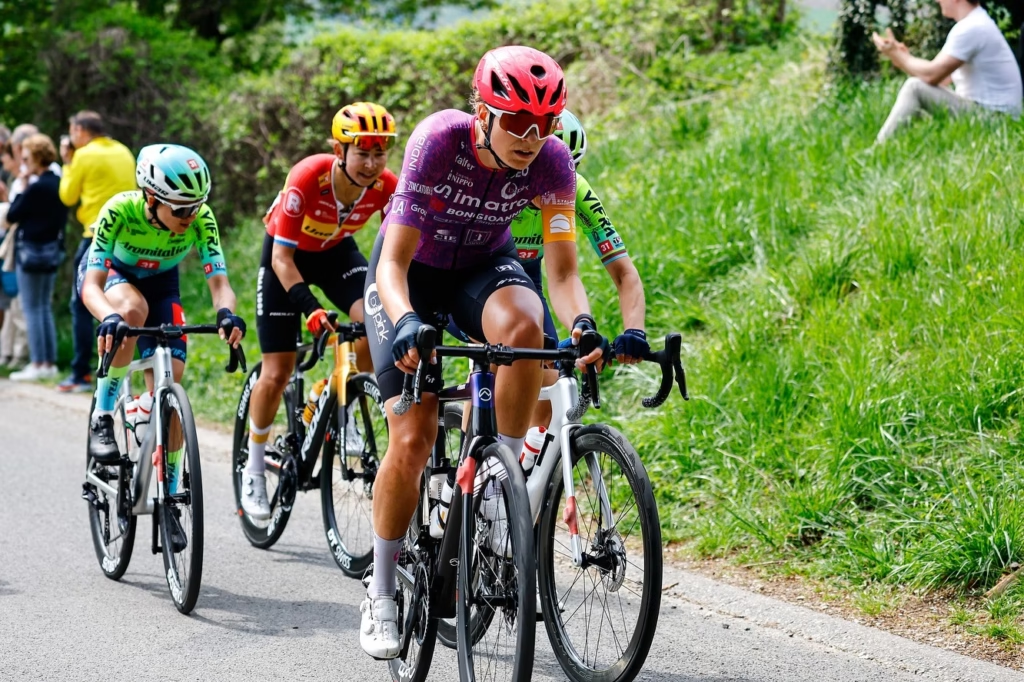 Photo Credit: Sprint Cycling Agency
Meike Uiterwijk Winkel
Uiterwijk Winkel’s career arc reflects one of the most common and most difficult development challenges in women’s road racing: translating early sprint promise into repeatable elite-level outcomes. As a junior, she was a national champion and clearly identified as a fast finisher. Since then, her progression has been steady rather than linear, shaped as much by environment as by raw speed.
Her recent seasons underline that she is not short of ability. The issue has been context. Sprinters are uniquely dependent on structure, and without consistent positioning, protection, and clarity of role, even strong speed struggles to surface in results. Her move to DAS-Hutchinson for 2026 should be read in that light. It is a search for definition rather than scale, and for a racing environment where sprint opportunities are not incidental.
What separates Uiterwijk Winkel from many sprinters at a similar level is her willingness to adapt. She has spoken about developing as a lead-out rider as well as a finisher, which points to a rider who understands the mechanics of sprinting rather than simply relying on instinct. That awareness often precedes a late step forward, particularly in teams where sprint hierarchy is clear.
Type of races suiting her
Uiterwijk Winkel is best suited to flatter one-day races and stage race sprint finishes, especially in events where the sprint field is not dominated by fully formed WorldTour lead-out trains. Smaller stage races and one-day events with controlled finales give her the best chance to express speed without being overwhelmed by positioning battles.
She is also well placed to benefit from races where organisation breaks down late, allowing timing and decision-making to matter as much as raw lead-out power.
What a successful 2026 looks like
A successful 2026 for Uiterwijk Winkel is defined by consistency and visibility. The step forward does not require immediate wins. It requires regular presence in sprint finishes and the confidence that comes from knowing she will be delivered into contention when the opportunity arises.
From a team perspective, the most meaningful support is structural rather than tactical. Building a calendar that prioritises sprint opportunities, committing to a simple and repeatable approach to lead-outs, and maintaining that approach across the season would allow her to develop rhythm and confidence. Even modest positioning support, if applied consistently, can transform how a sprinter races.
If she finishes 2026 with a run of top ten finishes in sprint stages and one-day races, and with a clear identity as a sprint option rather than an occasional finisher, that represents a genuine breakout. At that point, speed stops being theoretical and starts to become a defining feature of her role in the peloton.

