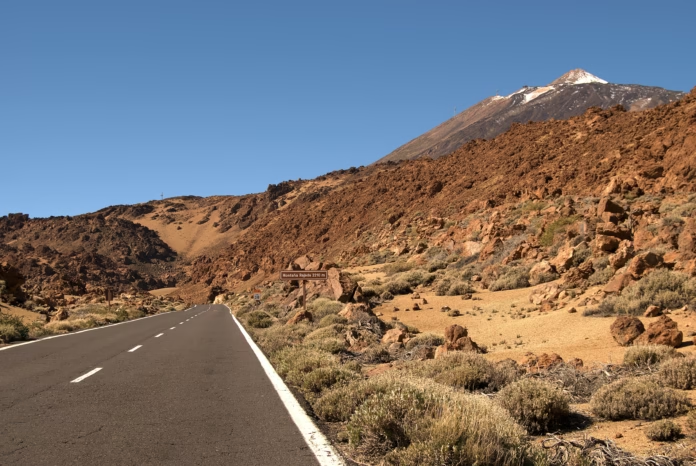
Tenerife, the largest of the Canary Islands, presents a unique proposition for the discerning cyclist. Often lauded for its year-round sunshine and diverse landscapes, its true allure for those who pedal lies in its geological heart: Mount Teide. This colossal stratovolcano, dominating the island’s interior at 3,718 metres, offers a training environment unparalleled in Europe, effectively transforming Tenerife into a natural, high-altitude training laboratory. For the serious rider, this isn’t merely a holiday destination, it’s an investment in performance, a crucible where endurance is forged and limits are redefined.
The Ascent to Altitude: Understanding Teide’s Gravity
The ascent to Mount Teide is not a singular undertaking but a multifaceted challenge, offering various pathways to its lofty reaches. Each approach presents its own character, a unique blend of gradient, road surface, and scenic wonder. Understanding these routes is paramount for effective training, allowing a targeted approach to endurance, power, and climbing technique.
The Classic Climb: Vilaflor to Teide (TF-21)
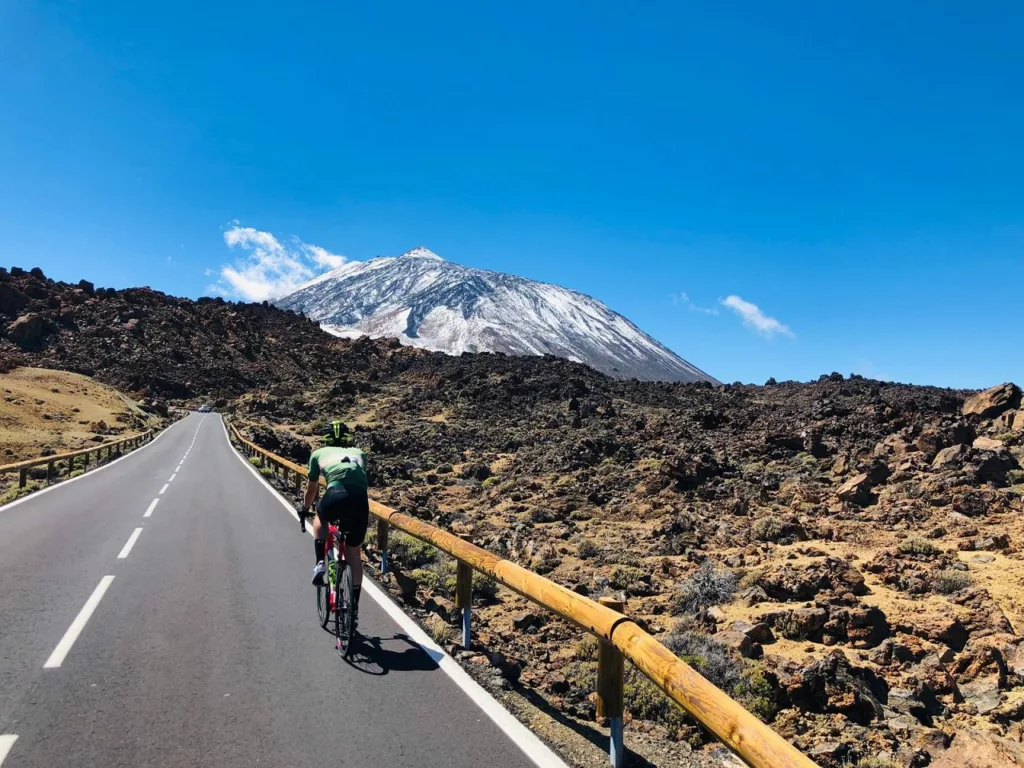
Widely regarded as the quintessential Teide climb, the route from Vilaflor via the TF-21 is a benchmark for many professional cyclists. Starting from the charming, high-altitude village of Vilaflor at 1,400 metres – Spain’s highest municipality – the ascent immediately instils a sense of purpose.
Route Specifics:
- Distance: 13 kilometres from Vilaflor to the Teide National Park entrance
- Elevation gain: 820 metres
- Average gradient: 6-7%
- Summit altitude: 2,220 metres at the park entrance
The initial kilometres wind through fragrant Canary pine forests that provide welcome respite from the increasingly thinning air. The road, typically well-maintained with smooth asphalt, maintains a consistent gradient that demands a rhythmic cadence. This sustained effort, often undertaken in the crisp, cool air of the upper slopes, is invaluable for building foundational climbing strength and aerobic capacity. The lack of sharp, punishing ramps allows for consistent power output, a critical factor in long-distance endurance events. Professional teams from Sky/Ineos, Movistar, and Jumbo-Visma have used this exact climb for pre-season training camps.
The Eastern Front: Granadilla to Teide (TF-21)
For those seeking a longer, more gradual introduction to the volcano’s embrace, the ascent from Granadilla de Abona offers an extended odyssey starting near sea level at 630 metres.
Route Specifics:
- Distance: 35 kilometres to Teide National Park entrance
- Elevation gain: 1,590 metres
- Average gradient: 4.5%
- Key landmarks: San Miguel de Abona, Vilaflor village
The lower slopes traverse arid, almost lunar landscapes near San Miguel, gradually transitioning into sparse vegetation as altitude increases. The consistent, albeit gentler, gradient allows for sustained sub-threshold efforts that hone endurance and mental fortitude. The length of this climb makes it ideal for long-distance training rides, simulating the relentless nature of mountain stages in grand tours. The relative lack of traffic, particularly before 9am, offers a contemplative and focused riding experience.
The North Face: La Orotava to Teide (TF-21)
Approaching Teide from the north, specifically from the verdant Orotava Valley, offers a dramatic contrast to the southern routes. This ascent from La Orotava town centre at 390 metres is often described as the most challenging due to its length, cumulative elevation, and varying gradients.
Route Specifics:
- Distance: 40 kilometres to National Park entrance
- Elevation gain: 2,130 metres
- Average gradient: 5.3% (with sections reaching 10-12%)
- Key climbs: Aguamansa section, Portillo Alto
From La Orotava, the road (TF-21) climbs relentlessly through the towns of Aguamansa and La Caldera, revealing panoramic views of the valley floor and the Atlantic Ocean beyond. The changing vegetation – from subtropical banana plantations to pine forests to alpine scrubland – adds visual richness to the physical exertion. This route tests a rider’s ability to sustain high power outputs on steeper ramps and recover efficiently between harder efforts. Completing the full north face is considered a significant milestone, with many cyclists marking their personal record times on Strava segments like “La Orotava – Teide” which has over 15,000 attempts logged.
The Western Approach: Santiago del Teide via Chío (TF-38/TF-21)
A less-travelled alternative from the west offers unique views and quieter roads, starting from Santiago del Teide at 900 metres.
Route Specifics:
- Distance: 28 kilometres via Chío to park entrance
- Elevation gain: 1,320 metres
- Average gradient: 4.7%
- Highlights: Views of La Gomera, passage through Chío village
This route joins the TF-21 at Boca Tauce, offering spectacular westward views toward La Gomera and La Palma islands. The lower traffic makes it excellent for interval training, and the junction at Boca Tauce (1,980m) serves as a natural decision point for extending rides or creating loop routes.
Strategic Staging Posts: Where to Rest and Recover
The effectiveness of high-altitude training is not solely dictated by effort but also by recovery. Selecting appropriate accommodation that supports this delicate balance is crucial. Tenerife offers a range of options, from high-altitude retreats to bustling coastal bases, each with its own advantages.
The High-Altitude Haven: Parador de Turismo Cañadas del Teide
Positioned directly within the Teide National Park at 2,152 metres, the Parador is the logical choice for those committed to pure high-altitude living. Its location means every ride begins and ends at altitude, maximising physiological adaptations associated with reduced oxygen levels.
Advantages:
- Immediate access to TF-21 and park roads
- Altitude acclimatisation 24/7
- Quiet environment for optimal recovery
- On-site restaurant with cyclist-friendly nutrition
- Bike storage facilities
The air is thin, the nights cool, and the quiet isolation allows for unparalleled recovery. For professional teams and serious amateurs, this is often the preferred choice. The experience is akin to living within a performance laboratory, where every breath contributes to acclimatisation. Book well in advance, especially during March-May and September-October peak training season.
The Coastal Compromise: Hotels in Los Cristianos and Playa de las Américas
For riders travelling with family or preferring to “sleep low, train high,” the resorts of Los Cristianos (sea level) and Playa de las Américas offer viable alternatives.
Recommended Hotels:
- H10 Conquistador – Cyclist-friendly with bike storage and early breakfast
- GF Victoria – Spa facilities for recovery, nutrition-conscious dining
- Hotel Riu Arecas – Popular with cycling groups, secure bike storage
The daily routine involves an early morning 45-60 minute drive to Teide climbing bases, followed by descent and recovery at sea level. This approach allows for daily high-altitude exposure without sleep disruption. The 35-40km transfer to Vilaflor becomes part of the warm-up routine.
The Mid-Mountain Retreat: Vilaflor Accommodation
Bridging the gap between sea-level resorts and extreme altitude, Vilaflor at 1,400 metres provides a compelling middle ground.
Recommended Options:
- Hotel Spa Villalba – Purpose-built spa facilities, cyclist menus available
- Hotel Rural Senderos de Abona – Traditional Canarian atmosphere, bike washing area
From Vilaflor, the main Teide climb via TF-21 starts literally from your hotel door, meaning less transfer time and more riding. The village offers several restaurants, a small supermarket, and genuine local atmosphere. This altitude provides noticeable adaptation benefits without the intensity of living above 2,000 metres, ideal for cyclists new to altitude training or those on 7-14 day trips.
Beyond the Summit: Tenerife’s Diverse Cycling Canvas
While Teide acts as the central magnet, limiting exploration to its slopes alone overlooks the rich tapestry of cycling opportunities across the island. Much like exploring different regions in Spain, Tenerife rewards those who venture beyond the headline routes.
The Anaga Rural Park: North-Eastern Wilderness
Venturing to the island’s north-eastern tip, Anaga Rural Park offers dramatically different riding through ancient laurel forests.
Key Routes:
- San Andrés to Taganana (TF-12): 10km, 600m elevation, narrow switchbacks through cloud forest
- Mirador Pico del Inglés loop: 25km from La Laguna, multiple viewpoints over rugged coastline
- Cruz del Carmen circuit: Relentless short climbs, perfect for VO2max intervals
The roads here present constant undulations with gradients frequently hitting 12-15%. While absolute elevations peak around 1,000 metres, the technical descents on narrow roads demand agile handling. This area excels for recovery rides with varied terrain or explosive power intervals. Strava segments like “Taganana Climb” are local benchmarks for punchy efforts.
The Teno Rural Park: Western Seclusion
The far western Teno massif provides raw, dramatic cycling through deep ravines and clifftop roads.
Signature Rides:
- Masca descent/climb (TF-436): Legendary 6km with gradients exceeding 20%, dropping 600m to the village
- Buenavista del Norte to Teno Alto: Remote mountain road, minimal traffic, sustained 8-10% gradients
- Los Gigantes coastal route: Cliff-edge riding with Atlantic exposure
The road to Masca is notoriously severe, with hairpin bends and exposed sections demanding maximum power on climbs and exceptional bike handling on descents. Local cyclists use this for short power testing – if you can maintain 300+ watts up Masca, your climbing form is sharp. The scenery provides powerful motivation, with sheer drops to the Atlantic acting as visual reward for physical exertion.
Coastal Pathways and Recovery Rides
For recovery days, Tenerife offers numerous flatter options perfect for active recovery while maintaining blood flow.
Recommended Recovery Routes:
- Los Cristianos to Costa Adeje promenade: 8km flat seafront path, protected from traffic
- El Médano coastal road: 12km with mild undulations, consistent ocean breeze
- Puerto de la Cruz to La Orotava valley floor: 15km through banana plantations, minimal climbing
These routes are essential counterpoints to arduous climbs, allowing the body to recover while preventing stiffness. Many cyclists use the Los Cristianos promenade for morning coffee spins or evening leg openers before rest days.
Training Protocols: Maximising Teide’s Potential
Professional teams don’t simply ride Teide, they apply structured protocols to leverage its altitude benefits. Similar to the structured training approaches used for long-distance events, altitude training requires careful planning.
Acclimatisation Strategy
Days 1-3: Easy endurance rides below 1,500m, allowing body to adjust Days 4-7: Introduce single Teide climb at controlled intensity (Zone 2-3) Days 8+: Full intensity work, intervals, and multiple ascents per ride
Sample Weekly Training Block
Monday: Recovery ride – Los Cristianos promenade, 90 minutes easy spinning
Tuesday: Vilaflor to Teide climb, 2x15min at threshold power, 3 hours total
Wednesday: Anaga intervals – 8x3min VO2max efforts on Taganana climb
Thursday: Long endurance – Granadilla to Teide via full TF-21, 4-5 hours
Friday: Active recovery – coastal route, 60-90 minutes
Saturday: North face challenge – La Orotava full ascent, race simulation
Sunday: Teno exploration or complete rest
Power-Based Training Targets
At altitude, expect 5-8% reduction in power output compared to sea level due to reduced oxygen. Adjust training zones accordingly:
- Threshold efforts: Target 92-95% of sea-level FTP
- VO2max intervals: May require 10% reduction in target watts
- Endurance pace: Maintain by heart rate rather than power
Practical Considerations for the Discerning Cyclist
Bike Rental versus Own Bike
High-quality rental options exist across southern Tenerife:
Top Rental Companies:
- Bike Point Tenerife (Los Cristianos & Las Américas) – Canyon, Cervélo, Pinarello fleet, compact gearing standard
- Free Motion (Los Cristianos & Adeje) – Specialized, Trek, Canyon options, excellent mechanical support
- Volcano Biking (Adeje) – Custom fitting service, premium carbon race bikes
Rental rates: €25-45/day for aluminium, €60-90/day for high-end carbon. Compact 50/34 or even 52/36 chainrings with 11-32 cassettes are recommended for Teide gradients. Many serious cyclists prefer their own bike’s precise fit, especially for camps longer than one week.
Nutrition and Hydration at Altitude
The combination of altitude, warm climate, and sustained efforts demands meticulous fuelling. Understanding proper cycling nutrition becomes even more critical at altitude.
Essential Supplies:
- Electrolytes: High-sodium drinks critical on 3+ hour rides (Vilaflor has water fountain for refills)
- Carbohydrates: Target 60-90g/hour on climbs, gels and bars readily available at coastal supermarkets
- Altitude considerations: Appetite suppression common above 2,000m – force feed if necessary
- Recovery nutrition: Consume 20-30g protein within 30 minutes of finishing
Where to Shop:
- Mercadona (Los Cristianos): Best value for energy products, isotonic drinks
- Hiperdino (multiple locations): Wide selection, cyclist-friendly brands
- Local bakeries in Vilaflor: Fresh fruit, bocadillos for ride food
Safety and Road Etiquette
Tenerife’s cycling infrastructure is well-developed, but vigilance remains essential.
Key Safety Considerations:
- Descents: Teide descents exceed 70km/h – check brakes before every descent, wear gloves
- Weather: Temperatures can drop 15°C from coast to summit – carry arm warmers, gilet
- Traffic: TF-21 sees heavy weekend traffic after 11am – start climbs early (7-8am optimal)
- Road surface: Generally excellent, but watch for gravel on tight corners, especially after rain
- Emergency services: Limited mobile coverage above 1,800m – inform hotel of planned routes
Local Driving Culture: Most drivers are cyclist-aware, especially on established routes like TF-21. However, maintain high visibility with lights and bright clothing. Rental car drivers can be less predictable – extra caution on weekends.
When to Visit: Seasonal Considerations
Optimal Months:
- March-May: Mild temperatures (18-24°C coast, 8-15°C Teide), minimal rain, wildflowers blooming
- September-November: Post-summer warmth, fewer tourists, excellent conditions
Avoid:
- July-August: Excessive heat at coast (30°C+), crowded roads, limited hotel availability
- December-February: Potential snow above 2,000m, stronger winds, shorter daylight hours
Weather Patterns: Teide creates its own microclimate – cloud cover (“Mar de Nubes”) often sits at 1,200-1,600m, with clear skies above. Check AEMET weather specifically for Teide National Park, not just coastal forecasts.
Comparing Tenerife to Other Cycling Destinations
Tenerife occupies a unique space in the European cycling landscape. Unlike Mallorca, which offers varied terrain but limited altitude, or Girona, which provides rolling climbs and cycling culture, Tenerife delivers unmatched high-altitude training combined with year-round riding conditions. For those exploring cycling destinations beyond the UK, Tenerife stands as the premier altitude training base in Europe.
Conclusion: Tenerife as Your Performance Laboratory
Tenerife, and specifically Mount Teide’s dominating presence, transcends typical cycling destinations. Its diverse topography offers a kaleidoscope of challenges, from relentless high-altitude ascents on the TF-21 to technical undulating routes through Anaga and Teno. For the dedicated cyclist, it presents a unique opportunity to push boundaries, hone endurance against an almost lunar landscape, and return home fundamentally strengthened.
The island combines natural beauty with physical demand – a canvas where personal cycling narratives are powerfully written. Whether you’re a professional seeking altitude adaptation, an amateur targeting a gran fondo, or simply a passionate cyclist craving challenging terrain, Tenerife delivers an unmatched training environment. The question isn’t whether Teide will test you, but how you’ll emerge from the challenge.
For more cycling travel inspiration, explore our guides to cycling in the rest of Europe or discover top cycling hotels worldwide.
Frequently Asked Questions
What is the best time of year to go cycling in Tenerife near Teide?
The optimal periods are spring (March to May) and autumn (September to November). During these months, temperatures are mild – 18-24°C at the coast and 8-15°C at Teide summit – avoiding intense summer heat and winter precipitation. March and April offer wildflower blooms, while September provides post-summer warmth with reduced tourist traffic.
How challenging is cycling around Mount Teide?
Mount Teide cycling is genuinely challenging and best suited for experienced cyclists or those prepared for sustained climbing. The main ascents involve 800-2,100 metres of elevation gain depending on starting point, with gradients averaging 5-7% but reaching 12% on steeper sections. The altitude – topping out above 2,200 metres – adds significant cardiovascular demand. A solid fitness base and climbing experience are recommended before attempting full Teide ascents.
Are there specific routes recommended for cycling in the Teide area?
Yes, three primary routes dominate: (1) Vilaflor to Teide via TF-21 – 13km, 820m gain, the classic training climb, (2) La Orotava north face via TF-21 – 40km, 2,130m gain, the most comprehensive test, (3) Granadilla eastern approach via TF-21 – 35km, 1,590m gain, ideal for sustained endurance work. Each offers well-maintained roads through spectacular volcanic landscapes but demands good fitness and appropriate gearing.
Is it necessary to have special equipment for cycling in Tenerife’s Teide region?
A standard road bike works well, but compact gearing (50/34 or 52/36 chainrings with 11-32 cassette minimum) is strongly advised for the sustained climbs. Essential equipment includes: layered clothing for temperature changes (15°C+ variation from coast to summit), strong brakes for long descents, high SPF sunscreen due to intense UV at altitude, and multiple water bottles – cafés are scarce above Vilaflor. Lights improve visibility in tunnels and early morning starts.
Are there any safety considerations for cycling near Teide?
Key safety factors include: rapidly changing weather (carry wind/rain protection), strong crosswinds at exposed sections above 2,000m, and altitude effects (headaches, reduced power output – acclimatise gradually). Descents from Teide reach 70+ km/h, demanding excellent bike handling and brake control. Traffic increases significantly after 11am on weekends – start early. Mobile coverage is limited above 1,800m, so inform accommodation of your route. Altitude sickness can affect some riders, particularly those flying in and immediately climbing to 2,200m.