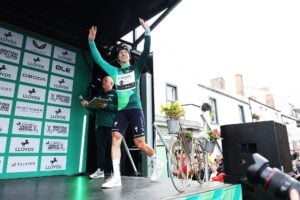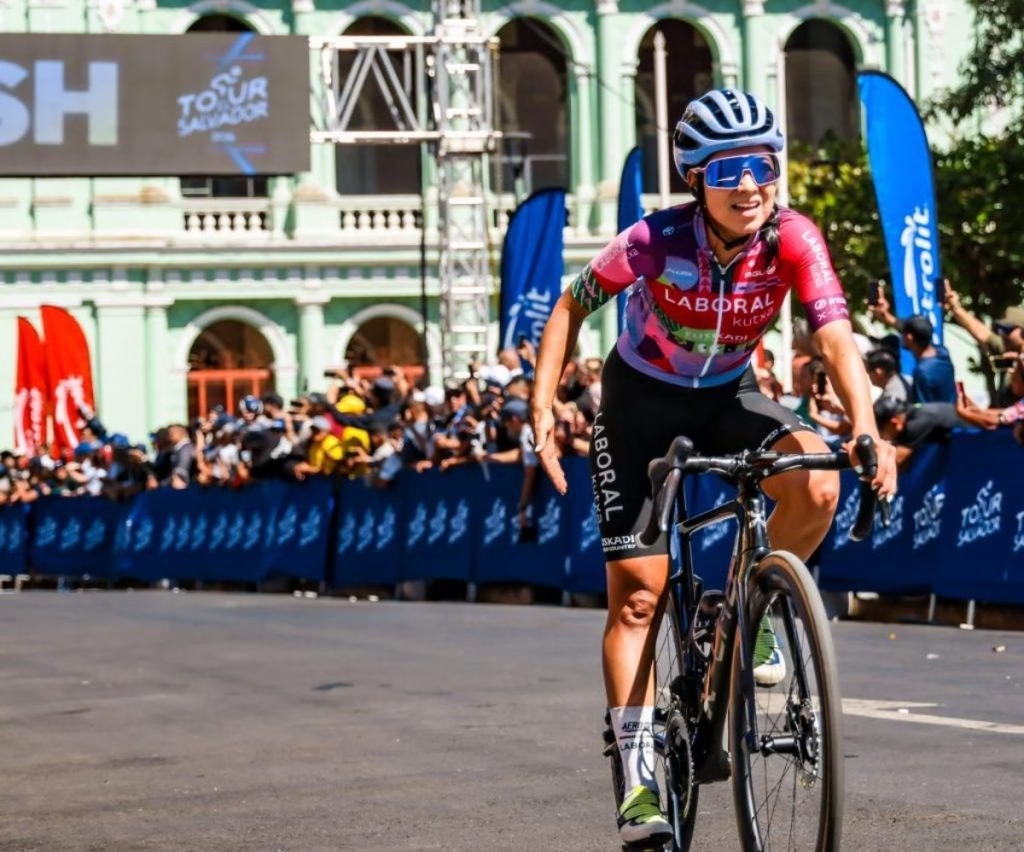
The Tour El Salvador 2026 saved its biggest twist for last. Ainara Albert arrived in Santa Ana wearing yellow and with the race apparently under control after her stage 2 win, but the final day demanded constant attention: a loop out to Metapán and back, intermediate sprints that kept the speed high, and a late climbing point that offered the perfect launch pad for a GC ambush.
Laboral Kutxa made that ambush their mission. When the stage finally broke open, Paula Patiño was the rider who finished it off, taking the stage win and flipping the general classification in one move.
The route and why it mattered
The finale ran on a Santa Ana to Metapán and return circuit, with the distance reported around the mid-90-kilometre mark depending on the route file used on the day. What mattered more than the exact number was how the stage was structured.
There were two sprint intermediates in Texistepeque, early and late, which encouraged teams to keep the tempo high and contest position repeatedly rather than letting the race drift into a passive final hour. Then, with the finish approaching, a late third-category mountain point near the Basurero sector added a sharp, selective effort at exactly the wrong time for anyone hoping to defend rather than attack.
A controlled build that never fully settled
From the start, the pattern was familiar for a race where the GC was still within touching distance.
- Teams with stage ambitions wanted a reduced sprint.
- Teams with GC ambitions wanted the race to fracture before the line.
- Laboral Kutxa had the strongest incentive to make the stage chaotic because yellow was still within range.
The peloton remained alert through the first half of the stage, with repeated surges around the intermediate sprint points. Those accelerations did not produce a long range split, but they did sap support riders and made it harder for the leader’s team to keep every threat in check.
The decisive move: numbers, timing, then commitment
The race turned in the closing kilometres when a select group forced clear and committed fully rather than looking for a late compromise.
Paula Patiño was in the key move, backed by the kind of support that makes a late stage attack viable: teammates willing to empty themselves, plus strong engines from rival squads who also saw an opportunity in a small group dynamic.
The group cooperation mattered. The gap did not form because the peloton gave up. It formed because the riders ahead rode as if the stage win and GC were both on the table, and because the bunch behind hesitated at precisely the wrong moment, with teams waiting for someone else to close the first dangerous twenty seconds.
Once the advantage reached the half minute mark, the scenario became brutally simple for the race leader. Either the chase became organised immediately, or yellow was going to be decided by the time gaps on the line.
The finish: a stage win that carried the overall
Patiño’s stage victory came with a time buffer that did the damage where it counts: the general classification.
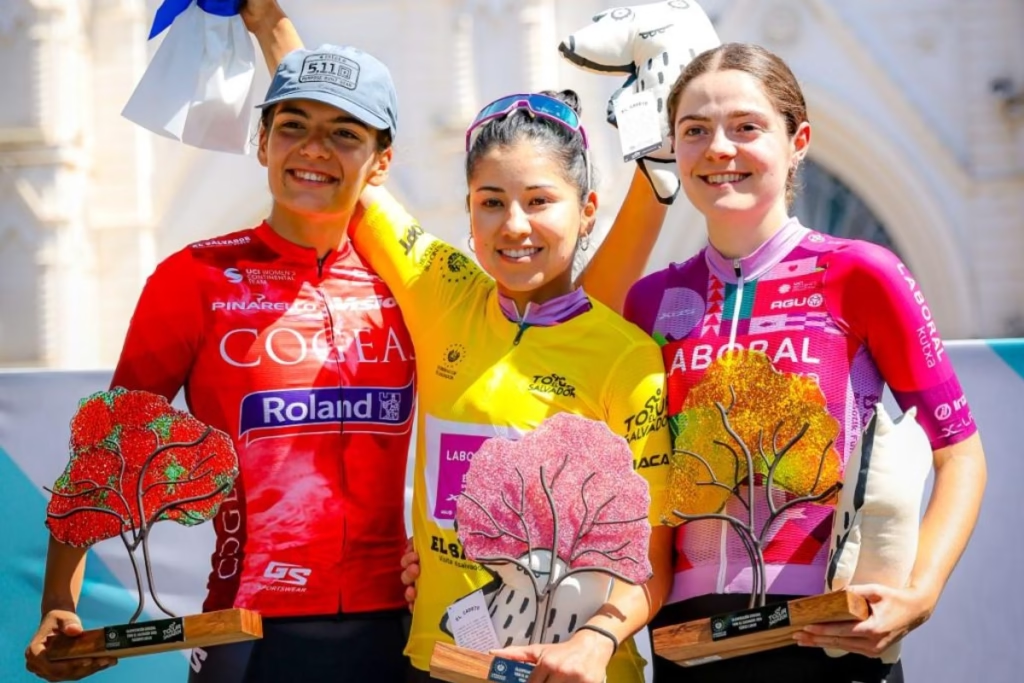
The chase behind, headed by a reduced group, arrived too late and too far down. Albert limited the losses as best she could, but the final stage is unforgiving when the GC is measured in seconds. The gap was enough to push Patiño into the overall lead, with Albert dropping to second and Naia Amondarain completing a Laboral Kutxa double on the final podium.
It also underlined the week’s broader theme. Laboral Kutxa did not just win the race on the final day, they shaped the race across the whole event, stacking stage wins and then using that momentum to execute the decisive GC strike when the opportunity finally opened.
What decided the Tour
The final GC reversal was not an accident, and it was not just about one rider having the legs on the last climb. It came down to three connected factors.
1) Timing the attack to the course design
The final stage offered late stress points, not long climbs. That rewarded teams that could hit the front together, accelerate hard, and then maintain pressure over rolling terrain.
2) Committing to the gap immediately
Once the move went, there was no waiting for a sprint. The group rode for time. That forced the chasers into a full chase scenario rather than a controlled run in.
3) Having the support to finish the job
A late GC attack only works if the leader is protected, guided, and never left isolated while the group rotates. Laboral Kutxa had the depth to do that.
The quotes that summed up the day
Patiño framed it as a team victory as much as a personal one, thanking her teammates and staff after sealing the overall win.
Laboral Kutxa’s sports director Peio Goikoetxea described the result as a completed mission, pointing to how the squad kept pressing after the race appeared to slip away earlier in the week.
Tour El Salvador 2026 Stage 4 result
Results powered by FirstCycling.com
Tour El Salvador 2026 GC result
Results powered by FirstCycling.com