
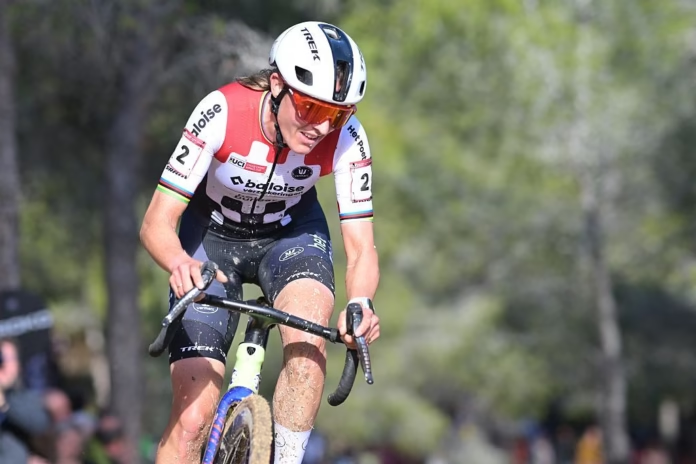
The women’s elite race at the 2026 UCI Cyclo-cross World Championships in Hulst looks far less predictable than the men’s event, because it is built around variables rather than certainty. The title picture hinges on three linked questions: is Lucinda Brand fully free of the calf issue that kept her out of Hoogerheide, can Puck Pieterse sustain the relentless pace she has found in the final week, and does Ceylin del Carmen Alvarado arrive at the perfect moment after her late-season rise.
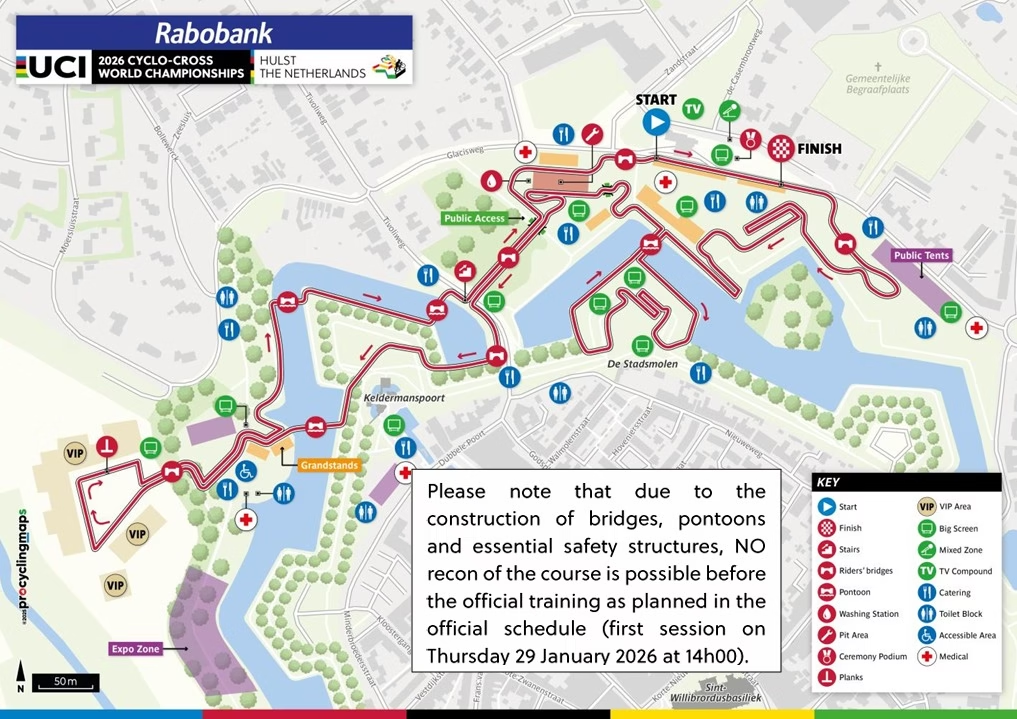
That framing matters early, because Hulst does not encourage passive racing. The course is designed to change rhythm again and again, and championships on circuits like that tend to reward the rider who can keep making good decisions when the pace spikes, then spikes again.
Recent context: championships reward timing, not reputation
The last decade of women’s world champions shows how dominant the Netherlands and Belgium have been, but it also underlines something more useful for this weekend: a Worlds can flip on one afternoon, even when a season looks settled. The recent winners list you provided already captures that contrast, from multi-year streaks to single-edition breakthroughs.
Last year in Liévin, Fem van Empel beat Brand in a hard, selective race, with Pieterse third. Van Empel is not defending this time, which removes the clearest reference point and forces the remaining contenders to define the hierarchy on the day.
What makes Hulst decisive for the women
Hulst is being presented as a purpose-built Worlds circuit, with bridges and pontoons adding technical pressure, and repeated climbs and drops on the bolwerk demanding constant changes of effort. The key point for the women’s race is not spectacle for its own sake, it is what that design does to the competition: riders will be forced into repeated accelerations, and the gaps can open quickly when one rider hesitates or loses flow.
That is why Brand’s status is central. If she is physically comfortable, she can control a race through pace and precision. If she is even slightly restricted, Hulst offers rivals multiple sectors to press again and again until the elastic finally snaps.
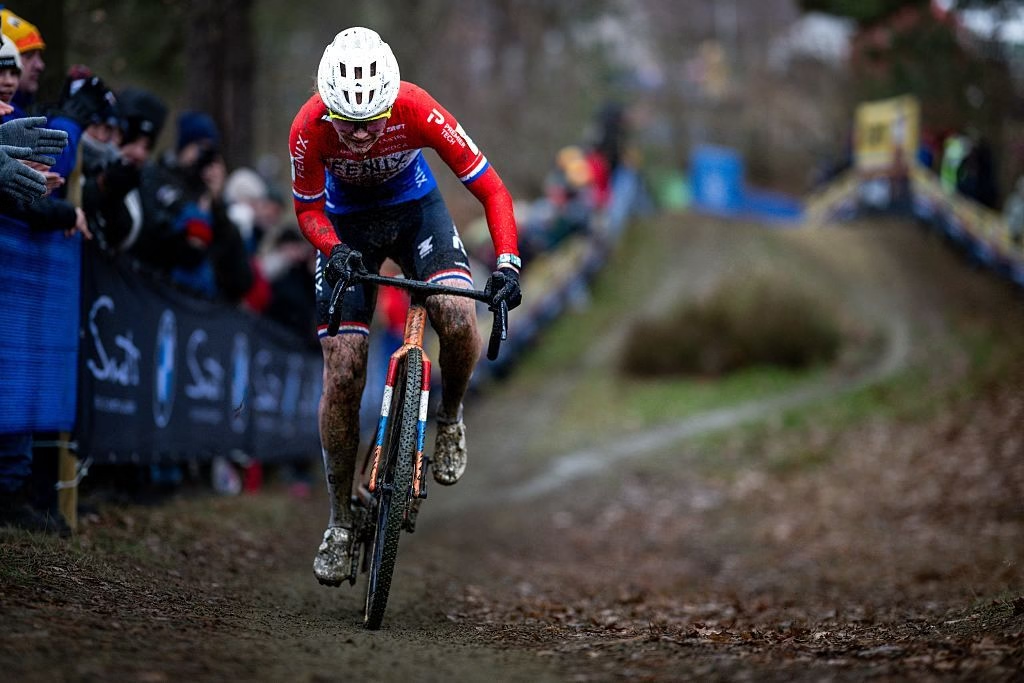 Photo Credit: Getty
Brand, Pieterse, Alvarado: the centre of the race
Lucinda Brand still sits at the centre of the conversation, not because of one result but because of the volume of her season. Even so, the final World Cup weekend changed the tone. Pieterse won in Maasmechelen and backed it up at Hoogerheide, while Brand did not start the latter because of a calf issue.
Pieterse’s recent wins matter, but so does the manner. Hoogerheide was not a procession, it was a messy, fast race with multiple challengers in contact before Pieterse made the decisive move late. It looked like a rider racing with belief, rather than hoping the race comes back to her.
Alvarado’s threat is different. Her season took longer to ignite, but she has risen into the mix at exactly the point where Worlds are won. The Hulst course profile, fast, punchy, and technical, suits a rider who can repeatedly hit the gas without losing composure.
The non-Dutch threats, with form that actually supports the talk
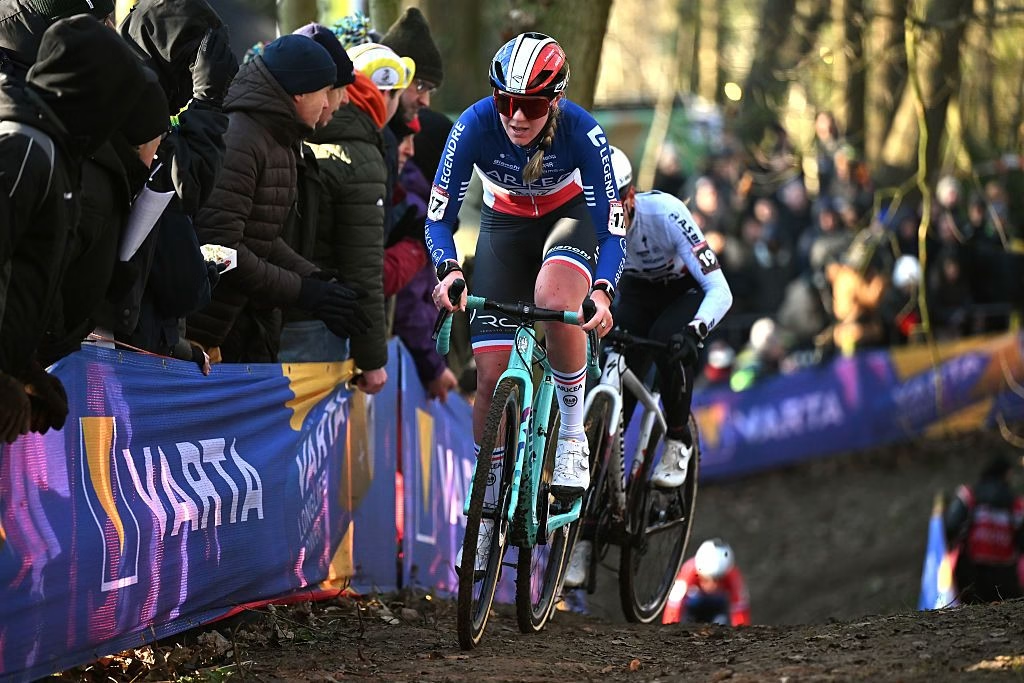
If the women’s race becomes a genuine dogfight, the most credible pressure from outside the Dutch core comes from riders who have already proved they can influence big races this winter.
Amandine Fouquenet has not simply appeared on a favourites list, she has built one of the most convincing mid-winter resumes in the peloton. She won Superprestige Heusden-Zolder and Superprestige Gullegem, then backed that level up with major World Cup results, second at Gavere and third at Dendermonde. She also finished third at Maasmechelen and third again at Hoogerheide. That is the profile of a rider who can handle both the brutal rhythm of championship racing and the tactical stress of riding at the very front.
Kristýna Zemanová has turned consistency into a genuine breakthrough. She finished second at the Hoogerheide World Cup, described as a career-best result, in a finale that required both nerve and legs while others faded in and out of contention. That is not the sort of podium you fluke, especially in the final weekend before Worlds when intensity is highest.
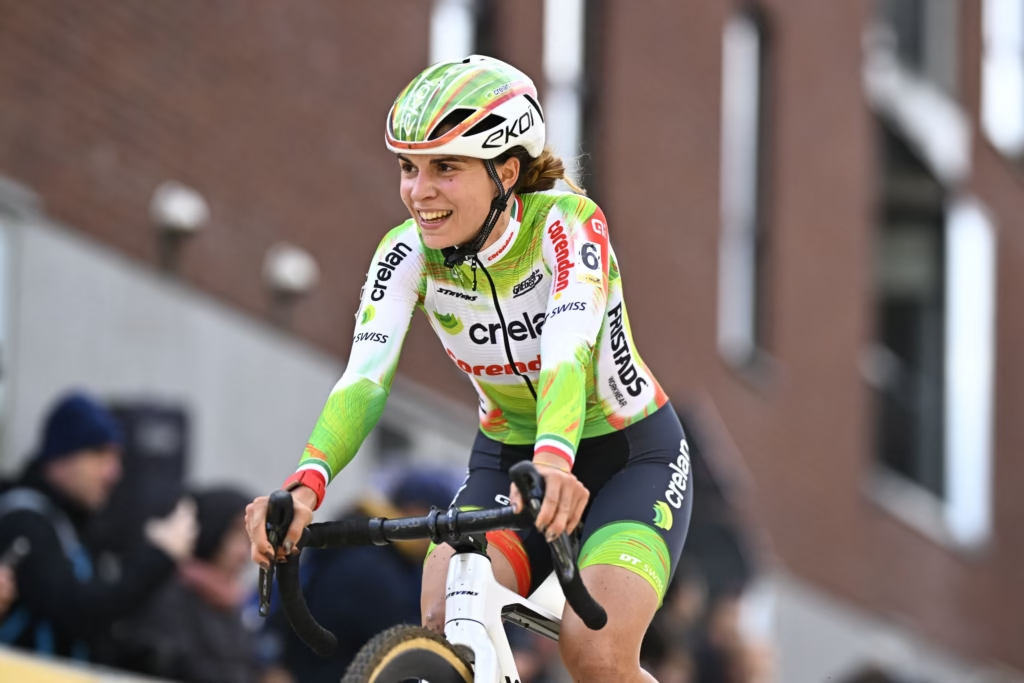
Sara Casasola has moved from “interesting” to “dangerous” over the course of this season. She won Superprestige Overijse and then produced a major step forward at the opening World Cup in Tábor, where she surged into the decisive fight and took her first elite World Cup podium. That combination, a win in a top series and a World Cup podium earned at full gas, makes her exactly the type of rider who can ride into the medal fight if the race fractures behind the leaders.
Zoe Bäckstedt enters the elite Worlds picture with a different kind of momentum: rapid progression rather than a long list of elite wins. She finished fourth at Hoogerheide, just outside the podium and close enough to measure herself against the best in the final tune-up race. She has also been explicit that the elite race will feel like a different challenge, which is important context: she is arriving with form, but also with the kind of freedom that can make a rider tactically unpredictable.
What that means on race day
Put together, it creates a women’s Worlds where the decisive story is likely to unfold early, not only in the final lap. If Brand rides the first two laps smoothly and can hit the bolwerk climbs without protecting her calf, she can reassert control quickly. If she looks even slightly constrained, expect Pieterse and Alvarado to keep raising the tempo in short waves, because Hulst is built for repeated pressure rather than one clean, steady effort.
And if the race becomes chaotic, Fouquenet, Zemanová, Casasola, and Bäckstedt are not just names on a list. They are riders who have already shown, in different ways, that they can either reach the front of a World Cup in full flight or survive there when it turns ugly.

