

A new Women’s WorldTour cycle always brings a small reshuffle in the pits as well as the peloton, but the more interesting story is rarely the headline sponsor logos. It is the quiet convergence underneath: frames that look more aero than ever, cockpits that keep getting cleaner, tyre widths that have crept wider without anyone blinking, and a constant tug of war between outright speed, real-world handling and day-to-day reliability.
For 2026, that convergence produces a peloton that is both more uniform and more sharply divided.
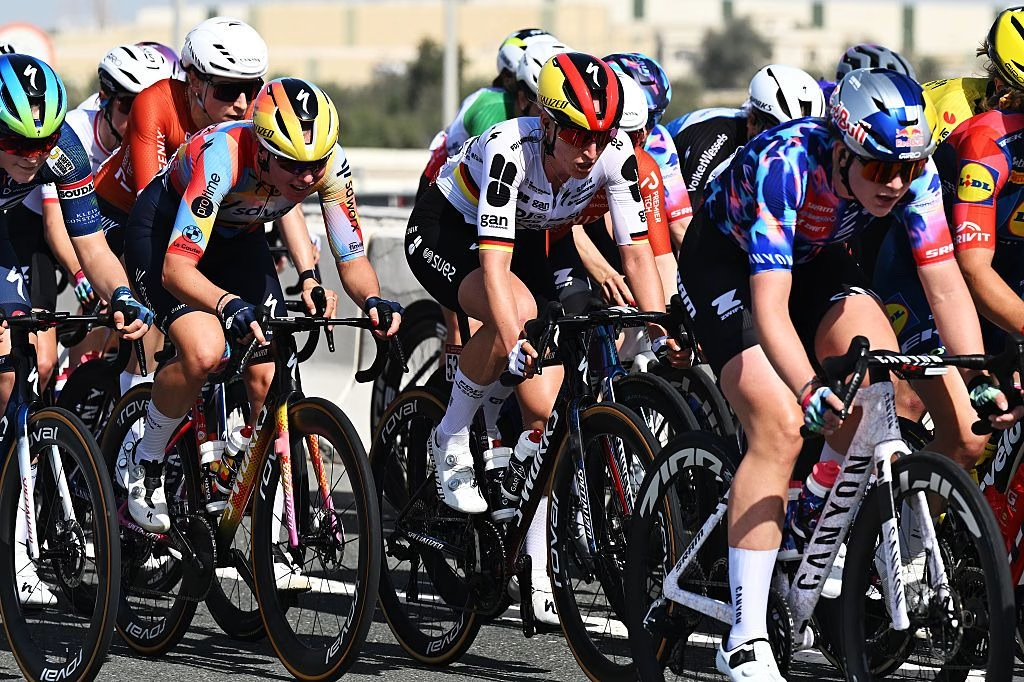
Uniform, because nearly every team is now racing a modern “do-it-all” platform: deep tube profiles, truncated airfoils, fully hidden cables, integrated bar-and-stem systems, and disc brake-only builds. Even the “climber’s bike” concept has blurred. Many squads will happily race their aero frames on almost everything, accepting a small weight penalty in exchange for a bike that is calmer at speed, more stable in crosswinds and easier to control in a hard, strung-out bunch.
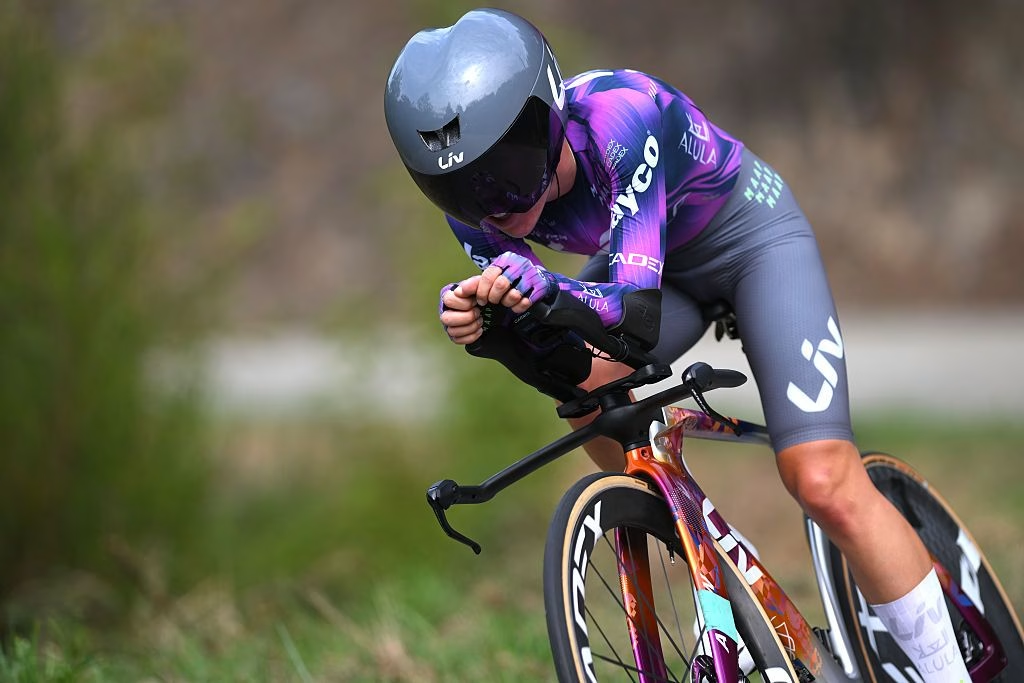 Photo Credit: Getty
Divided, because the component ecosystem is now a straight split. Seven teams are on Shimano, seven on SRAM, and each camp has its own logic.
- Shimano’s Dura-Ace Di2 remains the default choice for teams that prize a conservative, widely understood setup with a huge service footprint. It is a system many mechanics have built, rebuilt and optimised for years, with predictable maintenance routines and familiar spares.
- SRAM Red AXS continues to win converts on the simplicity of setup and a neat wireless approach. With fewer wires to route, fewer internal-rub headaches and fast, modular swaps, it suits flexibility, especially when the calendar is relentless.
The knock-on effects show up everywhere. Wheel partnerships often align with the drivetrain family. Computer choices tend to follow sponsor ecosystems. And even contact points matter more than the marketing departments like to admit. A saddle sponsor is not just a logo: it can influence rider comfort, which can influence position, which can influence aerodynamics, which can influence performance.
That is the other key point for 2026: the gains are increasingly positional rather than purely mechanical. The modern WorldTour bike is already extremely fast. The meaningful differences now often come from:
- Front-end integration: one-piece cockpits, narrower frontal area, cleaner cable routing, improved stiffness and more repeatable fit.
- Tyre choice and pressure: wider tyres at lower pressures, better control on rough surfaces, less fatigue over long days, and lower rolling resistance when paired correctly with rims.
- Wheel depth and stability: deeper rims still offer aerodynamic benefits, but teams are now much more sensitive to crosswind handling and rider confidence, particularly in exposed classics terrain.
- Tyres and compounds: marginal rolling resistance differences can add up across a full race, but the bigger performance swing can be grip, predictability in wet corners, and puncture resilience.
- Aero clothing and fit: skinsuits, overshoes, socks and even underlayers can deliver measurable savings, but only when they fit properly, and riders are comfortable enough to hold a position under fatigue.
- The human factor: the “best” tech is the setup a rider trusts when the bunch is fighting for position at 55kph and the road surface turns nasty.
Against that backdrop, 2026 also brings a few clear structural shifts at the top level. EF Education–Oatly arrives in the Women’s WorldTour, which adds a new bike brand into the elite mix, while two outgoing squads take their equipment partners out of the top flight with them. The result is a slightly tightened technical landscape: fewer outliers, more standardised high-end builds, and a peloton that looks increasingly like an arms race fought through iteration rather than revolution.
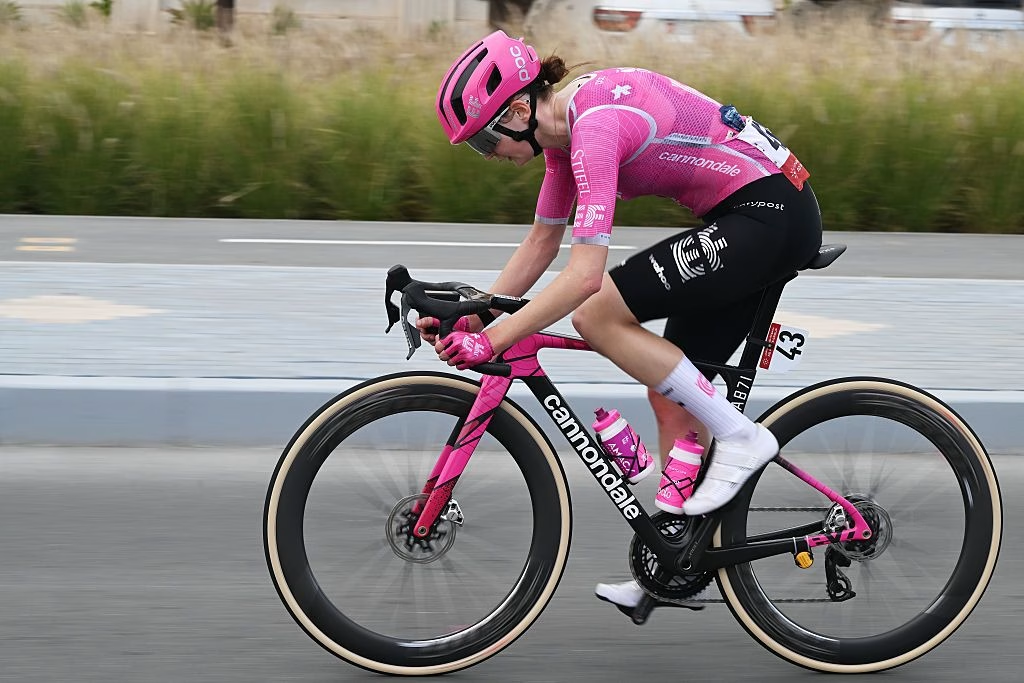
At a glance: 2026 Women’s WorldTour teams and equipment
| Team | Bike | Groupset | Wheels | Clothing | Saddles | Finishing kit | Computers |
|---|---|---|---|---|---|---|---|
| AG Insurance–Soudal | Specialized | Shimano Dura-Ace Di2 | Roval | Castelli | Specialized | Specialized | Garmin |
| Canyon//SRAM zondacrypto | Canyon | SRAM Red AXS | Zipp | Canyon | Ergon | Canyon | Hammerhead |
| EF Education–Oatly | Cannondale | SRAM Red AXS | Vision | Assos | Fizik | Cannondale | Wahoo |
| FDJ–SUEZ | Specialized | Shimano Dura-Ace Di2 | Roval | Gobik | Specialized | Roval | Garmin |
| Fenix–Premier Tech | Canyon | Shimano Dura-Ace Di2 | Shimano | Alé | Selle Italia | Canyon | Wahoo |
| Human Powered Health | Factor | SRAM Red AXS | Black Inc | Verge Sport | Selle Italia | Black Inc | Wahoo |
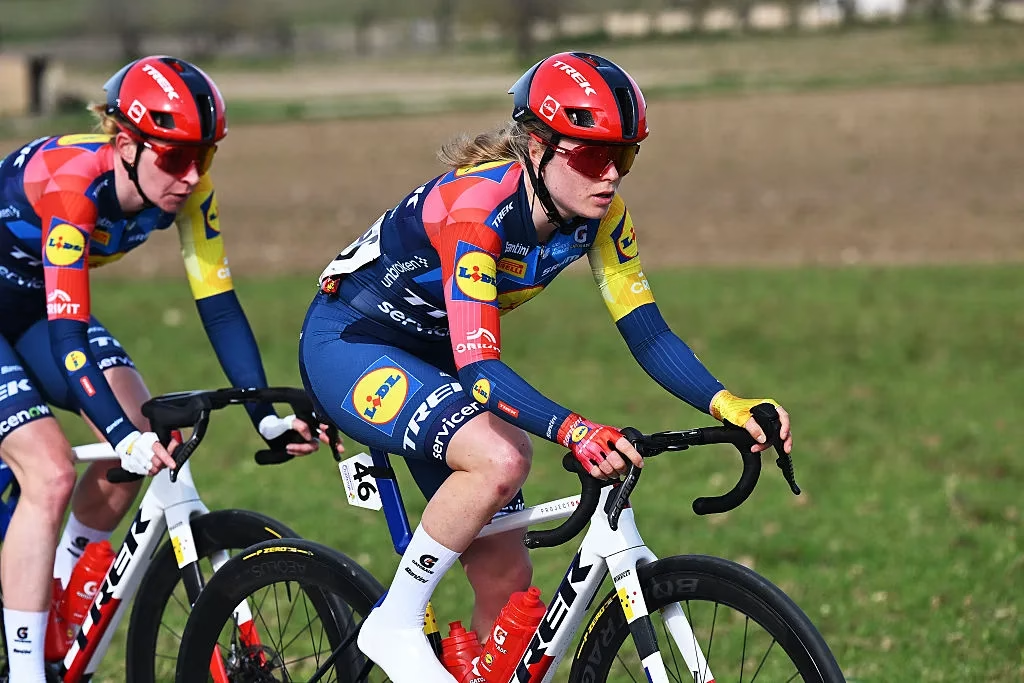
| Lidl–Trek | Trek | SRAM Red AXS | Bontrager | Santini | Bontrager | Trek / Bontrager | Wahoo |
| Liv–AlUla–Jayco | Liv | Shimano Dura-Ace Di2 | Cadex | MAAP | Giant | Giant / Cadex | Garmin |
| Movistar | Canyon | SRAM Red AXS | Zipp | Gobik | Fizik | Canyon | Garmin |
| Picnic PostNL | Lapierre | Shimano Dura-Ace Di2 | Ursus | Nalini | Prologo | Lapierre | Wahoo |
| SD Worx–Protime | Specialized | SRAM Red AXS | Roval | Specialized | Specialized | Specialized / Roval | Garmin |
| UAE Team ADQ | Colnago | Shimano Dura-Ace Di2 | Enve | Pissei | Prologo | Colnago | Wahoo |
| Uno-X Mobility | Ridley | SRAM Red AXS | DT Swiss | Fusion | Prologo | Dare | Garmin |
| Visma | Lease a Bike Women | Cervélo | SRAM Red AXS | Reserve | Yellow B | Prologo | Cervélo / FSA | Garmin |
Team-by-team: what stands out in 2026
AG Insurance–Soudal
This is the clearest example of a “single supplier” philosophy. Specialized and Roval cover much of the bike, from frames through wheels and finishing kit, with Shimano providing the drivetrain. The advantage is repeatability: the team can standardise builds across the roster and keep spare parts, maintenance routines and fit solutions consistent across a busy season.
Canyon//SRAM zondacrypto
The most complete expression of the SRAM ecosystem in the women’s peloton. SRAM Red AXS paired with Zipp wheels and Hammerhead computers makes the setup feel deliberately cohesive. These integrated sponsor stacks matter because they reduce friction when a rider needs a rapid swap or a mechanic needs to replicate a position perfectly across multiple frames.
EF Education–Oatly
New to the Women’s WorldTour for this cycle, the team lands with a clear identity: Cannondale frames, SRAM Red AXS, Vision wheels and Assos clothing. The interesting angle here is how “new” WorldTour projects often use equipment stability as a performance tool: fewer unknowns, faster learning curves, and more time to focus on training and racing rather than endless technical bedding-in.
FDJ–SUEZ
FDJ–SUEZ continue with a proven, conservative performance package: Specialized, Roval and Shimano. That combination has become almost the peloton’s reference point, and for a squad that targets big wins, predictability is a feature, not a compromise.
Fenix–Premier Tech
Canyon frames with Shimano Dura-Ace Di2 and Shimano wheels remains a distinctive choice. Shimano wheel usage, in particular, signals a preference for integrated drivetrain-and-wheel compatibility within one technical philosophy, even while many teams gravitate towards a “mix and match” approach.
Human Powered Health
Factor frames and SRAM Red AXS keep the team on a modern aero-first platform. The wider theme here is how teams increasingly lean into complete performance “systems”: wheels and finishing kit from the same family as the frame sponsor, and clothing designed to complement the riding position. The marginal gains tend to be small individually, but they stack.
Lidl–Trek
Lidl–Trek remain one of the most vertically integrated operations: Trek bikes, Bontrager wheels and components, SRAM Red AXS and Wahoo computers. That kind of integration often shows up in the classics, where quick bike changes, predictable handling and robust equipment support can matter as much as raw speed.
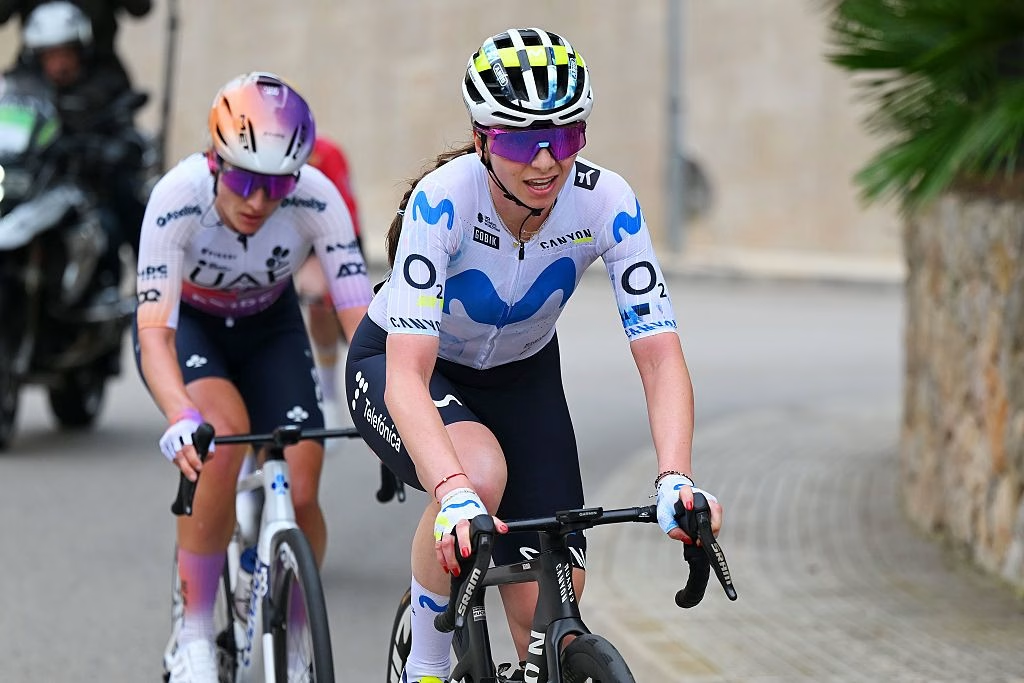 Photo Credit: Getty
Liv–AlUla–Jayco
This is a “family” build in the best sense: Liv frames, Cadex wheels and Giant/Liv finishing kit, combined with Shimano Dura-Ace Di2. The strength here is that the equipment is designed to work together as a complete package rather than a collection of best-in-class parts.
Movistar
Canyon plus SRAM Red AXS and Zipp wheels gives Movistar a clean, modern setup, with Garmin and Fizik completing a familiar sponsor profile. Movistar’s equipment story is not about novelty. It is about refinement, and that suits a team expected to be competitive across varied terrain.
Picnic PostNL
Lapierre, Shimano Dura-Ace Di2, Ursus wheels and Nalini clothing make for a coherent European sponsor stack. The broader point is stability. Teams that are not reinventing their equipment year-on-year can spend more time optimising fit, tyre choice and race-day setup.
SD Worx–Protime
A full-fat Specialized package paired with SRAM Red AXS. When a team runs a dominant equipment “spine” like this, it reduces decision fatigue. Riders know what they are racing. Mechanics know exactly what they are servicing. And that consistency can be a competitive advantage over a long season.
UAE Team ADQ
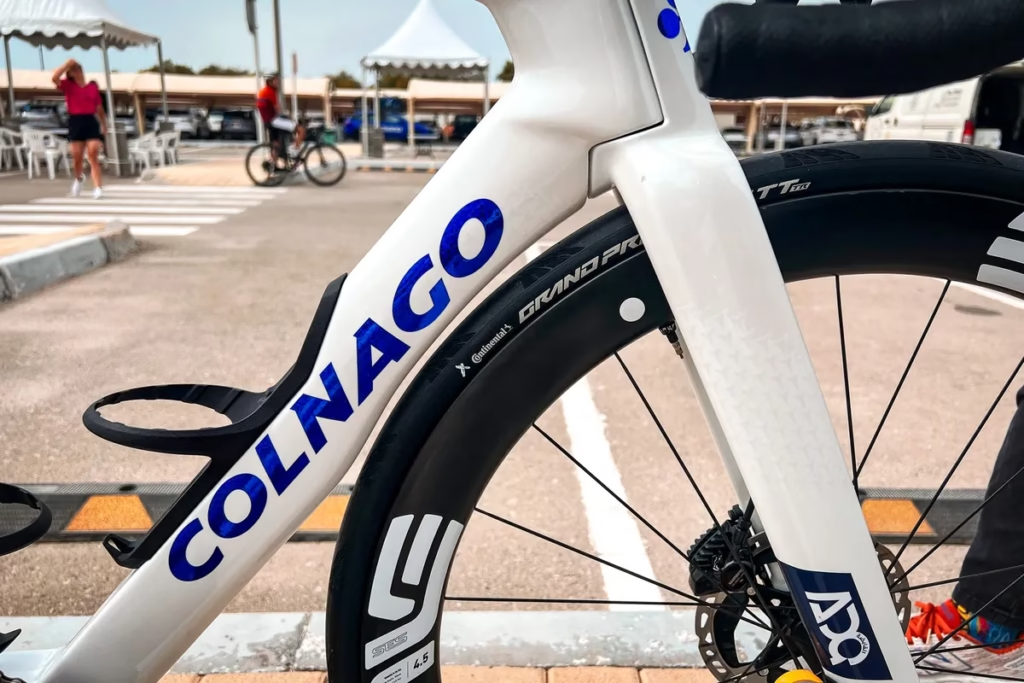
Colnago plus Shimano Dura-Ace Di2 remains the anchor, with Enve wheels and Wahoo computers. UAE Team ADQ’s setup reads like a pure performance build: premium frame platform, high-end wheel partner, and a drivetrain choice that is still the benchmark for many teams.
Uno-X Mobility
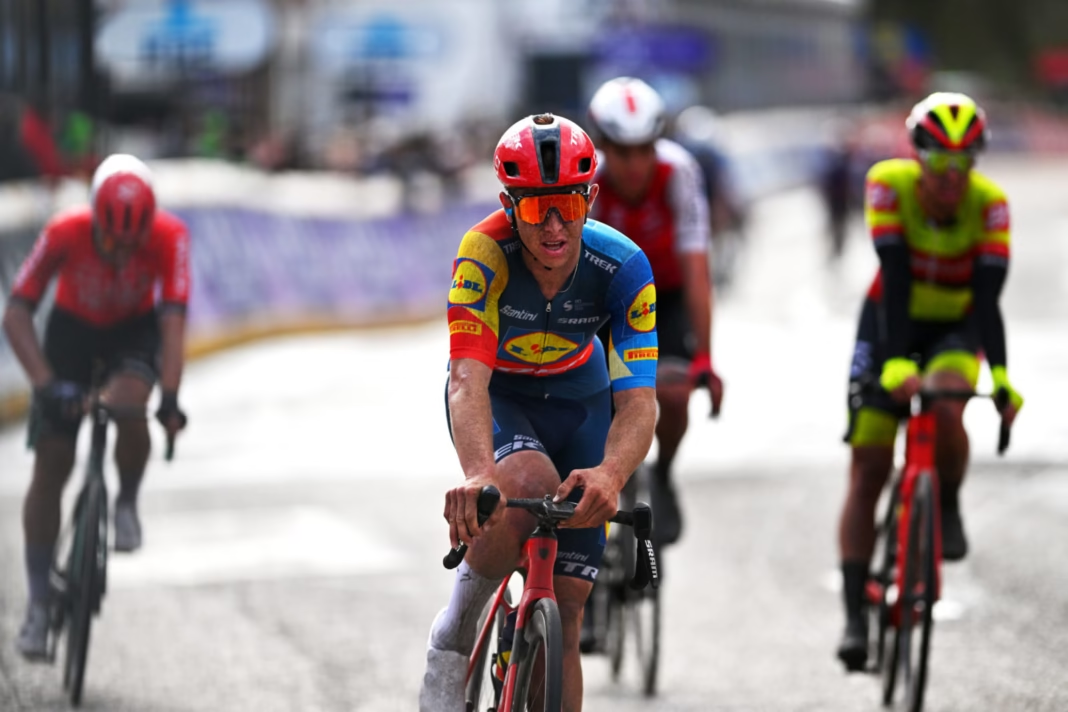
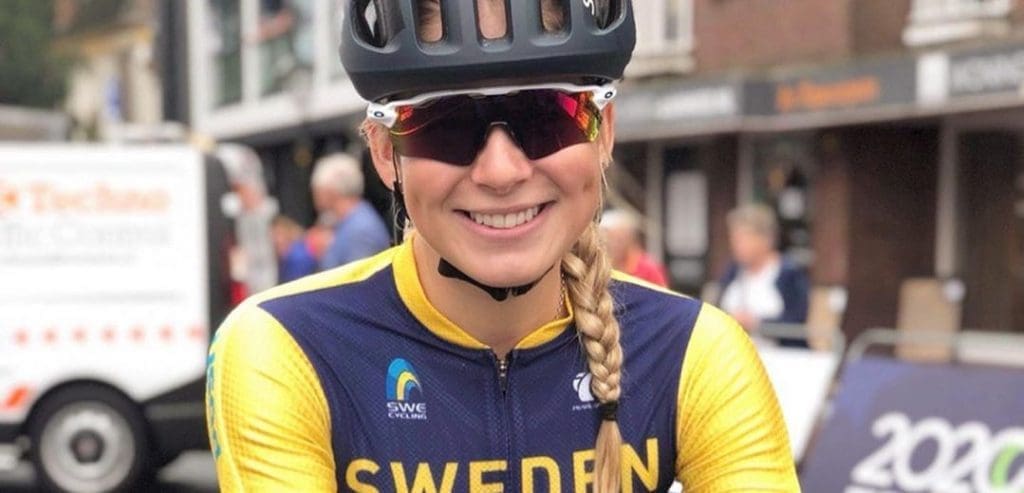
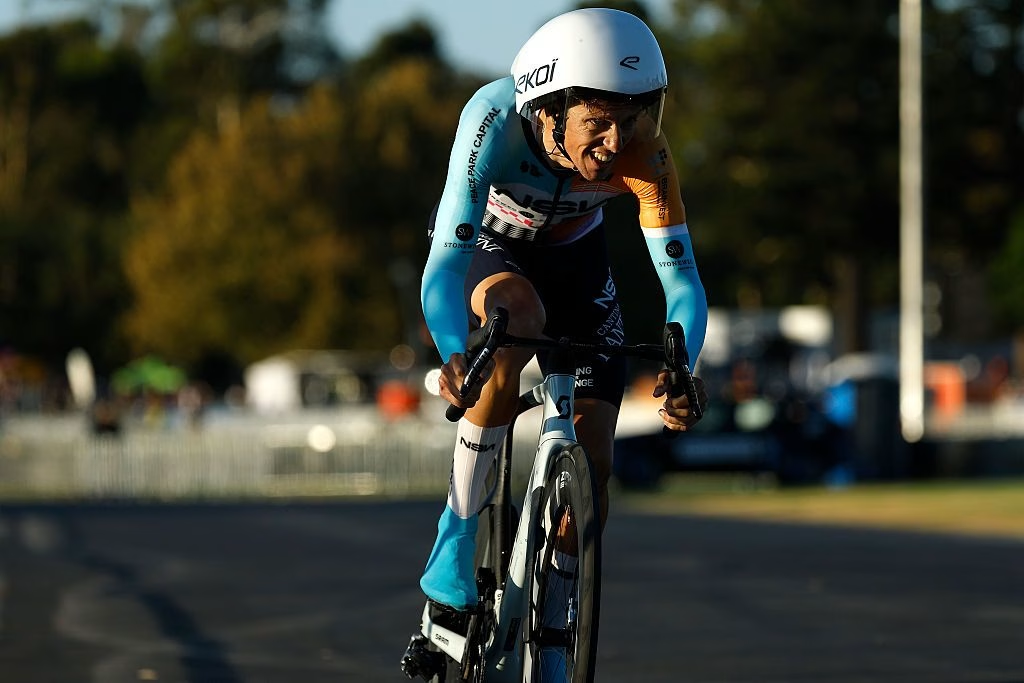
Ridley frames, SRAM Red AXS and DT Swiss wheels gives Uno-X a robust, classics-friendly profile. Teams riding rougher terrain or racing in harsh conditions often value straightforward servicing and predictable handling over chasing novelty.
Visma | Lease a Bike Women
Cervélo, SRAM Red AXS and Reserve wheels is now an established top-tier formula. It is the kind of equipment package designed to perform across the entire calendar, from early season stage races through to the hardest one-day tests.

