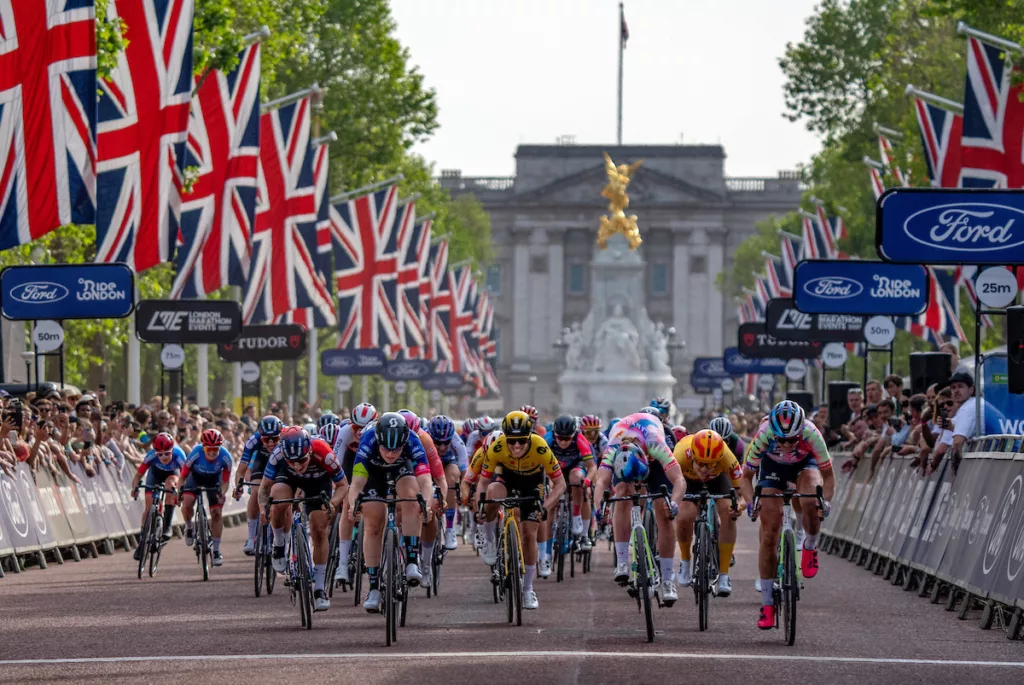
RideLondon has been placed on indefinite pause following a strategic review that cited operational and financial considerations, with organisers confirming the event will not continue in its current format.
The decision brings a major shift for British cycling. RideLondon was designed as one of the most visible sporting legacies of the London 2012 Olympic Games, blending mass participation rides with elite racing on closed roads through the capital and, later, Essex. Over ten editions, the event inspired more than 500,000 participants and raised more than £85 million for charity.
The organisers added that future efforts will instead focus on expanding access to cycling and promoting active travel across London and beyond.
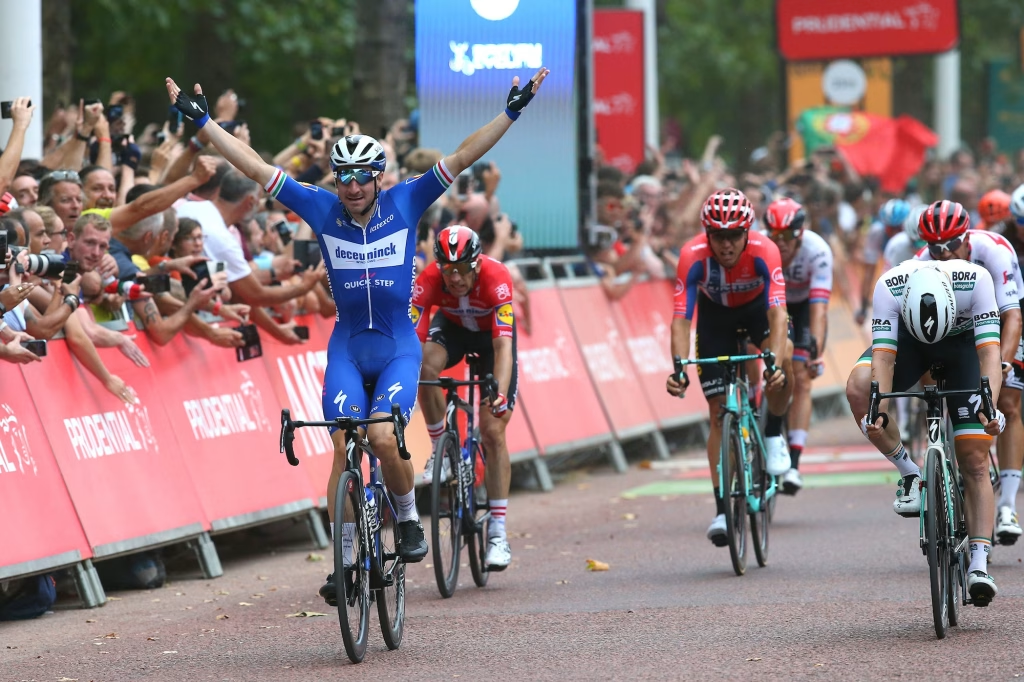 Photo Credit: Getty
From Olympic legacy to flagship festival
RideLondon was first held in 2013, built around the idea that London should retain the “closed roads” feel that made the Olympic road races so iconic for spectators and riders alike. The festival quickly became a fixture in the British sporting summer, offering everything from family-friendly city riding to a full-scale 100-mile sportive, alongside professional racing.
In its early years, the event was delivered in partnership with Surrey County Council, with the headline mass participation ride taking riders from London out into the Surrey Hills and back. That Surrey link also shaped the professional racing narrative, tying RideLondon closely to the Olympic route geography.
The men’s London–Surrey Classic: the rise and disappearance of a WorldTour one-day race
The elite men’s event, the RideLondon–Surrey Classic, ran from 2013 to 2019 and became the festival’s original centrepiece. It grew fast, stepping up the UCI ladder before reaching WorldTour status between 2017 and 2019, giving Britain a rare men’s WorldTour one-day race.
The course was built around a London start and finish with a long loop into Surrey and multiple climbs in the Surrey Hills. It was a route designed for a reduced bunch or a late attack rather than a straightforward sprint, with the final run-in back to The Mall providing a high-profile finish line fit for a major international race.
That race did not survive the post-pandemic reshaping of the event. RideLondon was cancelled in 2020 and 2021 due to COVID-19, and when it returned, the men’s WorldTour classic did not.

The women’s event: from a London one-day sprint to a three-stage WorldTour race
Women’s elite racing, though, had been present from the very beginning. The women’s event originally ran as a one-day race on a central London circuit, finishing on The Mall, where the short, flat laps frequently delivered sprint finishes in front of big crowds.
In 2016, the race was added to the UCI Women’s WorldTour and was renamed the RideLondon Classique. It also became notable for offering a prize fund comparable to the men’s event at the time, a statement of intent in an era when women’s prize money was still often treated as an afterthought.
After the pandemic cancellations and a change in the event’s structure, RideLondon returned in 2022 with Essex County Council as a key partner and with the women’s race expanded into a three-day stage race. The format shifted the story away from a pure London criterium and towards a mini-tour, typically using Essex for the first two stages before concluding with a circuit stage back in central London.
The move was significant: it gave the Women’s WorldTour a high-profile British stage race at a time when top-tier women’s racing was still trying to establish stable, repeatable fixtures outside the traditional heartlands.
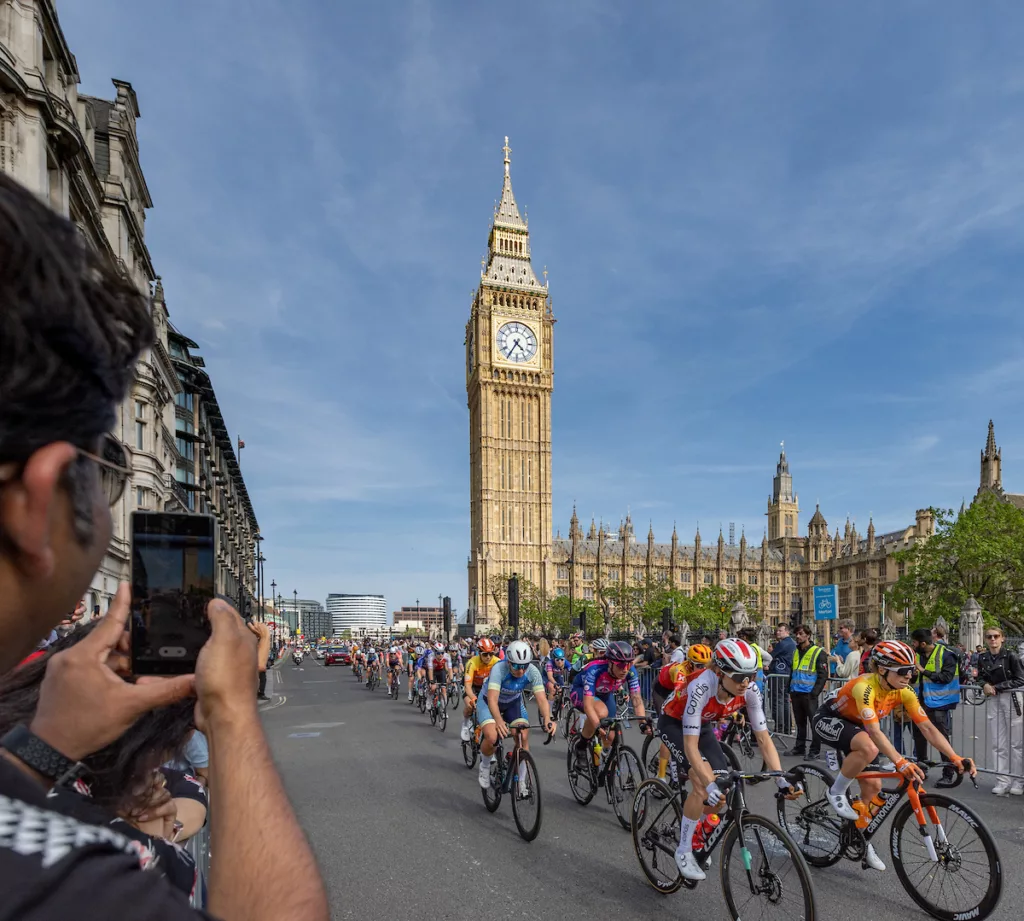 Photo Credit: Chloe Knott for London Marathon Events
Broadcast pressures and the reality of running elite racing in London
The move to a three-stage race also brought pressure. Broadcast requirements are central to Women’s WorldTour status, and RideLondon faced scrutiny around live coverage in its early stage-race years. That tension underlined a wider truth about elite racing in the UK: putting on world-class cycling in London is logistically complex and expensive, and keeping it on the WorldTour calendar depends on partners, budgets, policing resources, and broadcast deliverables all lining up.
A decade of editions, then a slow drift towards this moment
RideLondon ran annually from 2013 to 2019, then disappeared for two years because of the pandemic. It returned in 2022, staged in partnership with Essex, and held editions again in 2023 and 2024, with the tenth and most recent event taking place in May 2024.
The organisers have now confirmed that, following the strategic review, RideLondon will not continue in its current format and has been placed on indefinite pause.
What it means for Britain’s elite women’s road calendar
For women’s racing, the pause removes a rare, high-visibility platform: a Women’s WorldTour fixture that brought the sport into the centre of London and delivered a stage-race structure on British roads. It also lands at a time when the UK’s elite women’s calendar has already been under strain, leaving fewer opportunities for domestic teams, British sponsors, and riders to compete at home in the top tier.
For now, the headline is simple: RideLondon, one of Britain’s biggest cycling weekends and a decade-long Olympic legacy project, has been put on ice, and there is no confirmed pathway for the festival or the RideLondon Classique to return in the immediate future.