Women’s Ronde van Brugge is the latest name for a race that has changed identity several times in a relatively short history, without ever really losing its place in the spring. The women’s event began in 2018 as part of the broader Three Days of Bruges-De Panne set-up, later became widely known as Classic Brugge-De Panne, and from 2026 moves forward as Ronde van Brugge – Tour of Bruges. The women’s 2026 edition is scheduled for Thursday, 26 March.
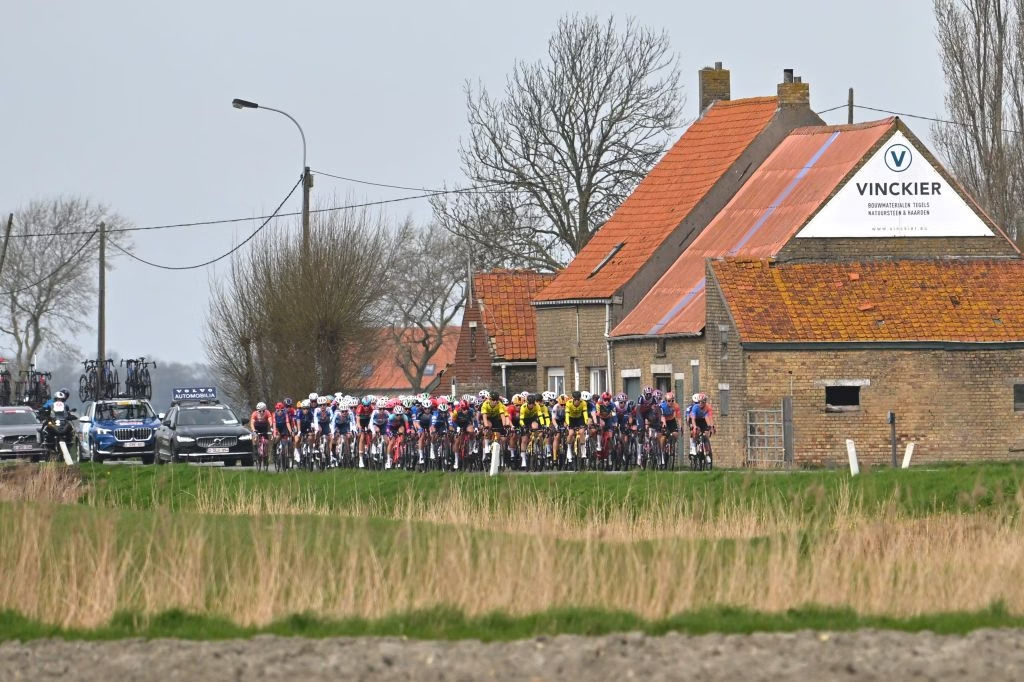
For many fans, this is still the race they most strongly associate with the long, nervous run from Bruges toward De Panne and, more specifically, with De Moeren. That flat, exposed landscape became the defining image of the race in its Brugge-De Panne era. It was the place where crosswinds could split the bunch, where sprint teams could lose control, and where the race’s reputation as far more than a routine flat one-day event was properly earned.
That is exactly why the 2026 change matters historically, not just cosmetically. The race no longer goes to De Panne, and the old windswept passage through De Moeren is gone with it. In its place comes a new route structure based around Brugge, with the event now starting and finishing there. The name change to Ronde van Brugge is therefore not just cleaner branding. It reflects a genuine break with the route feature that had defined the race’s sporting identity for much of its short life.
Women’s Ronde van Brugge winners
- 2018 – Jolien D’Hoore
- 2019 – Kirsten Wild
- 2020 – Lorena Wiebes
- 2021 – Grace Brown
- 2022 – Elisa Balsamo
- 2023 – Pfeiffer Georgi
- 2024 – Elisa Balsamo
- 2025 – Lorena Wiebes
Even that short winners list tells you a lot. This has often been described as a sprinters’ classic, and the names of D’Hoore, Wild, Wiebes and Balsamo support that. But Grace Brown’s solo win in 2021 and Pfeiffer Georgi’s victory in 2023 are a reminder that this race has never been only about the fastest rider in a straightforward finish. It has always rewarded riders who can survive pressure first and use their strength second.
How the women’s race began
The women’s race is a modern event by Belgian standards. Its first edition came in 2018, when the men’s Three Days of De Panne had already been reshaped and the women’s event was introduced as a one-day race inside that wider Bruges-De Panne framework. From the start, it had a strong place on the calendar because it arrived in one of the most important weeks of the Flemish spring.
That mattered because the race was never treated like a minor addition. It sat in a high-profile slot and quickly became part of the logic of late March racing. Teams came to it with real ambition, and the winners reflected that. Jolien D’Hoore opening the roll of honour felt like an early clue to what this event would become: a race where speed mattered, but where positioning, resilience and the ability to stay calm on exposed roads mattered just as much.
From Three Days of Bruges-De Panne to Classic Brugge-De Panne
One reason the race’s history can sound slightly confusing is that the event title and the women’s race format were never really the same thing.
The women’s race was never a three-day stage race. It started as a one-day event in 2018, but it did so under the broader Three Days of Bruges-De Panne banner. What it inherited was the identity of the event week rather than the structure of the old men’s race.
That is why Classic Brugge-De Panne became the name most fans settled on. It was a more natural fit for what the women’s race actually was: a one-day WorldTour race, high in profile, strongly linked to Bruges and De Panne, and built around a route that made wind and road position at least as important as climbing. The title matched the race better, and the race itself quickly built a recognisable identity under it.
What defined the Brugge-De Panne years
The central feature of the race’s history up to 2025 was De Moeren.
That section gave the race its mood and, often, its shape. De Moeren is flat, open and highly exposed, which made it ideal terrain for crosswinds and echelons. In some years it broke the race apart. In others it created enough fear and enough stress to shape the outcome even without a full collapse of the peloton. Either way, it was the place riders, teams and fans watched most closely because they knew the race could change there very quickly.
That was the key to understanding Classic Brugge-De Panne as a sporting event. On paper, it looked flat. In practice, it could be one of the more nervous and tactically revealing races of the spring. Sprint teams needed control, but they also needed strength in depth. Classics riders knew there was always a chance that wind and hesitation could open the door to something more selective than a simple bunch finish.

Why the race is now called Ronde van Brugge
The 2026 rebrand makes much more sense once you understand what has been removed.
This is no longer a race that uses the Bruges to De Panne axis as its defining line. De Panne is gone from the route. De Moeren is gone from the route. A new loop around Brugge takes their place, and the race now starts and finishes in Brugge itself. The old name had history, but it no longer described the course accurately enough.
That matters because Belgian race names are rarely decorative. They usually tell you where a race belongs and what part of the region gives it its character. In that sense, Ronde van Brugge is not just a fresh title. It is an admission that the race has left behind the defining coastal and crosswind geography of its earlier life and now belongs to a different map.
The winners tell the real story
Look again at the winners and the race starts to make sense as more than just a naming exercise.
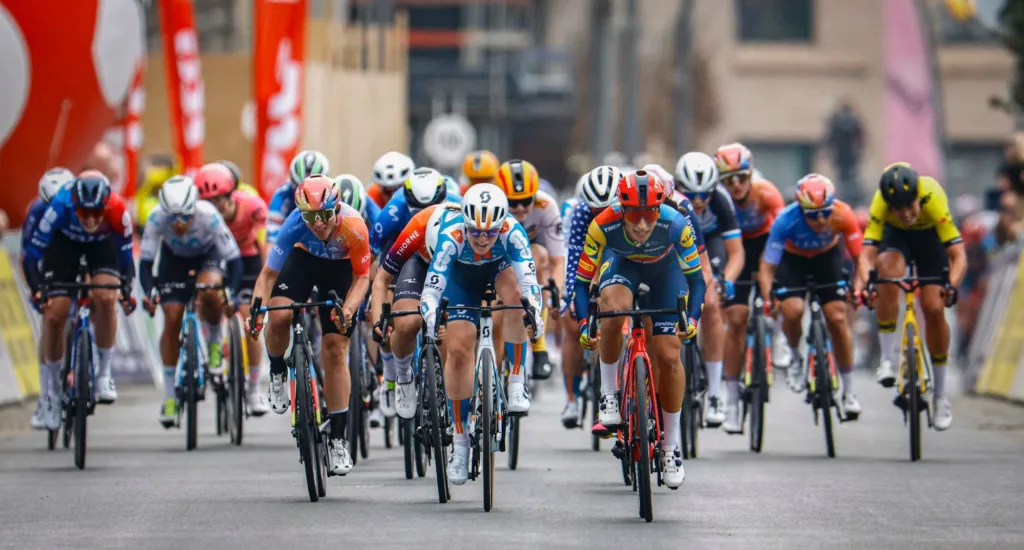
Lorena Wiebes and Elisa Balsamo, each with two wins, are the clearest symbols of the race’s sprinting side. Both are fast enough to dominate from a reduced bunch, but both are also strong enough to survive the stress that came before it. They were not simply winning flat races. They were winning tense, exposed one-day races where the finish only mattered if you had first survived the approach.
Grace Brown and Pfeiffer Georgi, by contrast, represent the other side of the race’s personality. Their wins showed that this event could still reward strength, timing and opportunism when the expected script broke down. That is what made the race so interesting for seasoned fans and useful for newer ones. It taught the same lesson repeatedly: speed is only decisive if the race allows you to use it.
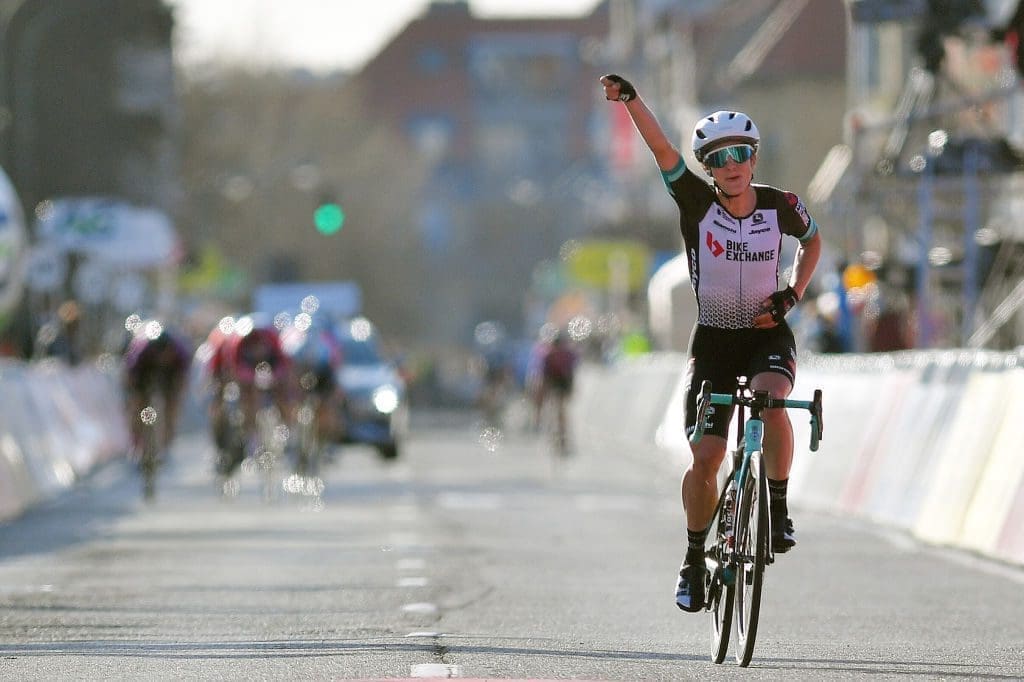 Photo Credit: Getty
What changes in 2026
The biggest historical question now is simple enough: what happens to the race when the feature that defined it is removed?
Without De Moeren and without the old pull toward De Panne, the race should still remain one for fast riders and aggressive teams, but the shape of that stress may change. A Brugge-centred loop can still be nervous, still be windy, still produce a hard race. But it will not carry the same symbolic warning as the approach to De Moeren did. That means the 2026 edition is not just a new chapter in name. It is the first real test of whether the race can preserve its sporting identity while changing one of its most recognisable route features.
That is what makes this moment in the race’s history genuinely interesting. Up to now, the event’s evolution had mostly been about branding catching up with reality. In 2026, the reality itself changes.
Why the race still matters
Even with the new name and route concept, the race still holds an important slot in the women’s spring.
By late March, the Belgian one-day season is already beginning to reveal which riders are sharp, which sprint teams have real control, and which classics riders can turn nervous races to their advantage. Women’s Ronde van Brugge remains valuable because it asks those questions in a very clear way.
Its history is brief, but it has already been rich enough to show what modern women’s cycling can do with the right calendar slot and the right route identity. From Three Days of Bruges-De Panne to Classic Brugge-De Panne and now to Ronde van Brugge, the labels have changed to match the map. The sporting appeal has always been deeper than that.
This has been a race where speed mattered, but only after positioning, resilience and nerve had already been tested. The historical challenge for 2026 is whether it can still feel like the same race once De Moeren is no longer there to define it.
-
 Photo Credit: Cor Vos