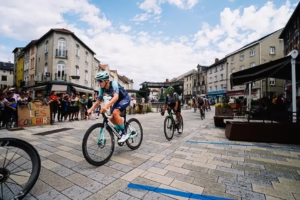
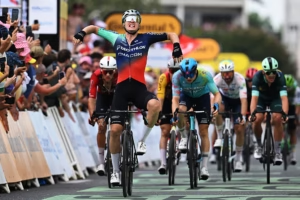
Milano-Sanremo 2026 begins in Pavia and finishes, as ever, on Via Roma in Sanremo. The route is 298km long, which makes it nine kilometres longer than the 2025 edition and reinforces what this race already was, the longest Monument and the most deceptive. On paper, much of the day still looks manageable. In reality, Milano-Sanremo is a race of accumulation, where patience, positioning and timing matter far more than the profile first suggests.
That is what makes the route so distinctive. This is not a race built around repeated climbs or constant spectacle. It is a race that spends hours pretending to be simple before suddenly becoming one of the hardest one-day races in the sport to control. ProCyclingUK’s Beginner’s guide to Men’s Milano-Sanremo 2026 gives the wider context, but the short version is this: the route stays open to multiple rider types until very late, and that is exactly why it is so dangerous.
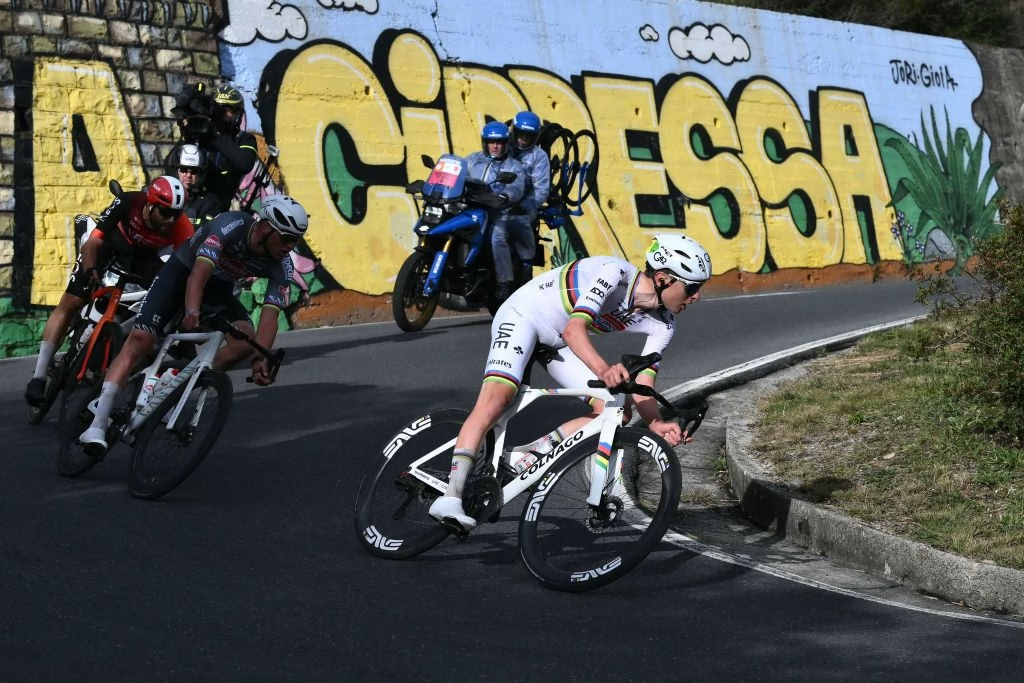 Photo Credit: Getty
The start in Pavia
The 2026 race again starts in Pavia rather than Milan itself, but this year the route pushes north towards the Certosa area before looping back and then heads out on new roads through Sannazzaro de’ Burgondi and Casei Gerola before reconnecting with the more familiar approach. That early addition is what stretches the race back out to 298km. It does not fundamentally change the type of race Milano-Sanremo is, but it does add one more layer of fatigue before the peloton even reaches the classic landmarks.
For the first-time viewer, this section matters less for tactics than for context. The opening half of Milano-Sanremo is usually about energy conservation, breakaway management and staying out of trouble. Teams are not trying to win here. They are trying not to lose the race before it starts to matter.
The long run south
After the northern loop and the reconnection with the traditional roads, the race resumes the familiar march south-west through Lombardy towards the Ligurian coast. Towns like Voghera and Tortona mark the transition back into the classic route structure, and eventually the peloton works its way towards the Passo del Turchino.
This is the part of Milano-Sanremo that can be easy to underestimate. It is not selective in the obvious sense, but it is still essential to the race’s identity. Riders are spending hours exposed to wind, stress and the sheer wearing effect of distance. A six-hour race would already be hard. A near-300km Monument is hard in a very different way. By the time the key climbs arrive, the riders are not fresh versions of themselves. They are already carrying a full day in their legs.
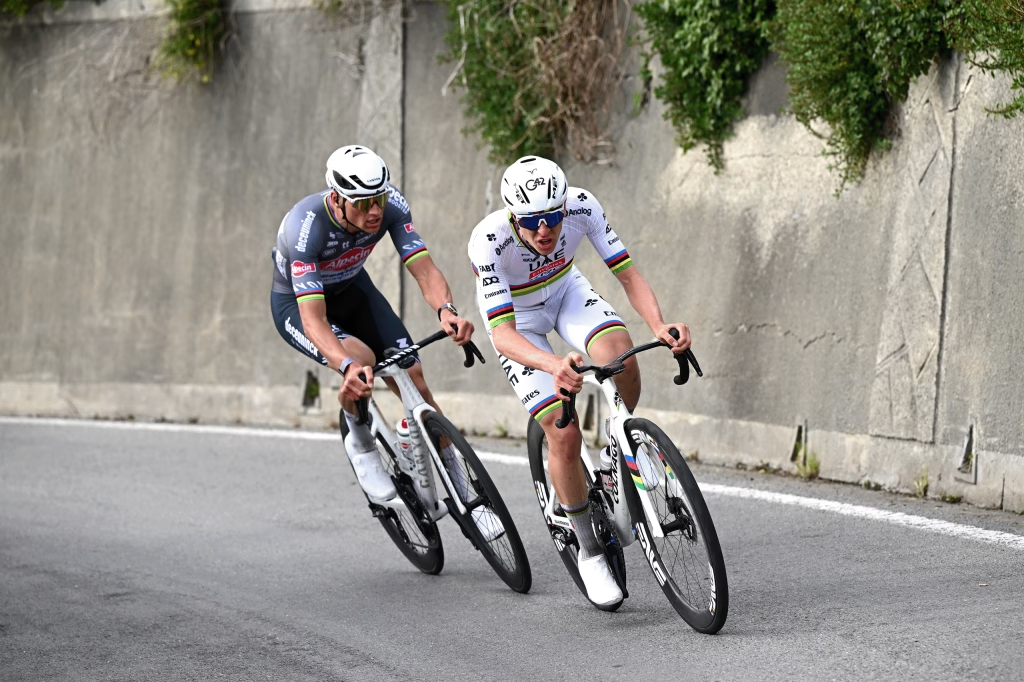 Photo Credit: Getty
Passo del Turchino and the move to the coast
The Passo del Turchino remains one of the race’s traditional reference points, even if it no longer decides very much directly. It is not steep enough or late enough to break the race apart among the favourites, but it still marks an important psychological shift. Once the riders crest it and descend towards the sea, Milano-Sanremo starts to feel like itself.
From there, the race joins the Ligurian coastline and begins the long eastward run towards Sanremo. This section can look calm, but that can be misleading. Teams begin to reorganise, riders start guarding position more carefully and the shape of the finale slowly starts to form.
The Capi
Before the two famous climbs come the three less glamorous but still important ones: Capo Mele, Capo Cervo and Capo Berta. These are not usually where the winning move goes, but they matter because they start to strip away any illusion that a pure bunch sprint is inevitable. They also force teams to reveal how much control they really have left.
For beginners, the important thing to understand is that the Capi are part of the compression effect that makes Milano-Sanremo such a strange race. Nothing here is individually decisive. The route works because each step makes the next one more dangerous.
Cipressa
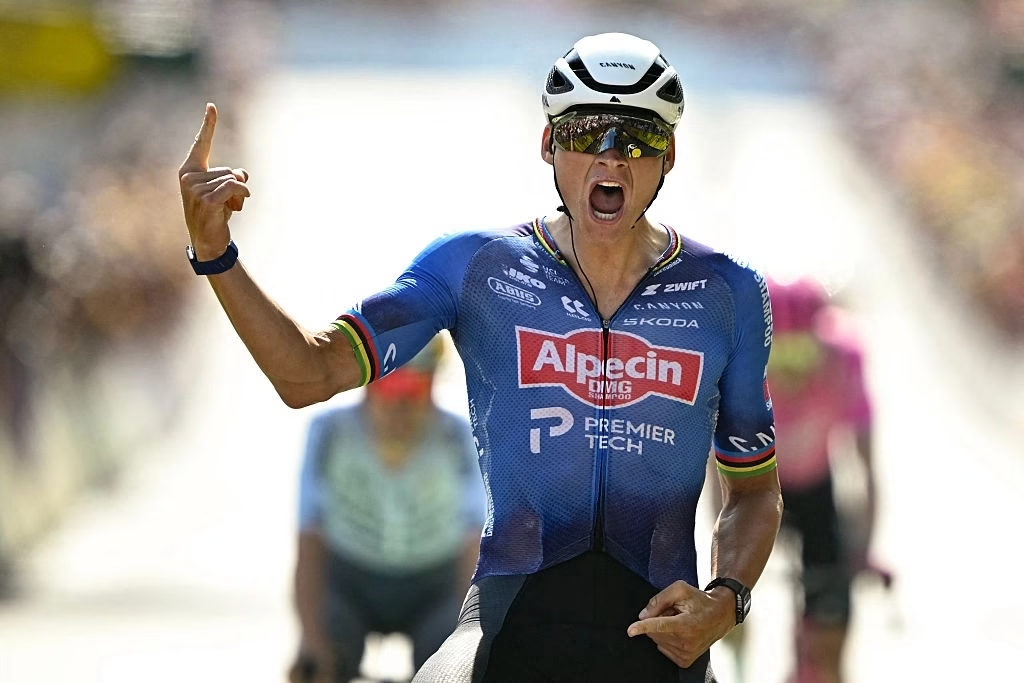
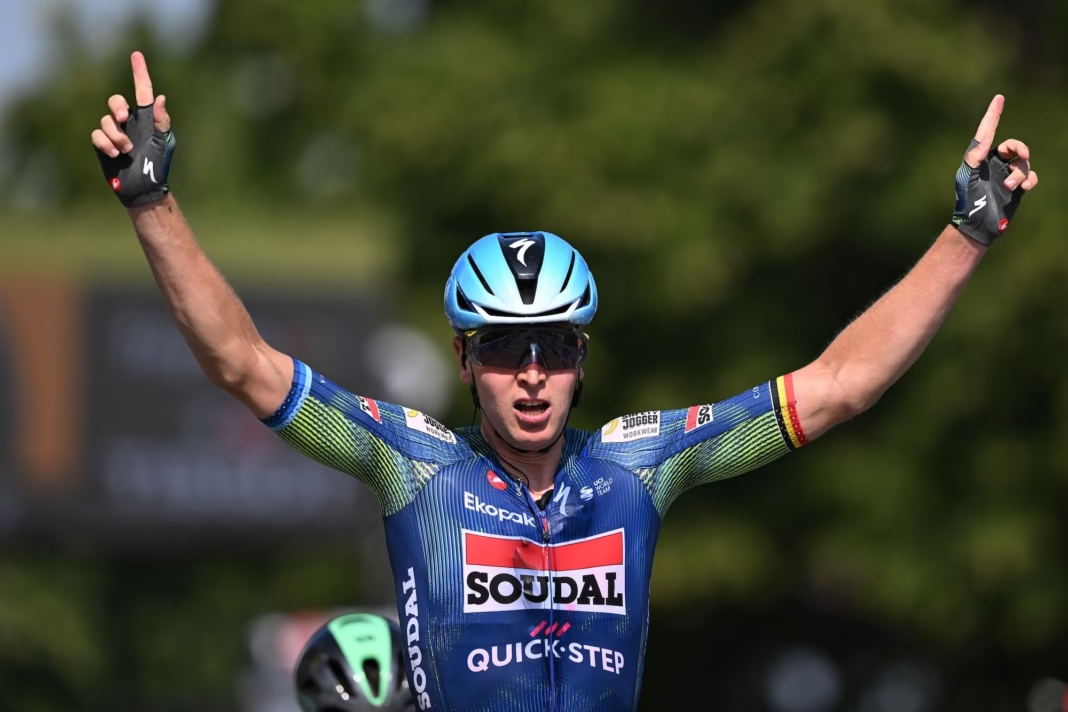
The Cipressa comes with 21.6km to go and remains 5.6km long at an average gradient of 4.1 per cent. On paper, those numbers do not look terrifying. In context, they are absolutely central. After more than 270 kilometres of racing, the Cipressa is steep enough, long enough and late enough to force teams into difficult choices.
That is especially true after what happened in 2025, when the race was blown apart there far more dramatically than usual. The climb has always mattered, but recent racing has reminded everyone that it is not merely a prelude to the Poggio. If a team wants to turn Milano-Sanremo into something more selective than a reduced sprint, the Cipressa is the first major place to do it. ProCyclingUK’s Milano-Sanremo 2026 team-by-team guide is the natural companion here, because the teams with multiple options are often the ones best placed to exploit the Cipressa properly.

The descent from the Cipressa
The descent is technical enough to matter, and that is one of the recurring themes of the race. Milano-Sanremo is never only about climbing. It is about what comes immediately after. A rider who crests in the right group still has to descend cleanly, stay calm and avoid losing position on the way back to the Aurelia.
That is why this Monument suits riders who can do several things well. Pure climbers do not always win. Pure sprinters do not always survive. The route rewards riders who can think clearly at speed after six and a half hours of racing.
Poggio di Sanremo
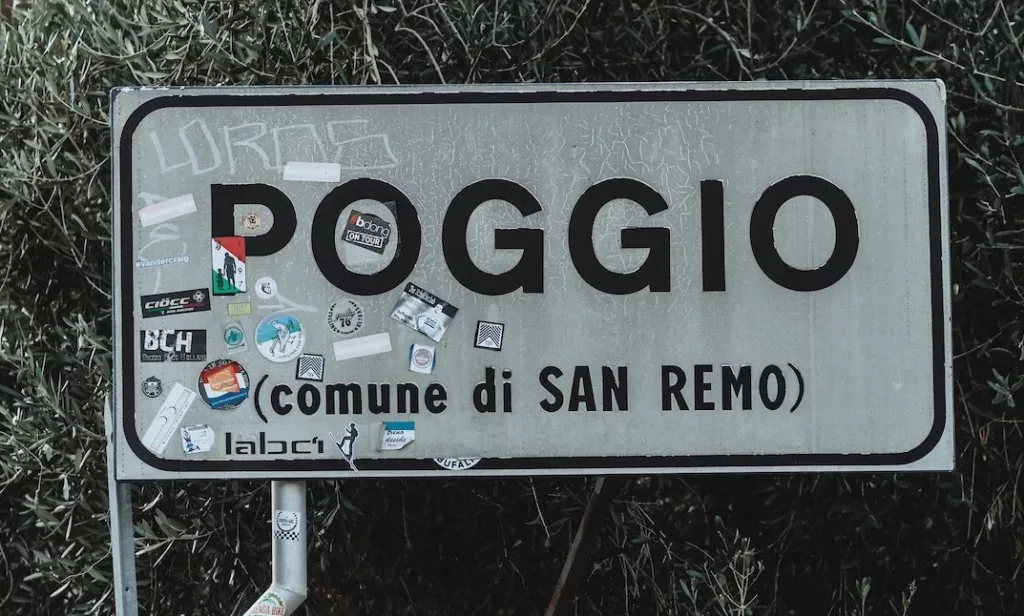
Then comes the Poggio, the climb that defines the race without ever fully explaining it. The Poggio begins with 9km to go and rises for 3.7km at an average gradient just under 4 per cent, with steeper ramps touching 8 per cent before the summit. The road narrows slightly, the bends matter, and the whole climb becomes a fight for position before it becomes a test of legs.
The key to the Poggio is not that it is brutally hard. It is that it comes so late, and that everyone knows it is the final true launch point. A rider who can produce one explosive effort here can win Milano-Sanremo. A rider who hesitates for a moment can watch the race disappear. That is why the Poggio remains one of the most suspenseful climbs in cycling. It does not eliminate many riders in the conventional sense. It just creates the exact sort of uncertainty from which winners emerge.
The descent to Sanremo
From the summit, there are only 5.6km left to the finish. The descent is fast, technical and absolutely vital. A rider who attacks on the Poggio still has to descend with precision, because this is one of the few Monuments where descending skill can be as decisive as climbing strength.
This is also where Milano-Sanremo becomes a race of nerve. If a small group hesitates, the chasers can come back. If the chasers hesitate, a solo rider can stay clear. There is very little time for anyone to reset their thinking. The race is simply there, happening at full speed.
The finish on Via Roma
The finish remains on Via Roma in Sanremo, which helps preserve the race’s traditional visual identity even as the start and early kilometres continue to evolve. It is one of cycling’s great finishing straights because it can host more than one type of ending. A lone winner arriving with seconds in hand looks right here. A reduced sprint between exhausted contenders also looks right here. That flexibility is built into the route itself.
That is the genius of Milano-Sanremo. The route is not trying to force one type of race. It is designed to stay uncertain for as long as possible.
What the 2026 route means for the race
The biggest change in 2026 is the added distance at the start, but the real soul of the race remains untouched. Pavia is still the starting point, the Ligurian coast still acts as the gateway to the finale, and the final sequence of Capi, Cipressa and Poggio still holds the race open to sprinters who can climb, attackers who can descend and all-rounders who can do both.
That is why Milano-Sanremo 2026 still looks like one of the hardest races in cycling to control and one of the easiest to ruin with a single mistake. It is not a race of endless attacks. It is a race of compressed decisions. The route gives everyone hope, then asks them to make the right choice at exactly the right moment.
For more on how the finale shapes the contenders, ProCyclingUK’s Milano-Sanremo 2026 team-by-team guide and Beginner’s guide to Men’s Milano-Sanremo 2026 are the next reads.