
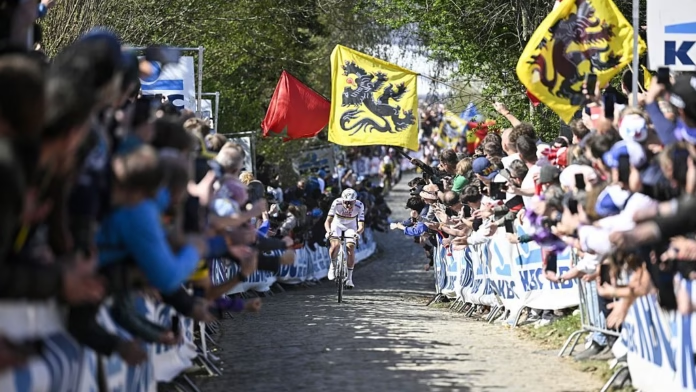
Men’s Ronde van Vlaanderen 2026 takes place on Sunday 5 April. The race starts in Antwerp, finishes in Oudenaarde and covers 267km. For anyone new to it, the simplest way to understand it is this: it is not just Belgium’s biggest one-day race, it is a race of pressure. The route does not rely on one mountain or one decisive sector. Instead, it keeps asking harder questions until only the strongest, smartest and best-positioned riders are left with real answers.
That is what makes the Tour of Flanders different from other major Classics. It is not Paris-Roubaix, where the flat pavé sectors dominate the identity. It is not Milano-Sanremo, where the suspense is compressed into the final climbs and descent. Men’s Ronde van Vlaanderen is about repeated violent efforts on short, steep climbs, often on cobbles, with almost no room to hide. If you want the wider Flemish context first, ProCyclingUK’s Beginner’s guide to E3 Saxo Classic 2026 and Beginner’s guide to Men’s Dwars door Vlaanderen 2026 are the natural companion pieces, because those races help explain the terrain and rhythm that Flanders then magnifies.
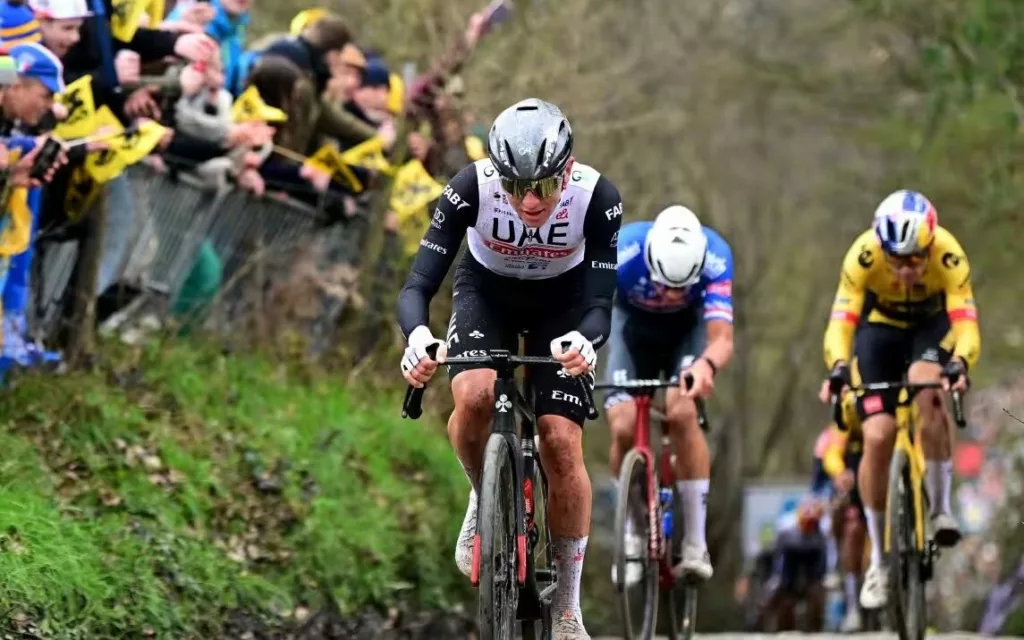
What is Men’s Ronde van Vlaanderen?
Men’s Ronde van Vlaanderen, or the Tour of Flanders, is one of cycling’s five Monuments and the second Monument of the season after Milano-Sanremo. It is also one of the defining events of Belgian sport. The 2026 edition is the 110th running of the race, which tells you how deep the history goes and why winning it carries so much weight.
For beginners, it helps to think of it as the ultimate test of the cobbled berg specialist. Riders need endurance for a near-270km day, power for repeated climbs, skill over cobbles, and the tactical awareness to fight for position hour after hour. Plenty of riders can handle one of those demands. Very few can handle all of them on the same afternoon.
Why is the race so important?
The short answer is prestige, history and difficulty.
The longer answer is that Men’s Ronde van Vlaanderen is one of the rare races that can define a rider’s whole career. Win it once and your name is tied to one of the sport’s most prestigious traditions. Win it more than once and you move into a different category entirely. That is because the race asks for so many different qualities at once. It is not enough to be strong. You have to be strong in exactly the right places, and calm enough to make the right decisions when the race is at its most frantic.
It also matters because Flanders sits at the centre of the cobbled spring. Performances here do not just stand alone. They shape how the whole season is remembered.
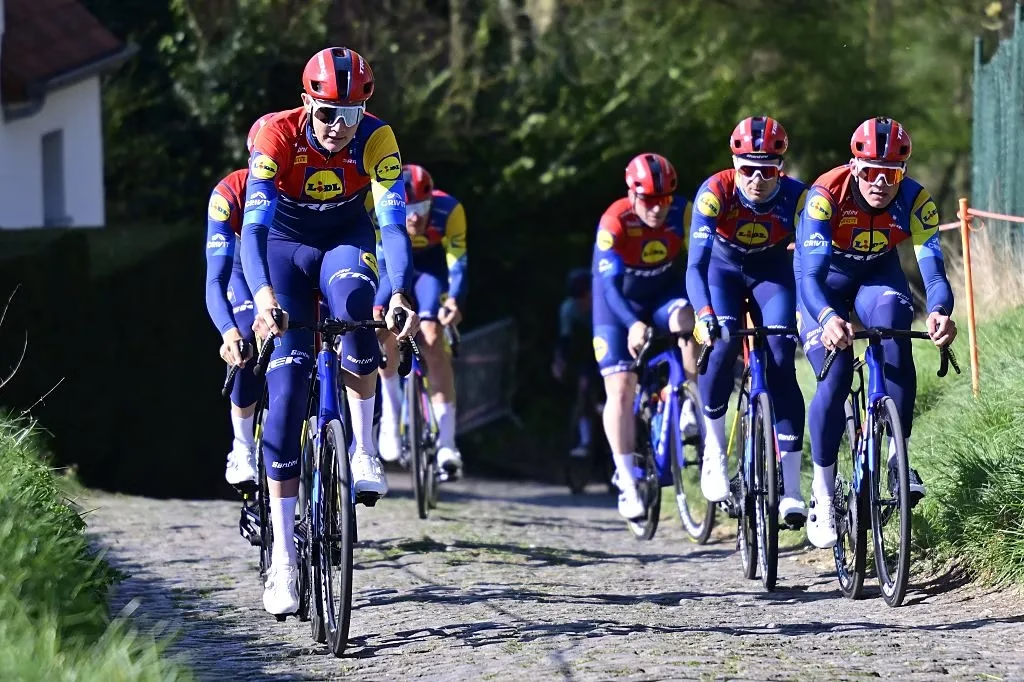
What does the 2026 route look like?
The 2026 route returns to a familiar shape. After a long opening phase from Antwerp, the first cobbled sectors are Lippenhovestraat and Paddestraat. The men then hit the Oude Kwaremont for the first time with 136km still to race, which is where the route starts to feel like Ronde van Vlaanderen in the full sense.
From there, the race builds through the classic hill zone. The finale begins in earnest with 45km remaining on the Koppenberg. After that come Mariaborrestraat, Taaienberg, Oude Kruisberg-Hotond, and then the decisive closing sequence of Oude Kwaremont and Paterberg. The top of the final Paterberg comes 13km from the finish in Oudenaarde. Steenbeekdries drops out in 2026 because of roadworks, but otherwise the route keeps the familiar architecture that has made recent editions so selective.
That route shape matters because Flanders is built to escalate. The first half sets the tone. The second half decides the race.
Which climbs matter most?
For first-time viewers, there are four names to lock in straight away: Koppenberg, Taaienberg, Oude Kwaremont and Paterberg.
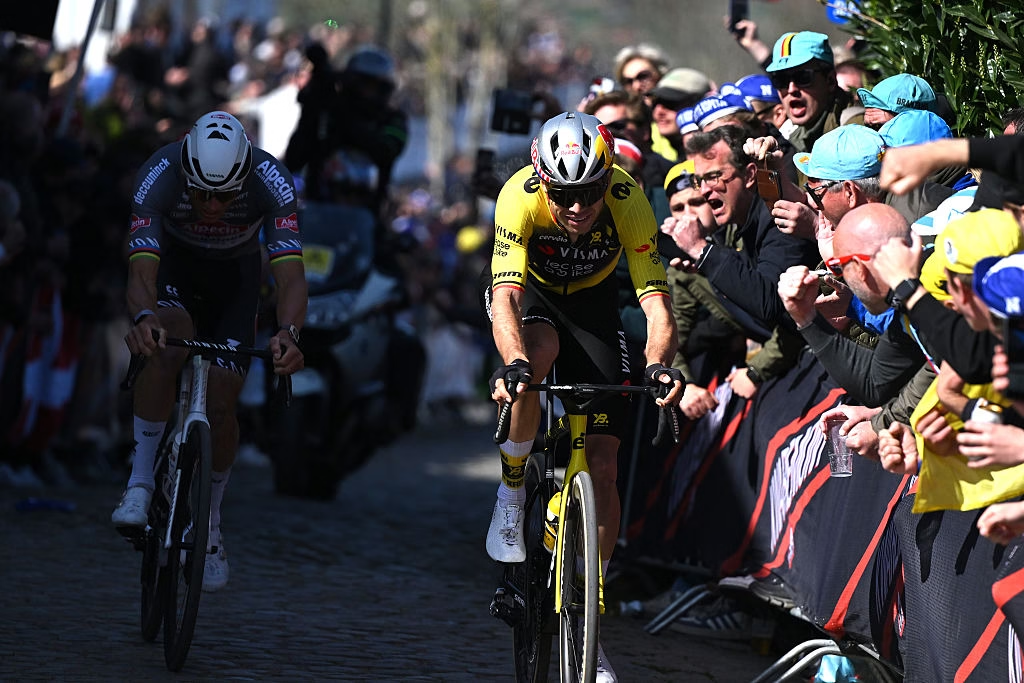
The Koppenberg is one of the race’s most feared climbs because it is steep, cobbled and awkward. It often forces riders into mistakes as much as weakness. Taaienberg is a launchpad, the kind of climb where stronger teams can put the race under pressure. Oude Kwaremont is long by Flemish standards and hard enough to create real gaps. Paterberg is shorter and sharper, and because it comes so late, it turns fatigue into something brutally visible.
The key point is that none of these climbs works in isolation. Flanders is not about one effort. It is about what happens when riders have already spent hours fighting for every metre and then have to produce one more decisive acceleration.
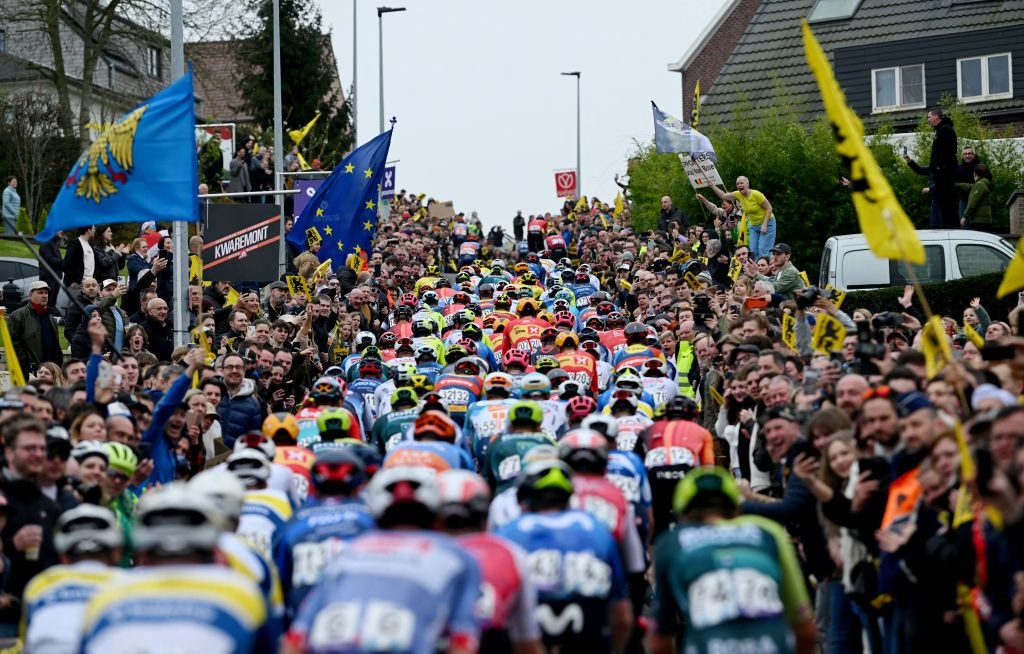
Is it a cobbles race or a climbing race?
It is both, which is exactly why it is so hard.
Men’s Ronde van Vlaanderen is defined by cobbled climbs rather than just flat pavé sectors. That makes it different from Paris-Roubaix. The cobbles break rhythm and sap energy. The climbs force attacks and expose weakness. Put the two together and you get a race where strength, handling and timing are all under pressure at once.
That is why the winners tend to be complete one-day riders rather than pure sprinters or pure climbers. The route rewards riders who can repeat hard efforts, recover quickly and still think clearly deep into the finale.
How does the race usually unfold?
The opening phase is often about breakaway management and position. The real selection begins later, once the bunch reaches the cobbled sectors and climbs in the Flemish Ardennes. From there, the race tends to get smaller in waves rather than all at once.
That is important for beginners because Men’s Ronde van Vlaanderen rarely flips from calm to decisive in one instant. Instead, it gets steadily harder until the riders who are slightly below the best are already gone. By the time the favourites truly attack, the race has often been thinning for a long time.
This is also why television can be slightly deceptive. The most important moment is not always the first big solo move. Sometimes it is the point where one team starts forcing the pace through a climb and half the field quietly disappears.
-
 Photo Credit: Cor Vos
Why are Oude Kwaremont and Paterberg so decisive?
Because together they create the race’s final hinge.
The Oude Kwaremont is long enough to reward raw power and sustained pressure. The Paterberg comes soon after and is steep enough to punish anyone already close to their limit. In 2026, as in recent editions, this pairing is again the key section, with the final Paterberg crest just 13km from the finish.
That means riders have very little time to recover or reorganise after the final big effort. If someone goes clear there with the right legs, the finish can come quickly. If a small group crests together, the tactical game changes immediately. Either way, those two climbs are where the race tends to reveal its winner.
What sort of rider wins Men’s Ronde van Vlaanderen?
Usually a rider with power, punch and confidence over cobbles.
They do not need to be the fastest finisher in the race, but they do need enough finishing speed to make a small-group move count. They do not need to be the best climber in the sport, but they do need to be able to explode repeatedly on steep ramps after five or six hours of racing. Most of all, they need positioning instinct. In Flanders, the cost of being five wheels too far back can be enormous.
That is why the race so often crowns the same sort of champions: riders who can impose themselves physically, but also read the race before it opens fully.
What should a first-time viewer watch for?
Watch the approach to the climbs, not just the climbs themselves.
A huge part of Men’s Ronde van Vlaanderen is the fight to begin each sector near the front. Riders can lose the race without being dropped in the obvious sense. They can simply enter a cobbled climb too far back, get delayed by someone else’s weakness, and spend the next 10km chasing. That repeated stress adds up.
Also watch which teams still have numbers late on. A lone star can win Flanders, but having two or three riders in contention deep into the finale changes everything. It lets teams attack, counter and force others to do the work.
What is the best way to think about Men’s Ronde van Vlaanderen 2026?
Think of it as cycling’s most famous race of controlled chaos.
The 2026 route keeps the familiar formula that has made modern editions so compelling: a long run-in, an increasingly selective second half, then a finale built around the Koppenberg and the closing Oude Kwaremont-Paterberg combination. It starts in Antwerp, ends in Oudenaarde and once again looks designed to make the strongest riders show themselves before the line.
That is why Men’s Ronde van Vlaanderen matters so much. It does not just ask who is strongest. It asks who can stay strongest when the race becomes most complicated.
For more on how the week builds towards it, ProCyclingUK’s Beginner’s guide to E3 Saxo Classic 2026, Beginner’s guide to Men’s Dwars door Vlaanderen 2026 and A brief history of Men’s In Flanders Fields are the best next reads.

