
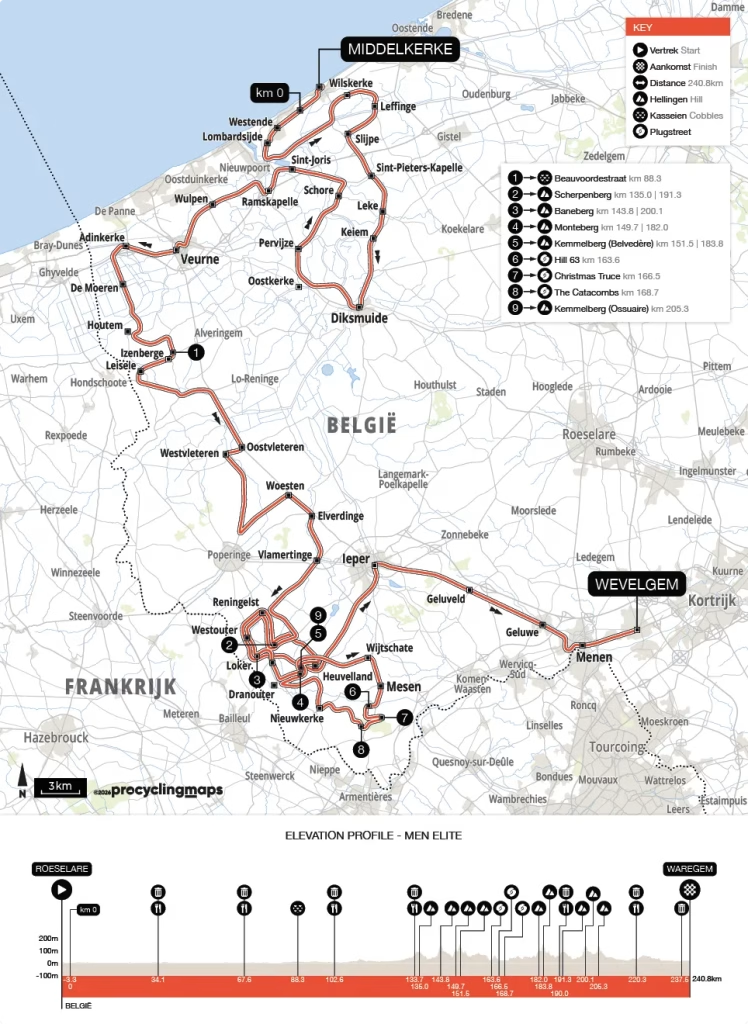
Men’s In Flanders Fields 2026 marks a real route reset as well as a name change. The race now starts in Middelkerke, finishes in Wevelgem and covers 240.8km, with the new coastal start replacing the old opening shape without removing the route’s core identity. The Moeren, the Plugstreets and the Kemmelberg all remain central, which means this is still the same broad sporting problem, just approached from a different direction.
That is the key thing to understand before anything else. This is not a total reinvention of Gent-Wevelgem under a different title. It is a reframing. The race still wants to do what it has always done – test whether teams can make the route selective enough before Wevelgem – but the Middelkerke start pulls the race towards the coast and the exposed roads much more naturally from the outset. ProCyclingUK’s Beginner’s guide to In Flanders Fields 2026 is the best companion piece if you want the broader identity behind the route.
The new start in Middelkerke
The biggest change in 2026 is right at the beginning. Middelkerke becomes the men’s start location under a new long-term agreement, and that immediately changes how the route feels. Instead of growing gradually towards the coast, the race now begins there. That matters because the opening phase now points more directly towards exposed roads and the sort of conditions that can create early stress before the race even reaches its more famous sectors.
In practical terms, that makes the opening more dangerous than it might first appear. Middelkerke is not just a new name on the race poster. It gives the route a more natural connection to the coastal landscape that has always helped define this race’s mood.
The Moeren remain the first big warning sign
Even with the new start, the Moeren remain one of the race’s defining features. That matters because no section better captures the event’s particular form of danger.
The roads here are flat, open and potentially race-breaking if the wind is right. This is where the event often starts to feel unstable in a way that other Classics do not. There may be no famous climb involved, but there is still huge tension. A team that is out of position here can lose the race without ever seeing a berg.
That is one reason this race has always been more than a sprint classic. The strongest sprinters are relevant, but only if they can survive this sort of exposure first.
The run towards the war landscape
After the coastal threat of the Moeren, the route keeps moving through terrain that is central to the race’s historical identity. The Great War connection remains embedded in the event, and that is a big part of why the new title works. The course moves through the landscape around Ypres and the war-linked heart of the race, which gives the route a more explicit historical frame than most Classics.
That gives Men’s In Flanders Fields a slightly different emotional texture from the rest of Flanders week. This is still a hard one-day race, but it is also one that leans more directly into the landscape and memory of the region. The new name does not create that connection. It simply makes it more visible.
The Plugstreets still give the race its rougher edge
The Plugstreets remain another fixed point of the route, and that is important because these sectors give the race a form of stress that is different from either cobbles or climbs.
They are unpaved, awkward and disruptive. They demand handling, calm and positioning, not just brute force. A rider can arrive at the Plugstreets with good legs and still lose ground through poor timing or bad placement. That is why they matter so much tactically. They break rhythm and make organisation harder, which in turn makes the later hills feel sharper.
Heuvelland changes the race again
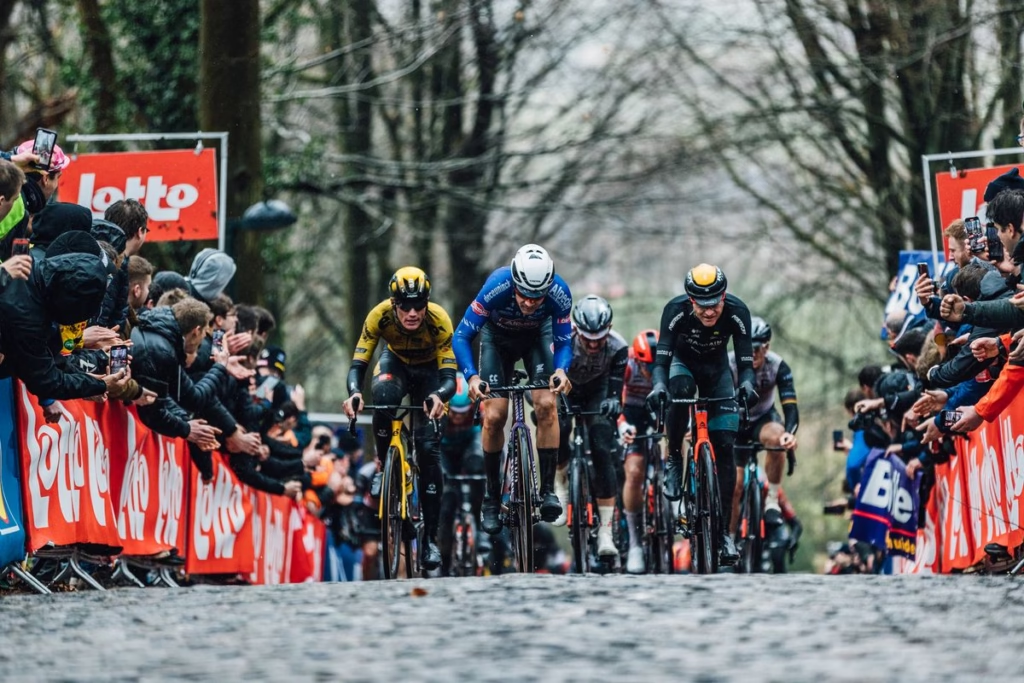
After the flatter and rougher sections, the route moves into Heuvelland, where the race takes on its hillier identity. This is where the climbers and classics specialists start asking harder questions of the durable sprinters. The key climbs remain the familiar set, including Monteberg, Scherpenberg, Baneberg and, above all, the Kemmelberg.
The important thing here is not just that these climbs exist, but where they sit in the race. By the time the peloton reaches them, the day has already been shaped by wind threat, positioning strain and the Plugstreets. So the hills do not begin the selection from scratch. They intensify one that may already be underway.
That is why this race is so difficult to classify neatly. It has a sprint-classic finish line, but the route keeps trying to strip away the purest sprinters before they get there.
Why the Kemmelberg still decides the tone
The Kemmelberg remains the route’s most important single obstacle. It is not the longest climb of the spring and not the hardest on paper, but in this race it acts as the key signal flare. It is where the stronger one-day riders usually try to turn accumulated pressure into something more decisive.
That is what makes the Kemmelberg so central to understanding Men’s In Flanders Fields. It does not always decide the winner directly, but it often decides what sort of finale is left. If the race is heavily reduced there, the finish becomes tactical. If too many riders survive, it leans back towards a sprint. If one or two favourites can force a split, then the race becomes about cooperation as much as strength.



The run-in to Wevelgem
The finish remains on Vanackerestraat in Wevelgem, which helps keep one part of the race very familiar even as the opening has changed. That matters because the race still needs to accommodate more than one ending. A reduced sprint is entirely possible. A late solo move is possible too. A small group can arrive together if the right attacks stick over the hills.
This is one of the reasons the race has always been so compelling. It stays tactically open later than many other Classics. The strongest rider does not always win in the simplest sense. Often, the rider who best understands what version of the race is left after the Kemmelberg is the one who gets it right.
What the 2026 route means for the race
The 2026 route makes the race easier to describe in one sense and trickier in another. It is easier because the new start makes the coastal and exposed identity of the event more obvious from the beginning. It is trickier because the race is no longer just the old Gent-Wevelgem route under a familiar label. It now starts differently, feels more exposed earlier, and yet still keeps the same core sequence of Moeren, Plugstreets, Heuvelland and Kemmelberg.
So the best way to think about Men’s In Flanders Fields 2026 is as a route of layers. The coast can split it. The Plugstreets can unsettle it. The Kemmelberg can reduce it. And Wevelgem can still reward whichever rider reads all of that best.
For more on how it fits into the wider spring, ProCyclingUK’s A brief history of Men’s In Flanders Fields, Beginner’s guide to Men’s Ronde van Vlaanderen 2026 and A brief history of Men’s Dwars door Vlaanderen are the best next reads.