
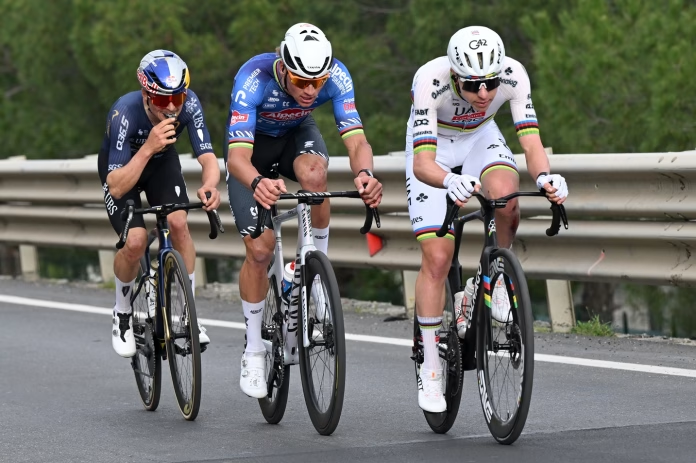
Tadej Pogačar of UAE Team Emirates-XRG finally added Milan-San Remo to his palmarès on Saturday, edging Tom Pidcock by centimetres after the pair broke clear on the Poggio and stayed away all the way to the line in Sanremo. After 289km of racing, a late crash, and another all-in assault on the Cipressa and Poggio, the world champion found just enough in the final sprint to deny Pidcock and win the Monument that had resisted him for so long.
How the early part unfolded
The first Monument of the men’s season began at speed and settled quickly into a familiar pattern, a large early break and a long day of controlled tension behind. Once the opening attacks had shaken out, nine riders moved clear: Martin Marcellusi, Manuele Tarozzi, Lorenzo Milesi, Manlio Moro, Andrea Peron, David Lozano, Alexy Faure-Prost, Dario Igor Belletta and Mirco Maestri.
There was even an early moment of confusion when riders went the wrong way on a roundabout, but once the break had properly formed it was allowed room to breathe. Silvan Dillier, as so often in this race, became the main reference point in the bunch. The Alpecin-Premier Tech rider spent huge stretches riding on the front, keeping the move under control while the peloton barrelled south at high speed.
The day was fast almost from the flag. The average speed stayed strikingly high, and although the race still had its long phases of apparent calm, it never really felt relaxed. Crosswinds briefly stretched the bunch, a few riders were caught out by crashes earlier in the day, and several teams kept drifting towards the front whenever the road narrowed or the pace lifted.
Still, the broad shape of the race held. The escapees carried several minutes over the peloton through the long approach to the Passo del Turchino, and behind them the biggest names remained patient. That is often the illusion of Milan-San Remo, that nothing is happening until suddenly everything is.
The tension builds on the coast road
Once the race came off the Turchino and onto the Ligurian coast, the logic of the finale began to take over. Dillier’s long shift kept the gap manageable, but more teams started to reveal their intentions. Pinarello-Q36.5 moved up for Pidcock. UAE Team Emirates-XRG gathered around Pogačar. Ineos Grenadiers, Lidl-Trek, Soudal-QuickStep, Bahrain Victorious and others all began to compete more aggressively for position.
The break itself started to come apart as the race moved closer to the Tre Capi. Riders were dropped one by one, and while the move still had a useful advantage, the sense was changing. This was no longer about whether the escape would survive. It was about which teams would reach the decisive climbs in full control.
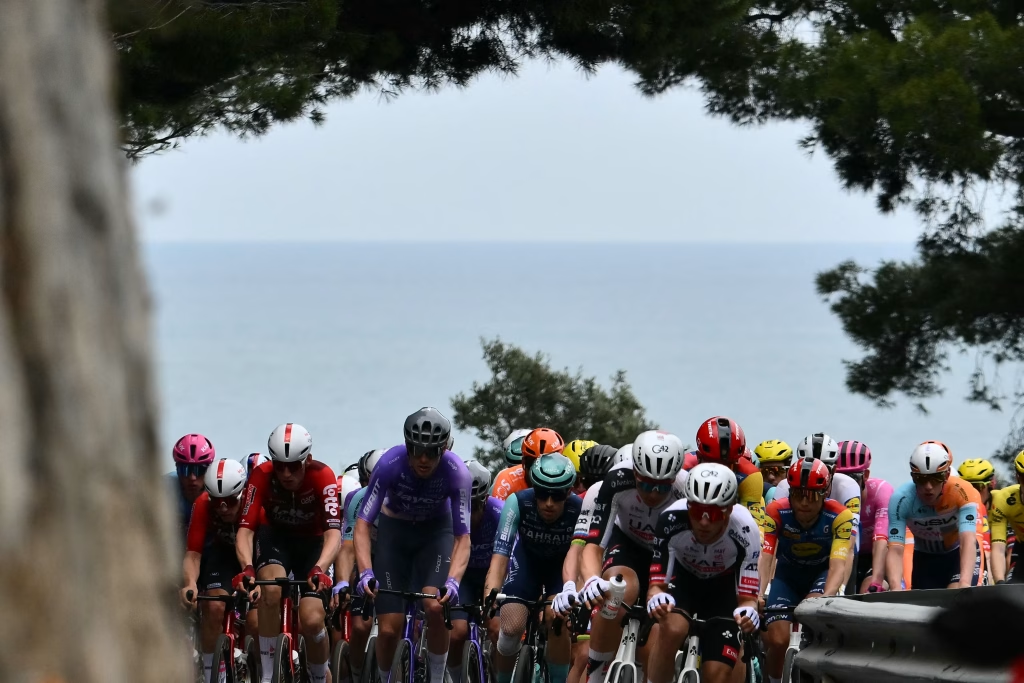
Capo Mele and Capo Cervo did not blow the race apart, but they sharpened it. By the time the peloton reached Capo Berta, the break had already been reduced again, and the bunch behind was now being driven with real purpose by Ineos Grenadiers and UAE Team Emirates-XRG. The road was getting tighter, the margins smaller, and every favourite was trying to stay out of trouble before the Cipressa.
Crash disrupts the run-in to the Cipressa
Then came the moment that threatened to change everything. With just 6km remaining to the foot of the Cipressa, a crash split the rhythm of the race and involved several major names. Pogačar went down. So did Wout van Aert, Biniam Girmay, Søren Kragh Andersen and Matteo Jorgenson. Mathieu van der Poel was also delayed by the incident, even if he was not as badly affected as some of the others.
For a few moments, the race looked as though it might be slipping away from Pogačar before he had even reached the place he wanted to attack. He was off the back and in the cars as the breakaway was caught right at the base of the Cipressa. But the key detail was that he made it back in time. So did Girmay. Van der Poel also returned to the peloton before the real selection began.
That recovery mattered because once Pogačar was back in position, UAE Team Emirates-XRG immediately began to rebuild the race around him.
Pogačar blows the race open on the Cipressa
Brandon McNulty and then Isaac Del Toro lifted the pace on the Cipressa, turning a climb that often serves as a launchpad into the first truly decisive section of the day. Once the tempo was high enough, Pogačar came through himself and the expected move finally arrived.
At first, the usual heavyweight names were still there. Filippo Ganna, Mads Pedersen, Pidcock and Van der Poel all remained close as the pace increased. But when Pogačar accelerated properly, the race snapped. Only Pidcock and Van der Poel could follow.
That was the first defining selection of the race. Everyone else was left chasing behind as the three strongest riders in the race surged clear. Pogačar drove the move. Pidcock went with him immediately. Van der Poel was still there too, but the effort looked a little more measured from the defending champion.
The trio quickly opened a gap on the descent and the run-in towards the Poggio. Behind them, Lidl-Trek tried to organise the chase for Pedersen, while Del Toro helped slow things down in the second group. Visma-Lease a Bike also contributed behind, aware that Van Aert was still trying to limit his losses after the earlier crash. Even so, the front three held a useful advantage as they approached the final climb.
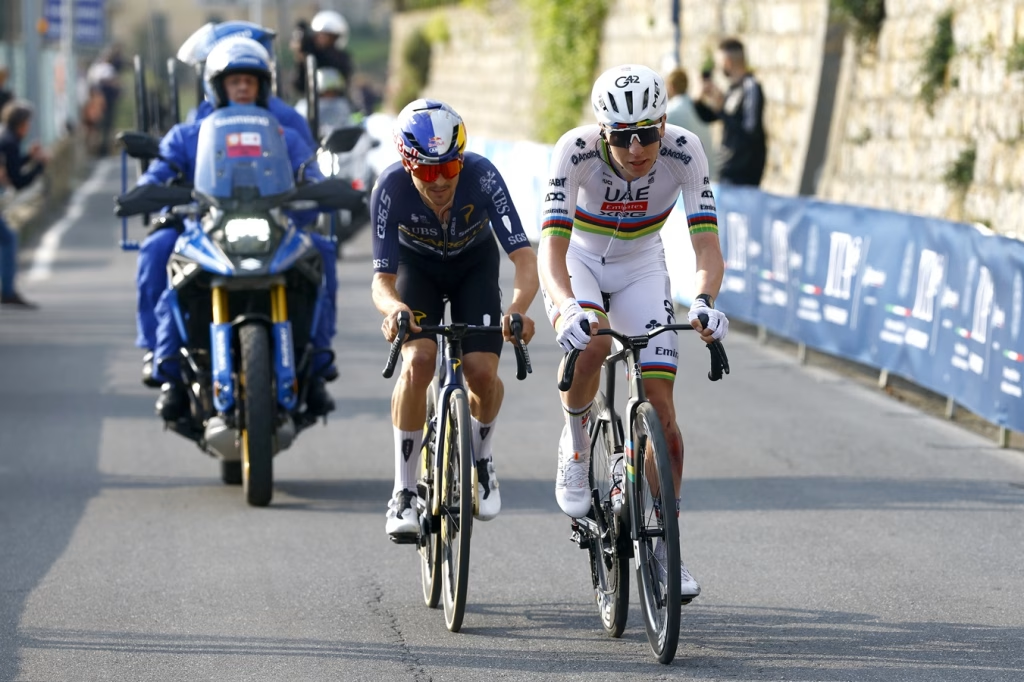 Photo Credit: Getty
The Poggio decides the winner
By the foot of the Poggio, the lead had been cut to 17 seconds. That was enough to keep the pressure high, but not enough to allow any hesitation. Pogačar knew this was the moment. If he was going to win Milan-San Remo, he had to force the race again.
He began pressing early on the climb, and once more Pidcock held his wheel. Van der Poel stayed in touch initially, but the balance of the race was shifting. Pogačar attacked again, harder this time, and finally created the split he had been searching for. Van der Poel could not follow. Pidcock could.
That was the decisive moment. For years the question around Pogačar at Milan-San Remo has been whether he can make the Poggio selective enough against riders with faster finishes or sharper acceleration. This time he did, but he could not get rid of everyone. Pidcock remained there, locked onto his wheel, and looking increasingly dangerous the longer the duel lasted.
Van der Poel did not immediately vanish from contention. For a short time he hovered in the gap behind, still close enough to matter if the front two hesitated. The peloton was also not far away, which made the final kilometres more complicated than a simple two-rider time trial to the line.
Pogačar tried to play with the rhythm near the top, slowing and then accelerating again, looking back, trying to force a mistake or a hesitation from Pidcock. None came. Pidcock matched every change and reached the summit still level in the contest.
-
 Photo Credit: Flavia Ossola
Finale
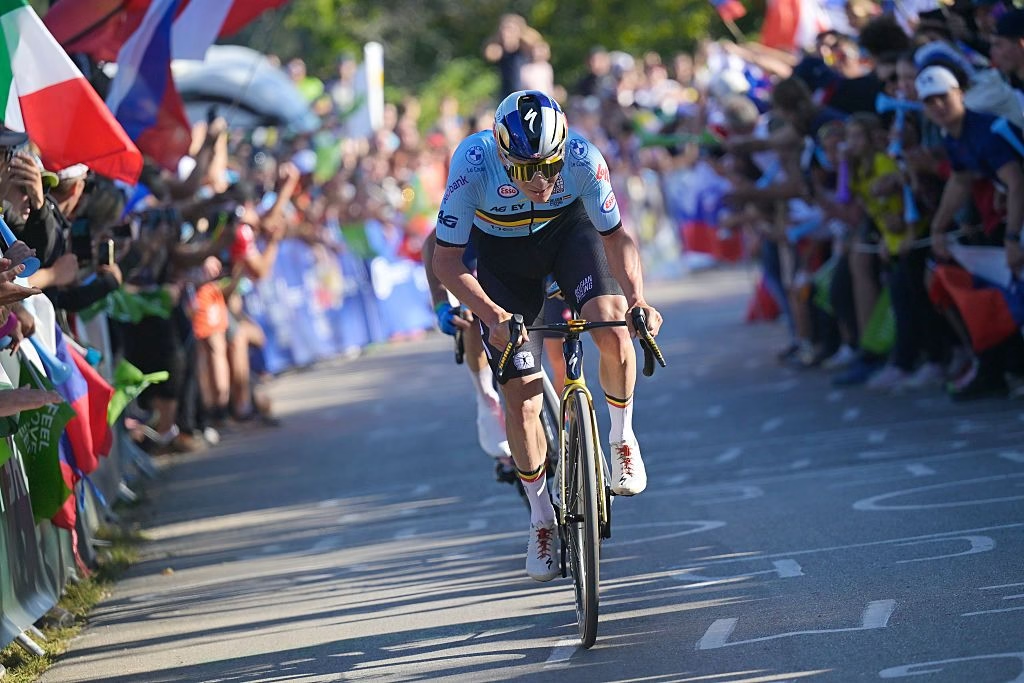
The descent off the Poggio became a duel of nerve as much as legs. Pidcock moved to the front and looked completely at ease on the technical run towards Sanremo, but Pogačar stayed composed and came back through. The pair were fully committed now, with no room left for calculation.
Behind them, Van der Poel was eventually swallowed up by the peloton as Lidl-Trek chased hard for Pedersen. Van Aert then launched a late attack from the bunch, trying to jump across in the final kilometres, but by then the race for victory was already up the road.
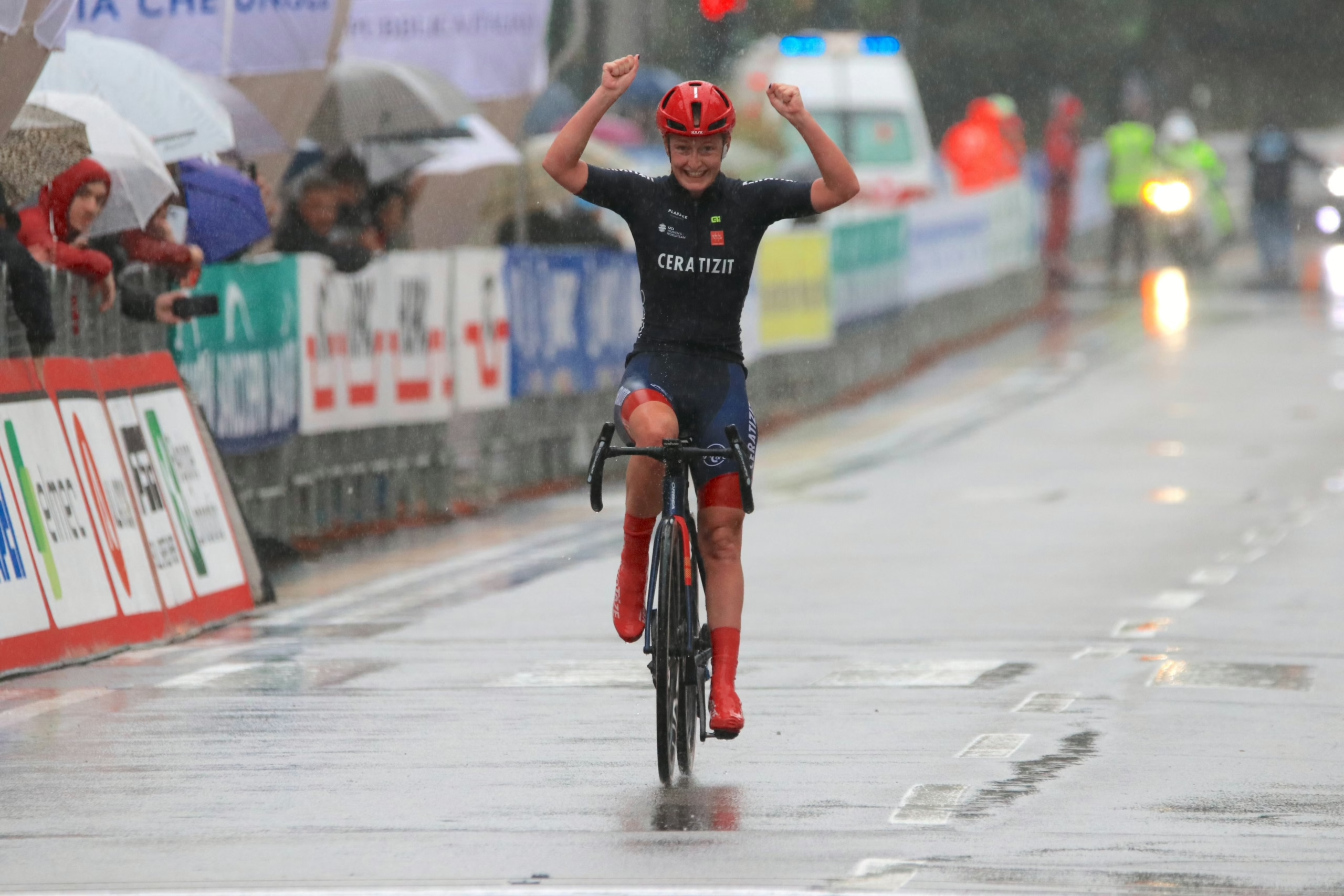
Pogačar and Pidcock reached the final kilometre still together. After everything that had happened on the Cipressa and Poggio, there was very little left to separate them beyond timing and sheer resilience. Pogačar opened the sprint first. Pidcock came alongside almost immediately. The two were virtually level as they surged towards the line, but Pogačar just held on, winning by centimetres in one of the tightest Sanremo finishes in recent memory.
What it means
This was a huge win for Pogačar, not only because it adds another Monument to his collection, but because of the way he won it. He had to recover from a late crash, force the selection on the Cipressa, split the race again on the Poggio, and still produce enough in the sprint to finish the job. For Pidcock, it was a brilliant ride despite the narrow defeat. He followed Pogačar where almost nobody else could and came agonisingly close to one of the biggest wins of his career. Van der Poel, meanwhile, was finally distanced on the Poggio after surviving the initial Cipressa move, while Pedersen and Van Aert both showed enough from behind to suggest they will be major factors in the cobbled weeks ahead.
Milan-San Remo 2026 Result
Results powered by FirstCycling.com
Main photo credit: Getty

