
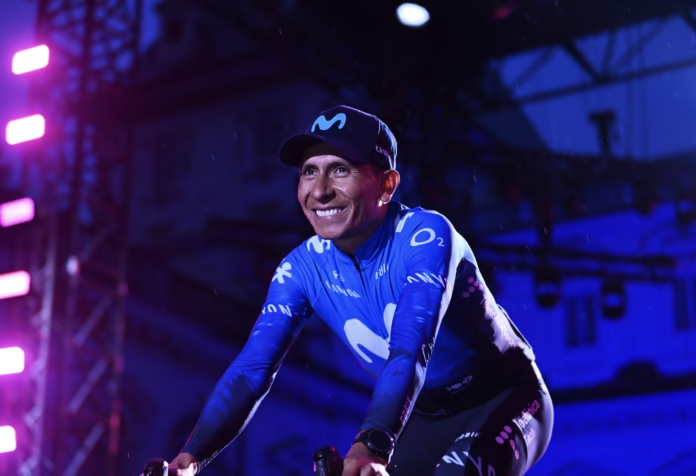
Nairo Quintana has confirmed that 2026 will be his final year in professional cycling, framing the months ahead as a farewell season rather than an abrupt exit. Speaking in Barcelona ahead of Volta Ciclista a Catalunya 2026, the Movistar rider said each race this year would feel like “that great party” and the “last dance” of his career.
It is the sort of announcement that lands with more force than a standard retirement notice because Quintana was never simply another Grand Tour climber. At his best, he helped redefine what a Colombian GC rider could be in Europe, and for a period, he was one of the most reliable mountain specialists in the sport.
A career that reshaped Colombia’s place in modern stage racing
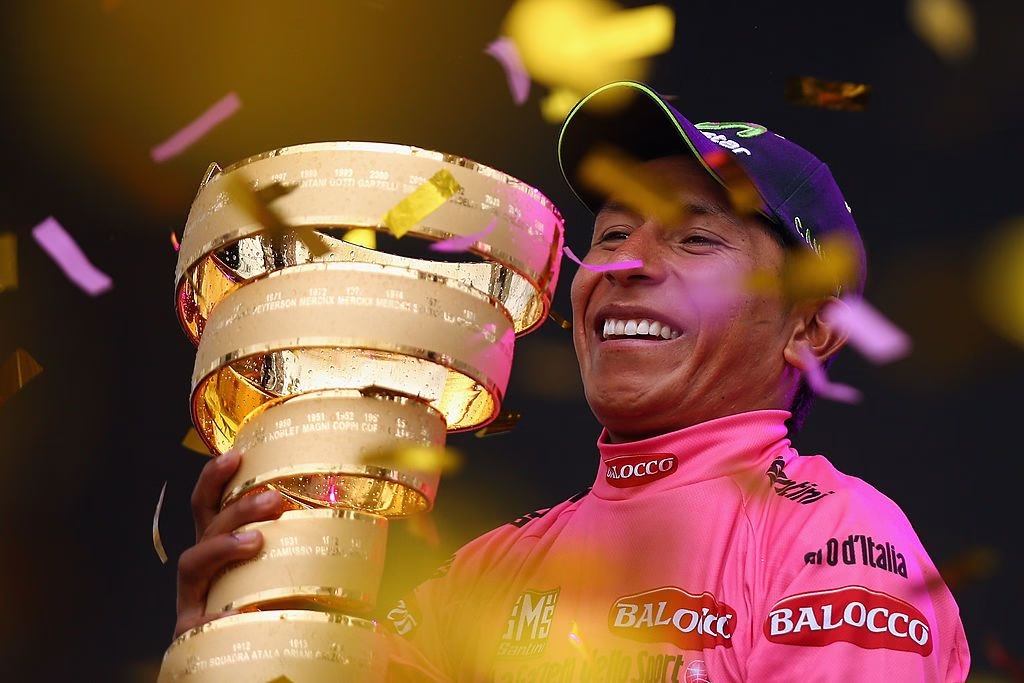
Quintana’s legacy is built first on results, but also on timing. He arrived when Colombian cycling was already rich in climbing tradition, then pushed it into a new era of sustained Grand Tour contention. His biggest achievements remain his overall victories at the 2014 Giro d’Italia and the 2016 Vuelta a España, two wins that confirmed he was not just capable of podiums, but of controlling and winning three-week races.
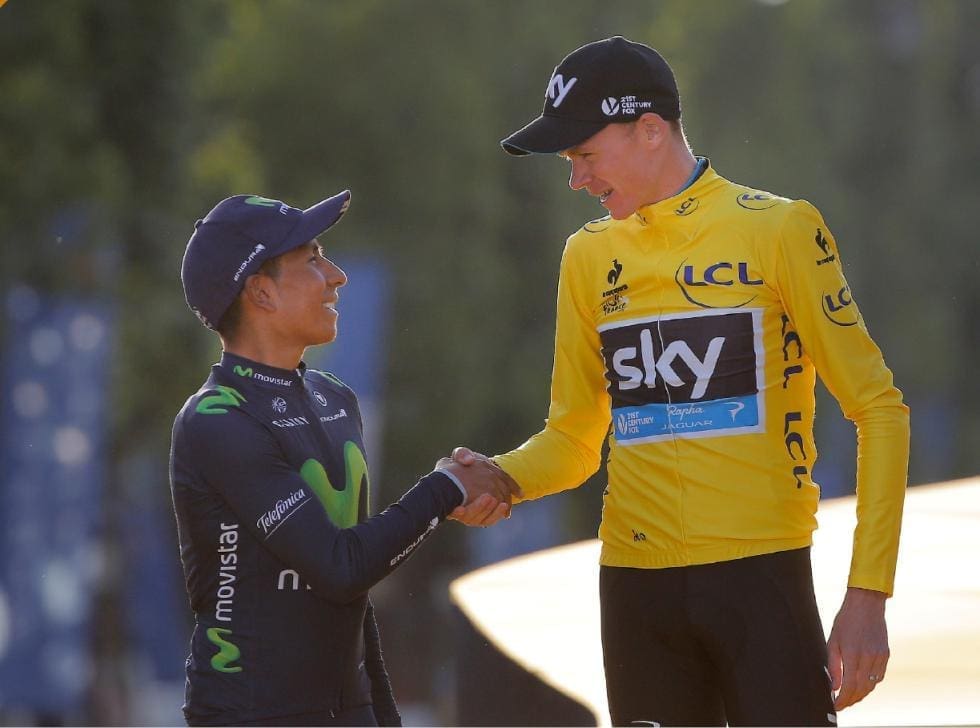
The Tour de France never fully gave him the final prize, but it did help define his stature. Quintana finished on the overall podium three times, taking 2nd in 2013, 2nd again in 2015 and 3rd in 2016. That record, combined with his Grand Tour victories, made him one of the defining GC riders of the 2010s rather than simply one of its better climbers.
His wider palmares matters too. Quintana won races such as Tirreno-Adriatico, the Tour of the Basque Country, the Route du Sud, the Critérium du Dauphiné stage to Morzine, Volta a Catalunya and Giro dell’Emilia. He was not built around one kind of mountain performance alone. He could dominate week-long stage races, hold form over three weeks and, when needed, attack from distance in a way that felt old-fashioned even while it was happening.
Why Catalunya was a fitting place to say it
The choice of Catalunya for the announcement made sense. Quintana won the race in 2016, and it has long suited the kind of rider he was at his peak – strong over repeated climbing days, able to read terrain well, and comfortable in the stop-start rhythm of a hard stage race week. This season’s Volta Ciclista a Catalunya 2026 contenders preview and team-by-team guide already showed that he still has a place in the story of the race, even if he now arrives in a different role.
By making the announcement here, Quintana linked his final chapter to one of the races most closely associated with his prime. That matters. Retirement announcements in cycling can often feel detached from the rider’s real history, delivered in an off-week or hidden in team messaging. This one did not. It was public, direct and rooted in a race that still carries echoes of his best years.
-
 Photo Credit: Billy Ceusters / Getty Images

What his final season now means
Quintana did not present retirement as a withdrawal from racing. Instead, he spoke about enjoying the season, sharing it with fans and giving a proper ending to a career that has stretched across 17 years at the top end of the sport. That gives Movistar an obvious emotional thread for the months ahead, particularly in races where he still carries historical weight.
There is also a wider sporting context. Quintana’s presence in the peloton had already taken on a different texture after his return to Movistar, first covered when he was set to make his European comeback with the team, and later when he stayed on with Movistar for another season. In those later years, he was no longer the same rider who could break a race open high in the mountains and force everyone else onto the defensive. But the significance of his career did not depend on remaining at that level forever.
That is why the retirement news resonates. It closes the professional chapter of a rider who was central to one of cycling’s most important shifts of the past decade and a half. He made Colombia feel like a constant presence in the biggest mountain stages, not an occasional interruption. He also gave Movistar some of its defining modern moments, both in Grand Tours and in one-week races, during one of the team’s strongest eras.
There is a neat symmetry in the way he has chosen to step away. Quintana’s rise was marked by the sense that he could make the hardest climbs look smaller than they really were. His exit, announced on his own terms and ahead of a race that means something in his story, feels measured in much the same way.

