
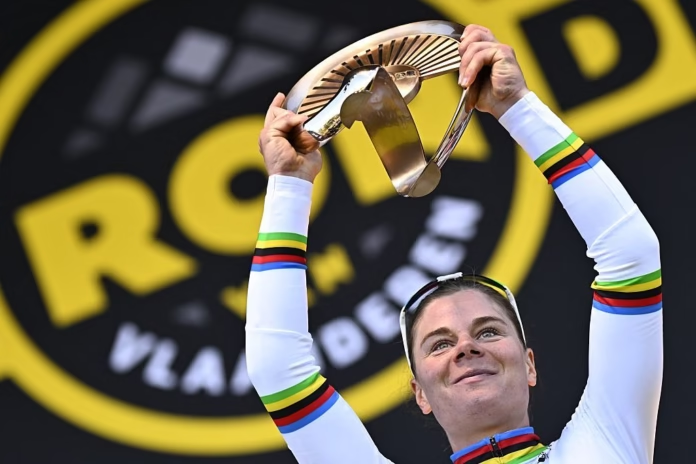
Tour of Flanders Women 2026 keeps the familiar shape that has made the race such a reliable monument of pressure, positioning and repeated selection. The women’s race starts and finishes in Oudenaarde on Sunday, 5th April, with the key finale again built around the Koppenberg, Oude Kruisberg/Hotond, Oude Kwaremont and Paterberg before the run back to Minderbroedersstraat.
That matters because this is not a route that asks a single question. It asks the same questions repeatedly, with less margin for error each time. By the point the riders hit the final sequence, the strongest legs still need good positioning, and the best tactics still need enough power to survive the road itself.
Start and finish details
The race begins and ends in Oudenaarde, which helps give the women’s event a tighter and more concentrated identity than the men’s race. Tour of Flanders Women tends to get to its defining terrain more quickly, and that gives the whole day a more direct feel.
For the riders, that means a race that wastes very little time before the pressure starts to build. For viewers, it means the route is easier to read. The event rarely hides what it is trying to do. It wants the strongest and smartest riders meeting the decisive climbs with enough fatigue already in their legs to make every acceleration count.
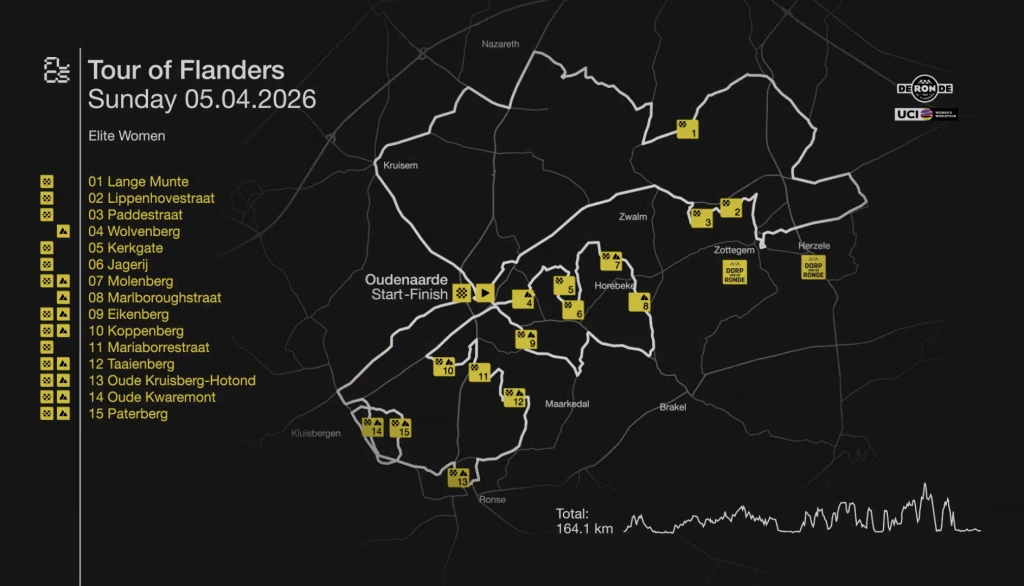
How the route is built
The opening phase sends the peloton out from Oudenaarde before the first cobbled roads begin to shape the day. Even before the major climbs arrive, the route is already asking for clean positioning, constant awareness and a willingness to fight for space.
That first section matters because Tour of Flanders Women does not need to wait for the headline climbs to start doing damage. Long cobbled drags and exposed roads in the first half of the race can wear riders down, split the bunch, and force teams to use helpers earlier than they would like. Even before the famous climbs begin, the route is already stripping away comfort.
The decisive finale begins on the Koppenberg
The Koppenberg is the point where the race really starts to narrow towards its winning shape. With around 45km still remaining from there to the finish, it comes early enough for the finale to stay tactical, but late enough that every acceleration starts to feel serious.
The Koppenberg remains one of the most feared roads in Belgian cycling for obvious reasons. It is steep, narrow, cobbled and difficult to enter in a good position if the bunch is still relatively large. Riders who hit it too far back can lose contact immediately, while riders who stall even briefly can be forced into a scramble that ends their race.
On paper, it is one climb. In reality, it is also a positioning test and a pressure point where the strongest teams often show their hand. That is one of the reasons Tour of Flanders Women so often rewards riders who can combine raw power with calm decision-making.
 Photo Credit: Thomas Maheux
Mariaborrestraat takes on extra weight
After the Koppenberg, the route continues onto Mariaborrestraat. With Steenbeekdries absent from the 2026 sequence, that road carries a little more tactical importance than usual.
That may sound like a small change, but this race is so often defined by linked sectors rather than one road in complete isolation. When one familiar section drops out, the roads around it begin to matter more. Mariaborrestraat may not have the same standalone reputation, but in sequence it still adds to the race’s wearing rhythm and helps keep the pressure high.
Taaienberg and Oude Kruisberg/Hotond keep the race unstable
From there the route continues through Taaienberg and Oude Kruisberg/Hotond. Those climbs matter because they come after the peloton has already been softened up and after the Koppenberg has likely narrowed the contenders.
Oude Kruisberg/Hotond is especially important because it sits in that awkward part of the race where riders and teams still have choices to make. It is far enough from the finish that patience can still make sense, but hard enough that fading legs are exposed very quickly. In that sense, it is one of the route’s most underrated decision points.
This is often where the race moves from a broad favourites group into something more selective and more tactical. Riders who survive that whole block well are usually the ones still shaping the podium fight later on.
Oude Kwaremont and Paterberg remain the defining pair
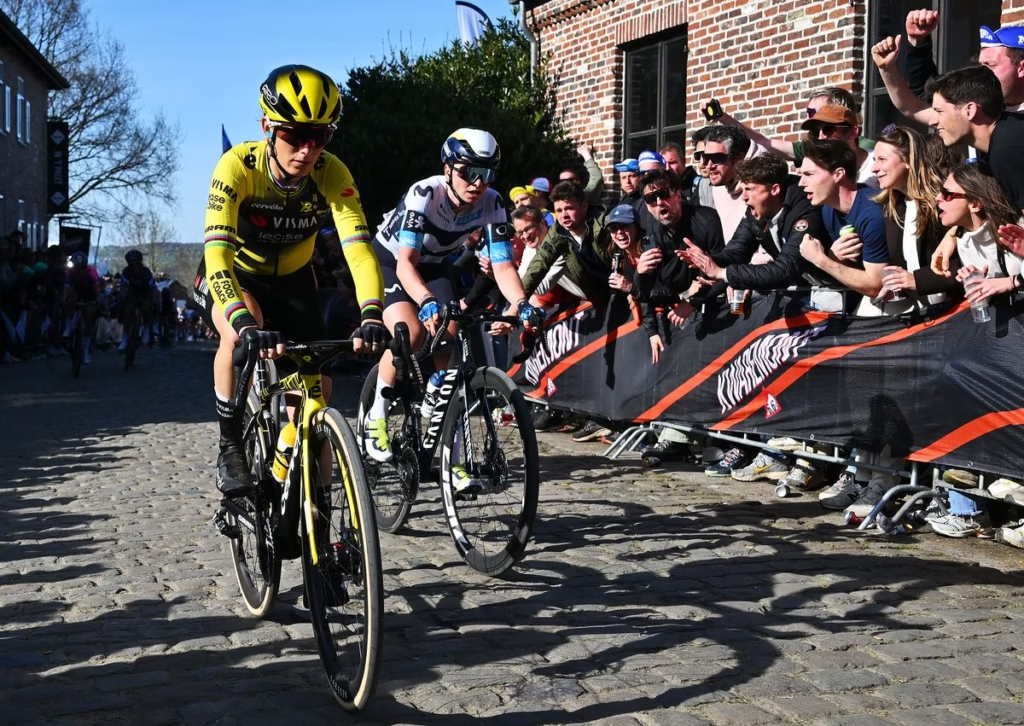
The heart of the route is still the late pairing of Oude Kwaremont and Paterberg. That combination has become the clearest expression of what Tour of Flanders Women is as a race.
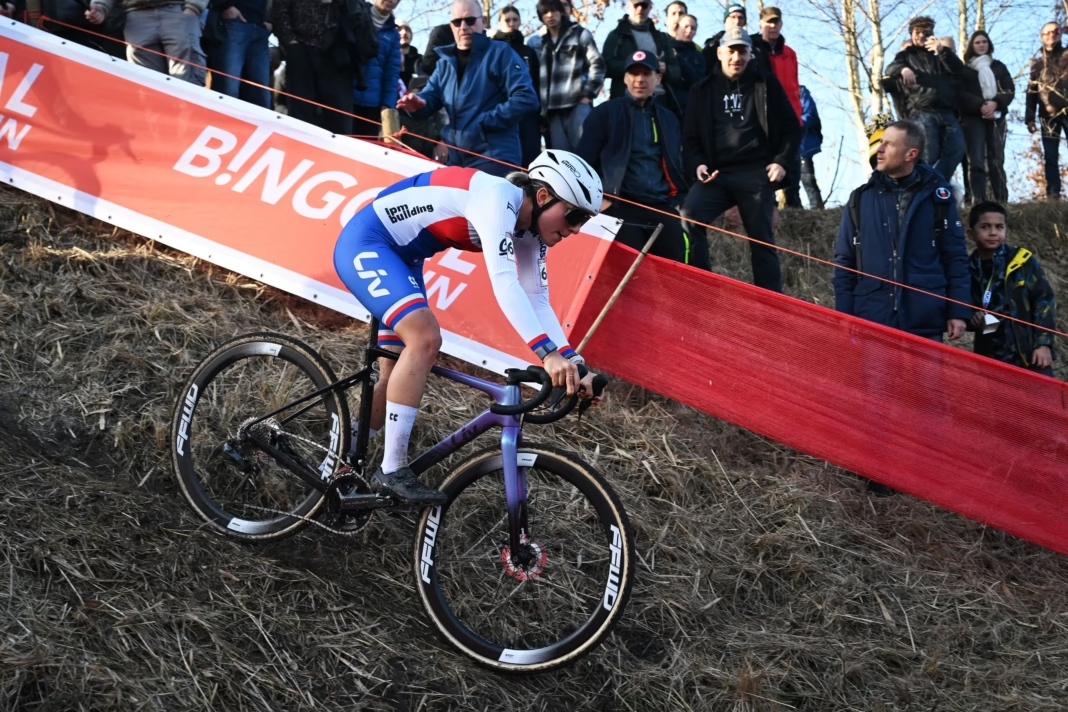
Oude Kwaremont is the longer drag where pure strength can start to tell. Riders can sustain pressure there, expose anyone already riding close to their limit, and reduce the race to a much smaller group. Paterberg then changes the demand completely. It is shorter, steeper and much more explosive. If Kwaremont thins the contenders, Paterberg often reveals exactly who still has the punch to win.
Because the top of the final Paterberg is still some way from the finish, the race does not always end there in a literal sense. Small groups can still reorganise. Chasers can still hope. Teams with multiple riders can still play games. But the decisive selection is very often already made by that point.
Why the final kilometres still matter
The run back to Oudenaarde is one of the most important parts of the route, even if it gets less attention than the climbs themselves. Once the riders crest the final Paterberg, they still need to turn selection into victory.
A solo rider needs enough left to resist the chase. A small group needs cooperation, which is never guaranteed when a monument is on the line. A team with numbers can try to disrupt the rhythm. So while Oude Kwaremont and Paterberg are the emotional centre of the race, the final kilometres are where that work has to be completed.
That is one of the reasons the event remains so compelling year after year. Tour of Flanders Women often identifies the strongest riders before the finish, but it still leaves enough space for tactics to influence the final result.
-
 Photo Credit: Cor Vos
What kind of rider does this route suit?
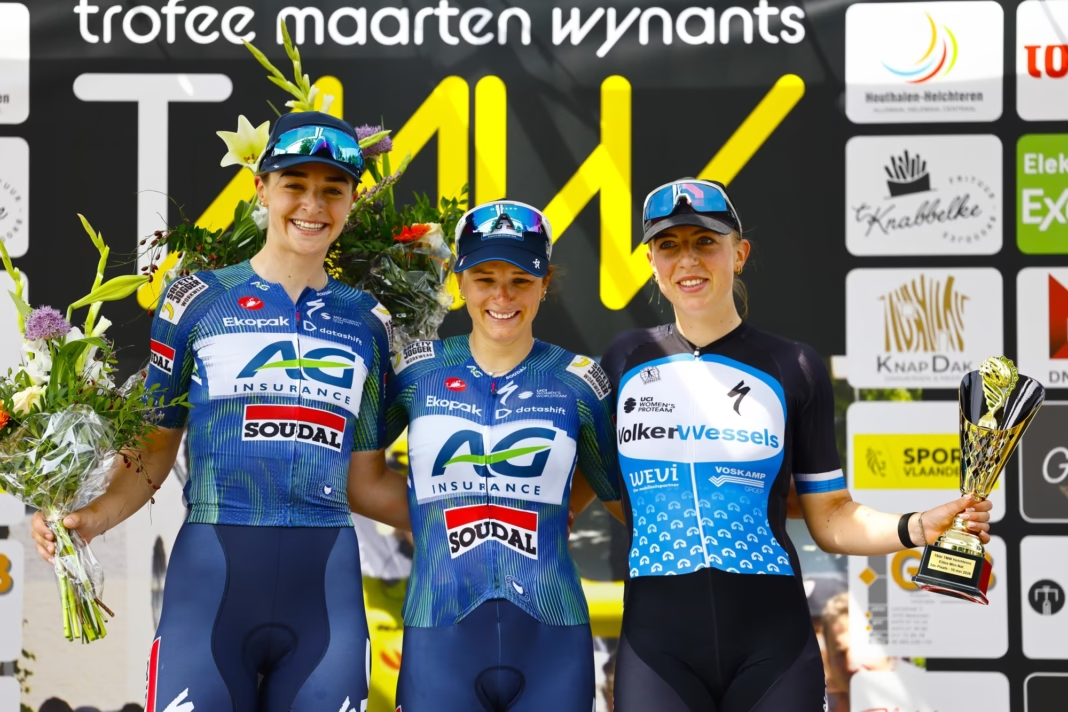
This route still suits the classic Tour of Flanders Women profile, riders who can handle cobbles, produce repeated hard efforts on climbs, and keep making good decisions deep into the final hour. It is not enough to be the strongest rider on one slope. The race asks for resilience, bike handling, positioning and the ability to recover between efforts just enough to go again.
That is why the event consistently favours all-round classics specialists rather than pure climbers or straightforward sprinters. By the time the race reaches the final Kwaremont and Paterberg, what matters is not only who can attack, but who has spent the least energy unnecessarily over the previous 150km.
If you want broader context on how this route fits into the wider spring campaign, Paris-Roubaix Femmes and Amstel Gold Race Women offer a useful contrast in how different monuments and major one-day races ask very different questions of the same group of riders.
What the 2026 route really promises
Tour of Flanders Women 2026 is not a radically redesigned edition. That is a strength rather than a weakness. The route keeps the essential logic that makes the race work: early cobbled stress, a finale that begins in earnest on the Koppenberg, and the familiar late pairing of Oude Kwaremont and Paterberg before the run to Oudenaarde.
In practical terms, that means the race should again reward riders who can survive a long-wearing day and still make their best effort right at the point where most of the field is already running short of answers. Tour of Flanders Women rarely needs gimmicks. The route already knows exactly where the race should be won.

