

Men’s Tour de Romandie 2026 runs from the 28th April to the 3rd May and sits in an important place on the men’s calendar. It arrives just after the Ardennes Classics and just before the Giro d’Italia, which makes it a key race for riders sharpening form, testing themselves over a full week, or chasing a major WorldTour result in its own right.
For newer fans, Men’s Tour de Romandie 2026 is one of the best races for understanding how week-long stage racing works outside the three Grand Tours. It does not have the sheer scale of the Tour de France, Giro d’Italia or Vuelta a España, but it still attracts a strong field and usually produces a serious general classification battle. If you are already following the spring season through races such as E3 Saxo Classic 2026 or In Flanders Fields 2026, this is one of the points where the calendar starts to shift from one-day racing towards stage-race depth.
What is Men’s Tour de Romandie 2026?
Men’s Tour de Romandie 2026 is a six-day stage race held across Romandie, the French-speaking region of Switzerland. In basic terms, riders compete across several very different stages, and the overall winner is the rider with the lowest cumulative time by the end of the week. That rider leads the general classification, usually shortened to GC.
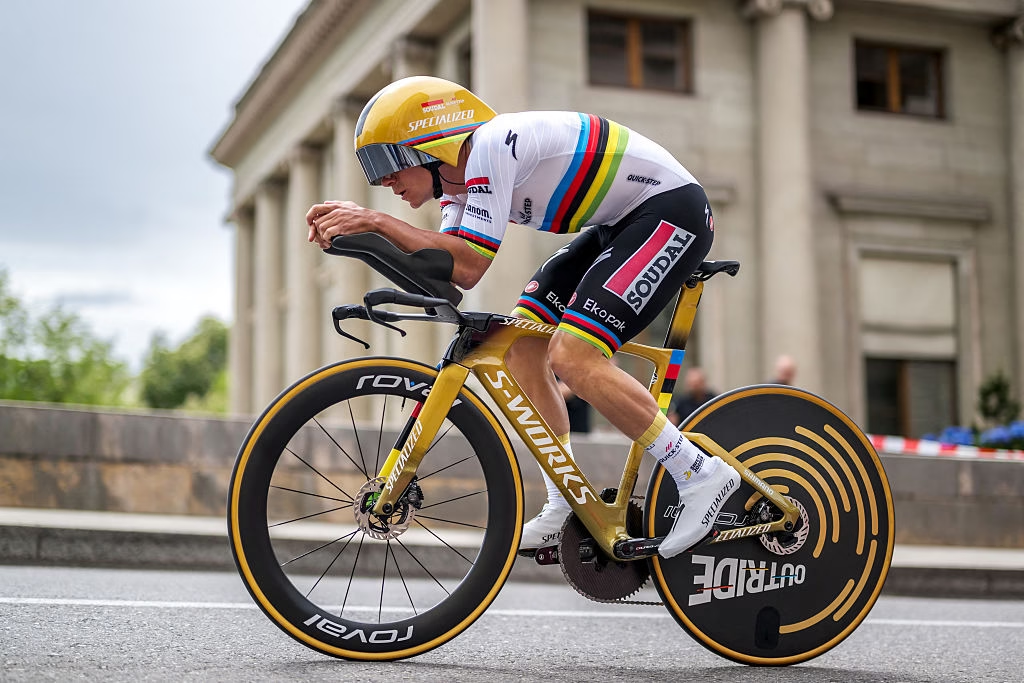
What makes this race especially useful for beginners is that it tends to include a bit of everything. There is often a short opening time trial or prologue, a selection of rolling or medium-mountain stages, and then a more decisive uphill day later in the week. That structure means the race usually rewards complete stage racers rather than riders who are only strong in one area.
If you are still getting used to stage-racing terminology, this is also the kind of event that helps explain how a rider can win a race without taking a stage, how time gaps build across several days, and why consistency often matters just as much as one standout performance.
Why does Men’s Tour de Romandie 2026 matter?
Men’s Tour de Romandie 2026 matters because of timing and profile. It comes at a point in the season when riders are either finishing one block of form or starting another. For some, it is a final competitive rehearsal before the Giro d’Italia. For others, especially riders not targeting a Grand Tour immediately, it is a major objective in itself.
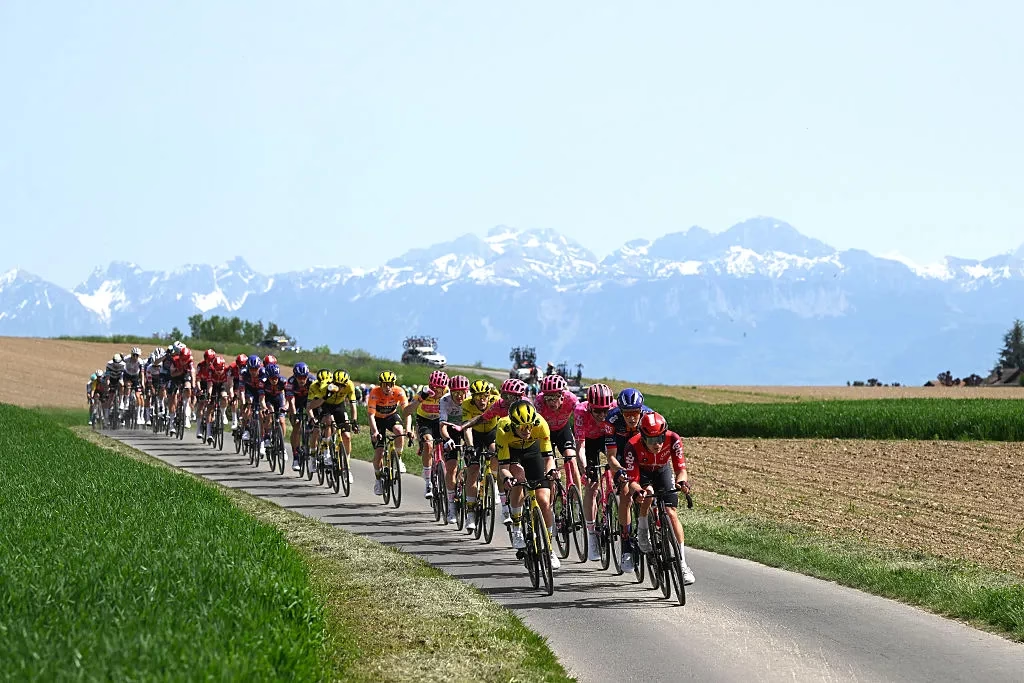
It also matters because the route often creates a demanding but balanced test. Switzerland rarely needs exaggerated terrain to make racing selective. Repeated climbs, technical roads and constant changes in rhythm can expose riders well before the biggest climbs arrive. That gives the race a slightly different feel from some stage races built around one overwhelming summit finish.
For newer viewers, that is part of the appeal. Men’s Tour de Romandie 2026 usually shows how stage races are shaped by far more than just one mountain-top finale. Positioning, recovery, pacing and team support all matter, often every single day.
How does the Men’s Tour de Romandie 2026 route look?
The race opens with a prologue in Villars-sur-Glâne on the 28th April. From there, the route moves into a looped stage in Martigny on the 29th April, then a road stage from Rue to Vucherens on the 30th April. Stage 3 is another looped day in Orbe on the 1st May, before stage 4 runs from Broc to Charmey on the 2nd May. The race finishes on the 3rd May with a stage from Lucens to Leysin.
For beginners, the easiest way to read that route is like this:
- the prologue creates the first small but important gaps
- the rolling stages can suit breakaways, puncheurs, or reduced sprint finishes
- the Broc to Charmey stage looks like one of the clearest GC tests
- the Lucens to Leysin finale gives the race a proper uphill finish and a natural place for the overall standings to be decided
Leysin stands out in particular because it gives the race a real climbing finish rather than a ceremonial final day. That matters in a short stage race because it keeps the GC battle alive deeper into the week and gives climbers one last major chance to overturn earlier deficits.
What should beginners watch for during Men’s Tour de Romandie 2026?
The first thing to watch is the prologue. Short opening tests can look minor, but they shape the race immediately. A rider who gains even a few seconds can take the leader’s jersey, and from there the tactical dynamic changes. Other teams have to decide whether to chase that rider down straight away or wait for the mountain stages.
The second thing is how the race behaves on the medium-difficulty days. Not every key moment in Romandie comes on the steepest climb. Weather, road furniture, repeated hills and technical descents can all create splits. A rider who loses only 20 seconds through poor positioning may spend the rest of the week trying to recover them.
The third thing is whether the race produces a clear hierarchy or stays tight until the closing stages. Because this is a six-day race rather than a Grand Tour, there is less time to recover from one bad day. That makes every stage feel more important.
If you are new to men’s stage racing, this race can also work nicely alongside some of the broader explainers and race guides already on ProCyclingUK, particularly as the site moves from the cobbled Classics into the next major phase of the season.


What do the key classifications mean?
The main competition is the general classification. That is the overall time contest, and the rider with the lowest total time across the week leads the race.
There are also secondary classifications that help give the race more shape:
Points classification
This rewards consistency in stage finishes and intermediate sprints. It often suits faster finishers who can place highly across several days.
Mountains classification
This is based on points taken over designated climbs. It can be won by an attacking climber, a breakaway specialist, or sometimes a rider who is also prominent in the overall GC fight.
Best young rider
This highlights the top-placed eligible younger rider on time, and it is often a useful way of spotting emerging talent.
Best Swiss rider
Races like Romandie often include a national classification as well, which adds another layer of local interest across the week.
For beginners, these classifications are useful because they create multiple stories within the same race. Even when one rider looks strongest for the overall, other riders and teams still have meaningful targets to race for.
Is Men’s Tour de Romandie 2026 more for climbers or all-rounders?
Usually, it leans towards all-rounders with strong climbing ability. A pure climber can certainly win the race, especially if the uphill finishes are selective enough, but the overall structure tends to favour riders who can time trial well enough, climb strongly, and stay sharp on rolling terrain.
That is one reason this race is so helpful for newer fans. It gives a compact version of what makes a complete GC rider. If someone climbs brilliantly but loses time in the prologue, or if another rider is excellent against the clock but struggles on the final uphill finish, the trade-offs become very easy to see.
It is also why this race often attracts riders who are relevant in other week-long WorldTour stage races. Men’s Tour de Romandie 2026 is not just about who climbs best. It is about who can handle several different demands within a short space of time.
A quick history of Men’s Tour de Romandie
Tour de Romandie began in 1947 and has grown into one of the established week-long races on the men’s calendar. It has long carried importance as both a high-level target and a preparation race, which is part of why it remains so relevant in the modern WorldTour schedule.
Its longevity also gives it a useful place in the season narrative. Some races exist mainly as stepping stones. Romandie has often been more than that. It can prepare riders for what comes next, but it also has enough prestige and difficulty to stand alone.
That mix of history, route variety and timing is why Men’s Tour de Romandie 2026 fits so well into the spring-to-Giro transition. If you have followed the one-day action through guides such as the beginner’s guide to In Flanders Fields 2026 or broader spring coverage on ProCyclingUK, this race marks a clear change in the type of racing to watch for.
Why beginners often end up liking Men’s Tour de Romandie 2026
Men’s Tour de Romandie 2026 is long enough to build tension, but short enough that every stage feels relevant. There is little room for passengers and not much space to recover from mistakes. That makes it a very watchable race, especially for anyone who wants to understand stage racing without committing to three full weeks of Grand Tour viewing.
It is also one of those races where the structure itself helps tell the story. The early time gaps matter. The rolling stages can change the hierarchy. The uphill finish can reset everything. And because it all unfolds within a week, the narrative stays tight.
For newer fans, that makes Men’s Tour de Romandie 2026 an excellent race to follow. It has history, tactical variety and a route that should build naturally from an opening prologue to a meaningful climbing finish. If you want a clearer understanding of how men’s GC racing works, this is a very good place to start.

