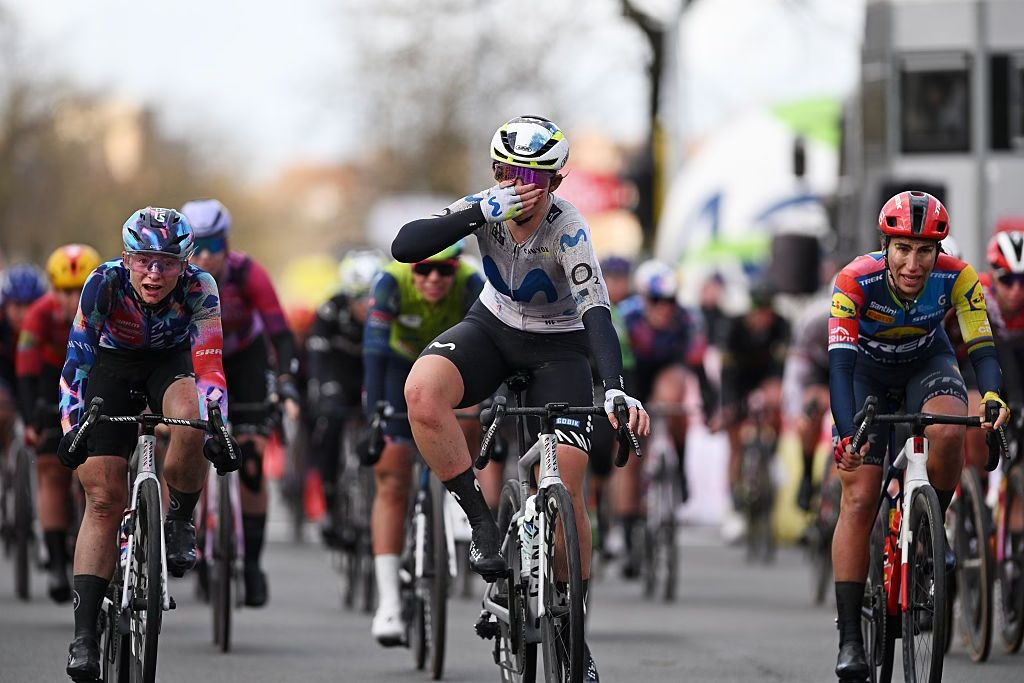
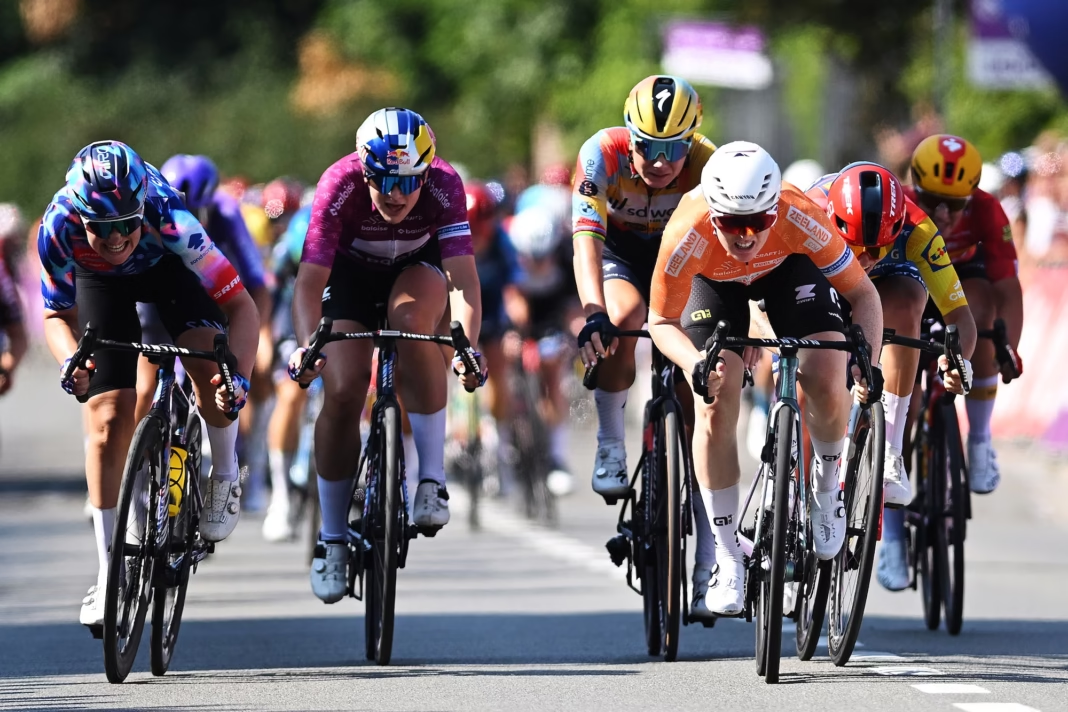
Women’s Ronde van Brugge 2026 did not just produce a surprise winner. It also offered one of the clearest tactical warnings of the spring so far. Carys Lloyd’s breakthrough victory for Movistar, ahead of Elisa Balsamo and Nienke Veenhoven, mattered in its own right, but the bigger story for the rest of the season may be what happened behind them, with Lorena Wiebes finishing only 9th after being boxed in and unable to launch her sprint.
That is unusual enough on its own. Wiebes has been the defining sprint force in women’s racing for long enough that a flat one-day race ending without a clean Wiebes sprint immediately feels significant. What made this even more notable was the manner of it. She was there, she was in the right sort of race, and yet she never got to use her biggest weapon. For readers wanting the race context first, the Women’s Ronde van Brugge 2026 live viewing and start time update and the wider spring coverage on ProCyclingUK help frame where this result sits.
This was not just about one blocked sprint
The first thing to say is that Ronde van Brugge was not a straightforward drag race. The day was shaped by poor weather, repeated pressure and a late crash that disrupted several sprint trains. The race stayed largely together, but it was never fully calm. That context matters because it means Wiebes’ defeat was not simply a case of poor legs or an off day. It happened in a messy, pressured finale where organisation mattered as much as outright pace.
That is why the finish feels important for the season rather than merely surprising. Wiebes has lost races before, but she has so often done so in situations where the terrain blunted her strengths, or where a different race type pulled the sprint out of her reach. Here, by contrast, the race still came back to a fast finish, and yet she did not get to sprint properly at all. That is a different kind of warning sign.
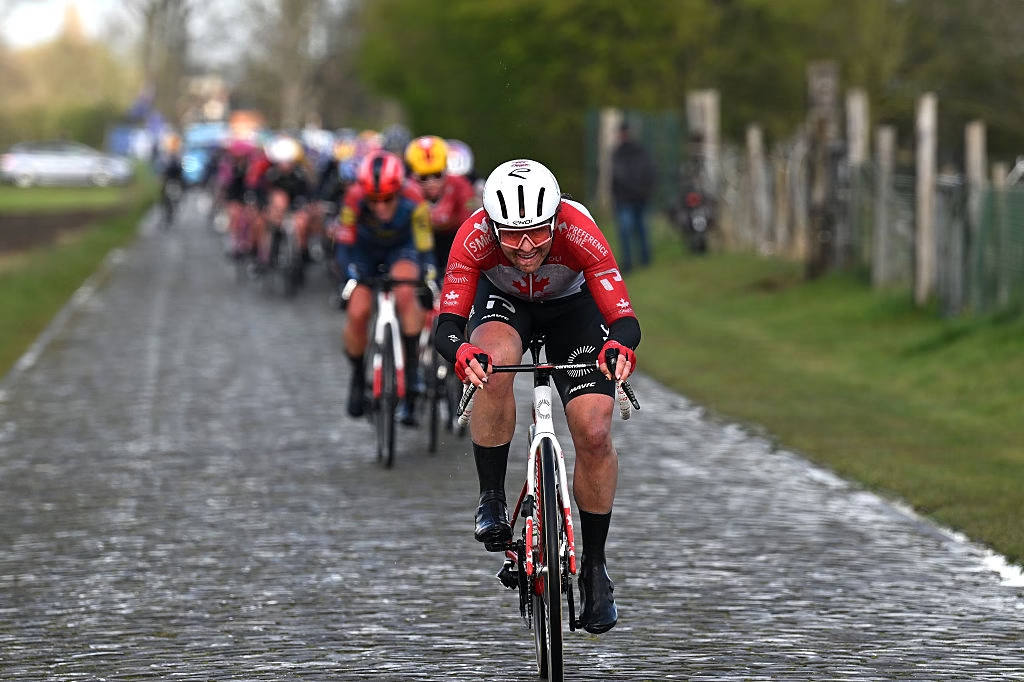 Photo Credit: Getty
SD Worx-Protime looked beatable in a pure sprint setup
The clearest takeaway is that SD Worx-Protime’s sprint machine looked less automatic than it usually does. When Wiebes wins, the finish often has a sense of inevitability because she is both the fastest rider and the best-protected one. In Brugge, that protection was not there in the same way, and once the structure around her loosened, the sprint became a far more open contest.
That matters for the rest of the spring because sprint races are often won long before the final 150 metres. If rival teams believe SD Worx-Protime can be disrupted, crowded out or isolated, they will approach future finales differently. Instead of riding defensively around Wiebes and hoping to launch second-best, teams may now feel there is more value in attacking the structure around her. That can mean fighting harder for position earlier, committing more riders deeper into the run-in, or simply believing that the right wheel choice can neutralise her.
This is part of why the race matters beyond one result. Women’s Ronde van Brugge 2026 was one of the cleaner sprint opportunities of the spring, the sort of day where the usual hierarchy should have reasserted itself. Instead, it suggested that when the lead-out is weakened or fragmented, Wiebes can be made to look human after all.
The result strengthens several rival narratives at once
The obvious winner beyond Lloyd herself is confidence across the rival sprint camps. Balsamo took 2nd, Veenhoven was 3rd and Chiara Consonni finished 4th. That means several of the most credible alternatives to Wiebes were right there in a finale where the favourite never got a clear run. That matters psychologically as much as tactically.
Lloyd’s win adds another layer again. A young Movistar rider taking her first professional victory in this sort of finish suggests the sprint hierarchy may be a little more open than expected when the race is chaotic enough. Lloyd did not simply inherit the result. She read the finale well, held her line cleanly and took her chance when the bigger sprint trains hesitated or broke apart. That is a useful reminder that sprint finishes are increasingly won by composure and positioning as much as by reputation.
For readers following the wider sprint picture, this also links naturally with ProCyclingUK’s Scheldeprijs Women 2026 route guide, because that race now becomes even more interesting as another major test for the fastest riders.
-
 Photo Credit: A.S.O./Charly López
It does not mean Wiebes is suddenly vulnerable everywhere
There is still a temptation to overreact. Wiebes remains the benchmark whenever a major women’s race ends in a flat sprint, and one blocked finish in Brugge does not suddenly change that. Nor does it erase the fact that SD Worx-Protime still have multiple ways to dominate major races.
That point matters even more when set against the previous weekend. At Milan-San Remo Women, Wiebes played a team role while Lotte Kopecky took the win, which underlined that SD Worx-Protime do not rely on only one script to shape the biggest races. In one sense, that softens the impact of Brugge. They do not need Wiebes to win every sprint race for their spring to remain successful.
But that is exactly why Ronde van Brugge still matters. This was one of the races where Wiebes was expected to look most dominant. Instead, the finish exposed how much even the strongest sprinter can depend on structure, timing and clear road space in the final metres.
What this could mean for the next races
The most immediate effect is tactical. Rival teams should come away from Brugge thinking less about outsprinting Wiebes in a straight line, and more about preventing her from ever getting that straight line. That is a subtle shift, but an important one. The lesson is not that Wiebes lacks speed. It is that the fastest rider can still be neutralised if the final run-in is disordered enough.
The second effect is strategic. If Wiebes is going to keep winning at her usual rate, SD Worx-Protime may need to be a little more deliberate about how they build her final kilometres when the run-in gets chaotic. That does not mean they have a crisis. It simply means the margin for error may be thinner than it looked a week ago.
The third effect is thematic. This spring is already beginning to feel less rigid than it first appeared. Kopecky asserting leadership at San Remo, Lloyd taking her first pro win here, and Wiebes missing the decisive sprint despite being in exactly the right kind of race all point in the same direction. The hierarchy is still real, but it no longer looks quite so untouchable. That broader shift sits well alongside the Demi Vollering 2026 season guide and the site’s wider Women’s WorldTour coverage.
The bigger conclusion
What Women’s Ronde van Brugge 2026 means for the season is not that Lorena Wiebes is suddenly easy to beat. It means something subtler, and probably more useful. It means the fastest rider in women’s cycling can still be beaten when the finish is disordered enough and when her team cannot deliver the usual level of control.
That is the lesson rival teams will take away. For the rest of the season, every flat or semi-flat finale becomes a little more interesting. Wiebes is still the benchmark, but after Brugge she looks a little less inevitable, and that changes the psychology of the races that follow.