
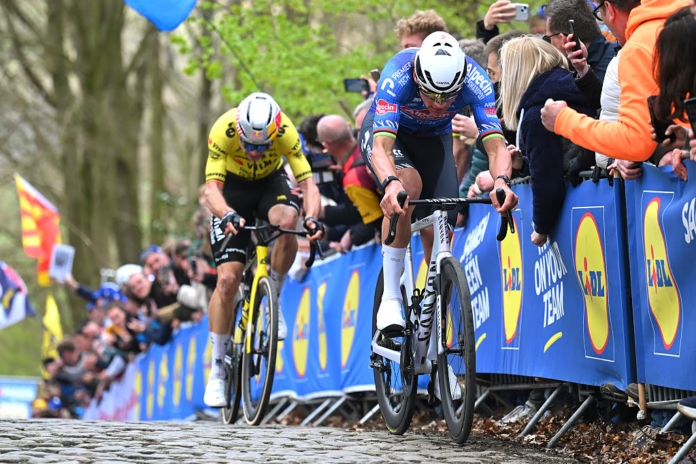
Men’s In Flanders Fields 2026 did more than produce a dramatic finish. It sharpened several of the biggest storylines of the cobbled spring in one afternoon. Jasper Philipsen won after Mathieu van der Poel and Wout van Aert were caught close to the line, with Tobias Lund Andresen and Christophe Laporte completing the podium. That finishing sequence gave the race its drama, but the wider significance sits in what it revealed. Philipsen remains one of the most dangerous riders in the spring whenever a hard race still leaves him within reach of the finish. Van der Poel and Van Aert are still the riders most capable of bending these races around themselves. And Alpecin-Premier Tech continue to pose the most awkward tactical problem for everyone else.
That is why this race matters beyond its own result. In Flanders Fields sits in exactly the right place on the calendar to act as a measuring point. It comes late enough in the cobbled campaign that form is already visible, but early enough that its lessons still feed directly into the biggest targets ahead. This year’s edition did not simplify the Classics picture. It made it clearer that the strongest teams and riders are dangerous in more than one kind of race.
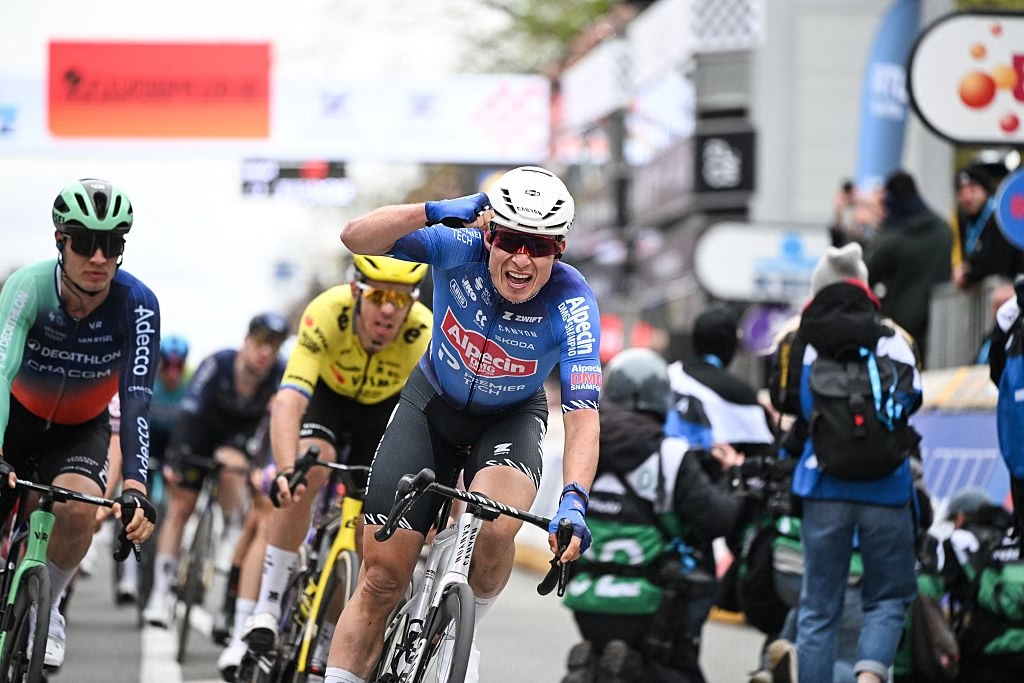 Photo Credit: Elias Rom/Belga/AFP
Jasper Philipsen is still one of the defining riders of the spring
Philipsen’s win reinforced a point that has been building throughout the Classics. He is no longer a rider who only becomes decisive if others hesitate. He is now a rider who can survive a demanding one-day race and still finish it off at the highest level.
That distinction is important. In Flanders Fields was selective enough for Van der Poel and Van Aert to attack late and come very close to staying away. This was not a routine sprint set-up. Philipsen still won. That tells you that rivals cannot simply rely on the race being made hard. If he is still there at the finish, he remains one of the most likely winners.
For the season, that keeps him central not only to races that lean more naturally towards a sprint, but also to the bigger one-day events where the terrain does not quite eliminate him. It also strengthens the wider reading of Alpecin’s spring, because Philipsen is not just collecting wins when the team’s more explosive options are neutralised. He is becoming part of the reason the team is so hard to control in the first place.
For readers following the wider campaign, this sits naturally alongside the How to watch Ronde van Vlaanderen 2026 in the UK and the Men’s Paris-Roubaix 2026 route guide, because Philipsen now feels relevant in both the selective and semi-selective end of the cobbled spectrum.
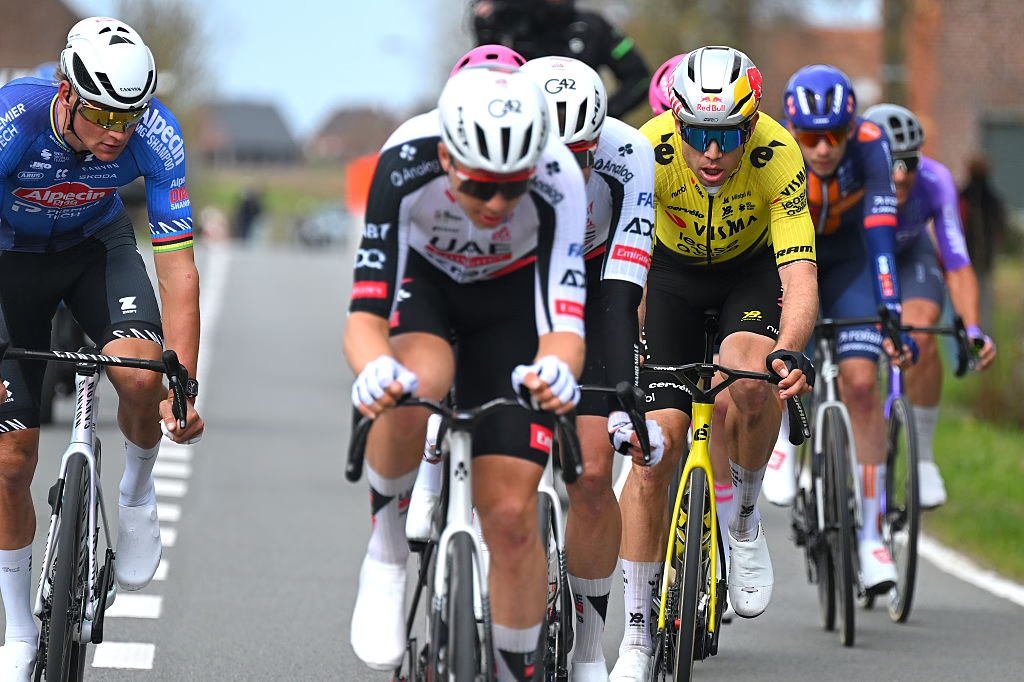 Photo Credit: Getty
Van der Poel and Van Aert are still driving the biggest races
Even in defeat, Van der Poel and Van Aert left the strongest visual impression on the race. Their late move was the defining image of the day, and that matters because it confirmed what has already been emerging through the spring. These are still the riders most capable of forcing a Classic onto their own terms.
For Van der Poel, the message is especially simple. He continues to race with the same confidence and force that make him the most disruptive presence in the cobbled campaign. He does not need to wait for the perfect moment, and he rarely looks content to leave things to chance. Even when he does not win, he shapes how the race is ridden.
For Van Aert, the reading is slightly different, but still encouraging. He did not get the result, yet he was active in the defining move and looked strong enough to matter at exactly the point where the race was being won or lost. In a spring where fine margins can decide the biggest races, that is not a trivial sign. It suggests he is still very much part of the top level of the cobbled narrative rather than chasing it from behind.
That gives extra context to the Men’s Dwars door Vlaanderen 2026 contenders preview and the Men’s Dwars door Vlaanderen 2026 team-by-team guide, because the same question now carries forward into the next race: who can actually prevent Van der Poel and Van Aert from shaping the outcome again?
Alpecin-Premier Tech are still the hardest team to solve
The bigger team takeaway may be the most important of all. Alpecin-Premier Tech leave this race with another major win, but the real issue for rivals is how many different ways they can still win.
Van der Poel can blow races apart from distance. Philipsen can survive enough of the damage and finish the job if it comes back together. That combination keeps forcing other teams into uncomfortable decisions. If they commit too much to stopping Van der Poel, they risk bringing Philipsen to the line. If they hold back because of Philipsen, they may give Van der Poel too much room to attack.
That is the fundamental tactical problem of the cobbled spring right now. In Flanders Fields did not resolve it. It reinforced it. Alpecin do not just have the strongest individual rider for one race shape. They have multiple riders who remain dangerous across different race scripts. That is a very difficult thing to defend against over a run of one-day races.
If you are following that wider tactical thread, it also links neatly with the E3 Saxo Classic 2026 team-by-team guide and the Full start list for Men’s Dwars door Vlaanderen 2026, because both show the depth and structure around the headline names.
Tobias Lund Andresen and Christophe Laporte gave their teams more to work with
The podium behind Philipsen also carried some useful meaning for the rest of the spring. Tobias Lund Andresen taking second was not simply a good placing. It was another sign that he and his team can convert a hard, selective race into a top result when the biggest names do not quite make it to the line alone.
That matters because the cobbled spring is not only about the superstars. It is also about which teams can still place riders into the right situation when the race becomes complicated. A podium in a race like this shows real functionality, not just opportunism.
Laporte finishing third matters as well, especially in the context of Team Visma | Lease a Bike. Van Aert was already part of the defining late move, but Laporte still made the podium once the race came back together. That is exactly the kind of layered team strength that becomes increasingly valuable in the biggest Classics. One card is rarely enough. The teams that can stay dangerous across more than one scenario usually remain in the conversation deepest into the spring.
That broader Visma picture also connects with the Men’s In Flanders Fields 2026 live viewing and start time update and the How to watch Ronde van Vlaanderen 2026 in the UK, because the same depth-versus-specialisation question is now central to the races still to come.
-
 Photo Credit: Getty


The race still rewards versatility over specialism
One of the enduring truths of In Flanders Fields is that it sits in an awkward but revealing middle ground. It is not as brutally selective as the hardest editions of the Tour of Flanders, but it is also too hard and too tactically demanding to be treated as a pure sprinters’ race. The 2026 edition underlined that once again.
A late break by Van der Poel and Van Aert nearly stayed clear. The winner still came from a sprint after a highly selective day. That tells you something useful about the rest of the season. Riders who only win through one very specific race script are vulnerable. The riders who continue to emerge strongest are the ones who can handle multiple demands at once, survive a hard race, make good decisions under pressure and still finish quickly enough to matter.
That is a large part of why this race remains such a useful measuring point. It rewards adaptability, and adaptability usually carries very well into the rest of the cobbled spring.
What it says ahead of the next Classics
The broader picture now looks a little sharper. Philipsen remains a central threat whenever he reaches the finish in contention. Van der Poel is still racing with the kind of force that can tear open any Classic. Van Aert is clearly in the conversation even without the win. Alpecin-Premier Tech remain the team everyone else has to solve. Visma still have multiple cards. And the rest of the field is being asked to beat rivals who are excelling in more than one type of finale.
That is what Men’s In Flanders Fields 2026 means for the season. The race did not give one clean answer. Instead, it confirmed that this spring is being shaped by a small number of riders and teams with overlapping strengths, and that the hardest challenge for everyone else is not simply matching their power, but solving their range.
For readers following the wider cobbled campaign, this piece also sits naturally alongside the Men’s Dwars door Vlaanderen 2026 contenders preview, the Men’s Paris-Roubaix 2026 route guide, and the Lorena Wiebes 2026 season guide, as the spring continues to reward riders who can do more than one thing well.

