
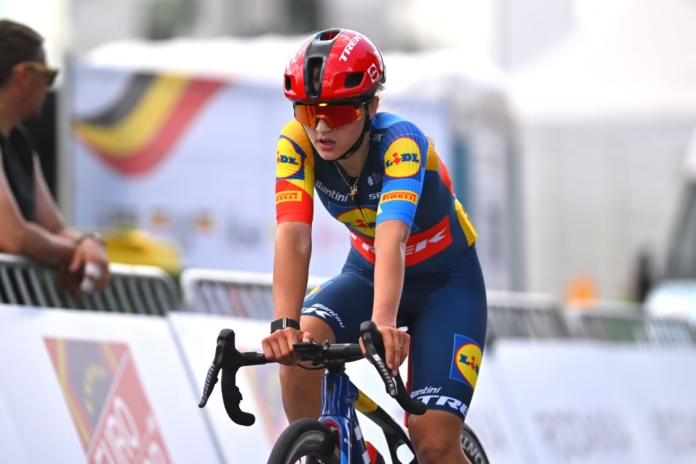
Fleur Moors’ 2nd place at In Flanders Fields was one of the standout rides of the Belgian spring so far, but it did not come from nowhere. It also should not be framed as her breakthrough moment. That came last season when she won Dwars door de Westhoek, the kind of result that changed how she was viewed within the peloton and by those following the next wave of Belgian talent.
What this spring has done instead is show the next phase of her development. Moors is no longer simply a young rider learning how to survive major one-day races. She is beginning to influence them, whether that is through tactical work for Lidl-Trek, by making decisive selections herself, or by turning those situations into results.
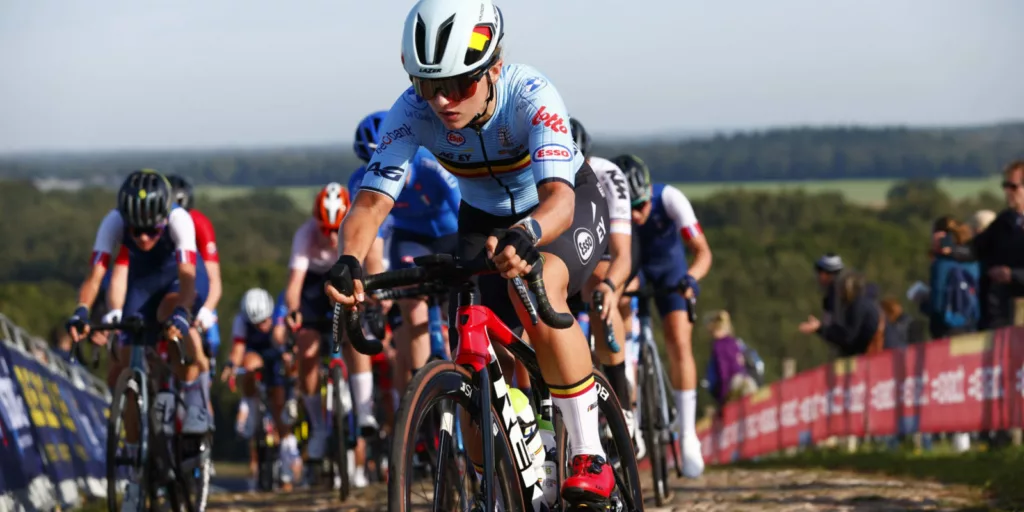 Photo Credit: Luca Bettini/SprintCyclingAgency
A rider who stood out long before the WorldTour
Moors has been on the radar for several years because her development was already unusually strong as a junior. She showed early that she could handle different demands, from cyclocross to hard one-day road races, and that combination has clearly helped shape the rider she is now.
Her junior road results pointed towards a rider with both speed and staying power. She was not simply collecting placings in controlled races. She was performing in events that rewarded resilience, positioning and toughness, which are often stronger indicators for the cobbled Classics than a pure sprinting background on its own. That gave Lidl-Trek enough confidence to move quickly when it came to bringing her into the professional ranks.
That step matters in understanding who Moors is. She was not signed as a long-term project that might eventually become useful. She was brought in because there was already a belief that her ceiling was high, and that her style of racing would translate well to elite one-day competition.
Learning the level in her first professional season
Her first season as a neo-pro was not built around immediate leadership, nor should it have been. The real task was to absorb the demands of WorldTour racing, learn how races were won, and show she could remain competitive against riders with far more experience.
That process was visible through 2024. Moors put together encouraging performances in Belgian races and showed enough consistency to suggest she was adapting quickly. A ride to 4th at the Belgian national road race stood out in particular because it came in a field full of riders who knew exactly how to handle those pressure-heavy domestic races. For a teenager, that was a meaningful marker of progression.
What it showed was not simply that she had talent. That was already known. It showed that she could translate it into elite racing conditions, where road position, nerve and timing matter as much as raw legs.
Why last season changed the conversation
If there is one point in Moors’ career so far that deserves to be called a breakthrough, it is 2025 rather than this spring. Winning Dwars door de Westhoek was important because it moved her beyond the category of promising youngster. She was suddenly a rider who had actually closed out a serious one-day race.
That mattered because many talented young riders spend a long time being described in terms of potential. Moors had already started turning that potential into evidence. She did not stop there either. Her 2nd place at Dwars door het Hageland backed up the Westhoek win with another result in a demanding Belgian race, one that suited riders who could handle rougher terrain and changing race dynamics. Later in the year she also finished 3rd at the Belgian national road race, strengthening the picture of a rider who was increasingly comfortable in difficult, selective events.
These were not random results. They revealed a pattern. Hard races suited her. Technical racing suited her. If the field was reduced by repeated efforts rather than a long drag race to the line, Moors increasingly looked like one of the riders still there at the end.
Setbacks that did not stop the momentum
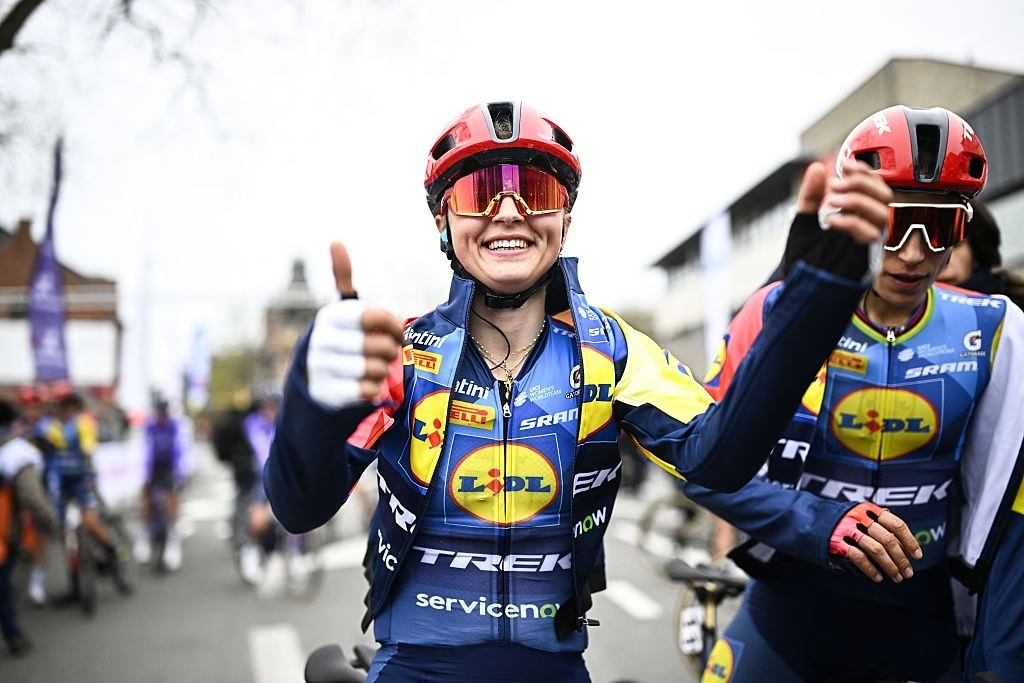
Development is rarely clean, especially for a rider making such a quick jump into the top tier, and Moors’ rise has had interruptions too. Injury disrupted part of her 2025 campaign, including a broken wrist that cut short her Giro d’Italia Women. Her cyclocross winter was also affected.
That is part of the story because it makes the current run of form more impressive. This is not a rider following a perfect upward line without setbacks. It is a rider who has already had to absorb disruption, reset and keep progressing. Lidl-Trek’s decision to extend her deal showed the team still believed strongly in that trajectory.
That trust now looks well placed. The team has not treated her like a rider who needs to be hidden. Instead, Moors is increasingly being used in meaningful tactical situations.
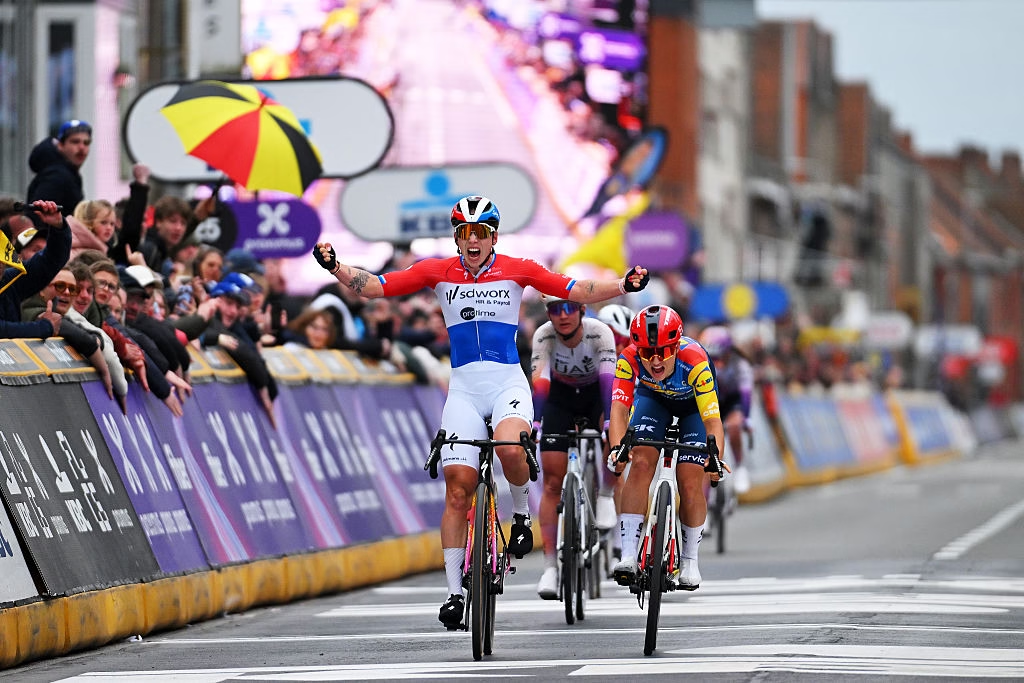 Photo Credit: Getty
What the 2026 Spring Classics have revealed
This season has not introduced Fleur Moors to the sport. It has clarified her level.
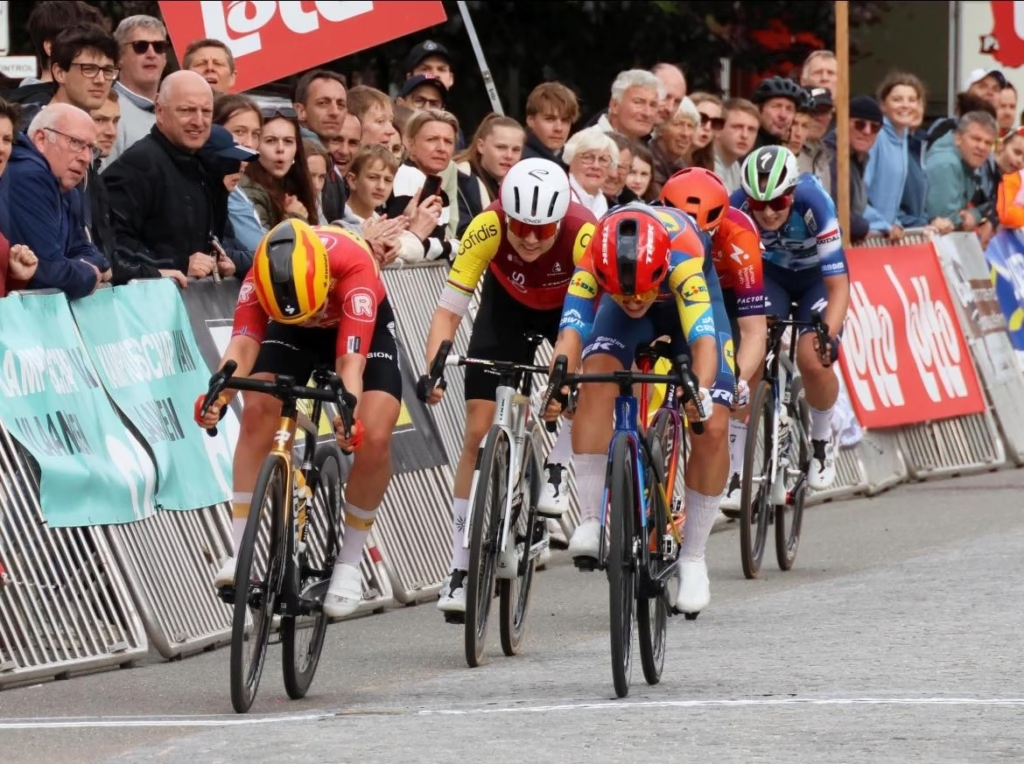
Her 2nd place at IXINA Leeuw-Oetingen was an early marker. Finishing runner-up behind Lorena Wiebes was a reminder that Moors can stay with the decisive move and still deliver a result when the race is hard enough to thin things out. It was also a sign that her finishing speed remains a major asset when she survives in a smaller group.
Then came In Flanders Fields, which offered the clearest illustration yet of where she sits in this Lidl-Trek team and how her abilities are evolving. She was given a very specific task, to cover the key move on the Kemmelberg, and she executed it perfectly. Once in the front group, she was not there by accident or on borrowed time. She was there because she had done the hard part of the race properly.
That is what made the sprint for 2nd so compelling. Moors was not just hanging on. She nearly came around Wiebes after one of the hardest editions of the race, and did so after carrying out a disciplined tactical role within the team plan. With Elisa Balsamo behind, Lidl-Trek had the ideal split in the race, and Moors had done exactly what was needed.
This is often the stage where a young rider’s real value becomes obvious. It is one thing to have talent. It is another to be trusted with a precise job in a major Belgian race and then still be strong enough to almost win from that position.

The kind of rider she is becoming
Moors is developing into a rider who makes sense for modern Classics racing because she can fill multiple roles. She can support a protected sprinter. She can make front groups herself. She can handle short climbs, cobbles and attritional racing, and she still has the finishing speed to take advantage if the race comes back together in a reduced sprint.
That versatility is what makes her so useful to Lidl-Trek and so interesting more broadly. Riders like that are hard to control because they can shape a race without necessarily starting as the obvious leader. A team can use them aggressively, defensively, or opportunistically depending on how the race develops.
In Moors’ case, the Belgian background matters too. She looks comfortable in these races in a way that cannot be faked. The roads, the rhythm, the stress and the repeated efforts all seem to suit her instincts.
Why her development curve looks so strong
The most convincing part of Fleur Moors’ rise is how logical it has been. Her junior years established the talent. Her first professional season showed she could cope with the level. Last season showed she could win and podium in hard one-day races. This spring has shown that she can carry that profile into the biggest Classics and still be there when the race reaches its most decisive phase.
So the real story is not that Moors has suddenly arrived. It is that she has been building towards this for some time, and the 2026 Spring Classics have made that development impossible to ignore. Her route to these results has been steady, demanding and increasingly impressive, and it now looks as though Lidl-Trek have a rider who can do far more than simply learn from the front of the race.

