HTC-Columbia only existed for a few seasons in that name, but it left a much bigger mark on men’s cycling than its lifespan suggests. In simple terms, it was the team that emerged from the collapse of the old T-Mobile structure, rebranded and rebuilt under Bob Stapleton after the sponsor walked away amid repeated doping scandals. From that reset came one of the most effective squads of the late 2000s and early 2010s, a team that turned sprinting, stage-hunting and time trialling into a sustained winning model.
It never had a Tour de France general classification winner and was not built around that kind of ambition. Instead, HTC-Columbia became something different – one of the sport’s great stage-winning operations, a team with a clear identity, a deep roster and a lead-out system that became the benchmark of its era. For a few years, it felt like almost every race on the calendar contained some version of the same story: HTC-Columbia had arrived with a plan, and more often than not, that plan worked. That is why the team still holds an important place in men’s cycling history.
From T-Mobile fallout to High Road reset
To understand HTC-Columbia properly, it helps to start with what it was trying to leave behind. The team’s deeper roots ran through Team Telekom and later T-Mobile, one of the biggest and most recognisable structures in the sport. But by 2006 and 2007, that identity had become badly damaged. Doping scandals, the fallout from Operación Puerto and the wider credibility crisis in German cycling pushed Deutsche Telekom to end its sponsorship.
That could easily have been the end of the structure altogether. Instead, Bob Stapleton kept the team alive through High Road Sports and tried to create something that looked and felt like a clean break. The project raced as Team High Road in the first part of 2008, without a title sponsor but with a clear attempt to present a new culture and a new sporting identity.
This was more than a cosmetic change. The team switched its registration to the United States, leaned into a stronger anti-doping position and started to build around a younger, more flexible roster. Columbia Sportswear then came in as title sponsor from the 2008 Tour de France, and HTC joined from the 2009 Tour before becoming the headline name in HTC-Columbia and later HTC-Highroad.
How the team was built to win
What made HTC-Columbia stand out was not only the number of victories, but the clarity behind them. This was not a team trying to do everything at once. It knew where its strengths were and leaned into them heavily.
The core of the project was built around stage wins, sprint control and time trial excellence. The team had the discipline to dominate bunch finishes, the horsepower to take short time trials and prologues, and enough all-round depth to keep winning across stage races and one-day events. It was rarely the most romantic team in the peloton, but it was often the most efficient.
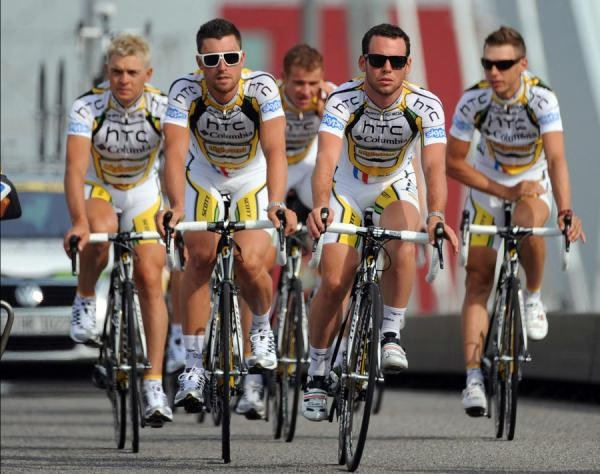
That was especially true in the sprint train. Around Mark Cavendish, the team built one of the defining lead-out systems of the era, with riders such as Mark Renshaw and Bernhard Eisel helping turn raw speed into repeated wins. At the same time, Tony Martin and Bert Grabsch gave the team elite time trial firepower, while riders like Edvald Boasson Hagen, Michael Rogers, and later André Greipel added depth well beyond one single discipline.
The breakthrough years
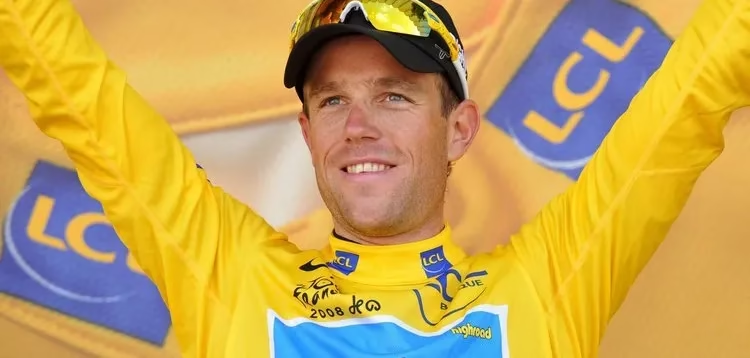
The first big statement came at the 2008 Tour de France. With Columbia newly on the jersey, the team won five stages, four of them through Cavendish, while Kim Kirchen also wore the yellow jersey. That race established two things very clearly. Cavendish was becoming the best pure sprinter in the world, and High Road had already built the sort of tactical discipline that could repeatedly deliver him in the biggest race of all.
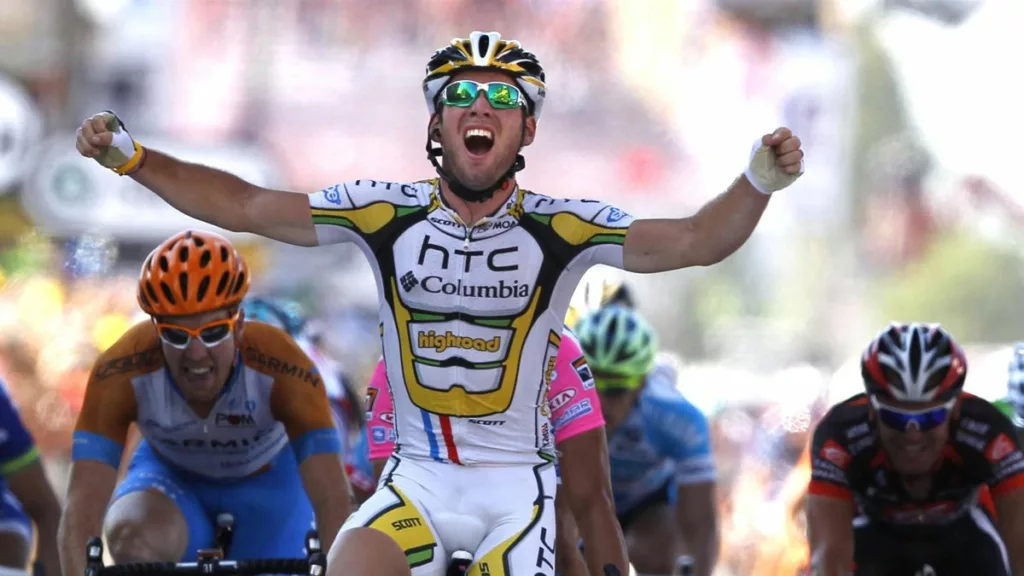
By 2009, the team had become one of the dominant forces in the peloton. Cavendish won six Tour de France stages that year, including the final stage on the Champs-Élysées, and the lead-out train became almost as famous as the rider finishing the job. Away from the Tour, Boasson Hagen developed into one of the most exciting all-round talents in the sport, while the broader team kept winning at a rate few rivals could match.
What stood out was the scale of it. This was not a team that relied on one rider peaking for one month. It was winning constantly, across the full season, with different riders and in different race situations. That made HTC-Columbia feel less like a star vehicle and more like a production line for victories.
The riders who defined HTC-Columbia
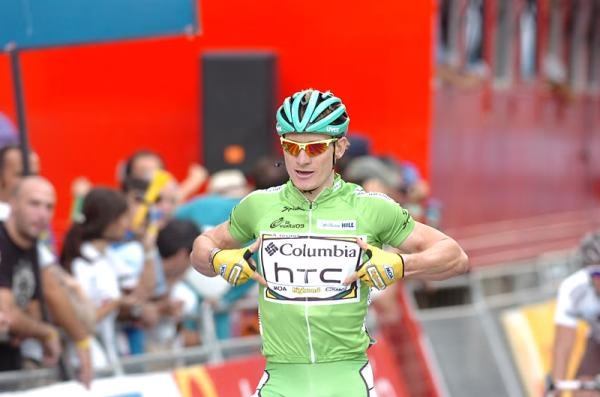
Mark Cavendish was the team’s biggest star and the clearest symbol of what it did best. HTC-Columbia gave him the platform to become the most feared sprinter in cycling. The structure around him was so polished that his victories often looked inevitable by the time the final kilometre arrived. His Tour de France stage wins became the public face of the entire project.
But the team was never only about Cavendish. André Greipel was another prolific winner, to the point that the squad sometimes seemed to have an excess of sprint talent. Boasson Hagen gave the team another angle, capable of winning from reduced groups, on lumpy terrain and in shorter stage races. Tony Martin became one of the best time trial riders in the world in these colours, while Michael Rogers, Bert Grabsch, Kim Kirchen, George Hincapie, Matt Goss and John Degenkolb all played important roles in different phases of the team’s life.
That is part of why the team remains so memorable. It was not a narrow, one-leader structure. It had stars, but it also had depth, and that depth kept the wins coming.
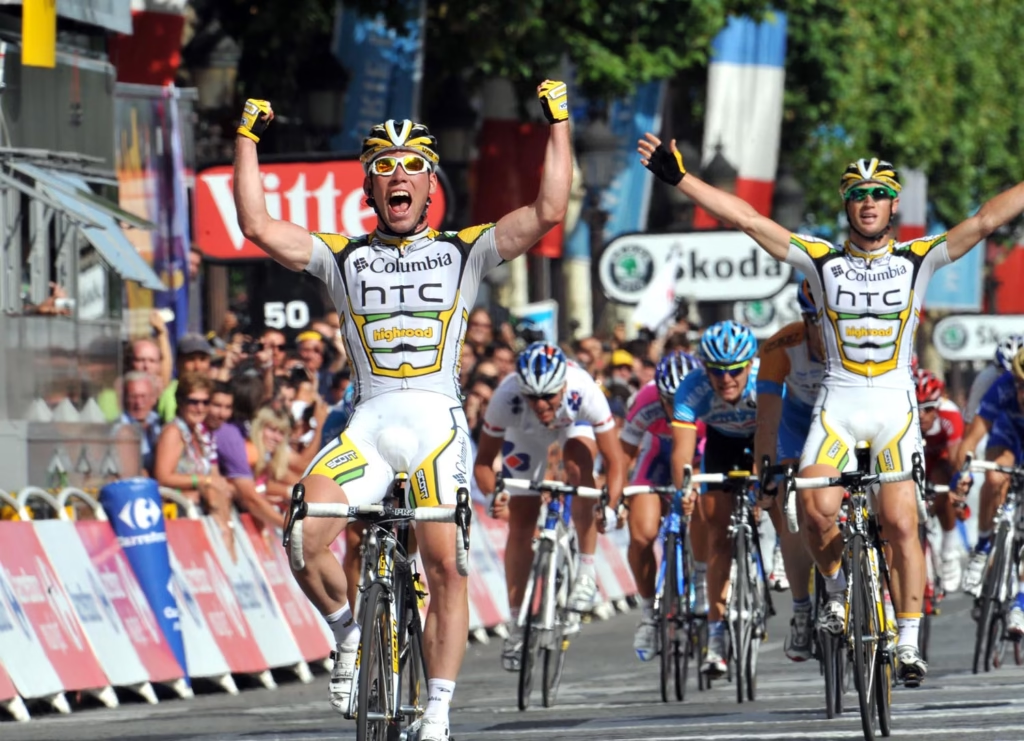 Photo Credit: Graham Watson
The victories that defined the team
There were too many victories to cover properly in one article, but a few performances stand above the rest.
The 2008 Tour de France was the true breakthrough, with Cavendish’s four stage wins and Kirchen’s stint in yellow giving the rebranded project instant credibility on the biggest stage in cycling.
The 2009 Tour de France may have been the team’s signature race. Cavendish won six stages, including the Champs-Élysées, and the team’s lead-out system reached its most intimidating form. For many fans, this is the version of HTC-Columbia that remains fixed in memory.
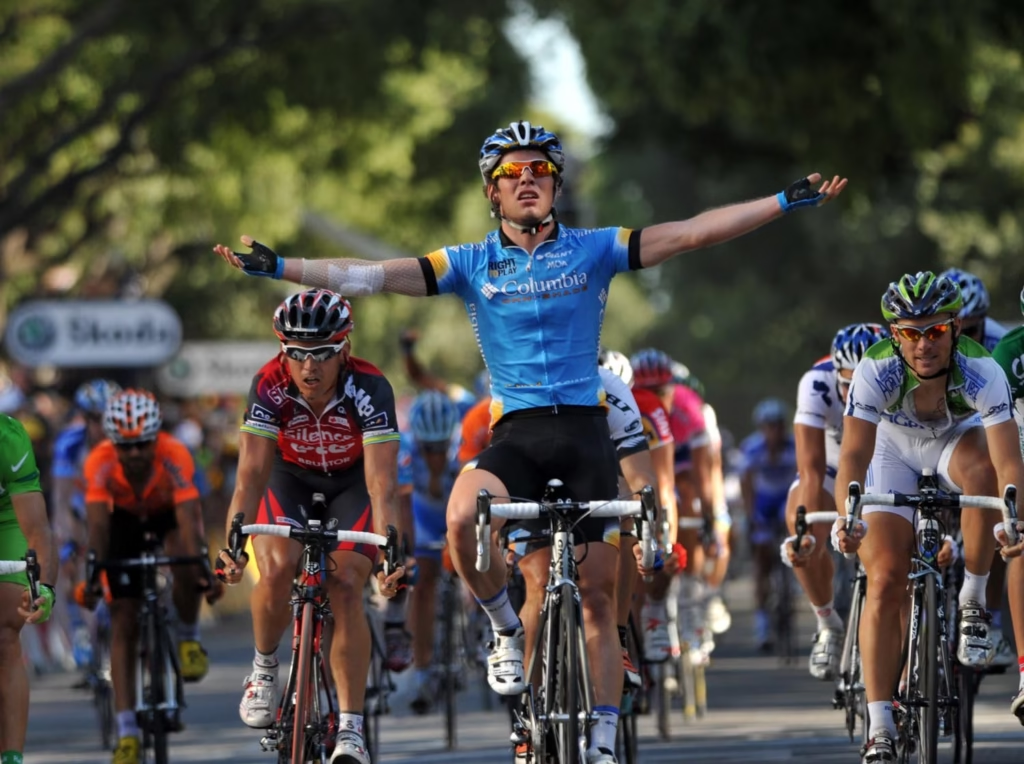
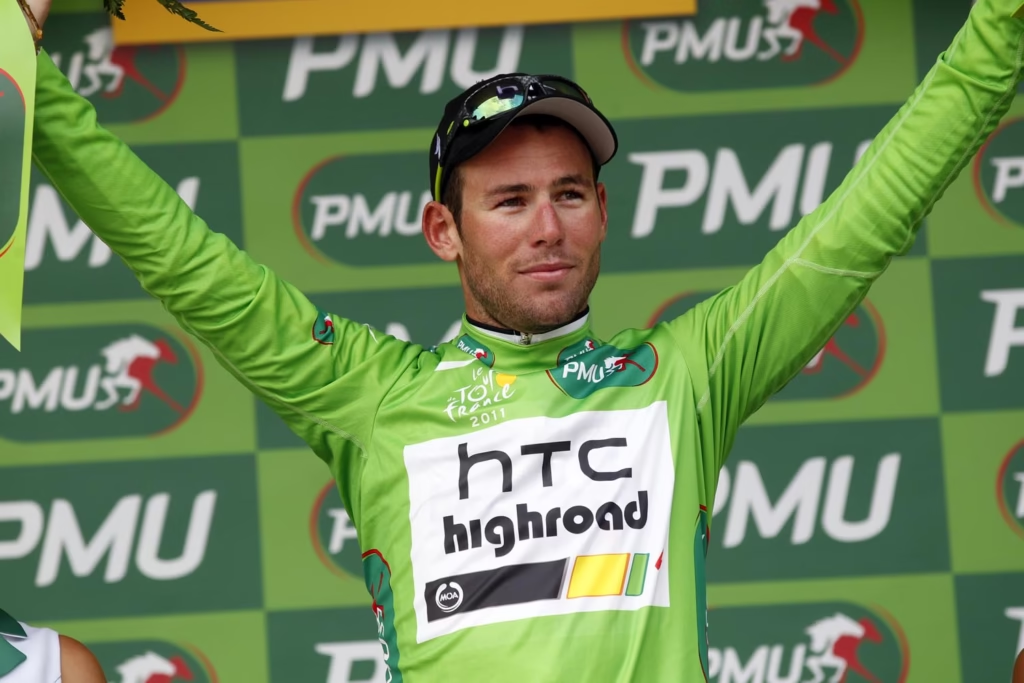
The final season in 2011 was also one of its strongest. HTC-Highroad finished as the most successful team of the year, taking a huge haul of victories, including six stages at the Tour de France, five of them through Cavendish, who also won the green jersey for the first time. Tony Martin added major time trial wins and underlined once again how much the team could do beyond sprinting.
Why HTC-Columbia mattered
HTC-Columbia mattered because it offered a different model of success. Many of the biggest teams of that period were judged above all by Grand Tour overall ambitions. High Road instead built one of the sharpest win-maximising structures in the sport without depending on a Tour de France contender.
It also changed how people thought about sprint teams. Cavendish was the finisher, but the train itself became a tactical weapon and a spectacle. The team helped define a more modern understanding of sprint organisation, one based on control, role clarity and repetition.
In that sense, HTC-Columbia was one of the transitional teams of the era. It sat between the older sponsor-heavy superteam model and the more specialised, systems-driven teams that followed.
Why it ended so abruptly
The surprising part of the story is still the ending. For a team that won so often, folding at the end of 2011 looked almost absurd from the outside. But success on the road did not solve the underlying commercial problem. The search for a new sponsor dragged on through the 2011 season, and no replacement was secured in time.
That left the team in a strange position. It was still one of the best squads in the world, still winning at a remarkable rate, and yet it had no future. In the end, the project closed after the 2011 season.
That contradiction is central to the team’s legacy. HTC-Columbia showed that in cycling, winning and commercial security are not always the same thing. A team can be one of the strongest in the sport and still disappear if the sponsorship model breaks.
Notable riders
- Mark Cavendish
- André Greipel
- Edvald Boasson Hagen
- Tony Martin
- Mark Renshaw
- Bernhard Eisel
- Michael Rogers
- Kim Kirchen
- George Hincapie
- Bert Grabsch
- Matt Goss
- John Degenkolb
Notable victories and achievements
- Multiple Tour de France stage wins across 2008 to 2011
- Cavendish’s six Tour de France stage wins in 2009
- Cavendish’s green jersey at the 2011 Tour de France
- Kim Kirchen in the yellow jersey at the 2008 Tour de France
- Tony Martin’s rise into one of the world’s best time trial riders
- A dominant lead-out train that became the standard of its era
- One of the most successful teams in the sport during its final 2011 season
The legacy of HTC-Columbia
HTC-Columbia’s existence was relatively short, but its influence lasted much longer. It helped launch or accelerate the careers of some of the most important riders of the era. It set a new standard for sprint organisation. It showed how a team could rebuild from scandal and become a winning machine almost immediately.
More than that, it left behind one of cycling’s stronger what-if stories. Had the funding been found for a few more years, it is easy to imagine HTC-Columbia carrying on as one of the dominant teams of the early 2010s. Instead, it ended just as it still looked fully alive.
That is why the team remains so memorable. It was not simply successful. It felt unfinished.
-
 Photo Credit: Canyon SRAM (supplied media release)
 -
 Photo Credit: Park Tool