
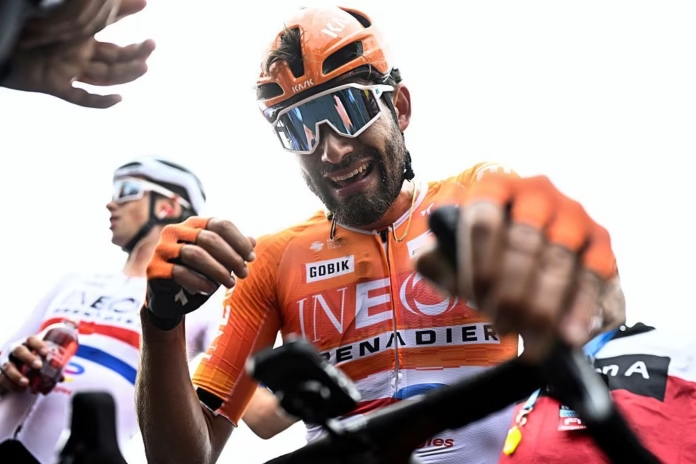
Men’s Dwars door Vlaanderen 2026 shifted the mood of the cobbled spring without needing Monument status to do it. Filippo Ganna’s late win, catching Wout van Aert almost on the line after a day that also included mechanical trouble and a long chase back into contention, did more than provide a dramatic finish. It sharpened the questions around several of the biggest names in the Classics season and gave the next ten days a more complicated shape.
This was not a race that settled everything. Instead, it made the coming run of races more interesting. Ganna now looks more dangerous than ever for Paris-Roubaix. Van Aert showed he has the legs to shape the biggest cobbled races, but also left Waregem with another near-miss that will inevitably invite scrutiny. For the rest of the contenders, Dwars door Vlaanderen was a reminder that the spring is still open enough for timing, resilience and tactical clarity to count for as much as raw strength.
If you want the broader context around the cobbled campaign, ProCyclingUK’s Men’s WorldTour guide and history of the men’s Paris-Roubaix help frame why this stretch of the season carries so much weight.
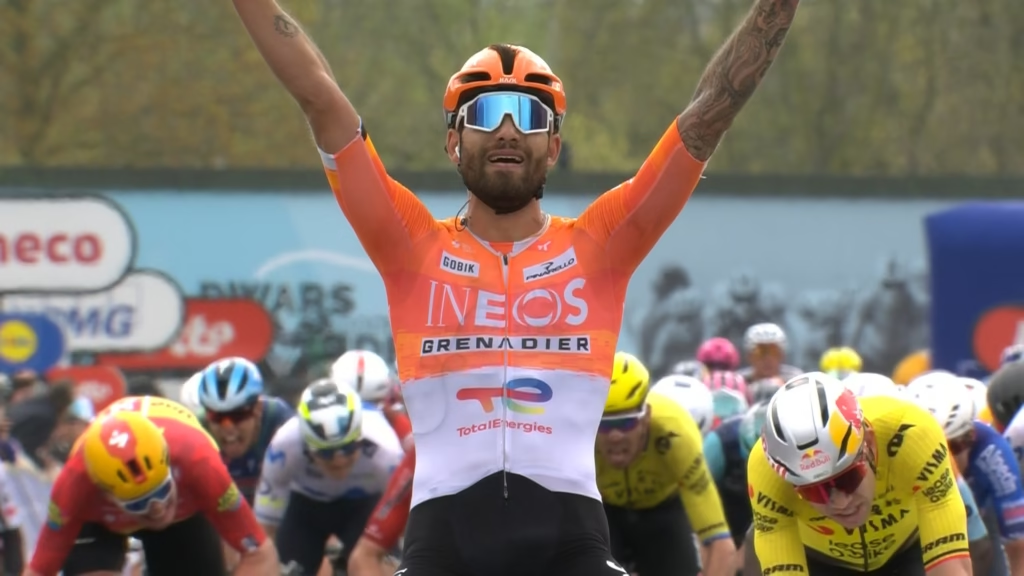
Filippo Ganna is no longer just an outsider for Roubaix
The clearest shift after Men’s Dwars door Vlaanderen 2026 concerns Ganna. He was already a rider everyone respected for Paris-Roubaix because of his size, power, ability to ride the flats at enormous speed, and growing comfort in these races. What changed on Wednesday was the sense of belief around him.
Winning after mechanical disruption and still having the composure and engine to close Van Aert down at the death tells you something important. Ganna is not arriving at Roubaix as a speculative pick built around theory. He is arriving as a rider who has just won one of the final major cobbled tests through a mix of force, patience and recovery.
That makes him dangerous in a very specific way. Paris-Roubaix often rewards riders who can absorb chaos better than everyone else. Ganna just demonstrated exactly that. He lost ground, chased back, managed the effort, then still had enough in reserve to finish the job. In a race where punctures, crashes and split-second adjustments are part of the deal, that feels especially relevant.
It also changes how rivals will read him. Before this, Ganna was often treated as a rider who could podium a Monument if things lined up perfectly. Now he looks like someone who can force others into mistakes simply by remaining in the race for longer than they want him to.
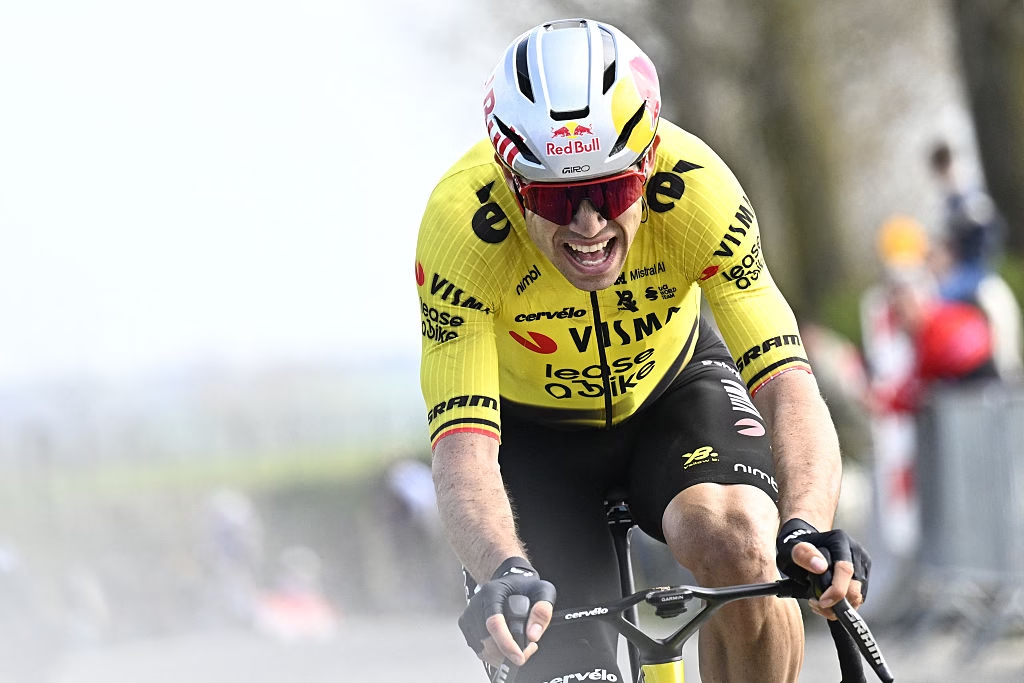 Photo Credit: Jasper Jacobs/BELGA/AFP
Wout van Aert proved his level, but not his finishing authority
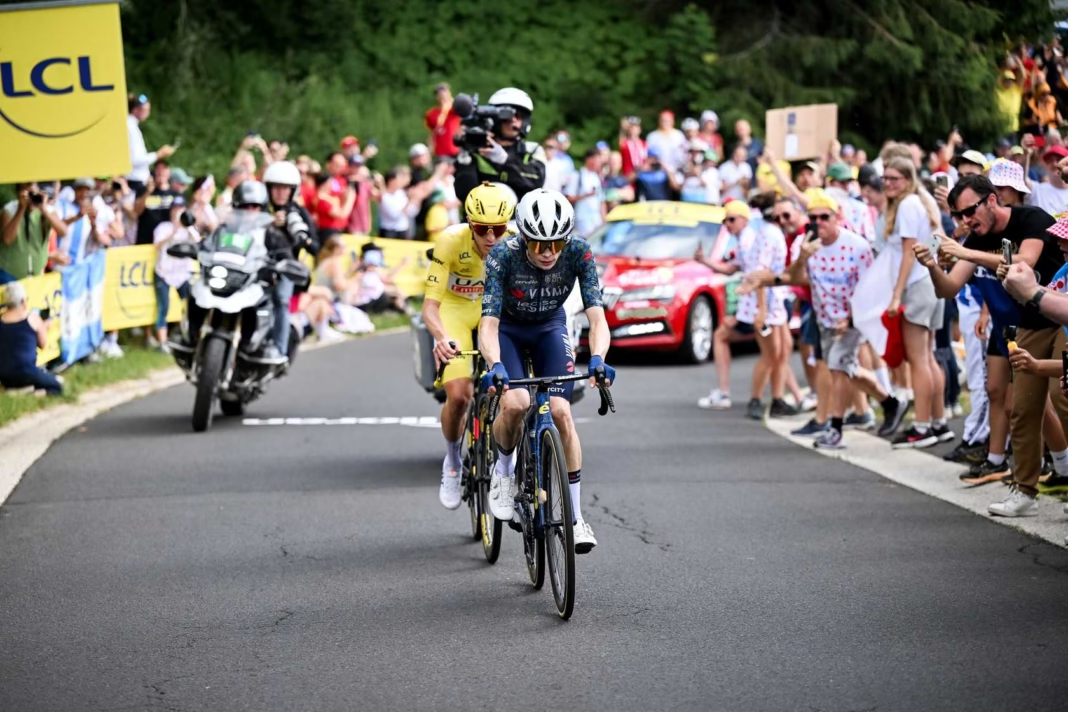
For Van Aert, Men’s Dwars door Vlaanderen 2026 was both encouraging and uncomfortable. The encouraging part is easy enough to see. He looked strong enough to shape the race himself. He attacked from distance, thinned the field, and came very close to winning. On pure form, there was plenty there to suggest he is where he needs to be ahead of the Tour of Flanders and Paris-Roubaix.
The discomfort comes from the ending. Van Aert did almost everything right, yet still lost. In isolation, that is not a disaster. Classics racing often turns on very fine margins. But Van Aert is not judged in isolation anymore. Every near-miss gets laid next to the rest of his spring record and the weight of expectation that follows him into every major one-day race.
The most useful reading, though, is probably the calmer one. Men’s Dwars door Vlaanderen 2026 did not show a rider lacking condition. It showed a rider capable of putting rivals under pressure from a long way out. The bigger question is whether that same approach will be enough when the opposition includes the very best version of Mathieu van der Poel, Tadej Pogačar, or a fully committed group of Roubaix specialists.
So the season implication for Van Aert is not that he is in trouble. It is that he is close enough to win the biggest races, but still searching for the cleanest route to actually close them out.
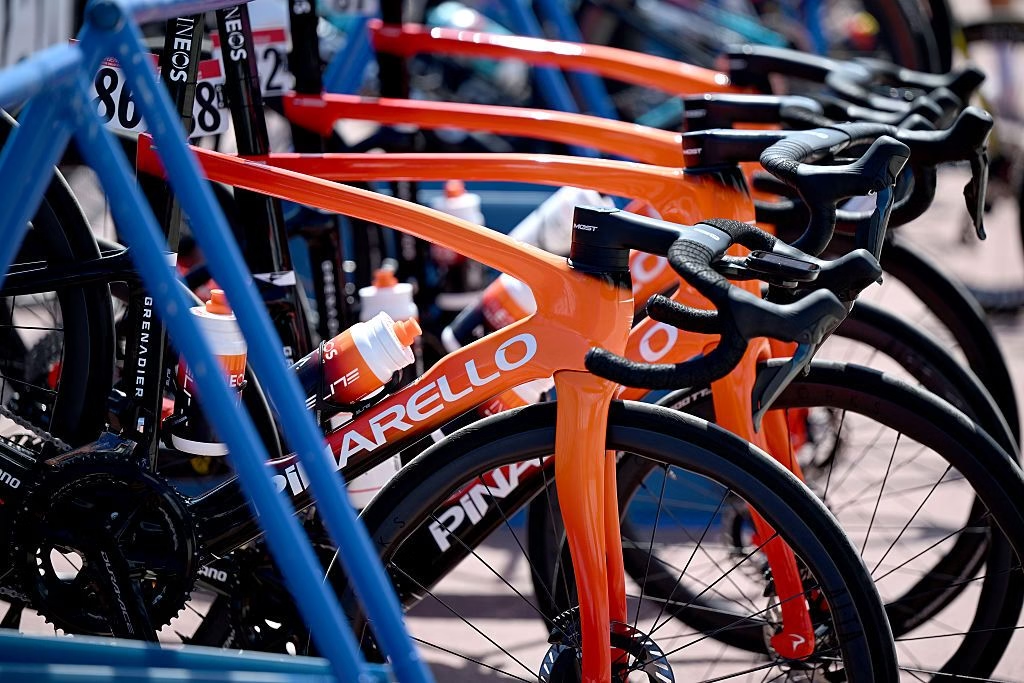
Ineos Grenadiers now have a spring leader with real momentum
Ineos Grenadiers have often looked strong in fragments during the cobbled races. The problem has usually been converting that into the defining win. Ganna’s success at Men’s Dwars door Vlaanderen 2026 changes the emotional balance of that a little.
Momentum is not a measurable performance metric in the same way as watts or finishing positions, but it does affect how teams race. A squad with a rider who has just won a major spring race tends to commit more clearly around him. Team-mates ride with greater certainty. Rivals mark them more closely. Tactical situations become easier to read because the hierarchy is clearer.
That could matter a lot at Roubaix in particular. Ineos now know they are not building around a hypothetical contender. They are backing a rider who has already found the winning move in this phase of the calendar. That makes the team more dangerous as a whole, because their collective decisions no longer need to be cautious.
The cobbled season still feels open
One of the most useful takeaways from Men’s Dwars door Vlaanderen 2026 is that the spring still does not feel fully locked down. Some years, a single rider arrives at this point and makes the rest of the field look as if they are racing for minor placings. This week did not quite create that mood.
Instead, it reinforced how varied the threat list remains. Van Aert can still blow a race apart. Ganna has now turned his potential into a marquee win. Other riders watching from slightly behind will have seen openings too, because the race showed that even the strongest men can be made vulnerable late on.
This feels especially relevant when moving from Dwars door Vlaanderen into races with different demands. The Tour of Flanders asks harder questions on repeated climbs and accelerations. Paris-Roubaix is flatter, more brutal, and often more random in how the race breaks apart. A rider who looked perfect for Waregem does not automatically dominate Roubaix, but the underlying confidence can travel.
For that reason, Men’s Dwars door Vlaanderen 2026 felt less like a verdict and more like rising pressure. The favourites are still favourites, but none of them comes out of the race with a sense of total control over the spring narrative.
-
 Photo Credit: A.S.O./Billy Ceusters
The race underlined how much resilience matters now
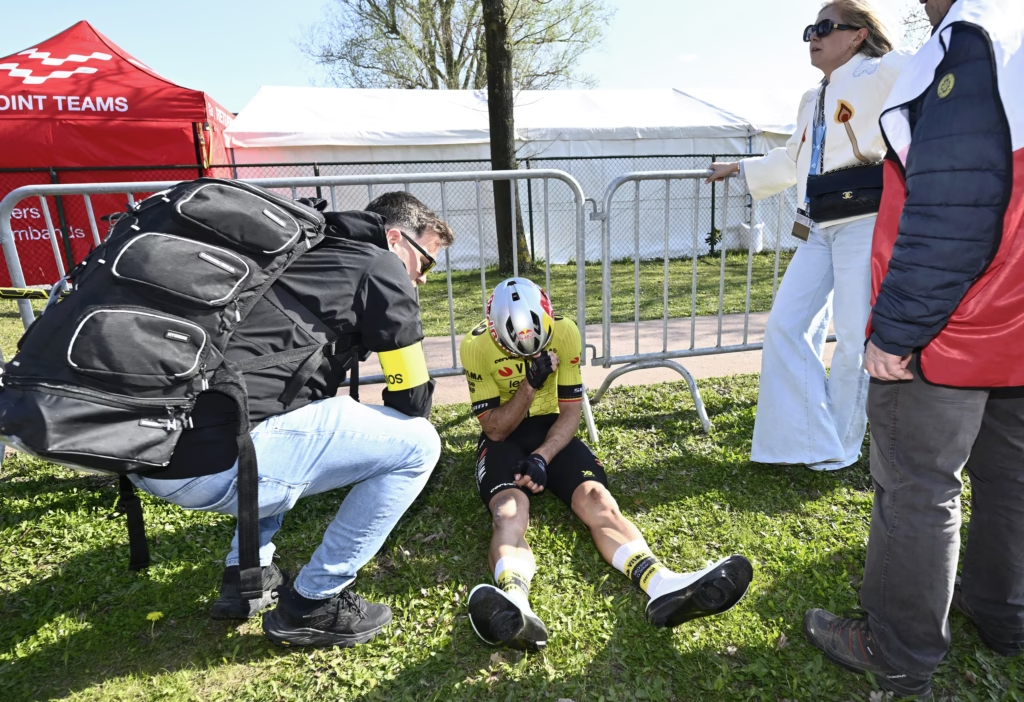
The most revealing feature of the race may have been the way it rewarded resilience as much as race craft. Ganna had setbacks and still won. Van Aert made the decisive move and still got caught. Others were strong enough to stay involved but not quite decisive enough to own the finale.
That is a useful lesson for the next races because the top end of men’s Classics racing is now so deep that pure form rarely guarantees anything. Riders need repeatability. They need the ability to deal with disrupted plans and still make effective decisions under fatigue. Men’s Dwars door Vlaanderen 2026 was a good example of that, because the final result came from a rider who kept solving problems rather than enjoying a perfect afternoon.
In that sense, the race was a very good preview of what the rest of the cobbled spring will demand. Not just strength, but adaptability.
What it means ahead of Flanders and Roubaix
Looking ahead, the most immediate implication is that the hierarchy behind the biggest headline names has become firmer. Ganna now belongs in the top bracket of Roubaix contenders rather than the second row of dangerous outsiders. Van Aert remains central to both Flanders and Roubaix conversations, but the pressure on him has increased because the legs are clearly there.
It also means the coming races should be approached with a little more caution when making hard predictions. Men’s Dwars door Vlaanderen 2026 reminded everyone that a rider can appear beaten, re-enter the race, and still take the biggest prize. That makes the spring richer and less predictable.
For readers following the run-in to the next cobbled Monuments, ProCyclingUK’s How to watch Tour of Flanders 2026 in the UK and How to watch Men’s Paris-Roubaix 2026 in the UK are the natural next reads.
Men’s Dwars door Vlaanderen 2026 did not close the book on anything. It widened it. Ganna now carries fresh authority into Roubaix, Van Aert carries both encouragement and pressure into the biggest races still to come, and the rest of the field has been reminded that this spring is still open enough for boldness to be rewarded.

