
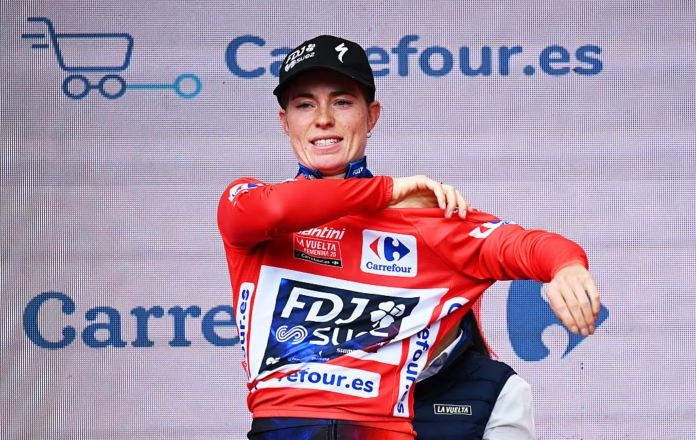
La Vuelta Femenina has grown faster than almost any other major race in women’s cycling. What began in 2015 as a one-day circuit race in central Madrid, closely tied to the final day of the men’s Vuelta a España, has become one of the three biggest stage races on the women’s calendar. That growth has not been neat or linear, but it has been clear – more days, more terrain, more identity, and a much stronger sense that Spain now has a women’s race that can sit alongside the Giro d’Italia Women and Tour de France Femmes as one of the season’s defining GC targets.
For readers coming to the race through the modern version, ProCyclingUK’s beginner’s guide to La Vuelta Femenina 2026 and guide to the Women’s WorldTour races, teams and points are useful companion pieces. The history matters because La Vuelta Femenina did not simply appear as a ready-made Grand Tour-style event. It had to grow into one.
How the race began in Madrid
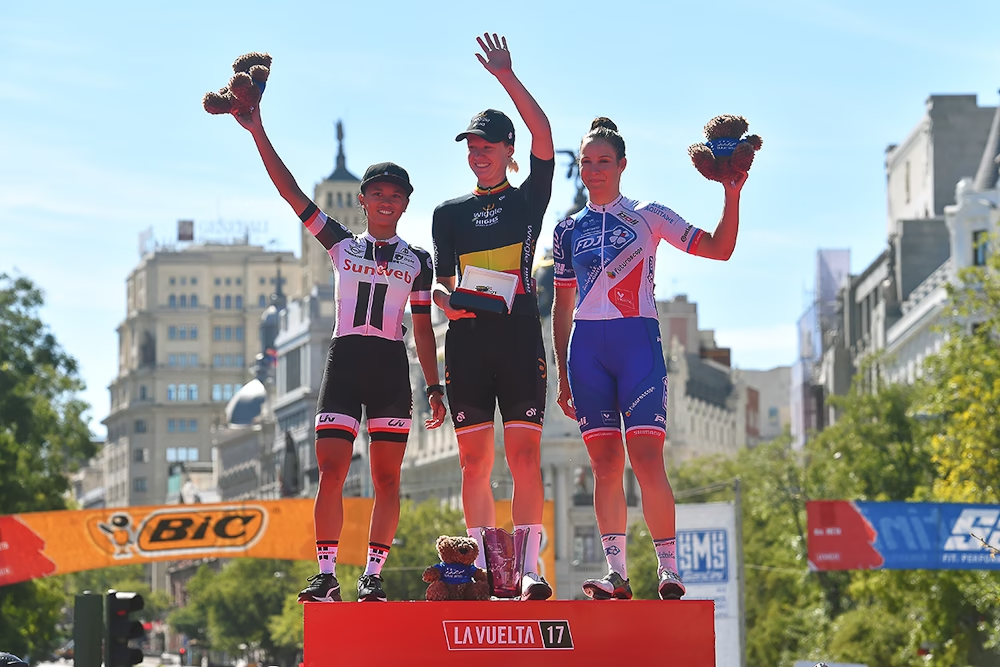
The race was created in 2015, and its first edition was held on an urban circuit in Madrid on the same day the men’s race concluded. In those early years, it was called the Madrid Challenge by La Vuelta, and the concept was fairly simple – a high-profile women’s race attached to the biggest stage race in Spain, but still much smaller in scale and ambition than what would come later.
Shelley Olds won that first edition, giving the race an outright sprint-friendly beginning. The next two editions followed a similar pattern. Jolien D’Hoore won in 2016 and again in 2017, becoming the race’s first dominant figure. At that stage, the event was still a one-day affair and very much shaped around Madrid city-centre racing rather than the wider geography of Spain.
It had visibility, but not yet true stage-race depth. That early phase now looks important in retrospect, because it gave the event a foothold before the organisers began testing how much bigger it could become.
2018 & 2019 – the first real expansion
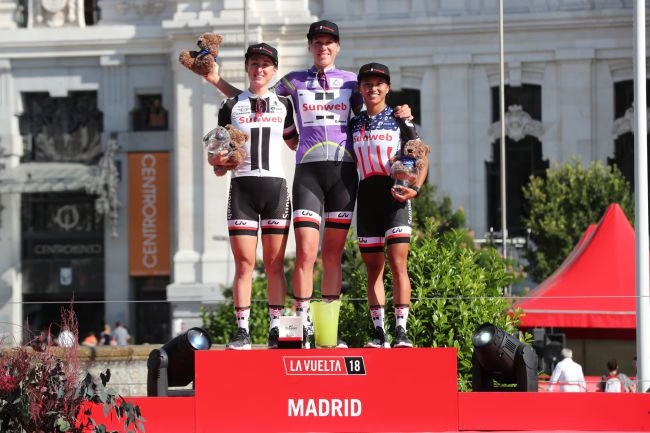
The first major step came in 2018, when the race moved from a single day to a weekend format. That edition introduced a team time trial in Boadilla del Monte, and Ellen van Dijk emerged as the overall winner after Team Sunweb dominated the opening stage.
It was a significant moment because it was the first time the race really looked like more than a ceremonial add-on to the men’s Vuelta. Even if it was still short, there was now at least a recognisable general classification structure to it.
In 2019, the format shifted again. The opening team time trial became an individual time trial, still based around Boadilla del Monte, and Lisa Brennauer used that change perfectly. Already one of the best time trial riders of her generation, she won the overall and carried the leader’s jersey into Madrid.
These two editions matter because they show the race in transition. It was no longer just a one-day showcase, but it was not yet a full Spanish stage race either. The organisers were still feeling their way towards the most effective format.
2020 – leaving Madrid behind
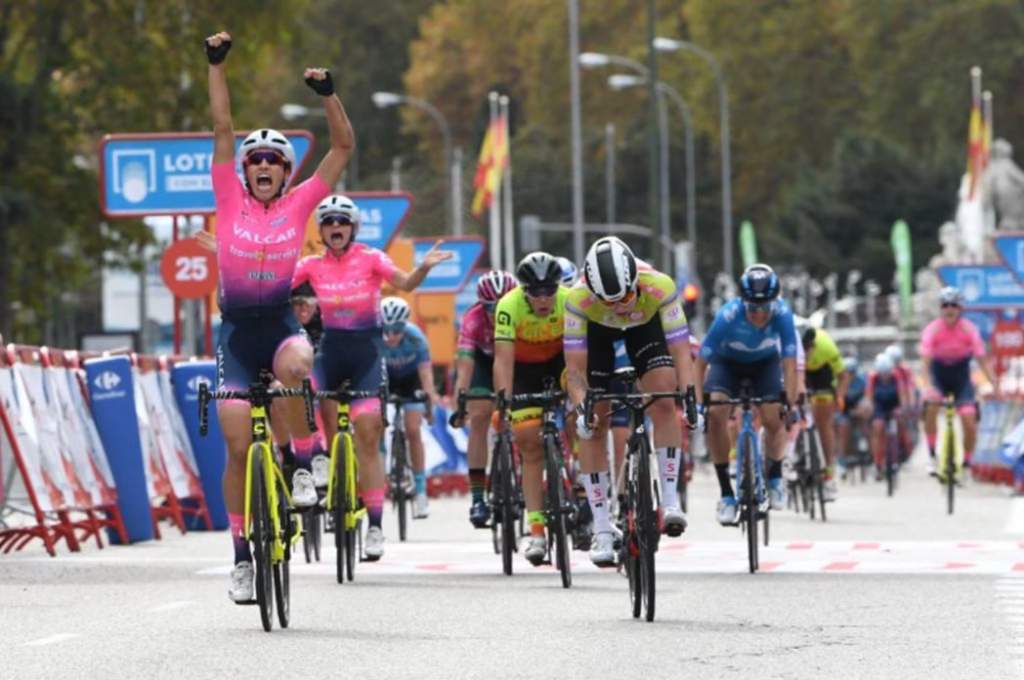
The 2020 edition was another turning point. The race expanded to three days and, for the first time, went beyond the Community of Madrid into Castilla-La Mancha. That mattered because it was not just an extra stage. It was the beginning of a broader Spanish identity for the event.
Lorena Wiebes won the opening stage from Toledo to Escalona, but Brennauer once again took control through the time trial and defended her lead to claim a second straight title. Elisa Balsamo won the final Madrid stage, but the larger story was that the race had started to outgrow its original boundaries.
This was also the point when the race began to look more credible as a genuine Women’s WorldTour stage race rather than a symbolic extra on the men’s calendar. Three days is still a short race, but it offered more tactical room, more route variation and a clearer general classification identity.
2021 & 2022 – the Annemiek van Vleuten years
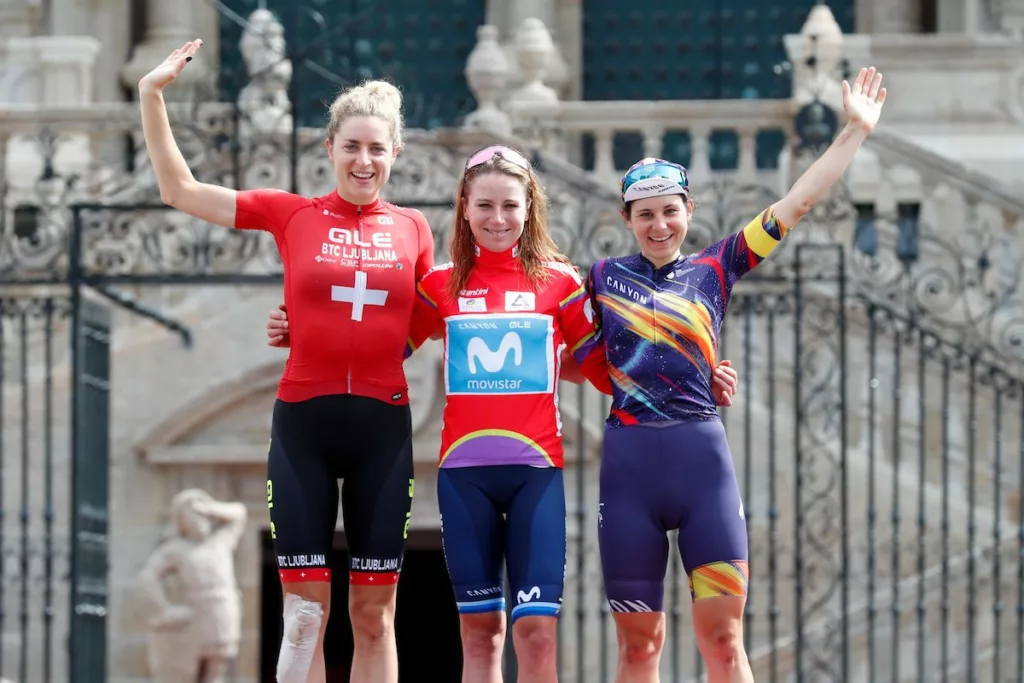
In 2021, the race moved to Galicia and grew to four stages. That edition began from the Manzaneda ski resort, included the race’s first mountain time trial, and felt much closer to the structure of a modern stage race than anything that had come before.
Marlen Reusser won the opening mountainous stage, but Annemiek van Vleuten took over in the mountain time trial and then tightened her grip with a stage win on the road to Pereiro de Aguiar. By the time the race finished in Santiago de Compostela, she had established a level of authority that suggested the event had finally found a rider and a format capable of giving it real weight.
Van Vleuten returned to win again in 2022, when the race expanded to five stages and took another step forward in difficulty and reach. That edition ran from Cantabria to Madrid and, while it still finished on the same day as the men’s Vuelta, it had become a far more ambitious event. Elisa Longo Borghini and Demi Vollering joined Van Vleuten on the final podium, which also helped underline how much the race’s prestige had grown.
The best GC riders were no longer treating it as a curiosity or a late add-on. They were treating it as something worth targeting. For wider context around the sort of riders who define these major stage races, ProCyclingUK’s Kasia Niewiadoma 2026 season guide and Lorena Wiebes 2026 season guide show how different rider types still interact with the biggest races on the calendar.
2023 – the race becomes La Vuelta Femenina
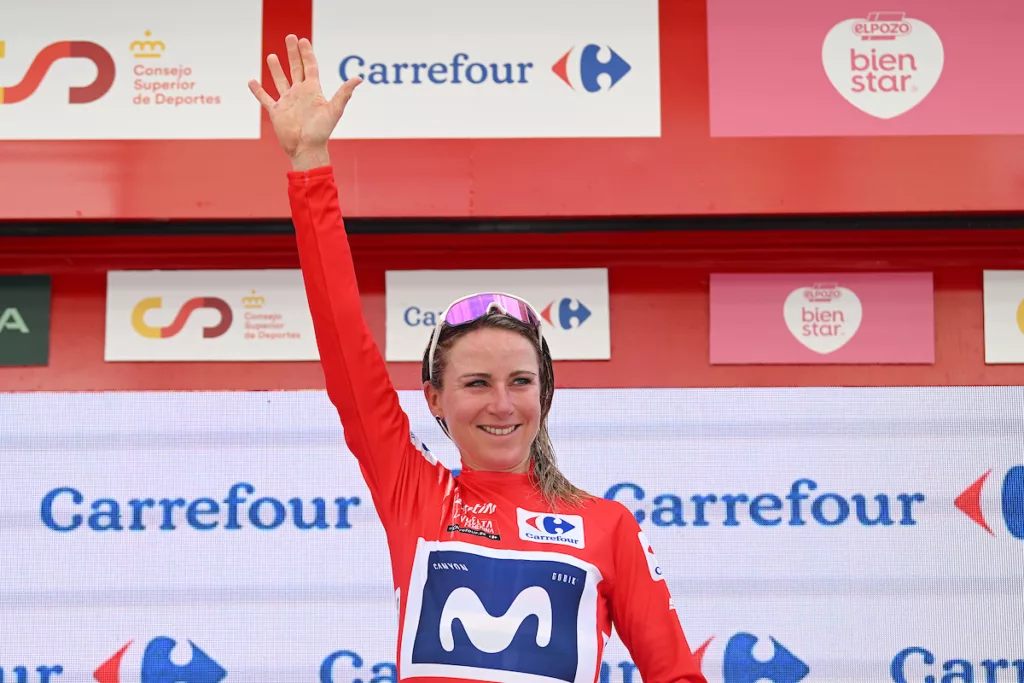
The decisive rebrand came in 2023. The event moved away from its old identity as the Ceratizit Challenge by La Vuelta and became La Vuelta Femenina. Just as importantly, it was shifted away from the men’s September slot and staged in May as a standalone race.
In practical terms, that was the moment the race became something bigger than a women’s counterpart attached to the men’s finale. It became its own event, with its own calendar space and far more room to breathe.
That first edition under the new name delivered a fittingly dramatic finish. Van Vleuten won the overall by just nine seconds from Demi Vollering after a tense final day on Lagos de Covadonga, while Gaia Realini finished third and won the mountains classification.
Van Vleuten’s victory also gave the race another layer of significance, because it showed La Vuelta Femenina could now produce the kind of tight, high-level GC battle expected from one of the sport’s biggest stage races.
 Photo Credit: Sprint Cycling Agency
2024 – Vollering takes control
If 2023 gave the race its new name and identity, 2024 gave it a more dominant modern champion. Demi Vollering won the general classification, the mountains classification and two stages, including the queen stage to Valdesquí. She finished comfortably clear of Riejanne Markus and Elisa Longo Borghini, and the race itself was longer and more demanding than the year before.
That edition mattered because it showed where La Vuelta Femenina was heading. The organisers were no longer just building prestige through branding. They were building it through route design. Harder summit finishes, longer stages and more serious GC terrain all pushed the race closer to the level fans expect from a major week-long tour.
This is also where the race started to feel less like a fast-growing event and more like an established one. By this point, La Vuelta Femenina had moved past the question of whether it belonged among the most important stage races in women’s cycling. The real question had become how far it could still grow.

2025 – a title defence that reinforced the race’s standing
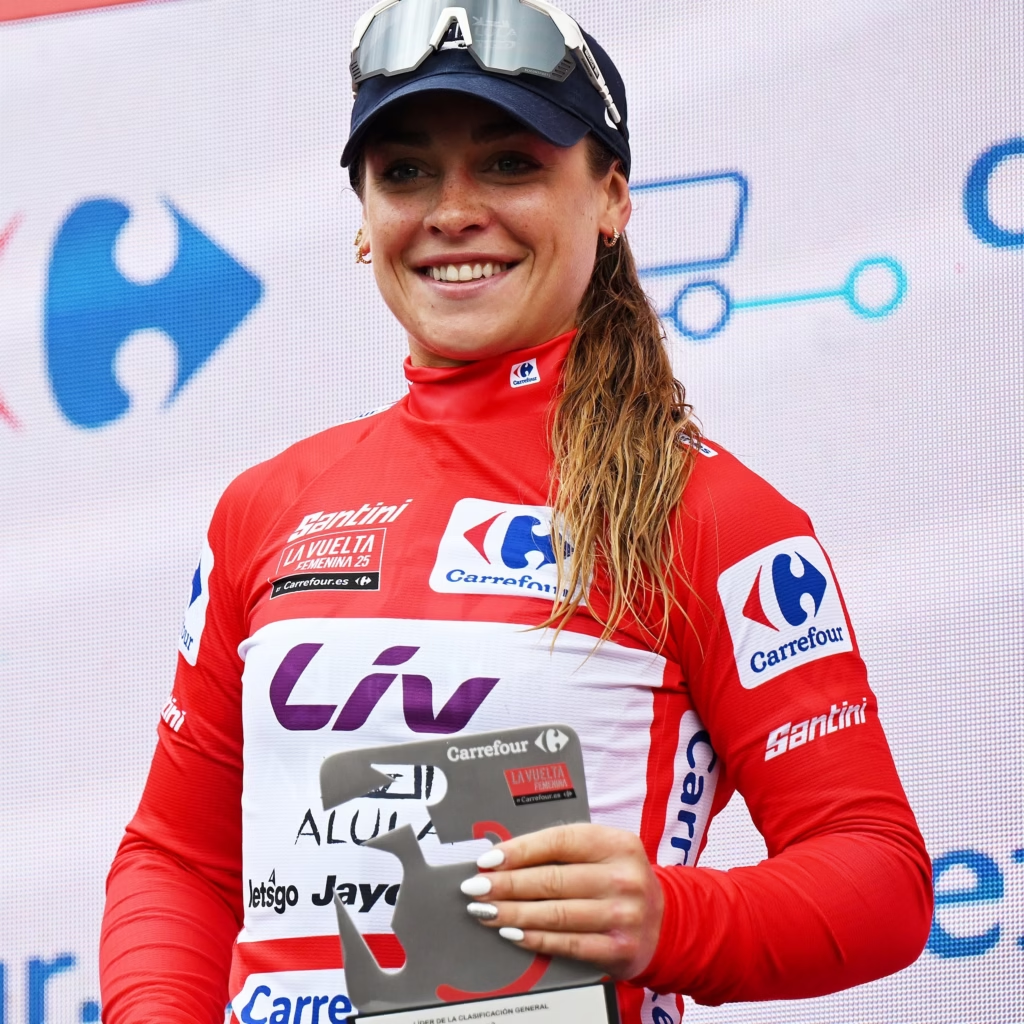
Vollering returned in 2025 and defended her title, again winning the overall as well as the mountains classification. She sealed the race on Lagunas de Neila and then finished it off with another stage win on Alto de Cotobello, while Marlen Reusser and Anna van der Breggen completed the final podium.
Marianne Vos won the points classification for the third consecutive year, which added another layer of continuity to a race that is now beginning to build recurring storylines rather than simply expanding year by year.
The 2025 route also reinforced the organisers’ broader direction. It began with a team time trial in Barcelona and built towards harder mountain stages later in the week, exactly the sort of crescendo structure that now defines many of the best women’s stage races.
For race-report style coverage of how this event now unfolds in real time, ProCyclingUK’s La Vuelta Femenina archive and wider women’s stage-race coverage help show just how quickly the race has moved from novelty to centrepiece.
Almost every edition, year by year
For a race with a relatively short history, La Vuelta Femenina already has a clear sequence of landmark editions.
2015 – Shelley Olds won the inaugural one-day Madrid Challenge.
2016 – Jolien D’Hoore won as the race remained a one-day Madrid circuit event.
2017 – D’Hoore repeated her win and became the first rider to take the race twice.
2018 – The race expanded to two days, introduced a team time trial, and Ellen van Dijk took the overall.
2019 – The opening team time trial became an individual time trial, and Lisa Brennauer won the overall.
2020 – The race grew to three stages, left Madrid’s region for the first time, and Brennauer defended her title.
2021 – Galicia hosted a four-stage edition, including a mountain time trial, and Annemiek van Vleuten won her first title.
2022 – The race expanded to five stages and Van Vleuten won again, ahead of Elisa Longo Borghini and Demi Vollering.
2023 – Reborn as La Vuelta Femenina and moved to May as a standalone event, the race was won by Van Vleuten by nine seconds over Vollering.
2024 – Demi Vollering took over as the new champion, winning a longer and more mountainous edition.
2025 – Vollering defended her title in another route that escalated towards major summit finishes.
That year-by-year sequence is the easiest way to understand what makes the race’s history distinctive. The event did not leap straight from a one-day race to an established major tour. It expanded step by step, testing different versions of itself before settling into the format it now uses.
-
 Photo Credit: Getty
What La Vuelta Femenina now represents
What makes La Vuelta Femenina so interesting is not just that it grew. It is the way it grew. The race did not appear fully formed as a seven-day Grand Tour-style event. It started as a short city-centre race, experimented with formats, left Madrid, added stages, found serious climbing, and only then became a standalone week-long tour.
That gradual development is one reason the race now feels more substantial. It has earned its place through successive expansions rather than being handed prestige by name alone.
Now it sits as one of the central stage races in women’s cycling, with a red jersey, a recognisable place in the calendar, and a history that is already richer than many newer events can claim. It is still younger than the Giro d’Italia Women and still does not yet carry the same broad public weight as the Tour de France Femmes, but it has closed the gap quickly.
That, more than anything, is the story of La Vuelta Femenina so far.

