

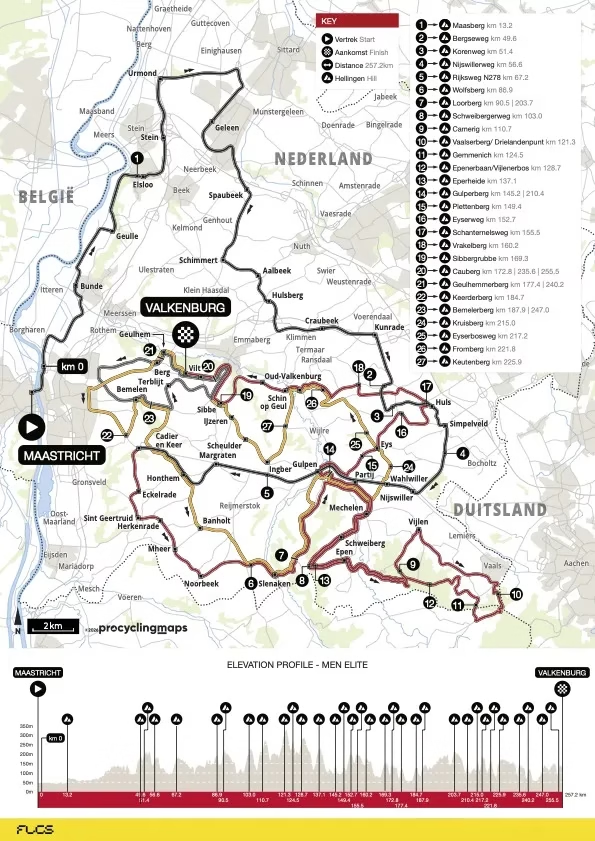
The 2026 Amstel Gold Race keeps the core identity of the race intact. It starts in Maastricht, finishes in Berg en Terblijt, covers 257.2km, and packs in 33 classified climbs across Limburg. This is still a race built less around one decisive mountain and more around relentless repetition, short sharp efforts, and the kind of finale where positioning can unravel very quickly.
For broader context around the race itself, ProCyclingUK’s Beginner’s guide to men’s Amstel Gold Race 2026 and A brief history of Men’s Amstel Gold Race both help place this route in the wider story of the event. If you are comparing it to the rest of the spring, the Men’s cycling route guide hub also shows how Amstel sits between the cobbled Classics and the harder Ardennes races.

What sort of Amstel Gold Race route is it in 2026?
This is a modern Amstel Gold Race route in every sense. The distance is significant, but the real difficulty comes from accumulation. The race does not ask one giant question. It keeps asking smaller, harder ones until only the strongest and smartest riders are left with clear answers.
The route builds through Limburg before tightening into a much more concentrated final phase. The first Cauberg passage comes with around 84km remaining, and from there the race begins to look and feel far more recognisable. Once that point is reached, recovery becomes limited and tactical mistakes become more costly.
Where does the race start and finish?
The race starts in Maastricht and finishes in Berg en Terblijt after 257.2km. That start and finish combination gives the day a useful contrast. The opening half feels broader and more expansive, but the finale gradually folds the race back into a more compressed pattern of repeated climbs and familiar roads.
That shift matters because Amstel is not simply a long ride through rolling terrain. It is a race that becomes progressively more claustrophobic. By the time the field returns to the decisive final circuits, there is less room to hide and less chance to repair bad positioning.
How does the early route unfold?
The first half of the race is selective without usually being decisive. The riders leave Maastricht and begin ticking off climbs early, with the Maasberg appearing after just over 13km. From there, the route moves through a sequence of Limburg hills before heading towards the tripoint area near the Dutch, Belgian and German borders.
Climbs in the opening and middle phase include the Maasberg, Adsteeg, Bergseweg, Korenweg, Nijswillerweg, Loorberg and Vaalserberg. None of those are likely to settle the race on their own, but together they wear the peloton down, force domestiques to work, and make it harder for pure sprinters or less durable puncheurs to stay comfortable deep into the day.
That wider loop is one of the route’s distinctive qualities. It gives the race a long, stretching feel before the real compression begins later on.
When does the decisive phase begin?
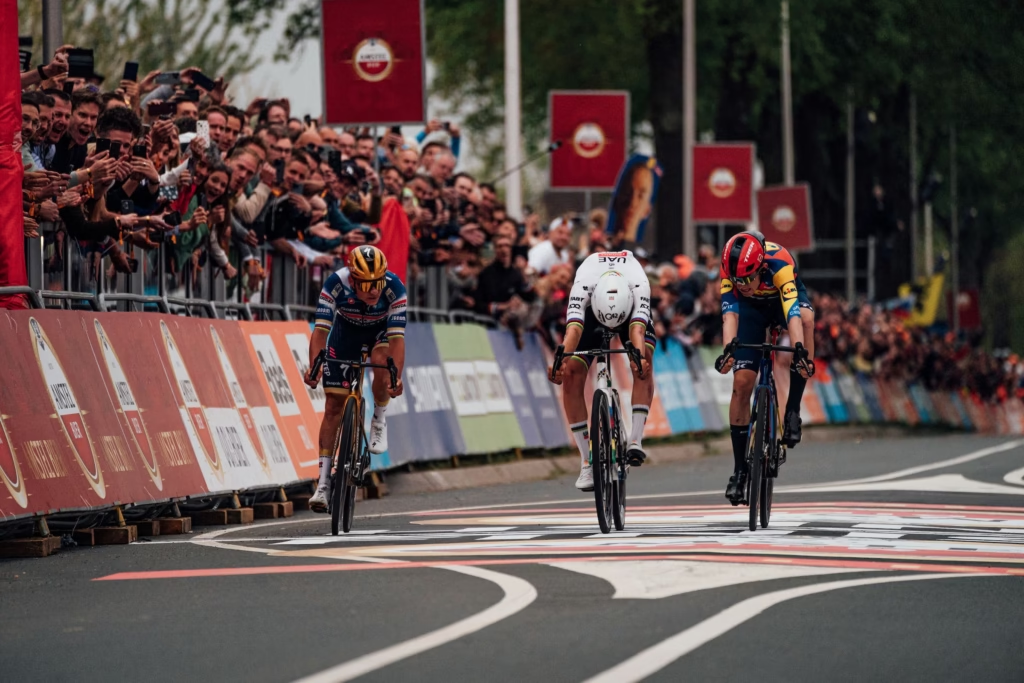
The first Cauberg passage is the clearest marker. It comes at 172.8km, leaving 84.4km still to race, and signals the point where the route stops feeling like preparation and starts feeling like a finale.
From there, the race passes the finish area for the first time and starts loading the key late climbs more closely together. Riders can no longer think only about saving energy. They have to start racing for position, responding to accelerations, and deciding whether to commit early or wait for the next key point.
Which climbs shape the race most?
The final sequence is where the 2026 route really sharpens. After the first Cauberg and early finish passage, the riders head through Geulhemmerberg, Heerderberg and Bemelerberg before looping back into the more selective late block that includes Loorberg, Gulperberg, Kruisberg, Eyserbosweg, Fromberg and Keutenberg.
That sequence is what gives Amstel its particular rhythm. None of these climbs is an Alpine ascent. Instead, they come in waves, often steep enough to create gaps, but close enough together that riders can be forced into repeated efforts without proper recovery.
Eyserbosweg and Keutenberg are usually the most obvious pressure points in the late race. They are steep, awkward, and difficult to ride defensively if you are already near your limit. By then, the strongest riders often stop waiting for the perfect moment and start forcing the race.
How many times do they climb the Cauberg?
The Cauberg appears three times in the 2026 men’s race. The first comes with 84.4km to go, the second with 21.6km remaining, and the final ascent crests only 1.7km before the finish.
That final placement is the key detail. A late attack on the Cauberg does not need to survive for long. A rider who opens even a small gap there can make the run to the line very difficult to close, especially if the group behind hesitates for only a few seconds.
That design gives the finale a more direct edge. The race can still be won earlier, especially on climbs such as Eyserbosweg or Keutenberg, but the last Cauberg remains an obvious launch point.
What does the final lap look like?
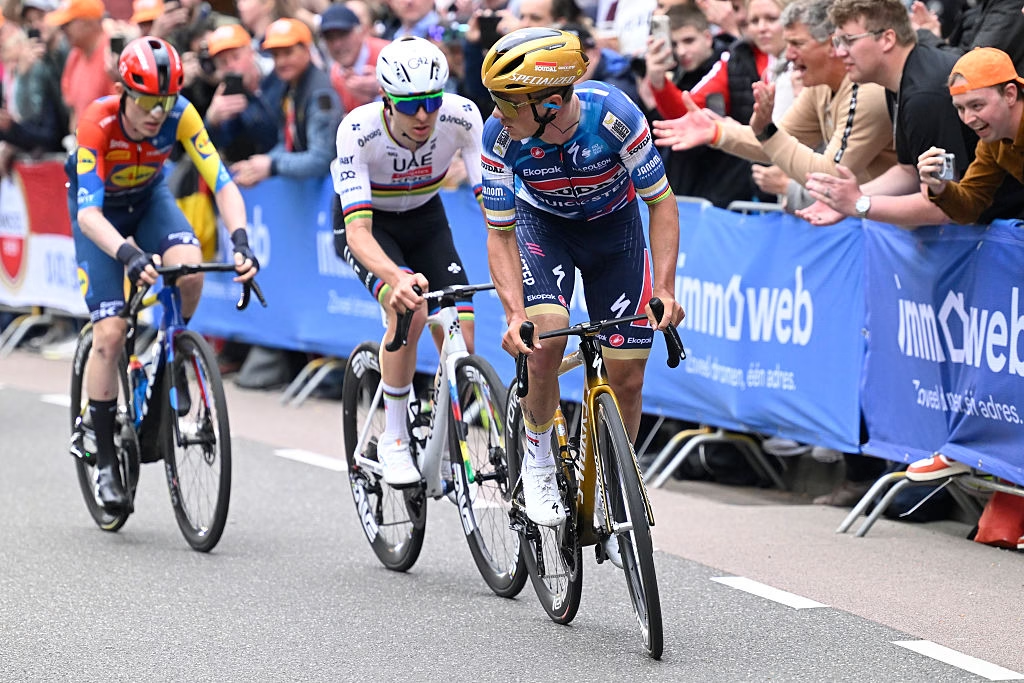
The closing phase is built around a familiar sequence. After the second run through the finish area, the riders tackle Geulhemmerberg, then head towards the last Bemelerberg with just over 10km remaining before returning for the final Cauberg.
From the top of that final climb, there is very little road left. That changes the tactical picture. Riders do not need to calculate a long chase or a drawn-out descent. They need to commit, respond, and position themselves almost perfectly. A small hesitation at the bottom of the Cauberg can decide the race before the summit is even reached.
What kind of rider does this route suit?
This route is built for a punchy, durable Classics rider rather than a pure climber or pure sprinter. The winner usually needs to be able to handle six hours of repeated accelerations, survive steep ramps late in the day, and still have the tactical judgement to pick the right moment.
That is what makes Amstel so compelling. The strongest rider can win, but not always in the most obvious way. The course encourages aggression, yet it also punishes impatience. A rider who attacks too soon can be exposed. A rider who waits too long can run out of road.
-
 Photo Credit: Getty

What to watch for on race day
The first thing to watch is whether a major team starts making the race hard before the first Cauberg. If the pace rises early enough, the finale can become more selective than usual before the best-known climbs even begin.
The second is how much damage is done on Eyserbosweg and Keutenberg. Those are often the climbs where the race becomes properly elite, with only a small group left in genuine contention.
The third is how the race is positioned heading into the final Bemelerberg and Cauberg. If several favourites are still together and marking one another, timing becomes everything. If one rider has even a small advantage in positioning and confidence, the final Cauberg is close enough to the finish to turn that into the winning move.
For another Ardennes style comparison, ProCyclingUK’s Brabantse Pijl 2026 teams confirmed as Overijse double-header returns in April shows how different spring hill races can still reward similar rider types, even when the route dynamics are not quite the same.
Verdict on the 2026 route
The 2026 men’s Amstel Gold Race route looks strong because it keeps the best elements of the modern race design. It has the long opening half, the layered middle section, the repeated Limburg sting, and a finale where the Cauberg is once again close enough to the line to matter directly.
That should produce the kind of race Amstel usually promises at its best. Not a simple uphill test, not a straightforward sprint, but a long, tactical and increasingly chaotic examination of who can still think clearly when the roads, legs and timing all start to tighten.

