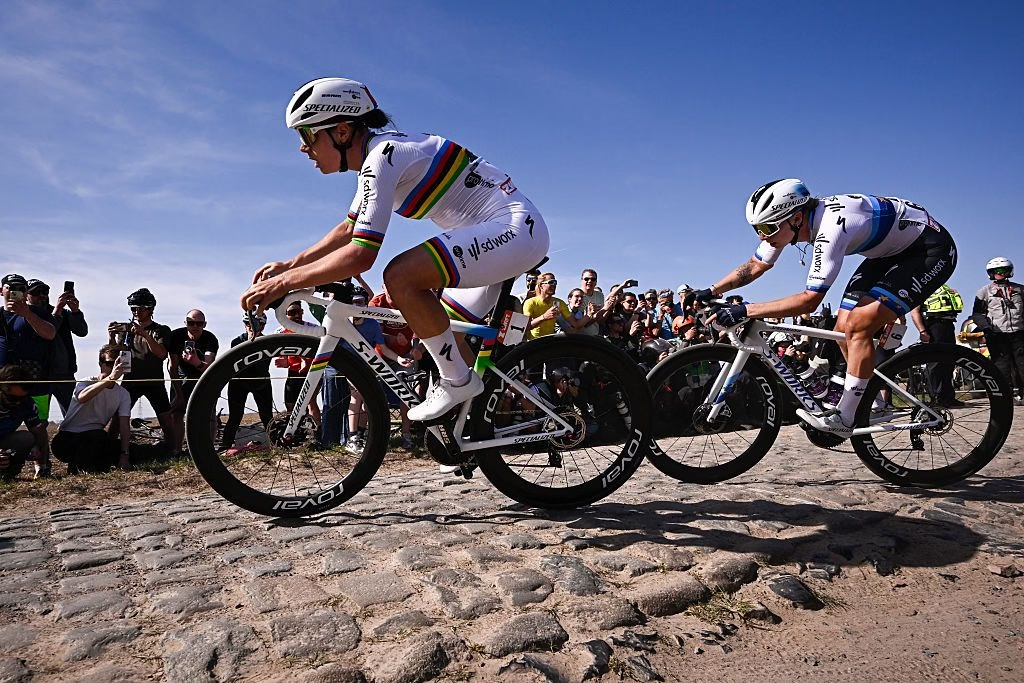
Paris-Roubaix Femmes has already become one of the defining races of the women’s spring, a Monument built not around climbs or repeated accelerations, but around pure endurance, power and nerve across the most unforgiving cobbled sectors in the sport. The route strips racing back to its rawest form. Positioning, bike handling, resilience and team depth matter from the first approach to the pavé, because once the sectors begin, there is rarely time to recover from a mistake.
Unlike the Tour of Flanders, where the repeated climbs naturally create a hierarchy, Roubaix often feels more chaotic and more brutal. Splits form through crashes, punctures, gaps over the stones and the inability to move back through the field once riders lose position. That unpredictability is central to its identity. The strongest rider does not always win, but the winner is almost always the rider who best combines strength with control over the full distance.

Recent editions have underlined how different the winning scenarios can be. Some have been decided by long-range solo moves launched before the final major sectors, others by reduced sprints after repeated selection on the pavé. What links them is attrition. By the time the race reaches the Roubaix Velodrome, only the riders who have survived every moment of stress remain in contention.
The 2026 edition once again builds towards that iconic finish, with the same sequence of cobbled sectors that steadily reduce the field before the final run into the velodrome. There is no climb to force the selection, no single defining attack point. Instead, the race asks the same question over and over again, can you stay near the front, absorb the impacts, survive the accelerations and still have enough left to finish the job?
Previous Winners
2025
Pauline Ferrand-Prévot
2024
Lotte Kopecky
2023
Alison Jackson
2026 Paris-Roubaix Femmes route
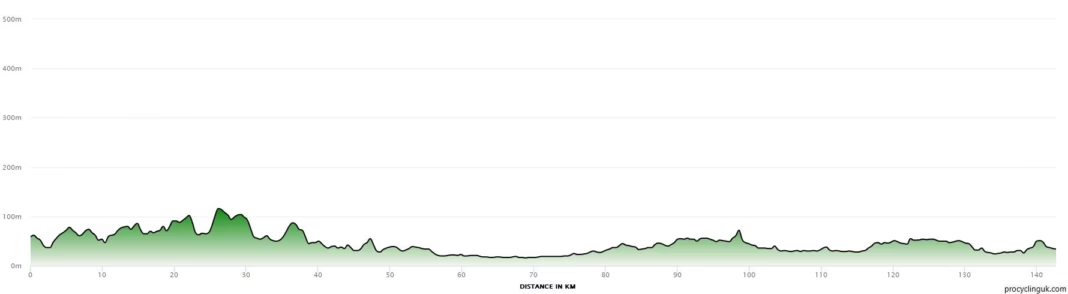
The route once again centres on the iconic northern French cobbled sectors that define the Hell of the North. The race builds steadily through the opening kilometres before the pavé begins to dictate every tactical decision. Early sectors are about staying out of trouble and preserving numbers, but the pressure rises with every approach as the road narrows and the pace lifts. Notably, there is no Arenberg sector in the women’s Paris Roubaix.
The later sectors carry the greatest weight, particularly those close to Carrefour de l’Arbre, where decisive splits often form and any mechanical issue can be race-ending. From there, the run into Roubaix is long enough to reward committed solo efforts but still close enough that organised chasing groups can bring riders back. The final lap of the velodrome remains one of the most recognisable finishes in cycling and a reward for whoever best manages the chaos that comes before it.
2026 Paris-Roubaix Femmes live TV coverage
Race Date: Sunday 12th April 2026
United Kingdom
Live coverage is available via HBOMax and TNT Sports
International broadcasters
In Europe, coverage is available via Eurosport & HBOMax. In France, the race is typically broadcast via France Télévisions. In the United States, coverage is available via Peacock.
2026 Paris-Roubaix Femmes startlist

2026 Paris-Roubaix Femmes Contenders
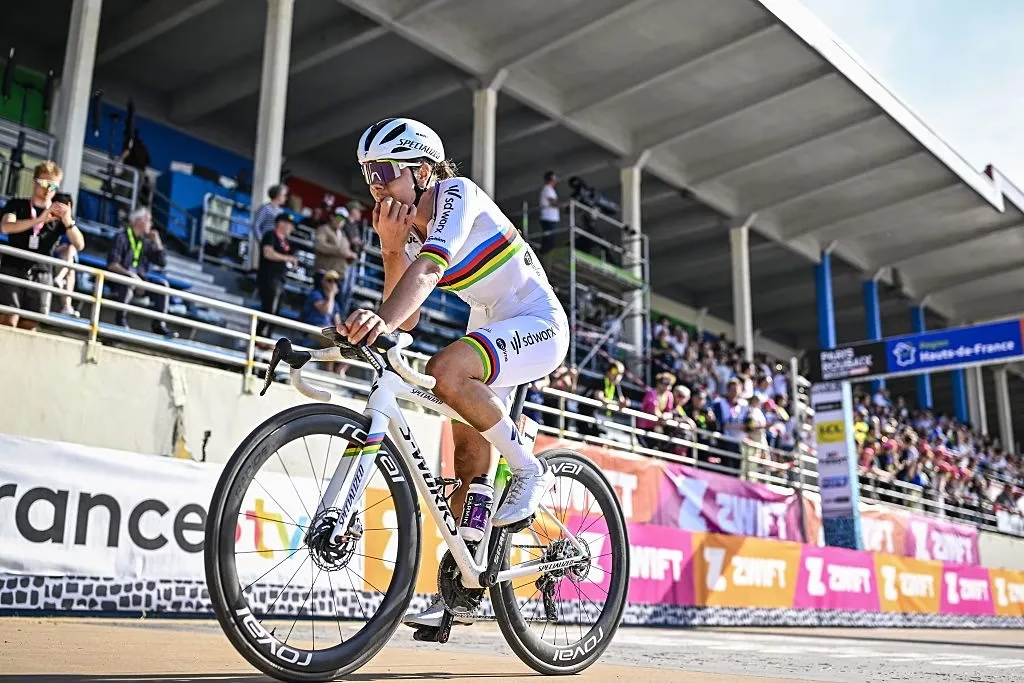 Photo Credit: Getty
Lotte Kopecky is still the rider every other team has to plan around, because Paris Roubaix Femmes rewards the same mix of traits she brings better than anyone, power, composure, positioning, and the ability to finish after hours of fighting. Five starts, a win, two podiums and three top 10s is a brutally consistent record for a race this chaotic, and Team SD Worx-Protime can back her with the kind of depth that stops small problems from becoming race-ending ones. If the early sectors are nervous and split-prone, riders like Barbara Guarischi and Femke Markus are exactly the ones who keep a leader in the right lanes, while Blanka Vas gives them another rider capable of surviving in the front group if the race becomes a war of attrition rather than a clean selection. The other key name is Lorena Wiebes, because a podium and two top 10s in five starts show she can survive Roubaix better than a lot of sprinters, and if she makes the velodrome in a reduced group she becomes a decisive finishing card. Surely this time Kopecky will work for her.
The most fascinating dynamic on the start line comes from Team Visma | Lease a Bike, because they arrive with two riders who can win the race in very different ways. Pauline Ferrand-Prevot has a perfect Roubaix record so far, one start, one win, and she has already shown she does not need a slow build-up of form to deliver a peak performance on the cobbles. The other half of the threat is Marianne Vos, who has a podium and four top 10s from five starts, which tells you she almost always navigates the chaos well enough to be relevant late. In a race where so much comes down to positioning before the sectors and surviving the bad luck moments, Vos’ reliability is a weapon. The one caveat is that she hasn’t raced much recently due to the death of her father. If Visma can get both riders into the final 30 kilometres in the front group, they can race with options rather than reacting, Ferrand-Prevot as the rider to go long, Vos as the rider who can finish if it comes back together for a hugely emotional victory.
 Photo Credit: Cor Vos
A consistent Paris Roubaix Femmes contender rarely looks flashy on paper, but Pfeiffer Georgi keeps proving she fits this race better than most. A podium and three top 10s across five starts is a strong record in a race that punishes indecision and poor positioning, and Team Picnic PostNL can build their entire day around keeping her safe and forward. Georgi’s best route is to survive the hardest sectors in the front group, then commit to the right selection rather than waiting for a sprint that may never be organised. If the race does come down to a reduced sprint in the velodrome, Picnic also have riders like Rachele Barbieri who can still be relevant, but Georgi is clearly the one who gives them a genuine chance of being in the decisive move.
A rider who always deserves respect here is Elisa Balsamo, because a podium and two top 10s from five starts is proof that she is not just a fast finisher; she can survive Roubaix’s attrition too. Lidl-Trek’s strength is that they can cover different race shapes without changing their identity. Lucinda Brand has a Roubaix podium and a top 10 history, which matters because she can handle a hard, selective race and still be present when the final groups form. Emma Norsgaard has a top 10 as well, giving Lidl another rider who can be there late if the race becomes a reduced sprint rather than a pure solo. The key for Lidl is always the same: get their leaders into the first selection before the most decisive sectors, because chasing on these roads is usually a losing game.
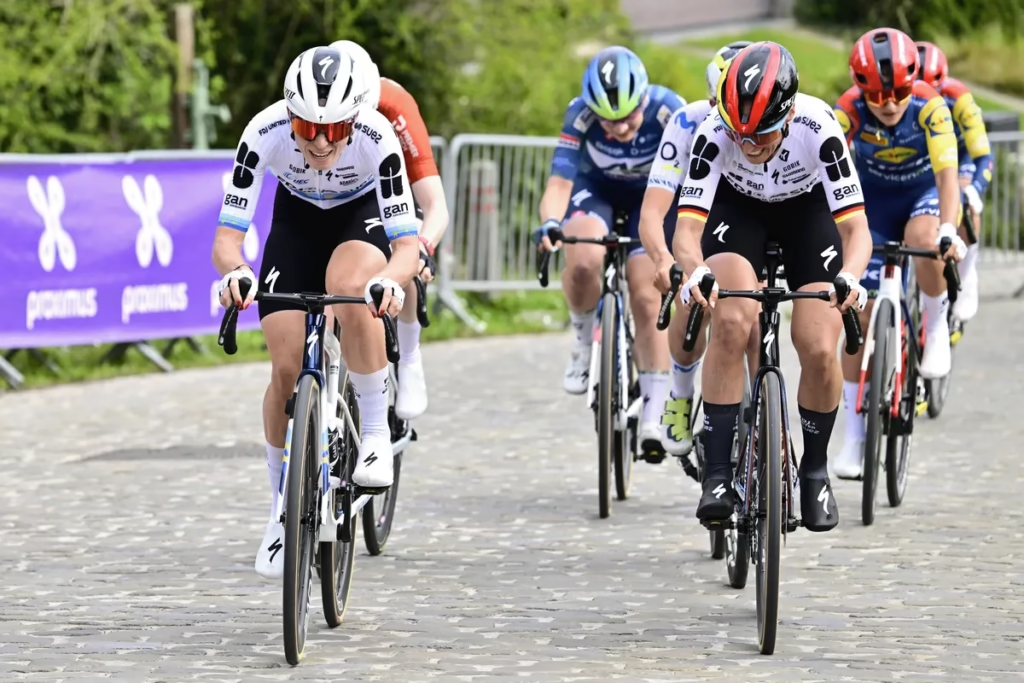
FDJ United-SUEZ have a line-up built for the version of Roubaix where the race is won through repeated pressure rather than one big attack. Elise Chabbey has two top 10s from five starts, which is a useful marker that she handles the race’s rhythm well, and she is exactly the kind of rider who can keep forcing pace when others want to reset after each sector. Franziska Koch has a top 10 in her Roubaix history too, which matters because it signals she can survive deep into the race and still be relevant in the decisive phase. If the race fractures into small groups and the strongest riders start taking turns, Chabbey and Koch are the type who can profit, not by sprinting, but by being the riders who keep the move alive. Her form this season has been huge in support of leaders and this is a chance for her to get a big result.
A win and a podium is already a major Paris Roubaix Femmes record for Alison Jackson, and it is the clearest reason St Michel-Preference Home-Auber 93 should be taken seriously in any scenario where a late group stays away and the favourites hesitate. Jackson’s value in this race is tactical as much as physical. She reads it well, she commits early, and she is comfortable racing from imperfect situations, which is often the only way to beat the biggest teams here. If a small group reaches the velodrome, she is also a rider who can still finish it off.
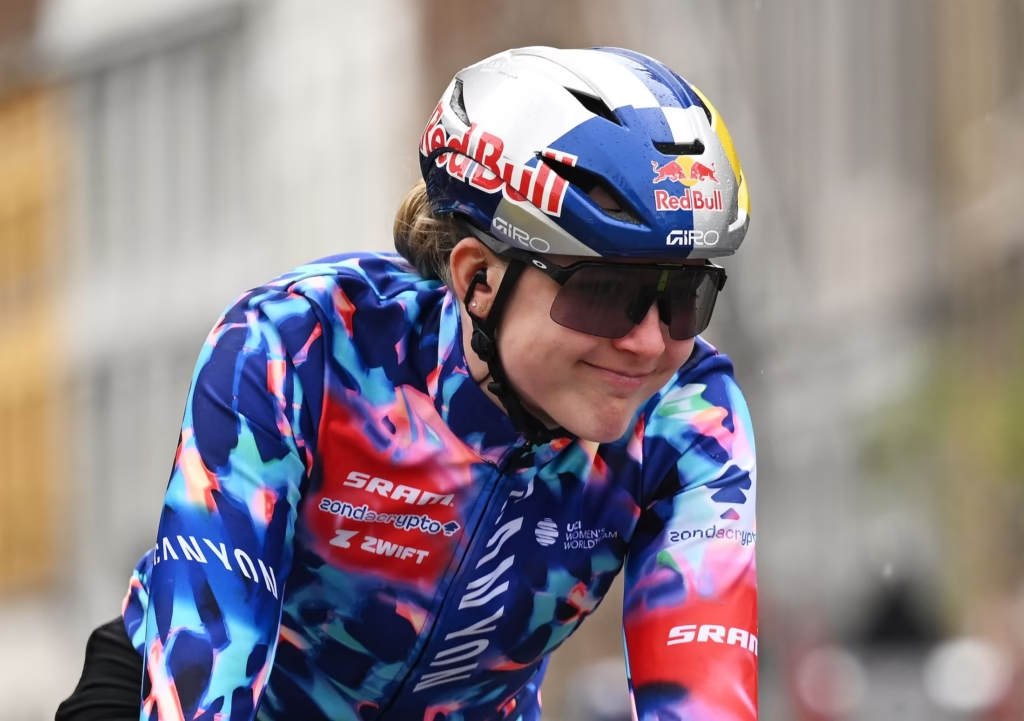
Canyon SRAM can turn Roubaix into a very uncomfortable race for the favourites because they arrive with multiple riders who suit the sectors. Chloe Dygert already has a top 10 from her only start, which is an immediate sign that her power and resilience translate well to this race’s demands. Chiara Consonni is another strong card, with two top 10s from five starts, and she becomes more dangerous the smaller the finishing group is, because she can still sprint after a hard day. With Zoe Backstedt in the mix, Canyon also have a rider who can handle the repeated accelerations and the positional fight, and if she is in the right group late, she can become part of the decisive move rather than simply a support rider.
One of the most underrated podium reference points on this start list belongs to Letizia Borghesi, and a Roubaix podium from only four starts is a serious indicator of course fit. Her finish last season was a big moment and now the leader on the team, she will try to replicate that. Her decent finishing speed will help if she reaches the velodrome in a group. AG Insurance-Soudal also have riders who can support the “survive and finish” script, with Shari Bossuyt as a rider capable of landing a big result if she reaches the velodrome in the right group, and Ilse Pluimers a strong option when the race becomes selective enough that resilience matters more than pure speed.
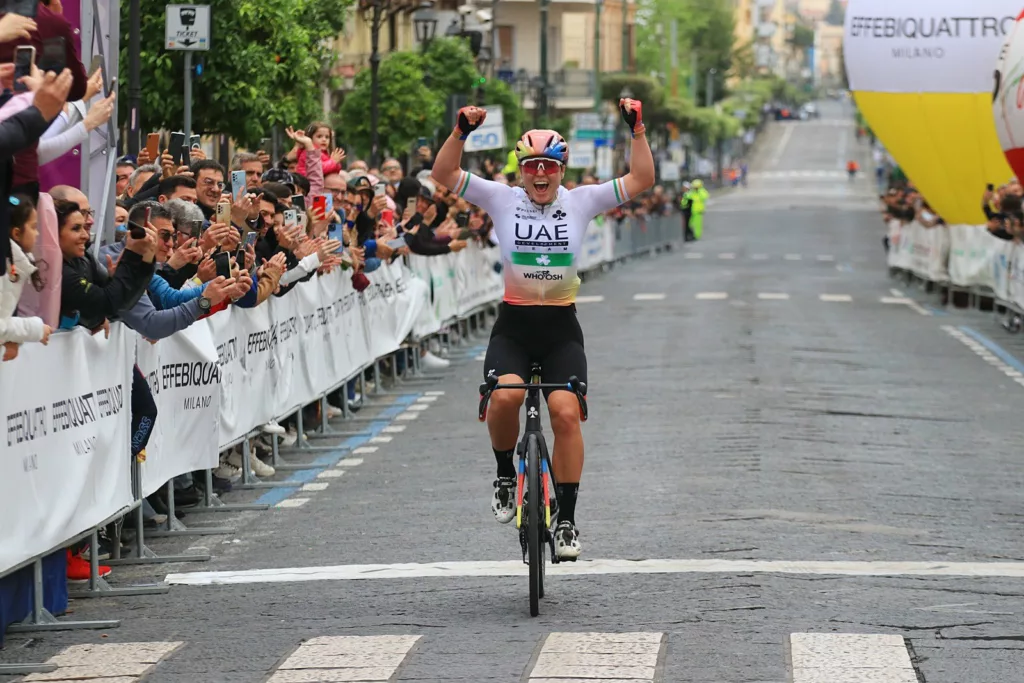
A reduced sprint or a late regroup is where UAE Team ADQ can suddenly become far more dangerous than a simple glance at the start list suggests. The key card is Lara Gillespie, because she has the power to survive the sectors when the pace is high and still deliver speed at the end if the velodrome finish comes from a tired front group. Megan Jastrab gives them another fast option if the race stays slightly more together than expected, while Sofie van Rooijen is the rider who can still be present when the race fractures, which is often the decisive point in Roubaix, not the final sprint itself. UAE’s best route is not to control, but to keep multiple riders in the first selection and then race opportunistically from there.
Fenix-Premier Tech looks more dangerous than a pure sprint read because their line-up can play different phases of the race. Marthe Truyen already has a Roubaix podium and a top 10 history, and that is a strong indicator that she can handle the sectors and still be competitive late. If the race becomes a war of attrition, Truyen is exactly the kind of rider who can end up in the right move without needing to burn matches early. The sprint card is Charlotte Kool, and if she reaches the velodrome in the front group, she is one of the fastest riders on the track, but the challenge is always the same, surviving the repeated hits of the cobbles with enough left to sprint cleanly. Millie Couzens is also useful here because she can cope with a hard rhythm and still be present if the race becomes selective.

Liv AlUla Jayco have a very clear pathway in a Roubaix that becomes messy and tactical rather than a pure long-range solo. Georgia Baker is the most obvious finisher if the velodrome sprint comes from a reduced group, because she does not need a perfect lead-out to launch well when the group is disorganised. The other name who can matter late is Ruby Roseman-Gannon, who tends to be strongest when the sprint is fought out on tired legs rather than fresh ones. If the race becomes more attritional, Quinty Ton is the rider who can still be there when the group shrinks, which can be more valuable than raw sprint speed if the favourites have already burned through their teammates.
Uno-X Mobility are outsiders for the win, but they have riders who can still land a meaningful result if the race fractures and the finale becomes chaotic. Susanne Andersen is the clearest finisher in this line-up, and she is the sort of rider who can profit if the sprint is reduced enough that timing and positioning matter more than top-end speed. Linda Zanetti is also worth watching because she suits hard one-day racing and can still be present when others are being dropped through fatigue rather than crashes. If the race ends up being decided by who makes the right split rather than who is strongest on one sector, Uno-X can sneak into the top 10.
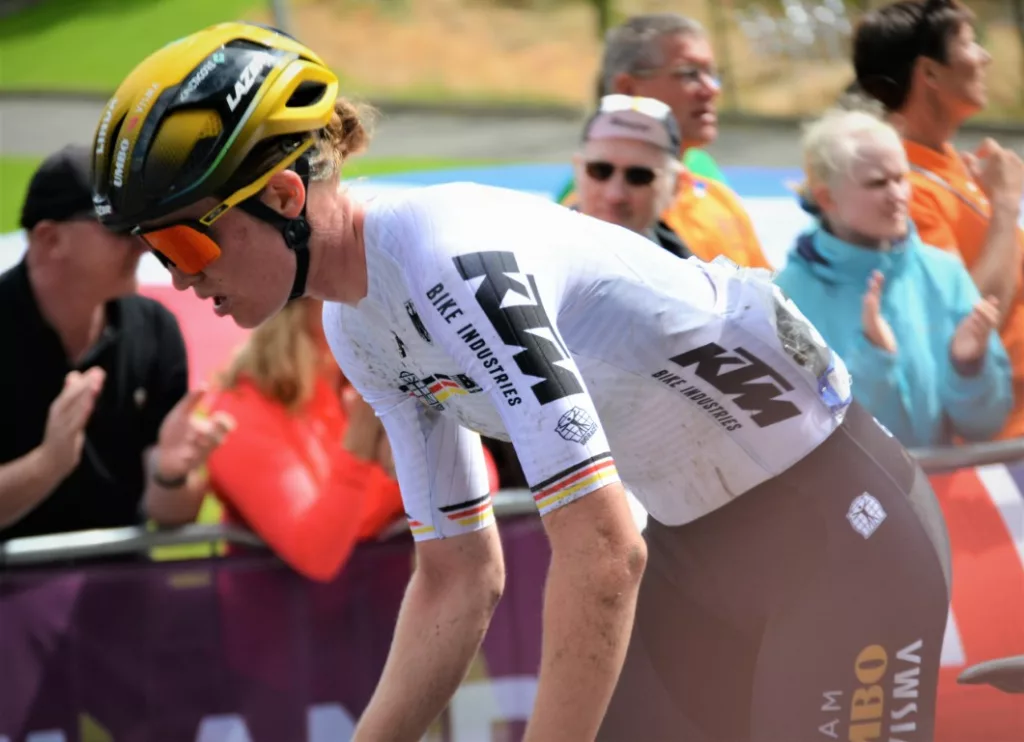
A team that can appear in the decisive phase simply by being calm and organised is Movistar, but they have already been covered. Looking further down the start list, Lotto-Intermarché Ladies are a team that can benefit if the favourites mark each other and a strong group is allowed to go clear. Lea Lin Teutenberg is the obvious finisher if the day ends in a larger group sprint, while riders like Linda Riedmann can be important in simply keeping the team in the right position before the sectors where the splits actually form.
VolkerWessels Cycling Team are not a headline Roubaix squad, but they do have a rider who can be relevant if the race comes down to a messy sprint from a reduced group. Lonneke Uneken is the clearest finishing card, because she can sprint well without needing a perfect set-up. If the race becomes chaotic and the bigger teams lose their structure, riders like Uneken can profit simply by staying upright, staying present, and finding a clean run late.
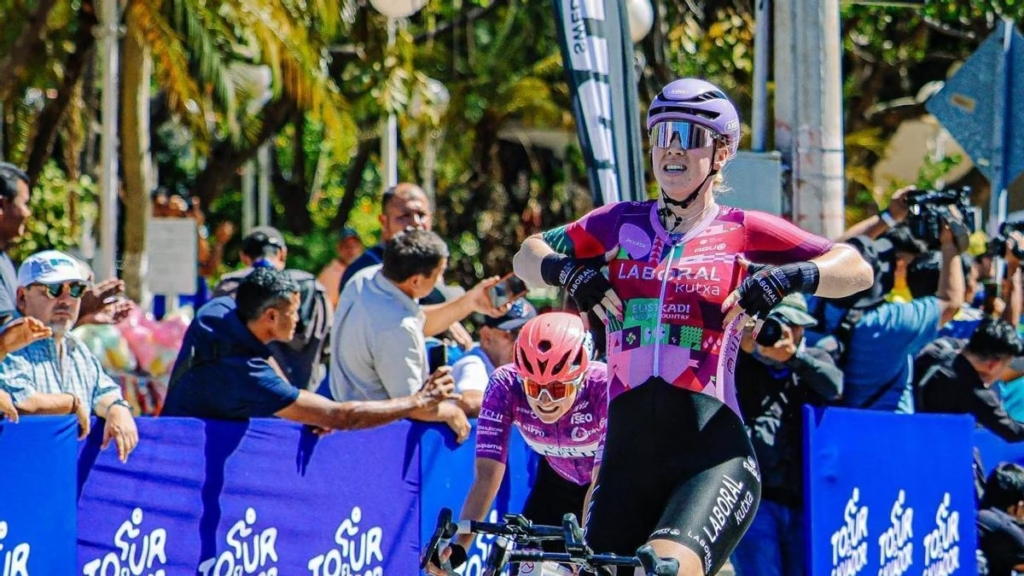
Finally, Laboral Kutxa-Fundacion Euskadi are more likely to aim for presence and opportunism than a pure sprint outcome, because Roubaix often rewards the teams that commit to being in the right early split rather than chasing later. Marjolein van ’t Geloof is the most obvious name if the race becomes a reduced group finish, because she can survive hard racing and still finish strongly when the group is tired and disorganised.
Top 3 Prediction
⦿ Lorena Wiebes
⦿ Lotte Kopecky
⦿ Pauline Ferrand-Prévot