
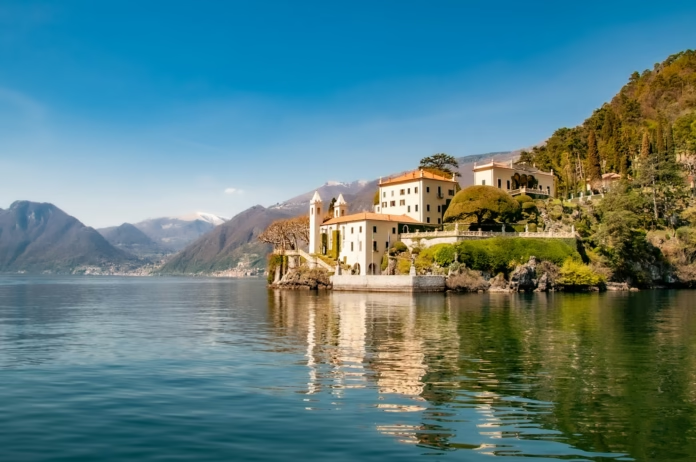
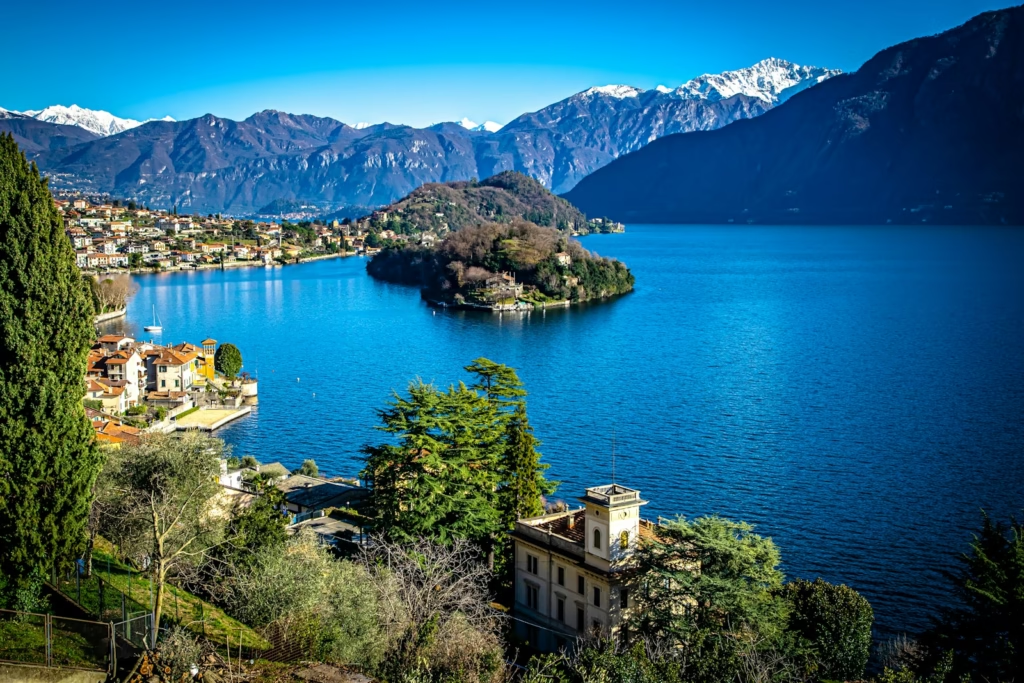
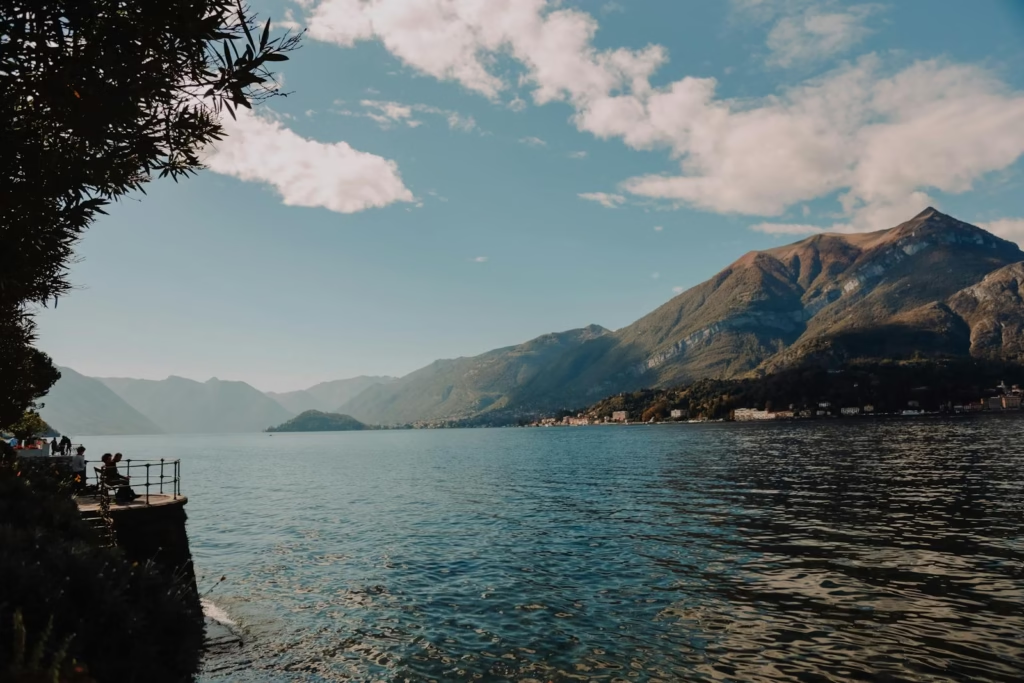
Lake Como has a way of making cycling feel cinematic before the road has even started to rise. The water sits deep and dark between steep green slopes, villas catch the light from the shoreline, and the mountains seem to fold straight out of the lake. It is beautiful in the obvious way, but for riders it also has something more useful than scenery. It has rhythm, variety and a landscape that turns even a modest loop into a memorable day.
Between Como, Bellagio, Lecco and the surrounding hills, this is one of northern Italy’s most rewarding cycling areas. It is not as high or as open as the Dolomites, and it does not carry the same Alpine drama as the Bormio, Stelvio, Gavia and Mortirolo region, but it has a different kind of pull. The roads are more intimate. The climbs often begin almost immediately from town streets. The descents drop you back towards ferry docks, lakeside cafés and small harbours where the water seems to hold the whole day in place.
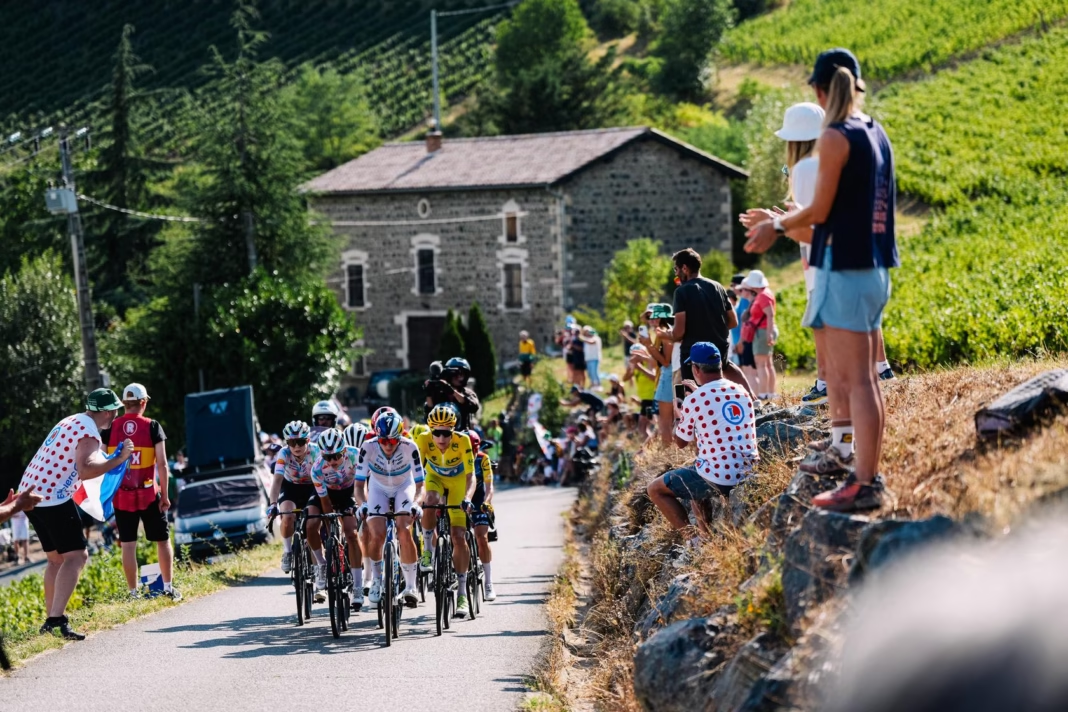
For cycling fans, Lake Como also comes with deep race meaning. This is Il Lombardia country, where autumn racing has repeatedly turned the lake roads and nearby climbs into one of the sport’s most beautiful and punishing theatres. The Madonna del Ghisallo, the Muro di Sormano and the run towards Como are not simply names on a route profile. They are part of the emotional geography of Italian cycling.
That is what makes a riding trip here so compelling. Lake Como is not only a place to look at from a terrace. It is a place to ride through slowly, sharply and sometimes painfully, with the lake appearing and disappearing between walls, trees and bends. It rewards ambition, but it also rewards patience. The best days here are not rushed. They are built from climbs, ferries, espresso stops and the feeling that every road has another view waiting just beyond the next corner.
A cycling landscape shaped by the lake
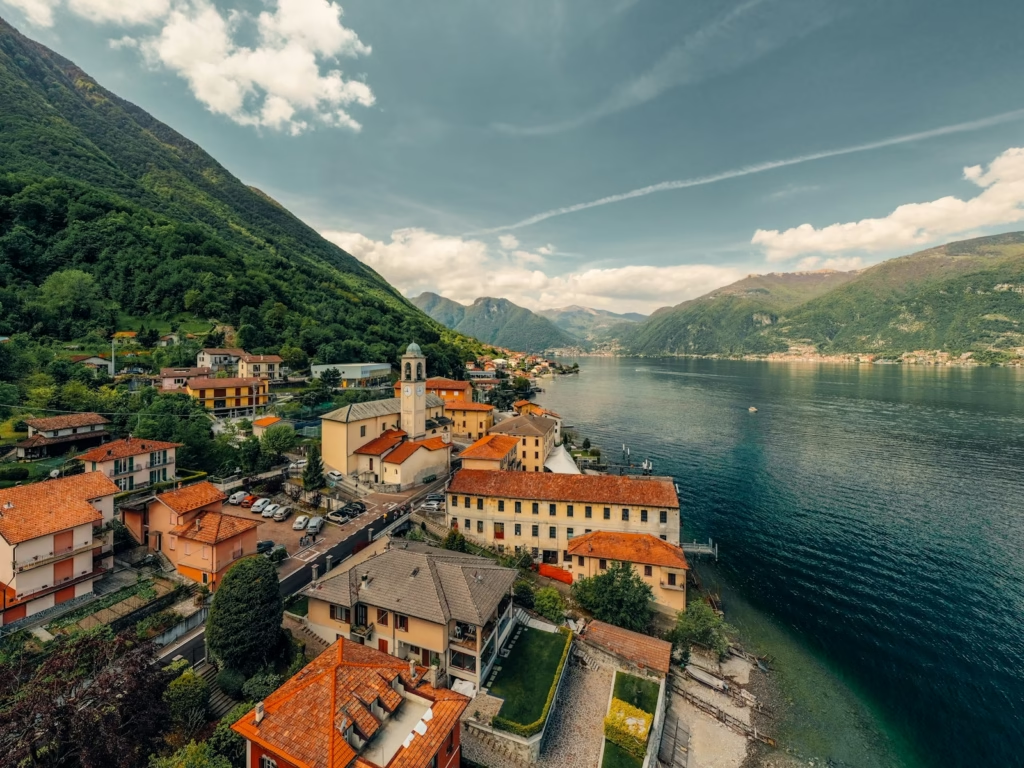
The defining feature of Lake Como as a cycling destination is the way the landscape compresses everything. The lake is narrow in places, the slopes rise quickly, and the towns are squeezed between water and hillside. That creates a very specific riding character. You are rarely in flat open country for long. Even when the road follows the shoreline, the mountains are always close enough to suggest the next climb.
This makes the area feel more dramatic than its raw numbers sometimes suggest. A route of 60km around Como or Bellagio can include enough climbing, traffic management and technical riding to feel far more substantial than the distance implies. The gradients arrive quickly, the road furniture is real, and the transitions from town to climb can be abrupt. One moment you are rolling past a hotel frontage or ferry queue. The next, you are in the first switchback of a climb that immediately asks for a smaller gear.
That is part of the attraction. Lake Como never feels like a training grid. It is too alive for that. The roads pass through working towns, tourist villages, quiet woodland and exposed balconies above the water. Riding here is not just about building a route with the right distance and elevation. It is about accepting the texture of the place: the sound of scooters, the smell of coffee from a lakeside bar, the shade of stone walls, the sudden glare of sunlight off the water.
For riders used to broad Alpine roads, Como can feel tighter and busier. For riders who love Italian cycling theatre, that is exactly the appeal. The road is never separate from life around it.
Bellagio is the natural cycling heart of the lake
Bellagio feels almost too picturesque to be practical, but for cyclists it has a strong logic. It sits on the central promontory where the lake splits into its two southern arms, giving it a rare sense of connection. From here, you can ride towards Como, Lecco, the Madonna del Ghisallo, or use the ferries to link routes across the lake without turning every day into an out-and-back.
The town itself is not large, and that is part of its charm. Early in the morning, before the main visitor flow arrives, Bellagio can feel like a stage set waiting for the day to begin. Narrow streets fall towards the water, boats move across the lake, and riders roll out with that particular quiet excitement that comes before a mountain day. The first climb is never far away.
Its usefulness comes from choice. A shorter ride can climb towards the Ghisallo and return, giving you race history and a serious effort without needing an epic distance. A longer day can drop towards Lecco, loop through the hills, or use a ferry crossing to create a route with more variety. If the legs are tired, Bellagio also works as a place to stop, eat and let the lake do some of the work for you.
There is a softness to Bellagio that balances the riding well. The climbs can be hard, especially in warm weather, but the town gives every route a civilised ending. That contrast is one of Lake Como’s strengths: effort in the morning, calm water in the afternoon, and the sense that a cycling trip can still feel like a holiday rather than a training camp.
The Madonna del Ghisallo gives the region its cycling soul
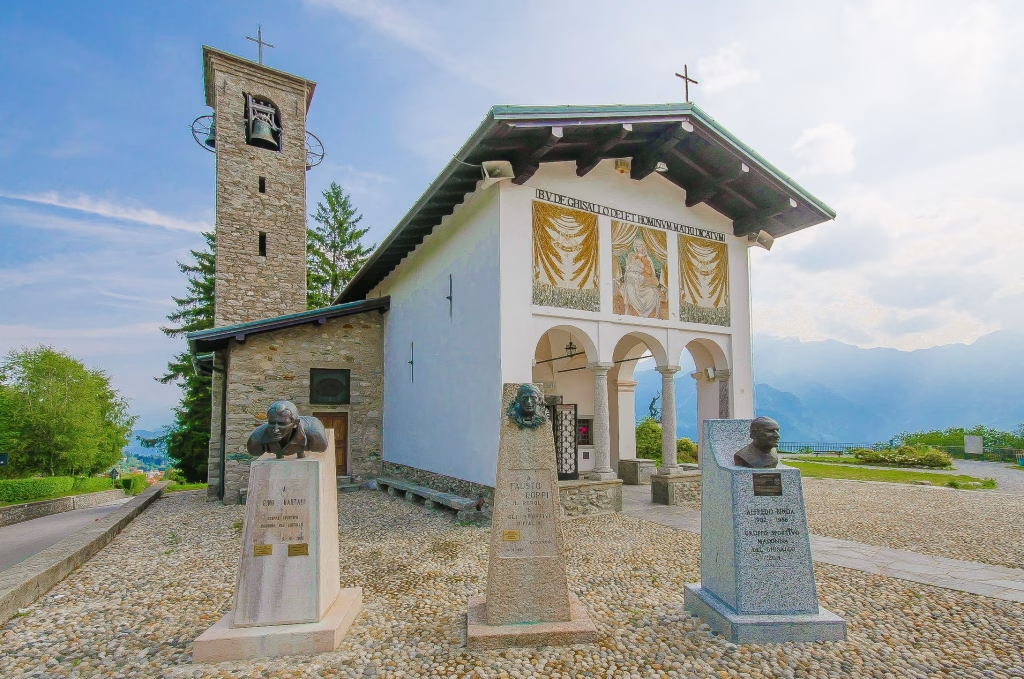
No climb defines cycling around Lake Como more clearly than the Madonna del Ghisallo. Rising above Bellagio towards Magreglio, it is not the longest climb in Italy, nor the most brutal, but it carries a weight that few roads can match. The small chapel at the top, dedicated to the patron saint of cyclists, gives the climb a symbolic pull that goes well beyond the gradient.
The climb from Bellagio is uneven enough to keep a rider honest. It begins sharply, eases in places, then asks again. The lake drops away below, the road twists through villages and trees, and the summit arrives not with Alpine emptiness but with a gathering of cycling memory. Bikes, jerseys, photographs and stories sit inside the chapel and nearby museum, connecting ordinary riders to a lineage far larger than their own effort.
That is what makes the Ghisallo special. It is both a climb and a pilgrimage. You can ride it hard, chasing a time or trying to imagine the pressure of Il Lombardia, but it is almost better approached with a little reverence. The road has been ridden by champions and club cyclists, professionals and tourists, people chasing victory and people simply wanting to understand why cycling attaches itself so deeply to certain places.
For a Lake Como trip, the Ghisallo is essential. It gives the region its cycling soul, and it turns the journey from Bellagio into something more than a scenic climb. It becomes a meeting point between effort, history and place.
The Muro di Sormano is short, savage and unforgettable
If the Ghisallo is the region’s soul, the Muro di Sormano is its warning. This is not a climb to underestimate because the distance looks manageable. It is short, but brutally steep, with gradients that turn rhythm into negotiation almost immediately. The road is narrow, the ramps are severe, and the markings on the tarmac seem to mock rather than motivate.
The Muro has a complicated place in cycling history. It became famous through Il Lombardia, disappeared from the race for many years because of its severity, then returned as a modern symbol of controlled suffering. For visiting riders, it is less a beautiful climb in the classic sense and more a physical confrontation. You do not flow up the Muro. You survive it, section by section.
That makes it optional, but tempting. Not every Lake Como ride needs to include it, and not every rider will enjoy it. But for those drawn to cycling’s more absurd challenges, the Muro has a strange magnetism. It is the kind of road that becomes a story immediately. Even if you crawl, stop, swear or promise never to ride it again, it leaves an impression.
Paired with the Ghisallo, it creates one of the great compact climbing combinations in northern Italy. One climb gives you history and reverence. The other gives you steepness stripped of romance. Together, they explain why this region can hurt far more than its lakefront calm suggests.
Como works well for riders who want culture and logistics
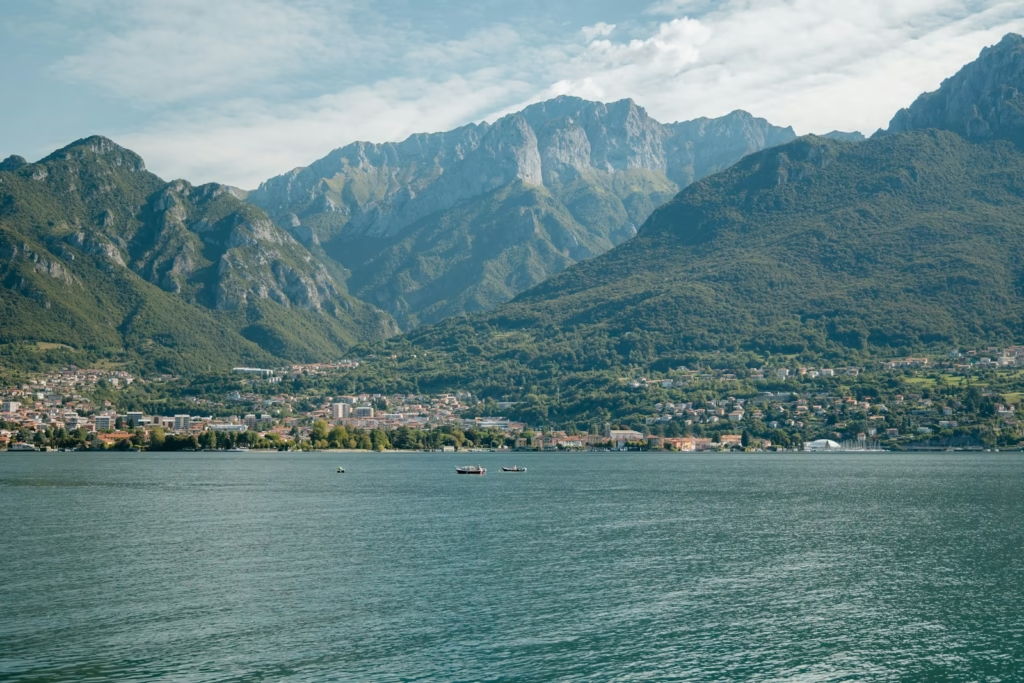
Como itself is a different kind of base to Bellagio. It is larger, more connected and easier to reach, particularly for riders arriving by train or using Milan as the gateway. It has more hotels, restaurants and practical options, and it gives a cycling trip a stronger city-break feel.
From Como, the riding is still excellent, but the first kilometres can feel busier. That is the trade-off. You gain convenience, transport links and evening choice, but you may need a little patience to clear the town and reach quieter roads. Once you do, the rewards come quickly. The climbs above Como and towards the Lombardia routes give immediate elevation, while the lakeside road north offers classic scenery with the usual need for traffic awareness.
Como also matters because of the race finish. Il Lombardia has often ended here, using the climbs around the lake before dropping towards the city. Riding into Como after a hard route gives the place a different feeling. It is not just a lakeside town. It is a finish line, a place where autumn racing has repeatedly gathered exhaustion, tactics and glory into the final kilometres.
For many riders, the best approach may be to split the difference: stay in Como for convenience, ride or transfer towards Bellagio for the Ghisallo side, and use ferries or trains to avoid making every route dependent on busy main roads. Lake Como rewards planning, but it also rewards leaving enough room for improvisation.
The ferries make route planning part of the pleasure
One of the joys of cycling around Lake Como is that the ferries are not just transport. They are part of the rhythm of the trip. Moving across the water with a bike beside you changes the feel of a day. It breaks the ride into chapters, lets the legs soften for a few minutes, and gives you the view that roads cannot always provide.
Ferries are especially useful around Bellagio, Varenna, Menaggio and Cadenabbia. They make it possible to create loops that would otherwise require awkward distance or busy roads. A ride can begin with a climb, cross the lake, follow a different shoreline, then return by boat in the late afternoon light. It feels less like cheating than like understanding how the lake wants to be used.
This is one of the reasons Como suits a cycling holiday rather than just a single hard ride. The lake gives you options. If the weather changes, you can adjust. If the legs are better than expected, you can add a climb. If the day has already given enough, a ferry can turn a hard route into a memorable one rather than a grim return.
For riders travelling with non-cyclists, the ferries also help the trip work socially. Not everyone has to ride the same road to arrive in the same place. Someone can take a boat, meet for lunch, walk through a lakeside town, or simply enjoy the journey while the cyclist takes the long way around.
Lake Como is beautiful, but it is not always easy riding
The beauty of Lake Como can make the cycling sound gentler than it is. This is not a place where every road is quiet, wide and perfectly suited to relaxed riding. Some lakeside sections are narrow. Traffic can be busy, especially in high season. Tunnels, scooters, tourist coaches and tight town streets all require attention. The riding is often magnificent, but it is rarely passive.
That honesty matters. Lake Como is best enjoyed by riders who are comfortable sharing roads and making sensible route choices. Early starts help, particularly in summer. So does avoiding the busiest shoreline stretches where possible, using ferries intelligently, and building routes that prioritise smaller climbing roads over long sections of traffic-heavy lakeside riding.
The climbs themselves can also be tougher than expected. Heat gathers in the lower roads, gradients change abruptly, and the effort of repeated climbing can creep up quickly. A ride that looks moderate on paper can feel much harder when it includes steep ramps, technical descents and the constant need to stay alert.
None of that should put riders off. It simply means Lake Como should be treated as a real cycling destination, not just a scenic backdrop. Respect the roads, plan carefully, and the reward is enormous.
Il Lombardia gives the trip a deeper racing context
Race history is everywhere around Lake Como, but Il Lombardia gives it its strongest shape. The race has used these roads to create some of the most evocative finales in the sport, linking the lake, the Ghisallo, the Sormano area and the approaches to Como into a landscape of late-season pressure.
That history changes the way a rider experiences the region. The climbs are not just scenic tests. They are places where races have been split, favourites have cracked, and attacks have carried towards one of cycling’s most prestigious autumn victories. Even if you are riding at touring pace, there is a quiet thrill in recognising roads from television and feeling how different they seem from inside the effort.
Como’s place in the Lombardia story also gives the region a different seasonal feel. Spring and summer are beautiful, but autumn has a particular resonance here. The light softens, the air cools, and the race’s identity as the Classic of the Falling Leaves suddenly makes sense. It is easy to understand why cycling has attached so much romance to this corner of Lombardy.
For a rider who loves the sport’s history, that context is one of Lake Como’s strongest arguments. You do not need to be chasing race routes every day, but knowing they are there adds depth to every climb, especially if your wider trip already links Italian race heritage with places such as the Giro d’Italia mountains.
Who Lake Como works best for
Lake Como works best for riders who want more than simple mileage. It suits cyclists who enjoy climbing, scenery, race history and the small rituals of Italian riding: coffee before the climb, a ferry crossing after the descent, lunch near the water, and the quiet satisfaction of a route that feels richer than its statistics.
It is a particularly good choice for riders who want a trip that can balance cycling and travel. A pure training camp may be easier somewhere with quieter roads and fewer distractions. Lake Como is better for riders who want the distractions. The villas, the food, the water, the towns, the boats and the views are part of the experience, not interruptions to it.
It also works well for couples or groups where not everyone wants the same level of riding. The area has enough non-cycling appeal to carry rest days and mixed itineraries, while the cycling is strong enough that serious riders will not feel short-changed. That balance is harder to find than it sounds.
What Lake Como is not, at least not at its best, is a place to tick off rides mechanically. It asks for a little patience. The roads can be busy, the climbs can bite, and the lake sometimes forces routes to bend around geography rather than logic. Accept that, and the trip becomes far more rewarding.
-
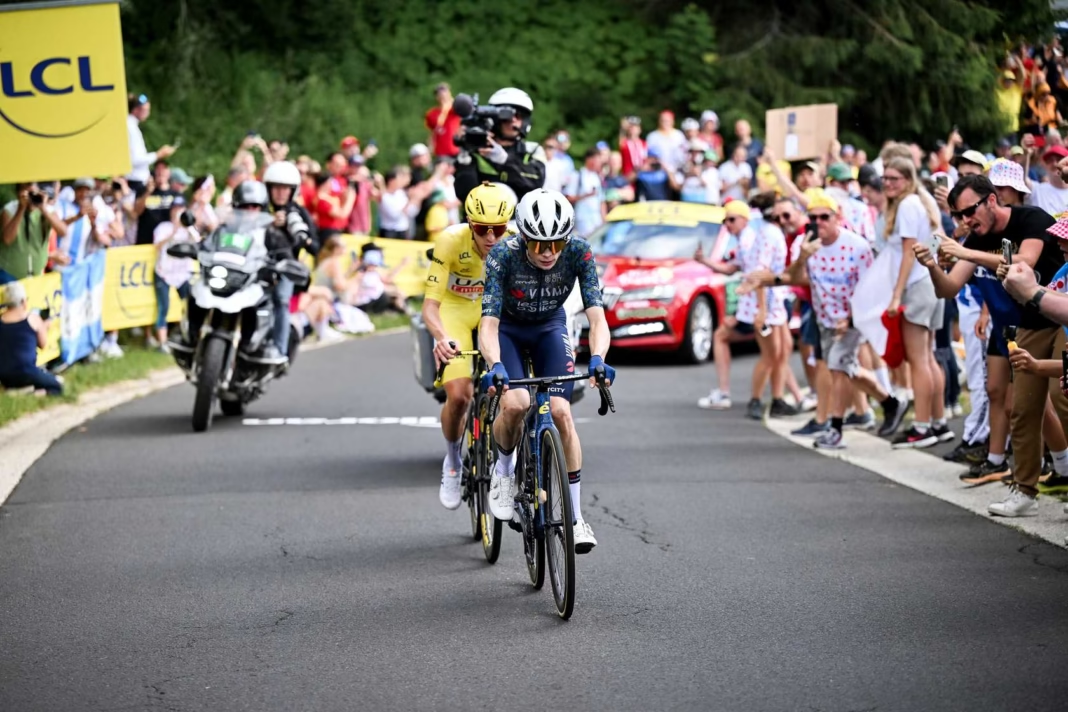
 Photo Credit: A.S.O./Billy Ceusters
Practical information
Location
Lake Como sits in Lombardy, northern Italy, close to Milan and the Swiss border. Como is the most accessible major base, while Bellagio is the classic central-lake option for riders who want to be close to the Madonna del Ghisallo and the ferry network. It also pairs naturally with other Italian riding destinations, from Lombardy’s race roads to the wider Italy cycling travel routes across the north.
Riding
The riding is defined by lakeside roads, steep climbs, technical descents and compact routes with plenty of elevation. Key cycling points include Bellagio, the Madonna del Ghisallo, the Muro di Sormano, Como, Lecco, Menaggio and Varenna. Route planning should account for traffic on some lakeside roads, especially in summer.
When to go
Late spring and early autumn are usually the best periods for cycling, with milder temperatures and fewer extremes than high summer. Autumn is especially atmospheric because of the region’s connection with Il Lombardia. Summer can be beautiful but busier and hotter, so early starts become more important.
Accommodation
Como is the best option for transport links, restaurants and a wider choice of accommodation. Bellagio is better for riders who want a more scenic base close to the Ghisallo and ferry connections. Varenna and Menaggio can also work well, especially for trips built around ferry-linked loops.
Getting there
Milan is the main gateway for UK travellers, with onward trains to Como and nearby towns. Riders travelling with bikes should check airline and rail bike policies carefully, especially if planning to use ferries or combine several bases during the trip. Hiring a bike locally can simplify the logistics for a shorter stay.
Why Lake Como belongs on a cycling travel list
Lake Como works because it combines beauty with substance. The scenery would be enough for a normal holiday, but the riding gives it edge. The climbs are meaningful, the roads are varied, the race history is deep, and the lake itself turns route planning into part of the experience.
It is not the simplest cycling destination in Italy, and that is part of its character. Riders need to think about traffic, ferries, gradients and timing. But the reward is a trip that feels layered in a way few places can match: Bellagio in the morning light, the Ghisallo in the legs, the Muro di Sormano waiting like a dare, and Como at the end of a hard day.
For riders who love Italian cycling, Lake Como is more than a scenic backdrop. It is a place where road, water, history and effort keep folding into each other, until the ride feels inseparable from the landscape itself.

