
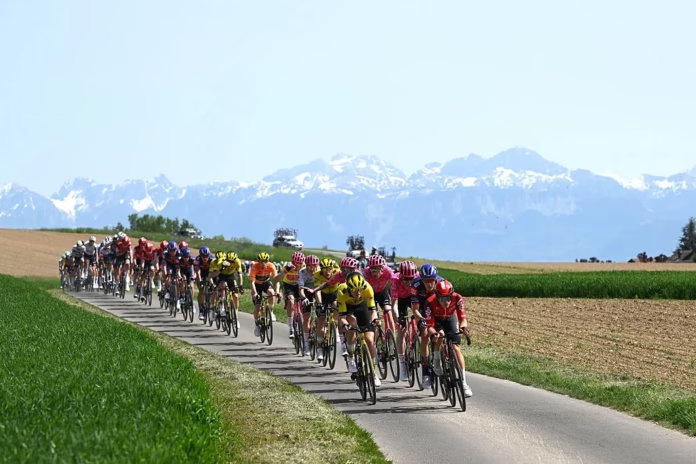
Men’s Tour de Romandie 2026 takes place from Tuesday 28th April to Sunday 3rd May, giving the WorldTour peloton six days of racing across French-speaking Switzerland. The race begins with a short prologue in Villars-sur-Glâne before moving into a demanding run of road stages that should make the general classification far more than a time trial exercise.
The confirmed start list gives the race a strong mix of Grand Tour leaders, climbing specialists, developing stage-race talents and riders looking to sharpen form before the Giro d’Italia. Tadej Pogačar and Primož Roglič are the headline names, which immediately lifts the race beyond a standard pre-Giro build-up. Their presence gives Romandie a heavyweight GC feel, especially on a route that includes more than 14,000 metres of climbing across the week.
Romandie often sits in a useful place in the calendar. It comes after the Ardennes Classics and before the Giro, which means it can draw riders with very different objectives. Some arrive chasing the overall win, some are building towards May, and others are using the Swiss terrain to test climbing legs after the spring one-day races. That mix usually gives the race a slightly unpredictable rhythm.
The 2026 edition looks particularly suited to climbers and all-round GC riders. The prologue will create the first time gaps, but the race is expected to be shaped more heavily by the road stages, especially the later mountain tests and the final stage to Leysin. That makes the start list especially important, because teams with more than one climbing option may be able to keep the race open deeper into the week.
Who is on the Men’s Tour de Romandie 2026 start list?
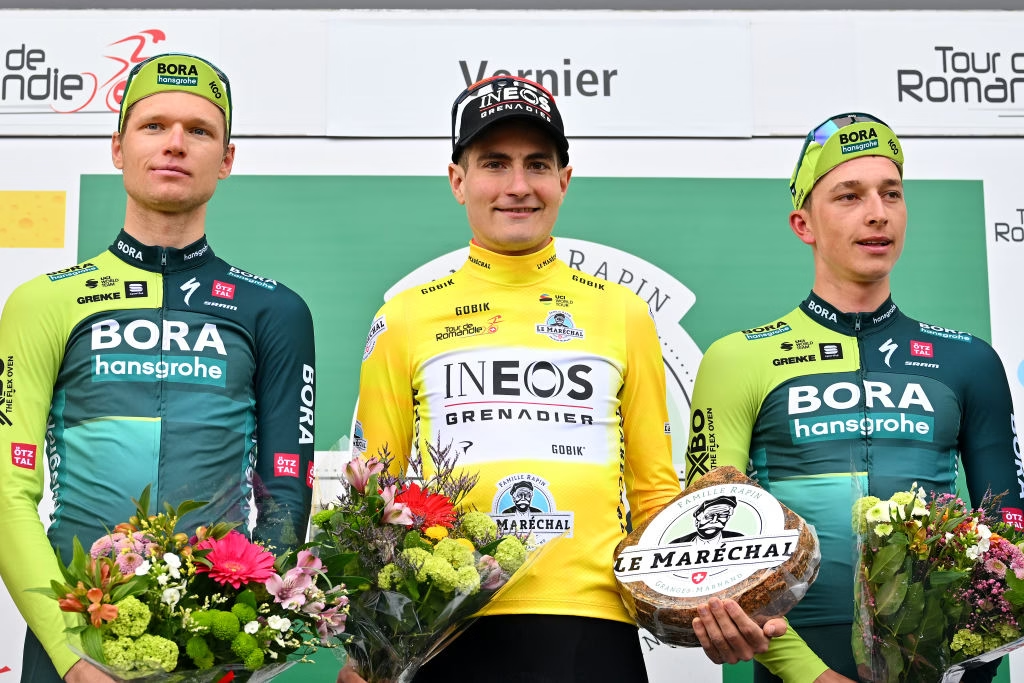
The full Men’s Tour de Romandie 2026 start list is expected to include the WorldTour teams alongside invited squads, with each team bringing seven riders. The line-up is headlined by UAE Team Emirates-XRG and Red Bull-Bora-Hansgrohe, who bring Pogačar and Roglič respectively, but the race has depth well beyond those two names.
UAE Team Emirates-XRG arrive with Pogačar, Pavel Sivakov, Felix Grossschartner and Mikkel Bjerg among their listed riders, giving them both climbing strength and time trial support. Red Bull-Bora-Hansgrohe have Roglič, Florian Lipowitz, Daniel Felipe Martínez, Jan Tratnik and Mattia Cattaneo, which gives them one of the most complete GC structures in the race.
Bahrain Victorious add another strong climbing block through Lenny Martinez, Antonio Tiberi and Damiano Caruso, while INEOS Grenadiers bring a varied squad that includes Oscar Onley, Michal Kwiatkowski, Laurens De Plus and Bob Jungels. Lidl-Trek, EF Education-EasyPost, Groupama-FDJ United and Team Jayco AlUla also have enough quality to affect both the GC and individual stages.
The full live start list is embedded below and will update as any final team changes are confirmed before the race.
Data powered by FirstCycling.com
Why the 2026 start list matters
The most obvious reason is the Pogačar-Roglič dynamic. They do not need to be framed as direct rivals in every race they enter, but when both are on the same start list in a mountainous WorldTour stage race, the race immediately gains a different kind of weight. Romandie may not be a Grand Tour, but its terrain is serious enough to test climbing condition, recovery and team control.
Pogačar’s presence gives UAE Team Emirates-XRG a clear reference point, but it also changes the job for everyone else. Teams cannot simply wait for one decisive climb if UAE choose to apply pressure earlier in the week. With Sivakov and Grossschartner available, the team should have enough depth to shape the harder stages rather than merely respond to them.
Roglič brings a different kind of pressure. His history in Romandie gives him natural relevance, and Red Bull-Bora-Hansgrohe’s line-up looks built around both protection and flexibility. Lipowitz and Martínez give the team additional climbing options, while Tratnik and Cattaneo can be valuable across transitional terrain and the race’s more controlled phases.
Behind those two headline teams, the race should still have several layers. Martinez and Tiberi give Bahrain Victorious two interesting GC cards. Onley gives INEOS Grenadiers a young climbing leader with a route that should suit his profile. Groupama-FDJ United have David Gaudu and Rémi Cavagna, while Lidl-Trek can use riders such as Toms Skujiņš, Sam Oomen and Patrick Konrad across different race situations.
The GC battle should not be decided by the prologue alone
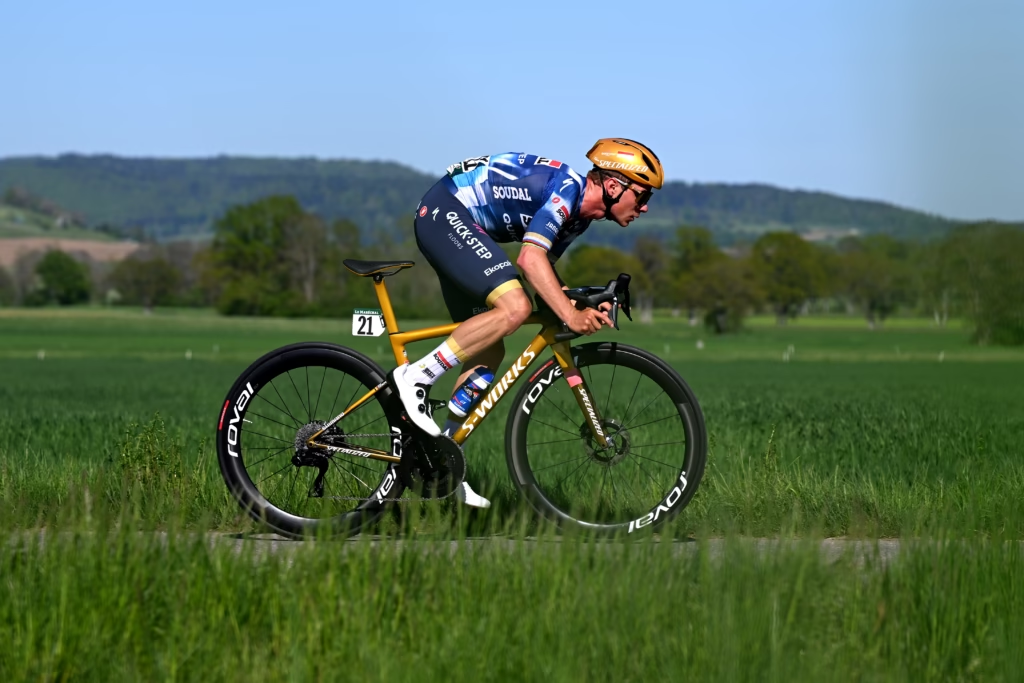
Romandie has often leaned heavily into time trials, but the 2026 route looks more climbing-focused. The short opening prologue in Villars-sur-Glâne will still matter, especially for early positioning and race leadership, but it should not define the overall result on its own.
The following road stages give the climbers far more room to work. Stage 1 around Martigny includes the category 1 climb to Ovronnaz, while Stage 2 uses repeated circuits and climbs around Rue and Vucherens. Stage 3 takes the race over the Col Mollendruz before the finish in Orbe, and Stage 4 is a shorter but demanding day featuring Jaunpass before the race reaches Charmey.
The final stage to Leysin looks like the most obvious GC test. With the race ending on a mountain finish after a week of accumulated climbing, the strongest pure climbers should still have time to overturn small gaps from the prologue. That is why the start list matters so much: the teams with more than one climbing option may be able to put pressure on the race before the final ascent.
Which teams look strongest on paper?
UAE Team Emirates-XRG and Red Bull-Bora-Hansgrohe look like the obvious strongest teams on paper. UAE have the race’s biggest individual favourite in Pogačar, while Red Bull-Bora-Hansgrohe have both Roglič and a deep supporting cast. If the race becomes a direct GC contest between those two squads, the mountain stages could become more controlled than the route profile suggests.
Bahrain Victorious should also be important. Martinez and Tiberi both have the climbing ability to stay relevant deep into the week, while Caruso brings experience and tactical calm. If the headline favourites mark each other too heavily, Bahrain have enough quality to profit from hesitation.
INEOS Grenadiers are harder to read, but potentially very interesting. Onley gives them a clear climbing option, while Kwiatkowski, De Plus, Jungels and Dorian Godon provide experience and race management. That kind of squad may not need to dominate the race from the front. It can keep riders in position, follow the right moves and look for opportunities when the GC favourites begin watching each other.
There should also be room for stage hunters. A race with this much climbing often creates days where the overall contenders hesitate, especially if the GC picture is not fully settled until Leysin. That opens space for riders who can climb well enough to survive the selection but are not marked as primary GC threats.

How the start list shapes the race
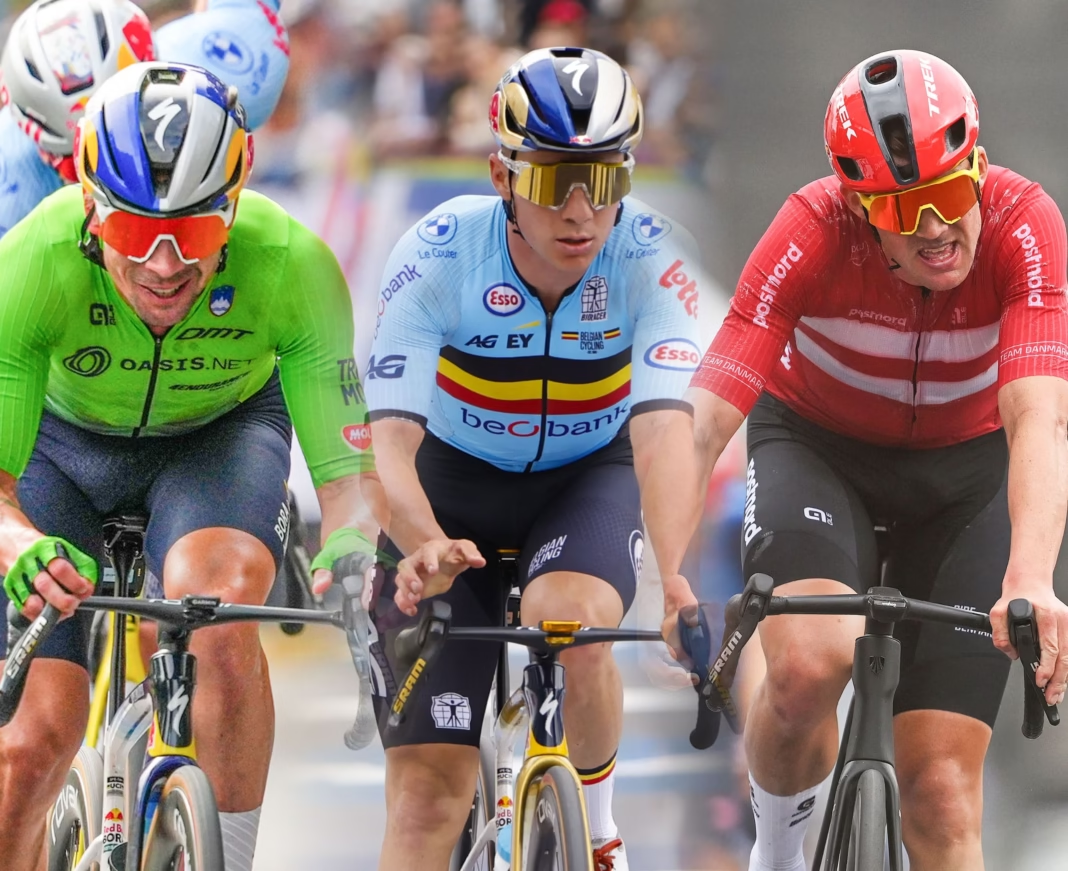
The start list suggests a race that could be pulled in two directions. On one side, the presence of Pogačar and Roglič encourages control. Their teams have the strength to manage the race, keep breakaways within reach and try to reduce the GC battle to moments where their leaders are strongest.
On the other side, the route gives rivals a reason to resist that control. The repeated climbing stages, especially before the final mountain finish, give teams like Bahrain Victorious, INEOS Grenadiers and Groupama-FDJ United chances to create pressure before the most obvious GC moment. If the race is still close after the prologue, those teams cannot afford to wait politely for Leysin.
That is where Romandie can become tactically interesting. It is short enough that one bad day can decide the whole race, but long enough that accumulated fatigue matters. Teams with multiple climbing options may try to make UAE and Red Bull-Bora-Hansgrohe work earlier than they would like. Teams with stage ambitions may look for transition days where the GC favourites prefer not to empty their squads.
The result should be a race where the start list shapes more than the favourites’ debate. It shapes who controls the early prologue aftermath, who can attack before the final mountain stage, and who has enough support left when the road finally rises to Leysin.
Men’s Tour de Romandie 2026 start list verdict
The Men’s Tour de Romandie 2026 start list gives the race exactly the kind of depth it needs. Pogačar and Roglič provide the headline pull, but the supporting cast makes the race more than a two-rider storyline. Martinez, Tiberi, Onley, Gaudu, Lipowitz, Martínez, Sivakov and others all have enough quality to shape the week if the race opens earlier than expected.
With a short prologue, repeated climbing stages and a final mountain finish at Leysin, the 2026 edition should reward riders who can combine climbing strength with recovery and team support. It is not just a pre-Giro form check. On this start list and this route, Romandie has enough substance to stand on its own.

