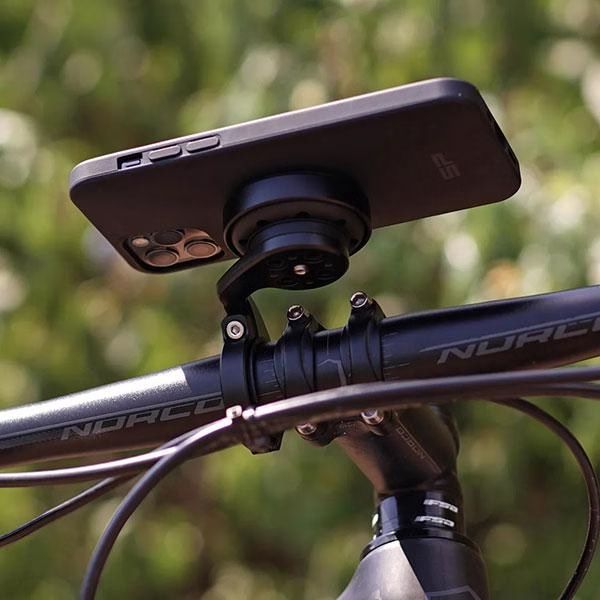
The SP Connect bike mount system is a modular phone mounting set-up for cyclists who want their smartphone visible, secure and easy to remove at the end of a ride. With the Universal Bike Mount starting at £29.95 in the UK, before adding a compatible case, clamp or anti-vibration accessory, it sits in the same serious phone-mount category as Quad Lock rather than the cheap silicone strap end of the market.
This SP Connect bike mount review looks at whether it is a genuine Quad Lock alternative for cycling. The short answer is yes. SP Connect is neat, secure and impressively versatile, especially if you like its slimmer SPC+ phone cases and broader accessory ecosystem. Quad Lock still feels like the more established cycling default, but SP Connect deserves to be taken seriously by road riders, commuters, gravel riders and e-bike users.
Check SP Connect bike mount options on Amazon UK
SP Connect bike mount review
SP Connect is not a single mount so much as a mounting ecosystem. Riders can build a set-up around a dedicated SPC+ phone case, a universal phone clamp, a universal phone case or an adhesive universal interface, then connect that to a bar mount, stem mount, out-front-style mount, micro stem mount, e-bike mount or anti-vibration module.
That modular approach is the main appeal. It means the SP Connect system can be tailored to a road bike, commuter, gravel bike, e-bike, motorbike, car or everyday phone case set-up. For cyclists, the most relevant starting point is the Universal Bike Mount or one of the Bike Bundle options, paired with either a dedicated SPC+ case or universal clamp.
Quick verdict
Overall verdict: The SP Connect bike mount system is a polished, secure and highly adaptable phone mounting option for cyclists. It is a credible Quad Lock alternative, especially for riders who prefer the slimmer SPC+ case design, but the total cost rises quickly once you add a case, anti-vibration module or charging accessory.
Best for: commuters, e-bike users, gravel riders, touring riders and road cyclists who want a secure phone mount with a slim everyday case and plenty of accessory options.
Not ideal for: riders who want the cheapest phone mount, racers who prefer a dedicated cycling computer, or anyone who dislikes using a proprietary phone case or adaptor.
Price: Universal Bike Mount £29.95, with cases, clamps and accessories adding to the final set-up cost.
Weight: varies by mount, case and accessory combination.
Key specs: twist-to-lock mounting, portrait or landscape phone position, handlebar or stem fitment, SPC and SPC+ compatibility depending on mount, phone-specific cases, universal clamps and optional anti-vibration modules.
Reasons to buy
- Secure twist-to-lock mechanism feels solid on road and gravel rides
- SPC+ phone cases are slimmer than many older-style mount cases
- Wide choice of mounts, cases, clamps and charging accessories
- Universal options work for riders without a dedicated case
- Portrait and landscape positioning is useful for navigation
- Anti-vibration module adds protection for rough roads and e-bike use
- A genuine alternative to Quad Lock rather than a cheap imitation
Reasons to avoid
- Total cost rises once a case, mount and accessories are added together
- Requires commitment to SP Connect’s proprietary mounting system
- Bulkier than using a dedicated cycling computer
- Some road riders will still prefer Quad Lock’s cycling ecosystem
- Universal clamps are less elegant than phone-specific cases
- Phone mounting always carries more crash and weather risk than keeping the phone in a pocket
Product overview
The SP Connect system is designed around a secure quarter-turn style connection. The phone case or adaptor locks onto the mount, then the phone can be rotated into position. It is a similar concept to Quad Lock, although the two systems are not directly compatible.
For cycling, SP Connect’s main appeal is that it gives riders several ways into the system. The cleanest option is a phone-specific SPC+ case, which keeps the everyday case relatively slim while adding the mount interface. Riders who do not want to change phone case can use a universal clamp, while those who want broader protection can use a universal phone case.
The SP Connect bike mount competes most directly with Quad Lock, Peak Design, Fidlock Vacuum, Topeak RideCase and various cheaper handlebar phone mounts. Quad Lock remains the obvious benchmark because of its cycling popularity, but SP Connect is more than credible, particularly for riders who also want a car, motorbike or everyday mounting ecosystem.
It is important to be clear about the use case. A phone mount is not the same as a GPS computer. For racing, structured training and long wet rides, a dedicated Garmin, Wahoo or Hammerhead unit is still the better cycling tool. For commuting, touring, e-bike navigation, delivery riding, café routes and occasional road use, a secure phone mount can be extremely useful.
Design and construction
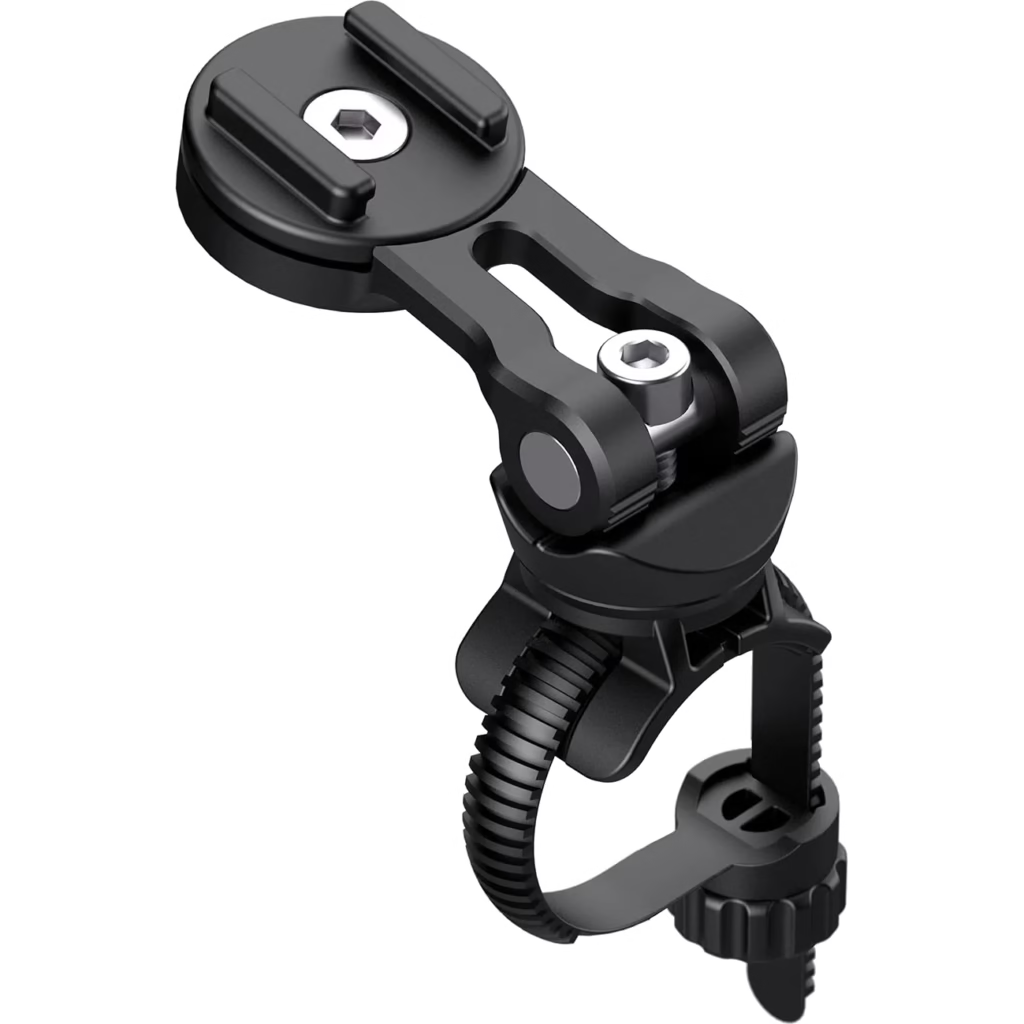
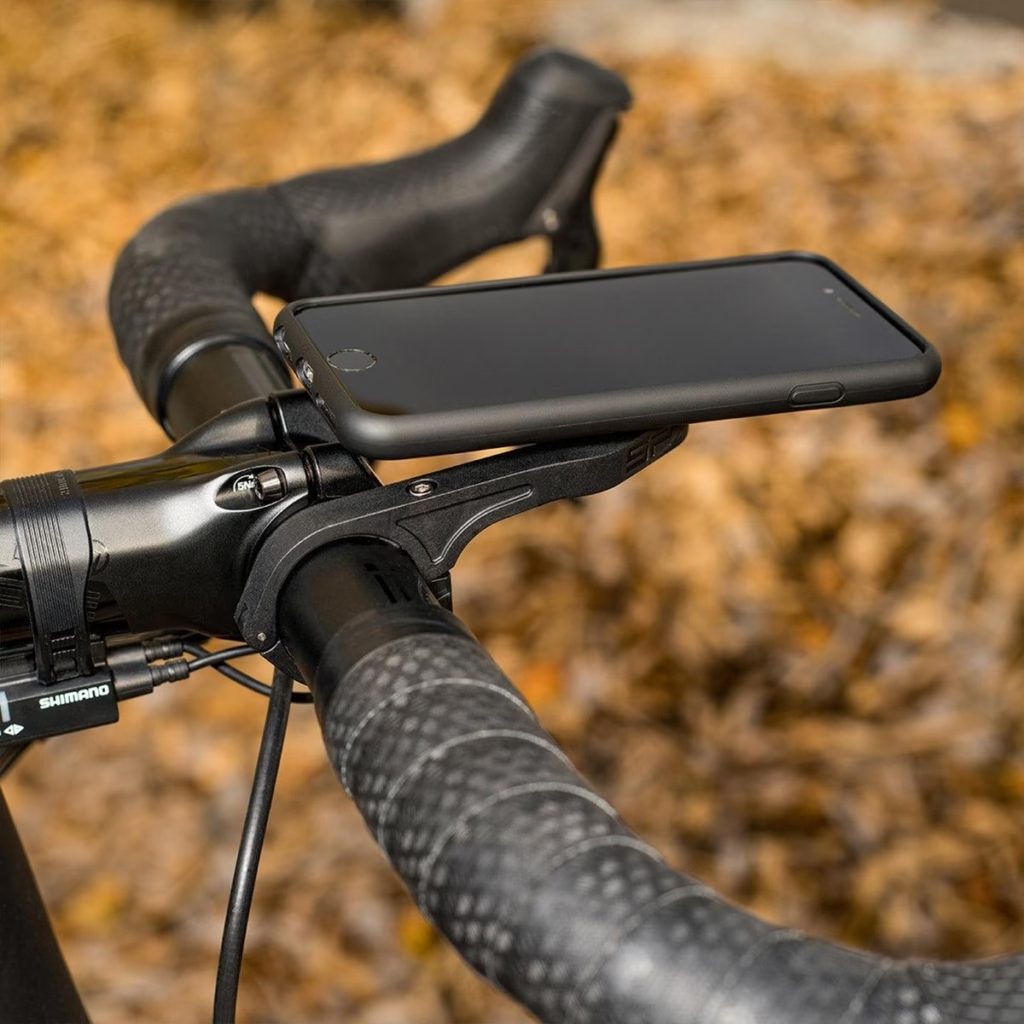
The SP Connect Universal Bike Mount is a compact handlebar or stem mount with a tool-free attachment system and an adjustable arm. It can position the phone in portrait or landscape orientation, which is useful for different navigation apps, ride tracking screens and e-bike displays.
The general fit and finish are good. SP Connect has clearly moved beyond the cheap phone-holder category. The mounts feel purposeful, the phone connection is positive, and the SPC+ case design is much more refined than the bulky early generation of phone-mount cases that made phones feel like ruggedised bricks.
The SPC+ system is the one most new buyers should focus on. SP Connect says SPC+ cases are thinner and lighter than the older SPC format, with MagSafe compatibility built into many versions. That matters because the case is not just something you use on the bike. For many riders, it becomes the everyday phone case.
The twist-to-lock mechanism is simple and reassuring. Align the phone with the mount, press it into place and turn it until it locks. It takes a couple of rides to become completely natural, but once familiar it is quick. Removing the phone is just as easy, which is important for café stops, shops and commuting.
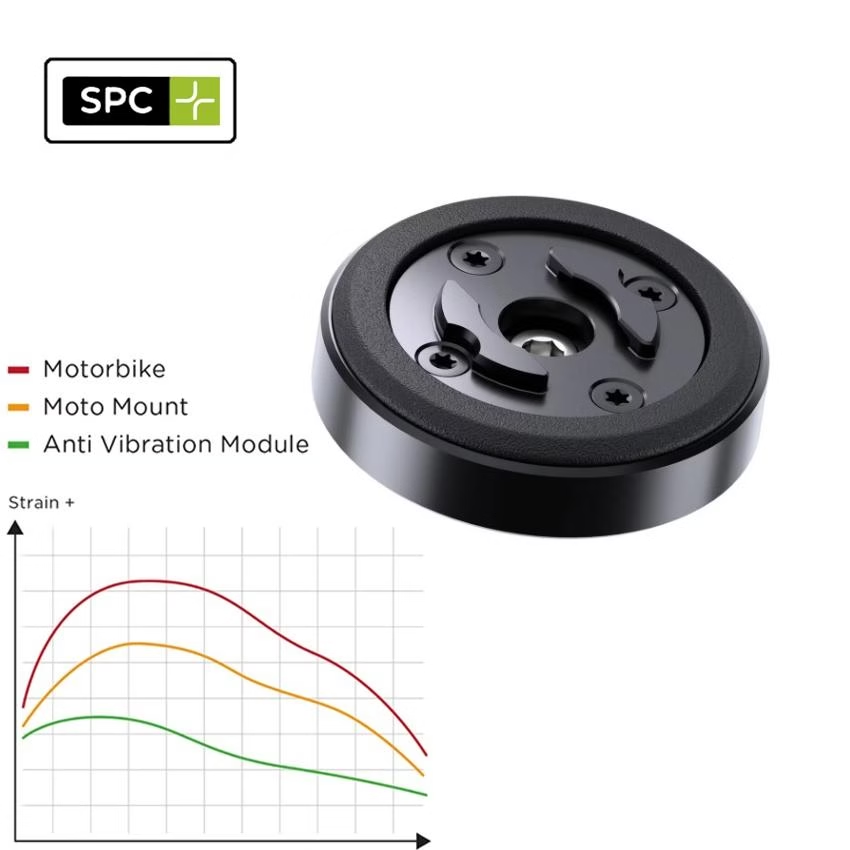
The anti-vibration module is a useful optional extra. SP Connect claims up to 60 per cent vibration reduction, using an elastomer inlay to reduce the vibration transmitted to the phone. It is most relevant for e-bikes, gravel bikes, rough roads and riders worried about smartphone camera stabilisation systems. For smooth road cycling, it is less essential, but still a sensible upgrade if the phone is mounted often.
Setup and ease of use
Initial setup depends on the route into the SP Connect system. The cleanest version is a dedicated SPC+ phone case matched to your phone model. Fit the case, attach the bike mount to the handlebar or stem, then twist the phone into place. It is neat and quick.
The Universal Bike Mount is easy to fit because it does not require tools. That makes it useful for riders who move the mount between bikes, or who do not want to commit to a permanent cockpit set-up. The adjustable arm helps with viewing angle, although a fully integrated out-front mount will look cleaner on a road bike.
The universal clamp is the more flexible but less elegant option. It is useful if you change phones frequently, use a phone model without a dedicated case, or do not want an SP Connect case on the phone all day. The downside is bulk. A clamp rarely looks or feels as clean as a purpose-made case.
Pairing is not an issue because this is a mechanical mount rather than an electronic device, unless you add charging accessories. That simplicity is part of the appeal. There is no firmware, no app requirement and no battery to manage for the basic bike mount.
The main setup decision is position. On a road bike, mounting the phone on the stem is tidy but can be harder to read while riding. A bar or out-front position gives better visibility but may clutter the cockpit. On commuter and e-bikes, a central bar position often makes most sense because the phone is being used for navigation rather than training data.
Real-world performance
The SP Connect bike mount performs best when used for navigation-led riding rather than performance-focused training. On commutes, urban routes, touring days and unfamiliar roads, having the phone visible makes route following much easier than relying on audio cues or repeatedly stopping to check a pocket.
The mount feels secure on normal road surfaces. Once locked into place, the phone does not have the nervous wobble that cheaper strap mounts often produce. That is the difference between a proper phone mount and a budget holder. The phone becomes part of the cockpit rather than something loosely attached to it.
On rougher surfaces, the experience depends on the mount and accessory combination. The basic mount is fine for road riding and light gravel, but the anti-vibration module makes more sense if the phone will regularly be exposed to broken lanes, gravel tracks, e-bike speeds or constant vibration. It adds cost and height to the set-up, but it also adds peace of mind.
The twist-to-lock mechanism is reassuring in use. There is a clear sense that the phone is properly engaged, and it takes deliberate action to remove it. That matters when riding over potholes or speed bumps, where cheaper mounts can make you look down repeatedly to check that the phone is still there.
Visibility is good in portrait and landscape modes, although this is partly dependent on phone brightness and weather. In bright sun, even a good phone screen can be harder to read than a dedicated GPS computer. In heavy rain, touchscreen usability becomes more awkward, and battery life can fall quickly if the phone is running navigation, mobile data and high screen brightness.
This is where the limits of any phone mount become clear. The SP Connect system can hold the phone well, but it cannot make a smartphone into a purpose-built cycling computer. For long wet rides, winter training and battery-heavy navigation, a dedicated GPS unit still wins. For short-to-medium rides, commuting and city navigation, the phone approach is very practical.
The everyday case experience is one of SP Connect’s strongest points. The SPC+ cases are slim enough that they do not feel like a purely cycling accessory. That makes the system easier to live with than mounts that require a bulky dedicated case or an awkward stick-on adaptor.
The universal clamp works well when needed, but it is less elegant. It adds bulk, takes slightly longer to secure and does not feel as integrated as a dedicated case. It is the right choice for flexibility, not for riders who care about the cleanest set-up.
The SP Connect phone mount for cycling feels particularly strong for e-bike riders. Many e-bike journeys are navigation-led, urban or utility-based, and the phone is often central to the ride experience. Add the anti-vibration module or charging module and the system starts to feel like a proper transport solution rather than a cycling accessory.
For road cyclists, the decision is more specific. If you already use a Garmin Edge or Wahoo Elemnt, SP Connect is unlikely to replace it for training. It is better as a secondary navigation option, touring tool or commuter mount. If you do not own a cycling computer, it can be a sensible way to use the phone you already have.
Phone security and vibration
Phone security is the main test for any bike mount. The SP Connect system passes that test well. The phone locks on firmly, the mount does not feel flimsy, and the twist-to-lock connection is much more confidence-inspiring than elastic straps or spring-loaded clamps.
The system still relies on proper engagement. The phone needs to be seated and turned fully into position. This is not difficult, but it is worth making the lock-check part of the routine, especially before rough roads or fast descents.
Vibration is the more complicated issue. Modern smartphones, particularly those with advanced camera stabilisation, can be sensitive to long-term vibration. This is more widely discussed in motorcycle use, but rough cycling surfaces can still transmit plenty of buzz through the cockpit.
The SP Connect anti-vibration module is therefore a sensible accessory for riders using expensive phones regularly on the bike. It is not essential for every smooth-road ride, but for gravel, e-bikes, commuting on broken roads and frequent use, it is a worthwhile upgrade. It also helps position SP Connect as a serious Quad Lock alternative because both brands now treat vibration management as part of the system rather than an afterthought.
Weather is another consideration. A phone on the bars is more exposed than a phone in a pocket. Many modern phones are water-resistant, but rain, grit, sweat and repeated wet charging are still not ideal. For bad-weather commuting, a universal weatherproof case or extra protection may be more important than on dry summer rides.
How it compares
Quad Lock is the obvious benchmark. It is widely used, secure, has a huge accessory range and feels deeply established in cycling. Quad Lock’s out-front bike mounts are especially familiar on road bikes. SP Connect’s main advantage is its slimmer SPC+ case feel and broad cross-sport ecosystem. Quad Lock still has the stronger cycling default status, but SP Connect is a serious rival.
Peak Design is the more premium lifestyle alternative. Its magnetic-mechanical mounting system feels slick, and the everyday cases are excellent. For riders who value everyday phone case quality as much as bike mounting, Peak Design is very tempting. SP Connect feels more bike and powersport-focused, while Peak Design has the stronger lifestyle design language.
Fidlock Vacuum uses a magnetic and suction-based system that is quick and elegant. It is especially good for riders who want very fast attachment and removal. SP Connect feels more mechanically locked and reassuring for rougher riding, while Fidlock feels more minimal and convenient.
Topeak RideCase is a more cycling-specific alternative, with a long history in bike phone mounts. It is often good value and practical, but the ecosystem does not feel as broad or polished as SP Connect or Quad Lock.
Cheap silicone or clamp-style mounts are much less expensive, and some are fine for casual use. The difference is security and refinement. The SP Connect bike mount alternative to Quad Lock makes sense because it gives a proper locked-in system, not just a strap holding a phone against the bars.
-
 Photo Credit: Franz-Renan-Joly


Value
The SP Connect system can look affordable at first because the Universal Bike Mount is £29.95. The final cost depends on the full set-up. Add a dedicated case, anti-vibration module, charging module or specialist mount and the price rises quickly.
That is not unusual in this category. Quad Lock works the same way. The mount is only part of the system, and the real investment is in the case, accessories and whether you commit to the platform across bikes, cars, motorbikes or everyday use.
The value is strongest if you use the phone on the bike regularly. For daily commuting, delivery riding, e-bike use, touring or frequent navigation, the SP Connect system justifies itself. It is secure, tidy and easier to use than stopping repeatedly to pull a phone from a pocket.
The value is weaker if you only want a phone visible once or twice a year. In that case, a cheaper mount may be enough, or a dedicated cycling computer may be a better long-term upgrade. Road riders already using Garmin or Wahoo should view SP Connect as a supplementary mount rather than a replacement for proper ride data.
The SP Connect bike mount for UK cyclists is the best value when it becomes part of a routine. If the phone is used for navigation, commuting, e-bike display functions or repeated everyday trips, the cost makes much more sense.
Verdict
The SP Connect bike mount system is a serious Quad Lock alternative. It is secure, well-made, adaptable and much more convincing than a cheap handlebar phone holder. The slimmer SPC+ case system is a major strength, especially if you want one case that works on the bike without making the phone feel bulky all day.
For commuters, e-bike riders, tourers and gravel riders using their phone for navigation, it is easy to recommend. The mount holds the phone securely, portrait and landscape positioning are useful, and the accessory range gives room to build a more complete set-up over time.
For performance-focused road cyclists, the answer is more conditional. A dedicated GPS computer is still better for training, racing, wet-weather reliability and battery life. The SP Connect system works best as a navigation or commuter tool rather than a replacement for a Garmin Edge or Wahoo Elemnt.
The single biggest reason to buy the SP Connect bike mount system is the combination of secure locking and everyday usability. The single biggest reason to hesitate is the platform cost, because the mount, case and accessories can quickly add up.
Rating: 4/5