
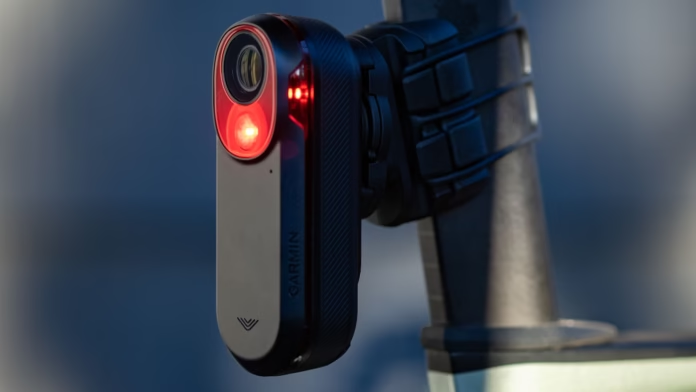
A normal rear light helps drivers see you. A radar rear light tries to do something more ambitious: it helps you know what is coming from behind before it reaches you. For road cyclists, commuters, gravel riders and winter trainers, that difference can change how a ride feels, especially on fast lanes, exposed roads and routes where traffic appears suddenly.
The question is whether a radar rear light is worth the upgrade over a good, normal rear light. The short answer is yes for many riders, but not everyone. If you ride solo on shared roads, train through winter or often find yourself surprised by fast-approaching traffic, radar can feel like one of the most useful cycling technology upgrades available. If you mainly ride traffic-free routes, short urban trips or group rides, a high-quality normal rear light may still be the smarter buy.
Check radar rear lights and cycling rear lights on Amazon UK
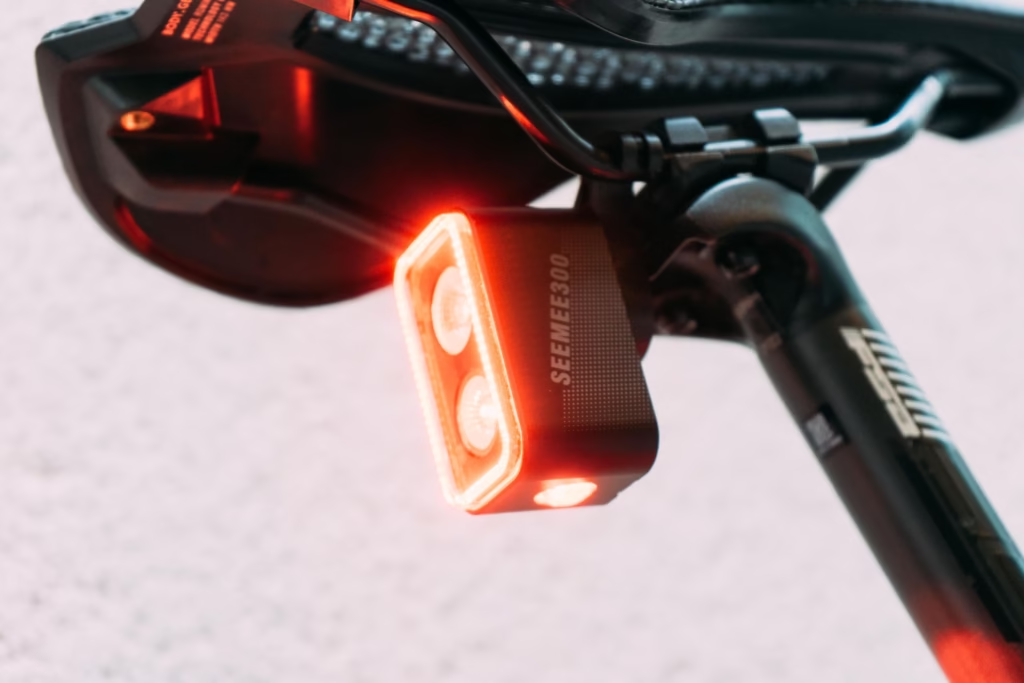
Radar rear light vs normal rear light
A normal rear light is a visibility tool. Its job is to make you easier to see from behind and, depending on the design, from the sides. Brightness, beam pattern, flash mode, mounting height, battery life and weather resistance are the key features.
A radar rear light combines that rear light function with a radar sensor. It detects vehicles approaching from behind and sends alerts to a compatible bike computer, smartwatch or phone app. The rider sees vehicles appear on the screen, usually as dots moving up the side of the display, with faster or closer vehicles triggering more urgent warnings.
That changes the purpose of the product. A normal rear light is mostly about being seen. A radar rear light is about being seen and being informed. It does not replace looking over your shoulder, listening for traffic or riding defensively, but it adds another layer of awareness.
Quick verdict
Best for most solo road riders: radar rear light
Best for tight budgets: normal rear light
Best for commuting in dense traffic: bright normal rear light or radar light depending on route
Best for fast rural roads: radar rear light
Best for group rides: normal rear light, or radar in peloton mode
Best for winter training: radar rear light with strong battery life and IPX7 water resistance
Reasons to buy a radar rear light
- Early warning of vehicles approaching from behind
- Useful on fast rural lanes and exposed roads
- Can reduce surprise and improve ride confidence
- Helps identify multiple vehicles approaching together
- Pairs with Garmin, Wahoo, Hammerhead and other compatible head units
- Often combines radar with a strong rear light
- Especially valuable for solo riders and winter training
Reasons to stick with a normal rear light
- Much cheaper than most radar lights
- Usually smaller, simpler and lighter
- No head unit or phone pairing required
- Better value for short commutes and traffic-free routes
- Some normal rear lights are brighter than radar units
- Less charging and device management
- No risk of becoming over-reliant on alerts
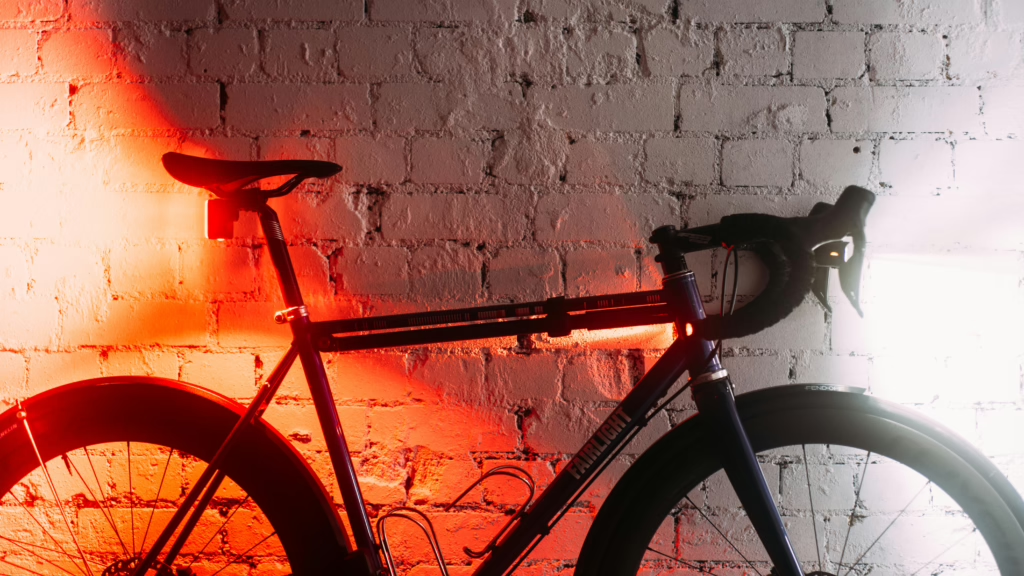
How a normal rear light helps cyclists
A normal rear light has one main job: visibility. A good one makes you stand out in daylight, low light and darkness, while giving drivers more time to recognise that there is a cyclist ahead.
For road cycling, the best rear lights usually combine a bright daytime flash mode, sensible night settings, side visibility and a secure mount. A light that is extremely bright but poorly aimed can be irritating or even counterproductive, especially in group rides. A light that is too weak can disappear in low sun, spray or busy traffic.
Normal rear lights also have a simplicity advantage. Charge the battery, attach the light, choose the mode and ride. There is no pairing, no app, no compatibility check and no screen alerts to manage. That makes them ideal for commuting, casual riding, short rides and riders who do not use a cycling computer.
The best normal rear lights can also be very powerful. Some offer 150, 200 or 300 lumens, broad side visibility and long runtimes. If the main goal is maximum visibility per pound, a normal rear light is still hard to beat.
How a radar rear light changes the ride
A radar rear light adds information. It detects vehicles approaching from behind and sends that information to a display. Most riders experience this as a vertical traffic strip on the side of their Garmin, Wahoo, Hammerhead or other compatible device.
The value becomes obvious on quiet roads. When there are long gaps between vehicles, radar gives an early cue that something is approaching. That can be useful before moving around potholes, riding two abreast, taking a narrower lane, descending quickly or preparing for a junction.
It also helps with multiple vehicles. A car may pass safely, but the second or third vehicle behind it can be the one that matters. Radar makes that queue more obvious. Instead of assuming the road is clear after one vehicle passes, you can see whether more traffic is still coming.
Radar does not make decisions for you. It cannot tell whether a driver will give enough room, whether the road ahead is safe, or whether it is time to move out. What it does is reduce uncertainty. For many riders, that is enough to make solo riding feel calmer.
Where radar is most useful
Radar is most useful on roads where traffic approaches at speed and where vehicles are spaced out enough for alerts to be meaningful. Rural lanes, B-roads, rolling training routes and long open roads are ideal examples.
On these roads, sound alone is not always enough. Wind noise, rough tarmac, rain, traffic echo and helmets or winter hats can all mask approaching vehicles. Radar gives another cue, and usually gives it earlier than hearing alone.
It is also valuable on winter training rides. Low light, wet roads and poor visibility all increase the importance of being seen and staying aware. A radar light with strong battery life and weather resistance can become one of the most useful pieces of winter safety kit.
For gravel riders, radar is useful on road links between off-road sections. It is less useful deep on trails, but many gravel rides still include fast roads, village lanes and exposed approaches where traffic awareness matters.
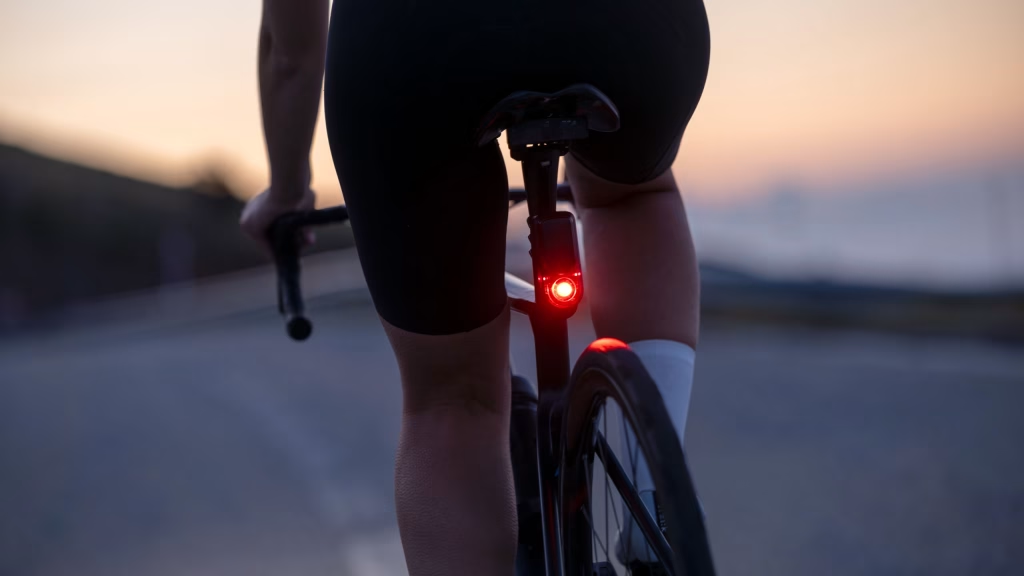
Where radar is less useful
Radar is less useful in dense urban traffic where vehicles are constantly behind you. If the head unit is always showing approaching vehicles, the information becomes less distinctive. In that environment, positioning, visibility, mirror checks and general traffic awareness matter more.
It can also be less useful in large group rides. Riders behind you, passing cyclists, support vehicles and closely packed traffic can create more alerts than you need. Some radar lights include peloton or low-light modes to reduce irritation, but radar is still most valuable for solo or small-group riding.
Traffic-free routes reduce the need too. If most riding is on cycle paths, closed roads, canal paths or off-road trails, a good normal rear light may be enough. Radar is only useful when there is traffic behind to detect.
It is also worth noting that radar can encourage bad habits if used carelessly. It should not replace looking. It should not be treated as proof that the road is clear. It is an aid, not a guarantee.
Safety: what radar can and cannot do
A radar rear light can improve awareness, but it cannot make riding safe by itself. It does not control drivers, widen roads or remove the need for basic roadcraft. The rider still needs to look behind before changing position, signal clearly, hold a sensible line and ride according to the conditions.
The best way to think about radar is as an early-warning system. It tells you that traffic is approaching, sometimes before you hear it. That extra time can help you prepare, but it does not tell you exactly how safely a driver will pass.
Normal rear lights have their own safety role. They make the rider visible, and visibility remains essential whether radar is present or not. A radar unit with a weak light may not be as useful in some situations as a powerful normal rear light with excellent side visibility.
That is why the best radar rear lights are the ones that do both jobs well. They detect traffic reliably and provide enough rear visibility for real road use.
Battery life and charging
Battery life is one of the biggest practical differences between a radar rear light and a normal rear light. Radar uses more power because the unit is running both a light and a detection system.
A normal rear light may last many hours or even dozens of hours in lower flash modes. Some radar lights also offer long runtimes in flash or radar-only modes, but brighter settings reduce battery life quickly. Garmin’s RTL515, for example, is rated for up to 16 hours in day flash mode, while Magene’s L508 lists up to 19 hours in radar-only mode and shorter runtimes when using brighter light modes. :contentReference[oaicite:1]{index=1}
For commuting, this means a radar light needs regular charging discipline. Forgetting to charge a normal rear light is annoying. Forgetting to charge a radar light can also remove the traffic-awareness feature you have become used to.
USB-C charging is now becoming more common, which is a welcome improvement. Older micro-USB lights feel dated alongside modern GPS computers, phones and front lights.
Visibility and light output
Do not assume that a radar rear light is automatically a better rear light. Some radar units have strong light performance, while others are more modest. A good normal rear light can be brighter, cheaper and more visible from the side than some radar lights.
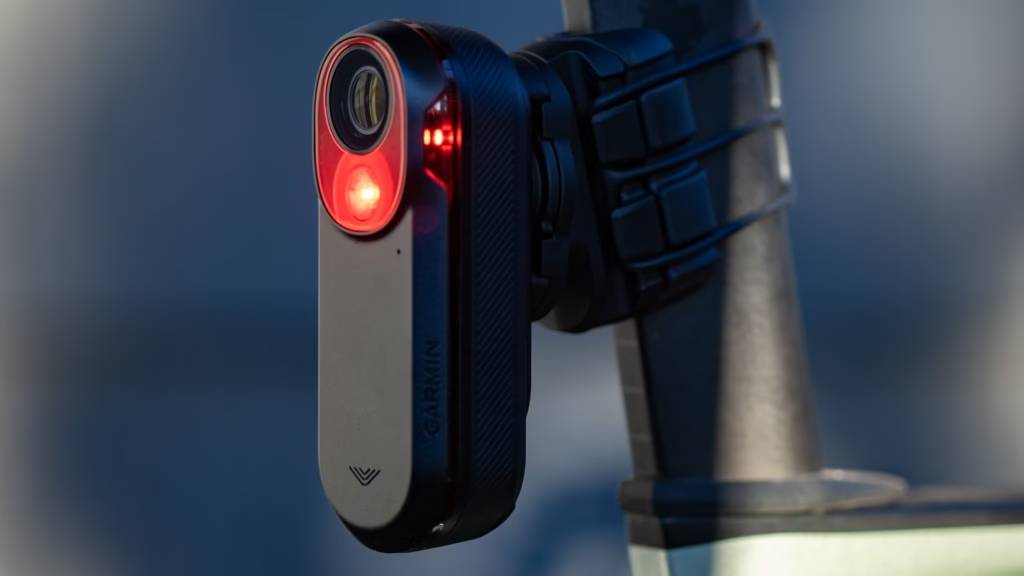
Garmin’s Varia RTL515 is known for broad compatibility and dependable radar performance, with daylight visibility up to one mile. Trek’s CarBack emphasises long radar range and high visibility, with claimed detection up to 240m. Magene’s L508 keeps the price lower at £99, but its maximum light output is more modest than many powerful standalone lights. :contentReference[oaicite:2]{index=2}
The right light mode also matters. A piercing daytime flash can be effective on open roads but unpleasant in a group. A steady night mode can be easier for drivers to judge in darkness. Side visibility is useful at junctions, roundabouts and angled roads.
For UK cyclists, water resistance matters too. A rear light sits directly in the line of road spray. IPX7-rated radar lights are well suited to wet-weather use, but the lens still needs regular cleaning if ridden through winter grime.
Compatibility with bike computers and apps
A normal rear light works alone. A radar rear light is more useful when paired with another device. That usually means a Garmin Edge, Wahoo Elemnt, Hammerhead Karoo, compatible watch or phone app.
Most radar rear lights broadcast over ANT+ and Bluetooth, but feature depth varies. The basic radar alert may work across several head units, while more advanced features can be limited to a brand’s own ecosystem or newer devices.
This matters when comparing premium radar lights. Garmin’s newer RearVue 820, for example, adds more advanced vehicle information, but some of those features are most useful with recent Garmin devices. Cheaper radar lights may deliver the basic alert without the same level of polish.
Before buying a radar light, check what you will use as the display. If you ride with no head unit and do not want your phone on the bars, a radar light becomes less convenient. If you already use a compatible Garmin, Wahoo or Hammerhead, the upgrade is much easier to justify.
Cost: radar rear light vs normal rear light
Price is the strongest argument for a normal rear light. A very good standard rear light can cost £30 to £70. A radar rear light often costs £100 to £260, depending on brand, features and light output.
The Magene L508 has helped lower the entry point at around £99, while Garmin’s RTL515 remains one of the established benchmarks. Premium options such as the Garmin Varia RearVue 820 sit much higher, around £259.99, but add more advanced radar and light features. :contentReference[oaicite:3]{index=3}
The value depends on use. If you ride on shared roads several times a week, radar can feel like good value because it affects every ride. If you only occasionally ride on roads with traffic, the same money may be better spent on a brighter normal rear light, better tyres, mudguards, overshoes or winter clothing.
A radar rear light is best viewed as an upgrade rather than a replacement for basic visibility thinking. It is worth paying for when the traffic-awareness benefit is genuinely useful to your riding.
Best radar rear lights to consider
The Garmin Varia RTL515 remains the obvious benchmark. It is widely supported, proven, easy to pair and still one of the safest choices for riders buying their first radar light. It is not the newest or cheapest option, but it remains dependable.
The Garmin Varia RearVue 820 is the premium option for riders already using recent Garmin devices. It adds more advanced radar information, wider visibility and newer features, but the price makes most sense if you can use the full Garmin ecosystem.
The Trek CarBack is a strong Garmin alternative, especially for riders who want long claimed detection range and a polished product from a mainstream bike brand.
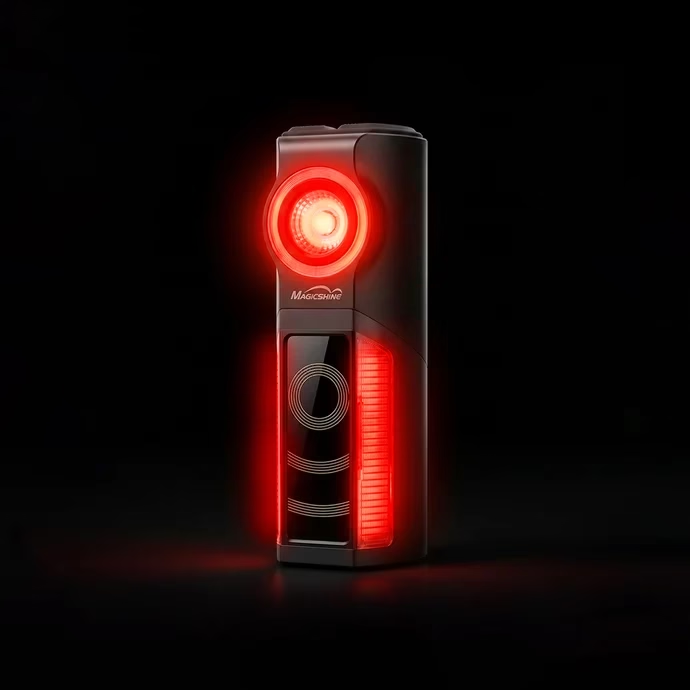
The Magene L508 is the value option. It brings radar down to a more accessible price and works well for riders who want the main benefit without spending premium money.
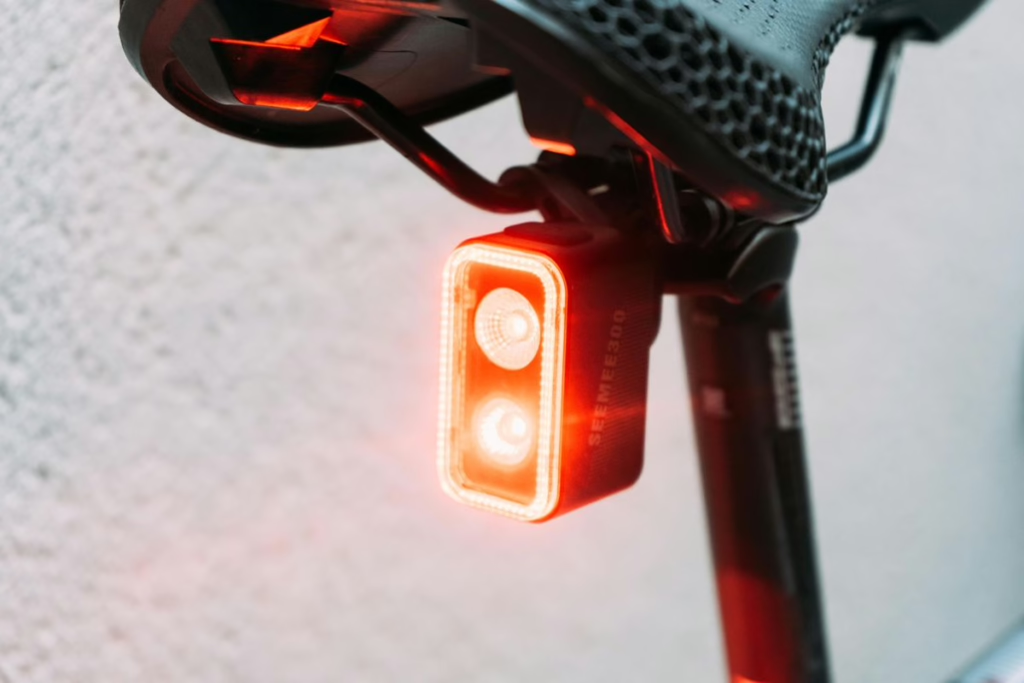
Lezyne’s Radar Drive 300 and newer radar-light options from other brands show how quickly this category is expanding. The important thing is not just brightness or price, but radar reliability. A radar light is only useful if the rider trusts the alerts.
Check radar rear lights for cycling on Amazon UK
Best normal rear lights to consider
A good normal rear light still makes sense for many riders. Look for strong daylight visibility, broad side visibility, secure mounting, sensible flash modes, waterproofing and enough runtime for your longest rides.
Lezyne, Exposure, Cateye, Knog, Moon, Ravemen, Trek and Bontrager all make strong rear lights across different price points. A powerful normal rear light can be the better choice if you ride mainly in traffic, do not use a cycling computer, or want maximum visibility for less money.
For group rides, a normal rear light with a low steady or group mode can be more considerate than an aggressive flash. For commuting, a light with excellent side visibility is especially important because traffic often approaches from angles rather than directly behind.
The best normal rear light is not necessarily the brightest. It is the one that is visible, well aimed, reliable, easy to charge and appropriate for the conditions you ride in.
Who should upgrade to a radar rear light?
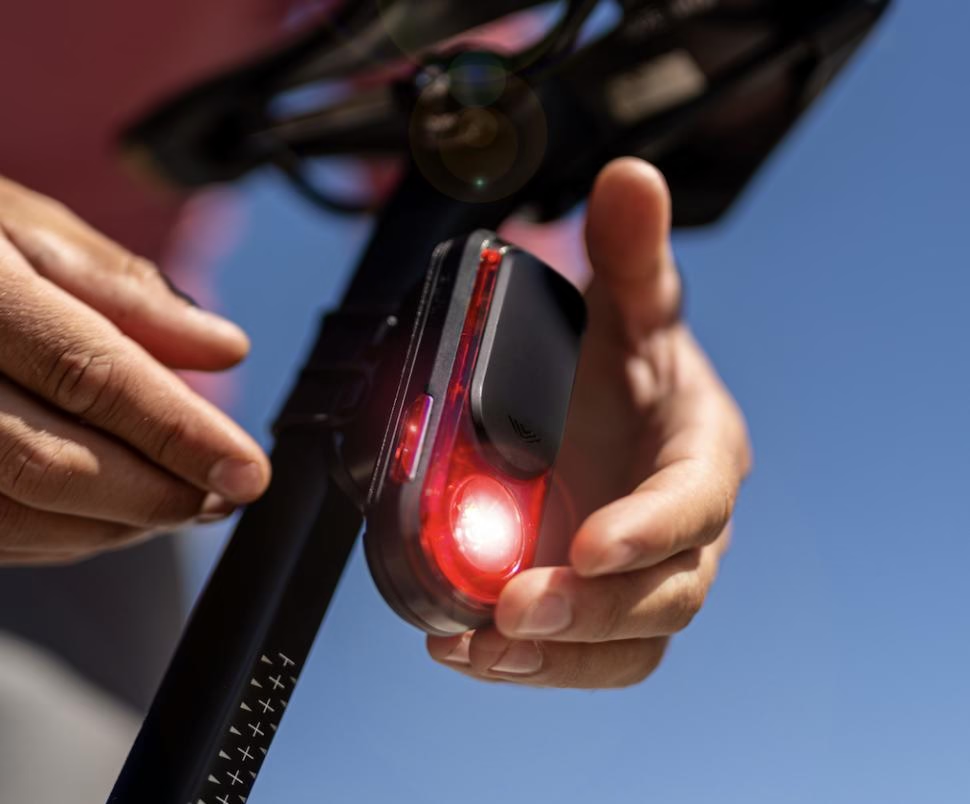
A radar rear light is worth it if you regularly ride solo on open roads. It is also worth it if you train through winter, ride fast rural routes, commute on roads with fast traffic, or often feel unsettled by vehicles approaching from behind.
It is especially useful for riders who already use a GPS computer. If a Garmin, Wahoo or Hammerhead is already on the bars, radar becomes a natural extension of the cockpit rather than another awkward device.
Riders who do long endurance rides, audax events, road links between gravel sections or early-morning winter training will probably get strong value from radar. The longer the ride and the more traffic exposure, the more useful the information becomes.
A normal rear light is enough if your riding is short, urban, traffic-free or budget-limited. It is also enough if you do not want another connected device and simply need to be seen clearly.
Radar rear light vs normal rear light for different riders
Solo road cyclist: radar rear light
Club rider: radar rear light for solo training, normal rear light for group rides unless using peloton mode
Commuter: depends on route, radar for fast roads, bright normal light for dense urban riding
Gravel rider: radar rear light for road sections, normal rear light for mostly off-road routes
Racer: normal rear light for training, radar useful on solo rides, usually irrelevant in races
Budget-conscious rider: high-quality normal rear light first
Tech-focused rider: radar rear light
Traffic-free path rider: normal rear light


Common mistakes when buying a rear light
The first mistake is buying only on lumen output. Brightness matters, but beam pattern, side visibility and mode choice are just as important.
The second mistake is mounting the light too low or pointing it badly. A powerful light aimed at the ground is wasted. A light aimed directly into a following rider’s eyes is irritating.
The third mistake is assuming radar removes the need to look. It does not. Radar is an extra warning system, not a substitute for road awareness.
The fourth mistake is ignoring battery life. A light that cannot last the full ride in the mode you actually use is the wrong light.
The fifth mistake is buying a radar light without checking compatibility. Make sure it works properly with your bike computer, watch or phone setup before spending the money.
Verdict
A radar rear light is worth the upgrade for many road cyclists, especially those who ride solo on shared roads. It adds information that a normal rear light cannot provide, and once you become used to early vehicle alerts, it can be difficult to go back.
That does not make normal rear lights obsolete. A good standard rear light is cheaper, simpler and often brighter. For short commutes, traffic-free routes, group rides and riders on tighter budgets, it remains the sensible starting point.
The best answer for frequent road riders is often radar plus good lighting habits. Choose a radar unit with reliable detection, decent light output, suitable battery life and proper compatibility with your head unit. Keep it clean, mount it correctly and still ride as though no device can see everything.
The single biggest reason to buy a radar rear light is early awareness of approaching traffic. The single biggest reason to stick with a normal rear light is value. If your rides regularly put you on fast shared roads, radar is one of the few cycling tech upgrades that can change the feel of almost every ride.

