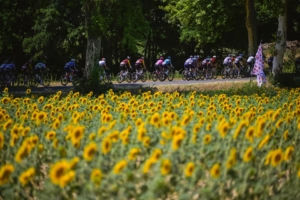
La Vuelta Femenina 2026 continues on Monday, 4th May with a second Galician stage that looks straightforward only at first glance. Stage 2 takes the peloton from Lobios to San Cibrao das Viñas over 109.8km, with no categorised climbs but very little flat road.
That creates a different kind of test from the opening day. Stage 1 had obvious points of pressure, including two category 3 climbs and the uphill finish in Salvaterra de Miño. Stage 2 is more subtle. The route rises and falls almost constantly, with winding roads and little chance for the bunch to settle into a steady rhythm. It is not mountainous, but it could still be wearing.
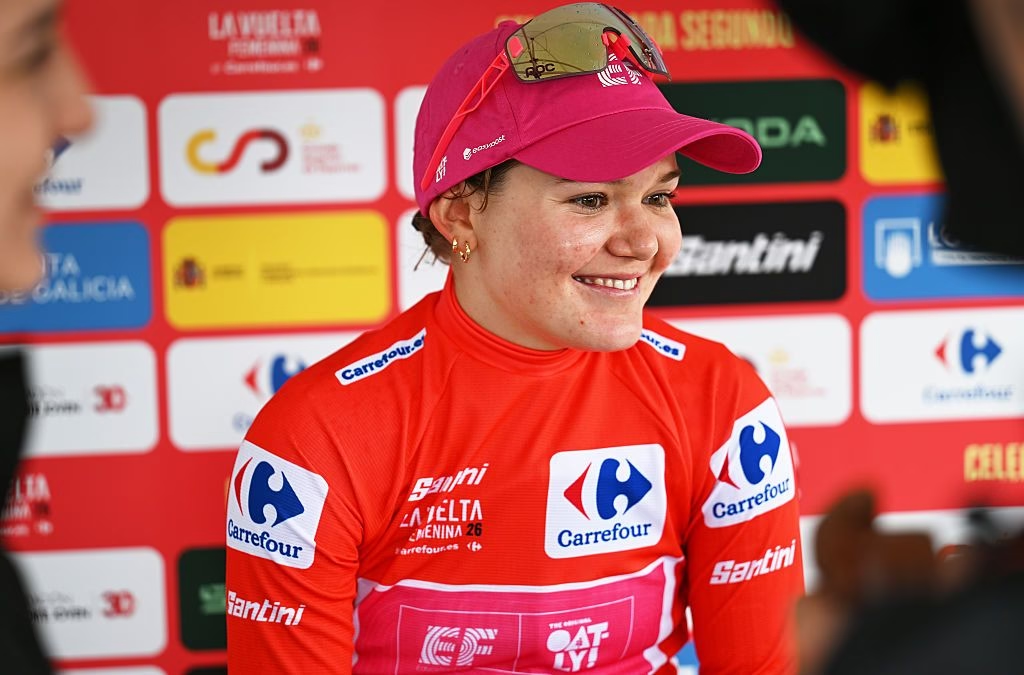
Noemi Rüegg begins the stage in the red jersey after her powerful uphill sprint victory on Stage 1. EF Education-Oatly now have the first leader’s jersey of the race, while SD Worx-Protime and FDJ-Suez both showed enough on the opening day to suggest they will be central again if the race comes down to a reduced finish.
The other major change is the absence of Marianne Vos. Team Visma | Lease a Bike Women confirmed after Stage 1 that she had suffered a broken collarbone in her late crash, ending her race after just one day. That removes one of the riders who would have been a natural favourite for this kind of rolling, technical stage, and it also changes the tactical balance for a team that would otherwise have had one of the safest finishing options in the bunch.
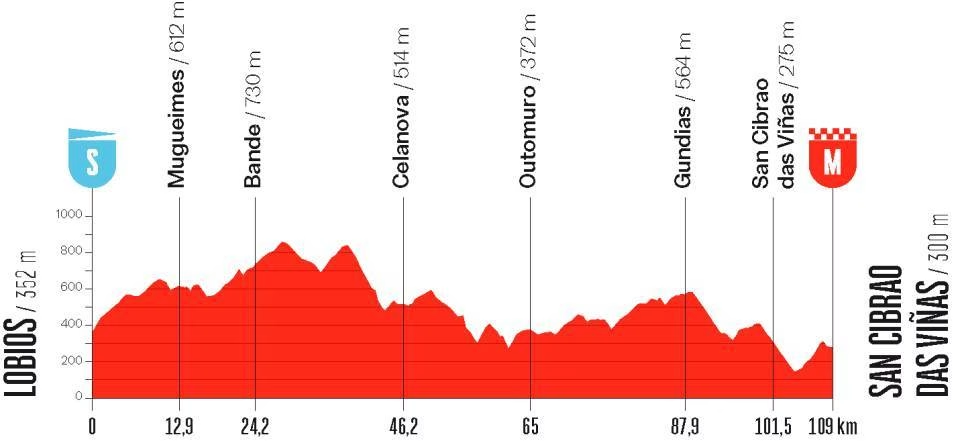
La Vuelta Femenina 2026 stage 2 route
Stage 2 runs from Lobios to San Cibrao das Viñas and stays within Galicia, keeping the race on terrain that is rarely simple even when the profile lacks major climbs. The official stage description makes the key point clearly: there are no point-incurring climbs, but the riders will be going up and down throughout the stage.
That makes it a route for strength, positioning and patience. The peloton will not have one obvious climb where the race must explode, but repeated changes in gradient can still remove weaker sprinters, blunt lead-out trains and make late attacks more dangerous.
The race should also be shaped by the intermediate sprint after 80km, which comes with just under 30km remaining. From there, the route continues to twist and rise before the finish in San Cibrao das Viñas. The final hour is likely to be the most important section of the stage, especially if the bunch has already been reduced by the rolling terrain.
For a broader look at the week ahead, our La Vuelta Femenina 2026 full route guide breaks down how these early Galician stages fit into a race that becomes much more mountainous later in the week.
What time does stage 2 start?
Stage 2 has its neutralised start at 2:00pm local time, with the official race start at 2:17pm local time. That is 1:00pm and 1:17pm in the UK.
The finish is expected between 4:05pm and 4:25pm local time, depending on the speed of the race. For UK viewers, that means an expected finish window of 3:05pm to 3:25pm.
Key stage details:
- Date: Monday, 4th May
- Route: Lobios to San Cibrao das Viñas
- Distance: 109.8km
- Stage type: Hilly
- Categorised climbs: None
- Neutralised start: 1:00pm UK time
- Official start: 1:17pm UK time
- Expected finish: between 3:05pm and 3:25pm UK time
- Race leader: Noemi Rüegg
UK viewers can follow the race through TNT Sports and HBO Max, with more detail available in our guide to watching La Vuelta Femenina 2026 in the UK.
-
 Photo Credit: A.S.O./Thomas Maheux
Why stage 2 could be harder than it looks
A stage does not need categorised climbs to create problems. Stage 2 is a good example, because the route gives teams very few long, flat sections where they can relax, reorganise or bring back attacks without cost.
For EF Education-Oatly, the question is how much responsibility they want to take with Rüegg in red. They have every reason to defend the jersey, but spending heavily on Stage 2 would come with a price. This is still only the second day of the race, and the toughest terrain is still several stages away.
SD Worx-Protime have a different kind of opportunity. Without Lorena Wiebes in the race, their sprint structure is not built around a pure fast finish, but Lotte Kopecky remains a major threat on this kind of profile. She was 2nd on Stage 1 and is well suited to a reduced group where the day has been made selective by terrain rather than by a single decisive climb.
FDJ-Suez also have reason to stay involved. Franziska Koch was 3rd on the opening stage and showed that she can be a serious option in these early finishes. The team can also use the rolling roads to keep pressure on, especially if the race becomes difficult to organise behind a dangerous move.
The main GC riders should be watching carefully rather than committing too much. This is not the day that should decide the overall battle, but the race can still punish hesitation. With harder stages still to come, including the decisive mountain block, the contenders covered in our La Vuelta Femenina 2026 contenders preview will want to stay out of trouble and avoid losing time through positioning rather than legs.
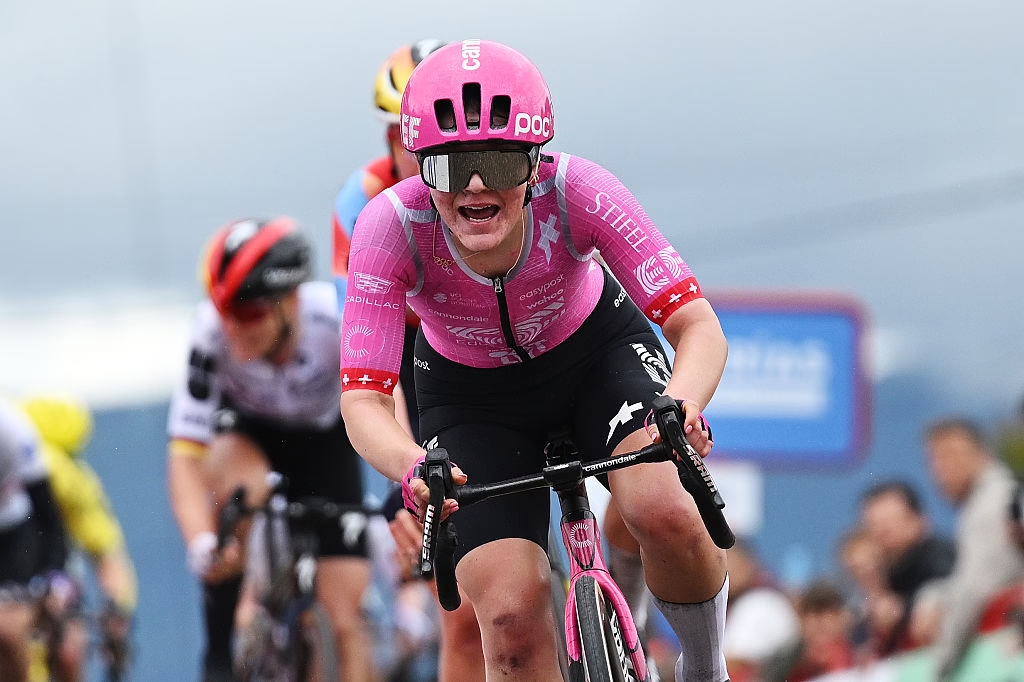 Photo Credit: Getty
Contenders to watch on stage 2
Noemi Rüegg has the confidence and the jersey after Stage 1, and that immediately makes her one of the riders to watch again. Stage 2 is not identical to the opener, but a reduced sprint from a tired group would still suit her well. The only complication is tactical rather than physical: defending the lead can sometimes make a team more reactive.
Lotte Kopecky looks like the most obvious favourite if the race comes back together in a reduced group. The rolling terrain should not trouble her, and the absence of a pure SD Worx-Protime sprint train built around Wiebes may actually simplify the team’s approach. If Kopecky is protected into the final kilometres, she has both the strength and speed for this kind of finish.
Franziska Koch deserves more than a passing mention after her Stage 1 podium. She handled the opening day well, and another awkward Galician stage gives her a similar route to contention. FDJ-Suez do not need to dominate the race from distance. They need to keep her close enough to the front when the bunch begins to fray.
Arlenis Sierra could be an interesting option for Movistar. The team’s wider GC picture is built around Liane Lippert, but Sierra has the speed and durability for a stage where the pure sprinters may not have a clean run. On a rolling day in Spain, Movistar should have a reason to stay close to the head of the race.
Letizia Paternoster also fits the profile if the finish comes from a reduced peloton. She is fast enough to take advantage of a sprint but robust enough to stay in contention when the route is not flat. Her chances improve if the day becomes controlled but not completely settled.
Pauline Ferrand-Prévot is less likely to wait for a sprint, but her presence changes how others race. With Vos out, Team Visma | Lease a Bike Women lose their clearest fast-finishing card, which may push them towards a more aggressive approach through Ferrand-Prévot, Sarah van Dam or another rider in the right move.

Tactical outlook
Stage 2 should be a day of control under pressure rather than a full GC battle. The major mountain stages are still to come, so the overall contenders are unlikely to spend too much energy unless the race situation demands it. The risk is that positioning, wind, wet roads or repeated changes in pace create gaps without anyone needing to make a planned long-range attack.
The breakaway has a chance if the right combination goes clear. EF Education-Oatly will not want to give away the red jersey cheaply, but they may not want to carry the entire chase either. If SD Worx-Protime, FDJ-Suez, Movistar or Team Visma | Lease a Bike Women place riders in a dangerous group, the stage could become tactically awkward very quickly.
If the bunch keeps control, the final 30km should be tense. The intermediate sprint comes with just under 30km remaining, and from there the route never gives the peloton much room to reset. A reduced sprint remains the most likely outcome, but it may be a messy one rather than a clean lead-out contest.
Prediction
Stage 2 looks made for a reduced sprint from a worn-down group. The terrain is not hard enough to favour the pure climbers, but it is awkward enough to make the finish more selective than a standard bunch sprint.
Kopecky is the strongest pick. She was already close on Stage 1, the rolling roads suit her, and SD Worx-Protime can shape the race around her without needing to protect a pure sprinter. Rüegg is an obvious threat again in red, while Koch, Sierra and Paternoster all have realistic routes to the podium if the final kilometres become fractured.
A breakaway would not be a surprise, especially after Vos’ withdrawal changes the sprint balance, but the likelier outcome is a reduced peloton arriving in San Cibrao das Viñas with Kopecky well placed to finish the job.