

Tour de Suisse Women is still a young race in its modern form, but it already carries more weight than its short history suggests. It has grown quickly from a revived national stage race into one of the most important events on the Women’s WorldTour calendar, sitting in a June slot that gives it real significance before the summer’s biggest stage races.
The race has not existed in one neat, continuous line. There was an earlier Tour de Suisse Féminin in 2001, won by Kimberly Baldwin, but the modern Tour de Suisse Women began in 2021 after a long gap. Since then, it has built its identity around the qualities that make Swiss racing so distinctive: climbing, technical roads, compact stages, time gaps created through repeated pressure rather than one single climb, and a route that rarely gives riders much room to hide.
By 2026, the race has taken another step. The women’s and men’s Tour de Suisse now run across the same five-day window, using the same host towns and largely parallel route designs. That change gives the women’s race a stronger shared platform within Swiss cycling, while keeping its own sporting identity intact.
A modern race with an older name
The Tour de Suisse name has long been associated with men’s cycling, but the women’s race has had a more fragmented journey. The 2001 Tour de Suisse Féminin stands as an early edition, but there was then a long absence before the race returned in its modern form.
That return in 2021 mattered. Women’s cycling was changing quickly, with more stage races, stronger WorldTour structures and a growing expectation that major cycling nations should offer serious women’s events alongside their established men’s races. Switzerland had the terrain, the history and the cycling culture to make the race work. What it needed was a modern platform.
The revived Tour de Suisse Women gave Swiss racing exactly that. It arrived as a compact but demanding stage race, one that could test climbers, all-rounders and time triallists without needing to copy the exact shape of the men’s event.
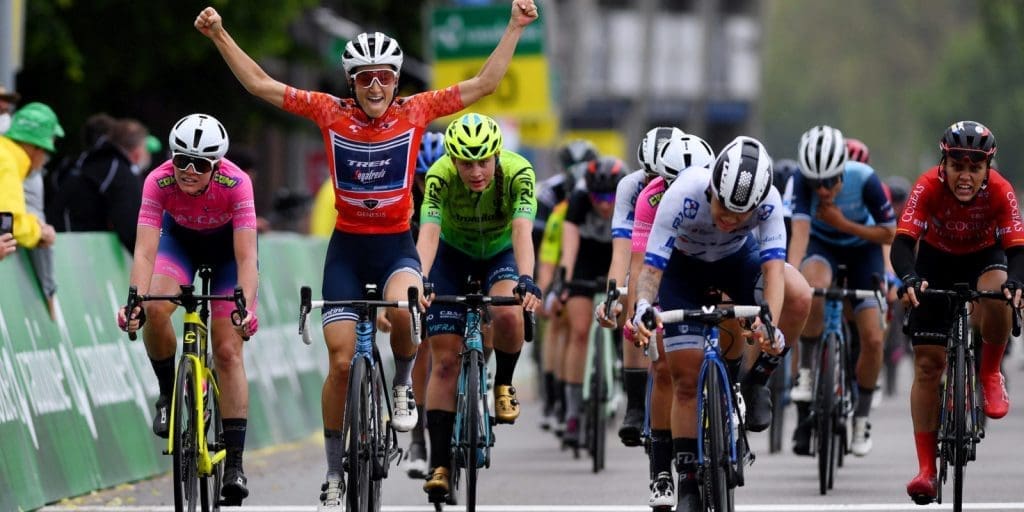 Photo Credit: Getty
Lizzie Deignan wins the 2021 revival
Lizzie Deignan won the first modern edition in 2021, giving the race immediate credibility. Deignan was already one of the most respected riders in the women’s peloton, with major Classics, world title pedigree and the ability to handle selective stage-race terrain.
Her victory set the tone for what the Tour de Suisse Women could become. This was not a race designed only for pure climbers, nor was it a sprinters’ event with a few hills attached. It rewarded complete racing: positioning, strength on rolling terrain, tactical discipline and the ability to stay calm across multiple days.
The 2021 edition also helped re-establish the race in the calendar. It showed that a women’s Tour de Suisse could have a real sporting purpose, not just a symbolic one.
Lucinda Brand and the all-rounder profile
Lucinda Brand won in 2022, adding another layer to the race’s early identity. Brand’s victory made sense because the Tour de Suisse Women rewards riders who can handle varied terrain rather than one-dimensional specialists.
Brand is not only a road rider with climbing strength. She has the cyclocross background, technical ability and race sharpness that suit difficult Swiss roads. Her win reinforced the idea that the race was not simply about waiting for the longest climb. It was about absorbing pressure, managing transitions and racing smartly across changing terrain.
That all-rounder quality has remained part of the Tour de Suisse Women’s DNA. The race tends to favour riders who can climb, time trial, descend, position well and still make good decisions when the road becomes chaotic.
Marlen Reusser gives Switzerland a home champion
Marlen Reusser’s 2023 victory gave the race something especially valuable: a Swiss winner. For any national tour, a home champion changes the emotional texture of the event. It connects the race more clearly to the fans, the roads and the wider cycling identity of the country.
Reusser was also a fitting winner because she reflects the modern Tour de Suisse Women so well. She is not a pure climber in the traditional sense, but she can change races through sustained power, time trial strength and the ability to make hard terrain feel harder for everyone else.
Her victory showed how broad the route demands could be. A rider did not need to be the lightest climber to win. They needed to be strong across all the stress points of a Swiss stage race.

Demi Vollering raises the level in 2024
Demi Vollering won the 2024 edition, and that result lifted the race’s status again. Vollering has been the benchmark stage racer of her generation, especially on hilly and mountainous terrain, so her victory placed Tour de Suisse Women firmly inside the top tier of preparation and performance races.
A rider like Vollering winning matters because it confirms the race is hard enough to attract and reward the very best. She brought climbing authority, GC consistency and the ability to finish off selective stages. In that sense, her win felt like a natural progression for an event that had already been building quickly since its revival.
By 2024, Tour de Suisse Women was no longer just a welcome addition to the calendar. It had become a race that could sit comfortably among the most important women’s stage races of the season, alongside established reference points such as the Giro d’Italia Women and Tour de France Femmes.
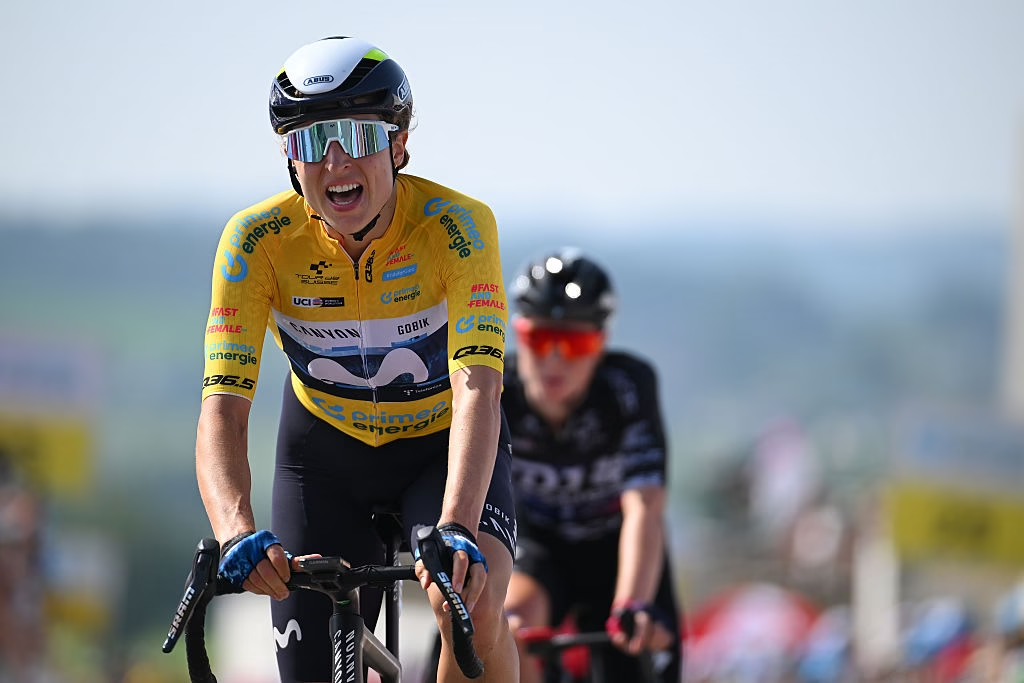
Reusser returns in 2025
Reusser’s second overall victory in 2025 gave the race another important storyline. Riding for Movistar Team, she won the opening stage, held the race lead, then sealed overall victory with another solo stage win on the final day. Demi Vollering finished 2nd overall, with Kasia Niewiadoma-Phinney 3rd.
That result was significant for two reasons. First, it confirmed Reusser as the defining rider of the race’s early modern history, with two overall victories in three editions. Second, it showed again how Tour de Suisse Women rewards more than one type of strength. Reusser used time trial-style power, climbing resilience and tactical timing rather than relying on one explosive mountain attack.
The 2025 edition also underlined the race’s growing depth. Vollering and Niewiadoma-Phinney on the final podium gave it a proper top-level feel, while the jersey competitions highlighted the range of riders the route can reward.
The race finds its place in the Women’s WorldTour
Tour de Suisse Women has become a Women’s WorldTour race, which gives it a clear place among the elite events in the sport. The 2026 edition is listed as a five-day UCI Women’s WorldTour stage race from the 17th to the 21st June.
That status matters because it brings stronger fields, more attention and more consistent sporting pressure. WorldTour races are not simply bigger names on a calendar. They shape team priorities. They influence rider schedules. They affect how teams build form before the summer’s biggest goals.
The race’s June position is particularly useful. It sits at the point in the season when riders are moving from spring Classics form towards summer stage-race targets. For some, it is a major objective in itself. For others, it is a final check before the Giro d’Italia Women or the Tour de France Femmes.
Why Switzerland gives the race its identity
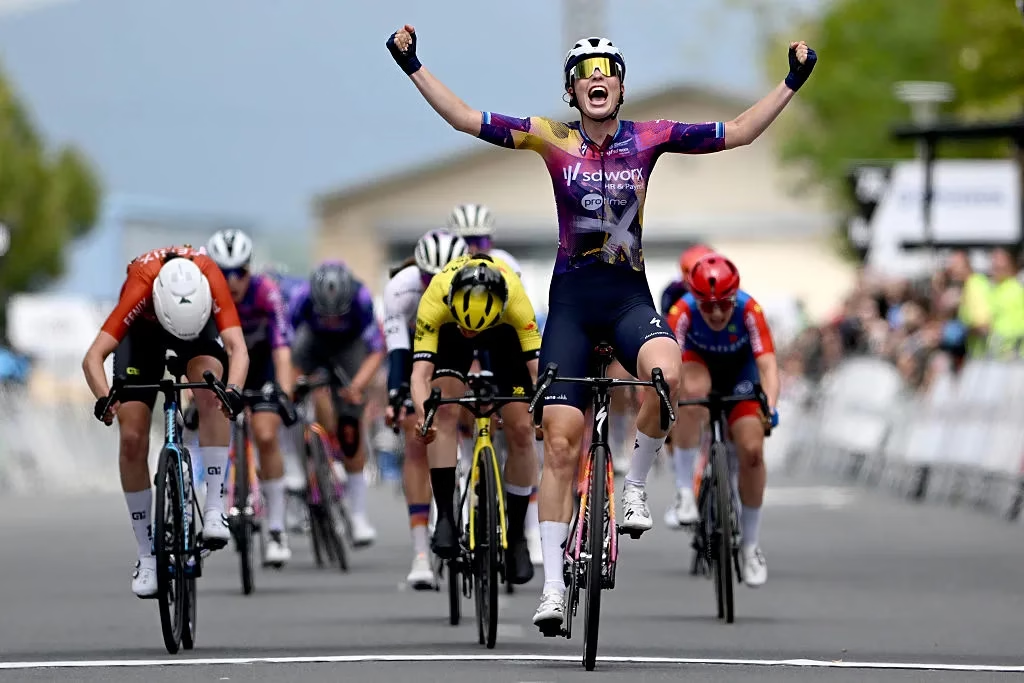
The route is central to why Tour de Suisse Women works. Switzerland gives organisers natural stage-race terrain: rolling roads, technical descents, sharp climbs, valley roads, lakeside sections and mountains close enough to change the race quickly.
That means the race does not need to be extremely long to be selective. Even relatively short stages can become difficult because the terrain rarely allows a completely settled rhythm. A climb may not be huge, but it can come at the wrong time. A descent may not decide the race, but it can stretch the field. A rolling circuit may not look severe on paper, but it can make control expensive.
This is one of the reasons the race has produced such varied winners. Deignan, Brand, Reusser and Vollering are not identical riders, but all can handle difficult terrain, recover across consecutive days and make decisions under pressure.
The 2026 format marks a new chapter
The 2026 edition marks one of the biggest structural changes in the race’s short modern history. The women’s and men’s races now share the same five-day period, with the women’s route using the same host towns and broadly parallel design. The women’s race starts in Sondrio and continues through Locarno, Bad Ragaz, Aarburg and Villars-sur-Ollon.
That gives the Tour de Suisse Women a stronger event identity. It is no longer positioned as something that sits separately around the men’s race. It is part of a combined Swiss cycling week, with both races presented as connected headline events.
The 2026 women’s route still has its own sporting rhythm. Stage 1 in Sondrio is hilly, stage 2 in Locarno again suits attacking riders, stage 3 in Bad Ragaz offers the closest thing to a sprint chance, stage 4 in Aarburg brings an individual time trial, and stage 5 in Villars-sur-Ollon provides the mountain finale. That is a compact but complete stage-race test.
Why Tour de Suisse Women matters
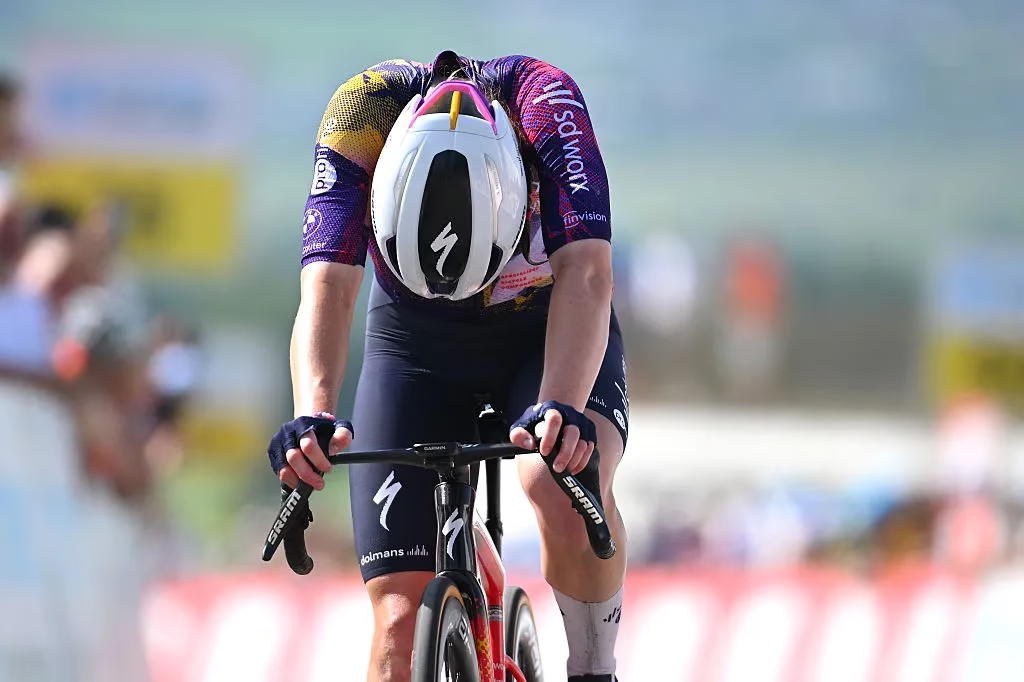
Tour de Suisse Women matters because it has quickly become one of the races that helps define the middle of the women’s season. It sits between the spring Classics and the biggest summer stage races, giving riders a chance to prove form on demanding terrain without the length of a Grand Tour.
For climbers, it is a chance to test themselves on real mountain and hilly terrain. For time triallists, it offers an important opportunity to gain time against GC riders. For all-rounders, it is one of the best races on the calendar because the route rarely favours one narrow skill set. For young riders, it can be a proving ground against the very best.
It also gives Swiss cycling a major women’s event that feels properly connected to the country’s racing culture. The Tour de Suisse name carries history, and the women’s race is now building its own version of that story.
The defining riders so far
Marlen Reusser is the defining rider of the modern Tour de Suisse Women so far. Her wins in 2023 and 2025 give her a special place in the race’s history, and the fact she achieved them as a Swiss rider makes that link even stronger.
Demi Vollering also has a major place in the story. Her 2024 victory confirmed the race’s ability to attract and reward the best stage racers in the world. Lizzie Deignan and Lucinda Brand, the first two modern winners, helped establish the race’s all-rounder identity, showing that it could be won by riders with tactical intelligence and versatility as much as pure climbing strength.
Those winners have given the race a strong early honours list. It is short, but it is already meaningful.

Tour de Suisse Women winners
The modern winners of Tour de Suisse Women are:
- 2021 – Lizzie Deignan
- 2022 – Lucinda Brand
- 2023 – Marlen Reusser
- 2024 – Demi Vollering
- 2025 – Marlen Reusser
There was also an earlier Tour de Suisse Féminin in 2001, won by Kimberly Baldwin, before the race disappeared for two decades and returned in its modern form in 2021.
The legacy still being built
Tour de Suisse Women is not an old race in the way that the Tour de France Femmes is linked to several decades of interrupted history, or the Giro d’Italia Women can look back across a much longer lineage. Its modern history is still being written.
That is part of what makes it interesting. The race is young enough to change quickly, but already established enough to matter. It has had home success through Reusser, global status through Vollering, and credibility through winners such as Deignan and Brand. It now has a strengthened 2026 format that connects it more closely to the wider Tour de Suisse platform.
The next step is consistency. If the race keeps attracting elite fields, keeps offering selective routes and keeps developing its shared identity with the men’s event without losing its own character, it can become one of the anchor races of the women’s stage-racing calendar.
Tour de Suisse Women has already moved beyond being a revived name. It is now a race with its own story, its own winners, and a growing place in the shape of the women’s season.

