
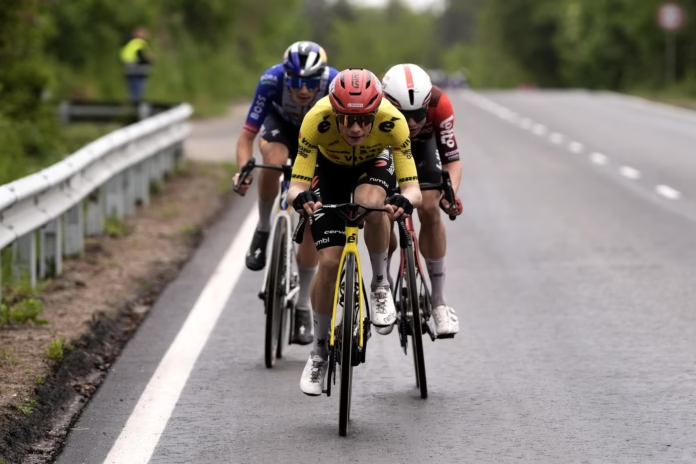
The Giro d’Italia 2026 reaches its first major summit finish on Friday, 15th May, with stage 7 taking the race from Formia to Blockhaus. After the chaos of stage 5 to Potenza and the sprint-style tension of stage 6 into Napoli, this is the day when the general classification should finally face a proper climbing examination.
Stage 7 is 246km long, with 4,600 metres of climbing, making it not just the hardest stage of the opening week, but one of the most demanding days of the entire race. The finale on Blockhaus gives the Giro its first true high-mountain test, and the distance before it makes the stage even more significant. Riders will not arrive at the final climb fresh. They will reach it after more than five hours of racing, repeated climbing and a gradual build through central Italy.
Afonso Eulálio starts the stage in the maglia rosa after taking the race lead on stage 5, where the breakaway gained more than seven minutes on the main favourites. That has changed the structure of the Giro. The established GC names, including Jonas Vingegaard, Egan Bernal, Thymen Arensman, Giulio Ciccone, Jai Hindley and Ben O’Connor, now have real time to take back. Blockhaus is the first obvious place to start.
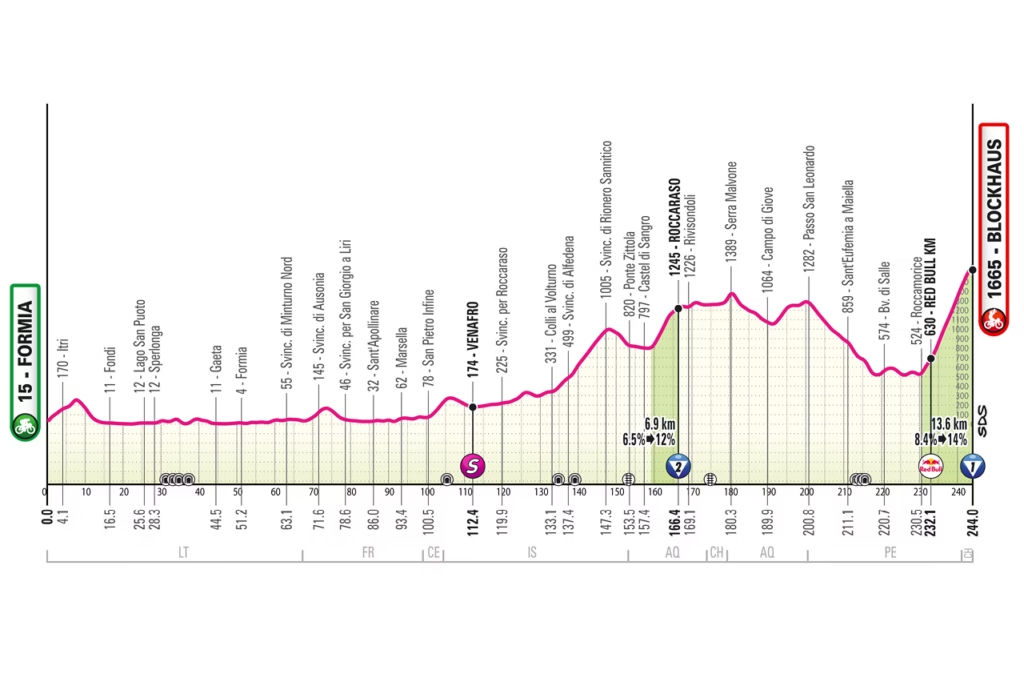
Giro d’Italia 2026 stage 7 route
Stage 7 runs from Formia to Blockhaus over 246km, with 4,600 metres of altitude gain. That distance alone makes it a major test. Add in the climbing load and the summit finish, and this becomes the first stage where the Giro’s overall contenders can no longer hide behind caution.
The route begins on the Tyrrhenian side of Italy before heading inland. The opening kilometres should allow a breakaway to form, but the fight to get into the move could be fierce. This is a day where strong climbers outside the immediate GC picture will see a major opportunity, especially if the favourites’ teams decide not to control from the start.
The middle of the stage steadily increases the pressure. There is no single decisive climb before the finale, but the accumulated fatigue matters. Long stages like this often look manageable until the final two hours, when riders who have been slightly short of form suddenly begin to pay for the distance.
The final climb to Blockhaus is the obvious centrepiece. It is one of the great Abruzzo climbs, steep, exposed in places, and long enough to create real GC gaps if the favourites race it properly. This is not a stage where a rider can rely on positioning alone. At some point, the legs have to answer.
What time does Giro d’Italia stage 7 start?
Stage 7 starts early because of the distance, with the peloton rolling out from Formia for one of the longest days of the 2026 Giro.
The exact timing may vary by the official race schedule, but this should be an all-day stage for viewers, with the decisive action likely to come late in the afternoon on the final climb to Blockhaus.
Key stage details:
- Date: Friday, 15th May
- Route: Formia to Blockhaus
- Distance: 246km
- Altitude gain: 4,600 metres
- Main difficulty: summit finish on Blockhaus
- Likely outcome: GC battle or elite climbing breakaway
- Current race leader: Afonso Eulálio
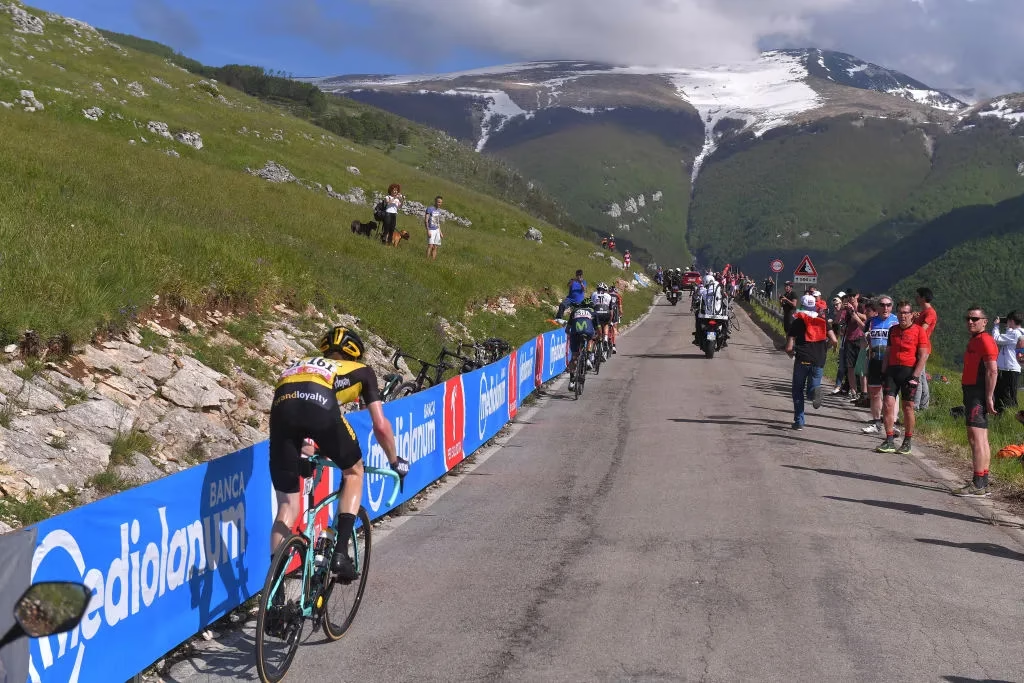
Why Blockhaus matters
Blockhaus is a climb with proper Giro weight. It is not simply a hard finish placed early in the race to create a bit of movement. It is a climb that can expose who is genuinely ready to fight for pink.
The gradients are severe enough to make drafting less important, especially once the strongest teams lift the pace. The climb also comes at the end of a brutally long stage, which changes the equation. A rider may be able to survive a hard climb after 140km. Doing the same after 246km and 4,600 metres of climbing is very different.
That makes Blockhaus a test of more than climbing numbers. It tests recovery after the opening week, team support, nutrition, patience and the ability to stay calm when the race finally becomes honest. Riders who looked comfortable on the shorter hilly stages may discover that a long summit finish asks a different question.
It is also the first point where the main favourites may feel they have to race. After stage 5, the GC gaps are larger than expected. Waiting too long could become dangerous.
How stage 5 changed the GC before Blockhaus
Stage 5 to Potenza transformed the Giro. Afonso Eulálio moved into the maglia rosa after the breakaway gained more than seven minutes on the main favourites, while Igor Arrieta, Christian Scaroni, Andrea Raccagni Noviero and Johannes Kulset all jumped into the top five overall.
That matters enormously for stage 7. The race no longer arrives at Blockhaus with all the pre-race favourites separated by a handful of seconds. Instead, the traditional GC contenders are chasing riders who now have meaningful time advantages.
Eulálio leads by 2:51 over Arrieta, with Scaroni at 3:34 and Raccagni Noviero at 3:39. Giulio Ciccone is 6th at 6:12, Jan Christen is 7th at 6:16, Egan Bernal is 9th at 6:16, and Thymen Arensman is 10th at 6:18. Jonas Vingegaard, Lennert van Eetvelt, Enric Mas, Jai Hindley, Ben O’Connor and Damiano Caruso are also in the same broader GC block, more than six minutes behind pink.
That creates a fascinating tension. Eulálio has enough of a lead that he does not need to panic, but he cannot afford a collapse. The favourites have enough ground to make up that they need to begin applying pressure, but they also know the Giro is not won on the first summit finish alone.
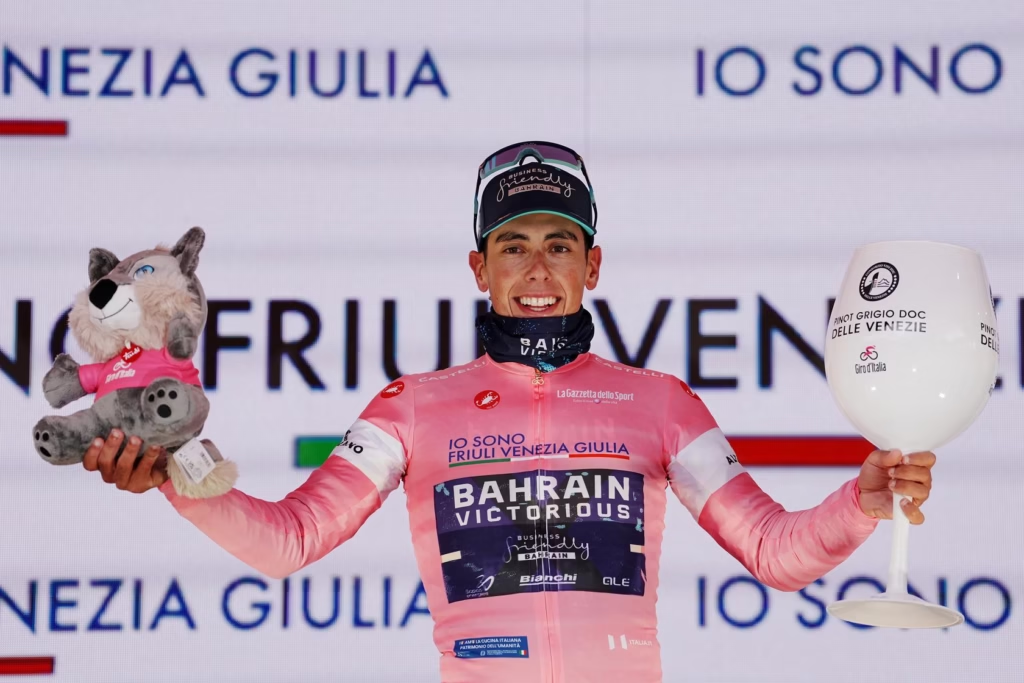 Photo Credit: RCS
Can Afonso Eulálio defend pink?
Eulálio’s lead is real, but Blockhaus will tell us far more about what it means. Stage 5 was a brilliant opportunity taken in brutal conditions. Stage 7 is a different kind of test. It is less about getting into the right move and more about whether he can climb with the riders who expected to fight for this Giro from the start.
His advantage gives Bahrain Victorious tactical flexibility. Eulálio can afford to lose time to some of the bigger names and still keep pink. That should allow him to ride defensively, pace his climb carefully and avoid trying to respond to every acceleration.
The risk is that Blockhaus can make losses escalate quickly. A rider who follows one attack too many can crack badly. A rider who rides too conservatively can find the gap growing with every kilometre. Bahrain’s job is to keep him calm, positioned and protected for as long as possible before the final climb becomes a rider-against-rider test.
If Eulálio limits his losses to a minute or two, his Giro position remains very strong. If he loses four or five minutes, the race resets almost immediately.
What will Jonas Vingegaard do?
Jonas Vingegaard has been quiet so far, but stage 7 is the first day where quiet may no longer be enough. Team Visma | Lease a Bike will know that Blockhaus is a chance to test everyone: Eulálio in pink, Arrieta and Scaroni ahead on GC, and the direct rivals in the main favourites’ group.
Vingegaard does not necessarily need to attack from far out. The stage is long enough that patience could be the better option. A hard team tempo on the lower slopes of Blockhaus, followed by one controlled acceleration near the steepest sections, may be enough to create the first serious gaps.
The question is whether Team Visma | Lease a Bike want to take responsibility this early. They could argue that Bahrain should defend pink and that other teams, such as Netcompany Ineos or Red Bull-BORA-hansgrohe, also need to work. But if Vingegaard is clearly the strongest rider, waiting too long would be a missed opportunity.
This is the first stage where he can move from hidden favourite to visible reference point.
Netcompany Ineos have numbers
Netcompany Ineos enter Blockhaus in a strong tactical position. Egan Bernal and Thymen Arensman are both well placed among the favourites, and that gives the team more than one way to race the final climb.
Bernal is the more emotionally compelling card, given his history as a Grand Tour winner and his ability on long climbs when he is close to his best. Blockhaus should suit him if the stage becomes a steady climbing test rather than a series of short accelerations.
Arensman is also well suited to a long, attritional day. He may not be the most explosive rider on the steepest ramps, but he can grind through difficult stages and move up when others fade. In a 246km stage, that durability can count for plenty.
The team’s choice is whether to follow or shape the race. If they use numbers aggressively before the final climb, they could isolate rivals. If they wait, they may still have two riders in the front group when others are already alone.
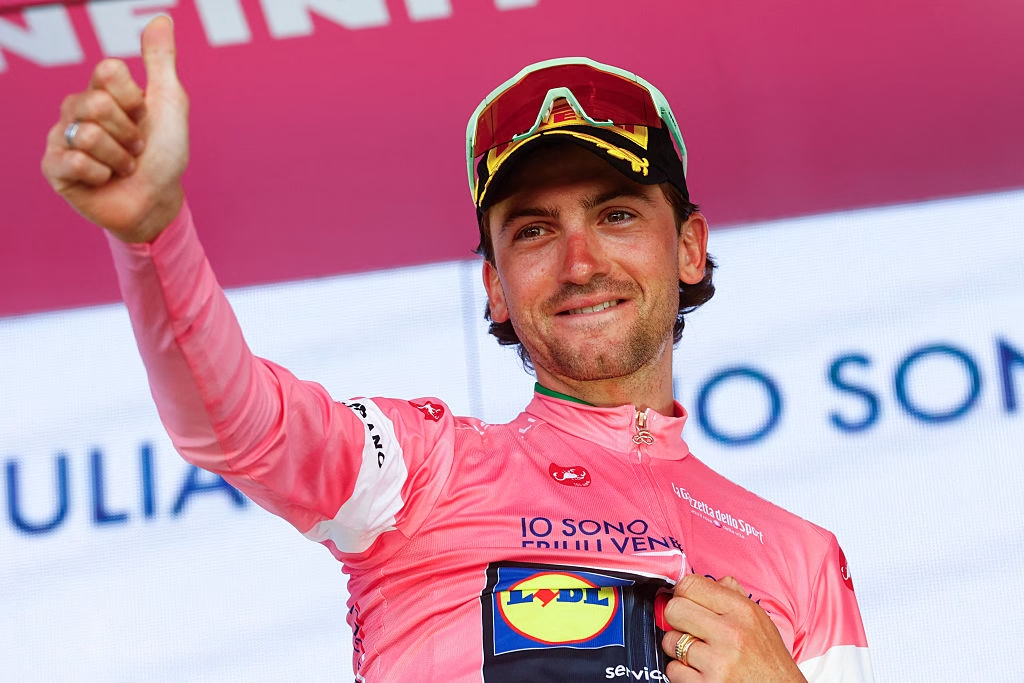 Photo Credit: AFP/Getty
Giulio Ciccone’s chance to respond
Ciccone lost the maglia rosa on stage 5, but he remains one of the most important riders in the race. He sits 6th overall, 6:12 behind Eulálio, and Blockhaus gives him a chance to turn the race back towards the original GC contenders.
The climb suits him, but the distance is the question. Ciccone is excellent on steep and punchy climbing terrain, and he can be dangerous when the race becomes explosive. A long, grinding stage to Blockhaus may be slightly different, especially if Team Visma | Lease a Bike or Netcompany Ineos set a relentless tempo.
Still, he has two things in his favour. First, he is no longer carrying pink, which removes some responsibility from Lidl-Trek. Second, he has already shown sharpness in the opening week. If the favourites look at Vingegaard, Ciccone could be one of the riders to attack earlier on the final climb.
He does not need to win the stage to have a good day. Taking back serious time on Eulálio and staying with the best GC riders would be enough.
Other GC riders to watch
Igor Arrieta is now 2nd overall after winning stage 5, and his situation is intriguing. He has already given UAE Team Emirates-XRG a major stage win, but now he also has a high GC position to defend. The question is whether he can recover from the wet, crash-filled Potenza stage and climb with the best on Blockhaus.
Jan Christen remains another UAE card, sitting close to the established favourites and still important in the young rider competition. He may not be the most obvious rider for a long climb like Blockhaus, but his opening week has been strong and he cannot be ignored.
Christian Scaroni is 3rd overall and will try to defend as much of his advantage as possible. He may not match the best pure climbers if the stage is raced full gas, but his lead over the favourites gives him room to lose time without disappearing from the GC picture.
Lennert van Eetvelt, Jai Hindley, Enric Mas, Ben O’Connor and Damiano Caruso all need to be watched carefully. Hindley and Mas in particular should welcome a proper climbing test, while Van Eetvelt has the punch to follow if the race becomes more explosive. O’Connor and Caruso will likely focus on staying consistent rather than making the first huge move.
Giulio Pellizzari is another rider who could be dangerous if given some freedom, particularly because the stage is close to terrain that suits pure climbing talent. Whether he races for himself or within Red Bull-BORA-hansgrohe’s broader plan could be significant.
Could the breakaway win?
A breakaway can win, but the GC situation makes it harder than it might have been otherwise. On a normal first summit finish, teams might allow a strong non-threatening group to fight for the stage while the favourites mark one another behind. Here, the GC has already been changed by a breakaway, and the teams that lost time may be more cautious about giving another move too much space.
That said, the stage is 246km long. Controlling it from the start would be expensive. If a group of riders who are far enough down on GC gets away, the peloton may still let them go, especially if Bahrain Victorious are more interested in defending Eulálio’s jersey than chasing the stage.
The ideal breakaway winner would need to climb extremely well, handle a long day and still have enough left for Blockhaus. Riders such as Lorenzo Fortunato, Einer Rubio, Jefferson Cepeda, Filippo Zana, Davide Formolo, Giulio Pellizzari or other strong climbers outside the immediate top of the GC would make sense if they are allowed freedom.
But if the favourites decide to race properly, the stage winner probably comes from the GC group.
-
 Photo Credit: A.S.O./Gaëtan Flamme
What will the main teams do?
Bahrain Victorious have the jersey and the responsibility, but they do not need to chase everything. Their job is to protect Eulálio and manage the gap to dangerous riders. If a harmless breakaway goes, letting it take the stage could be the easiest way to reduce bonus-second pressure.
Team Visma | Lease a Bike have the strongest long-term favourite in Vingegaard. They may not want to ride all day, but they will want control before Blockhaus. If Vingegaard feels good, expect them to make the final climb hard.
Netcompany Ineos have Bernal and Arensman, giving them tactical options. They can follow Visma, set their own tempo, or use one rider to pressure while the other waits.
Lidl-Trek are no longer defending pink, which could make Ciccone more dangerous. They can ride more selectively and choose moments rather than control the whole stage.
UAE Team Emirates-XRG have Arrieta and Christen, but after their turbulent first week, they may need to decide whether to defend GC positions or keep racing aggressively. Their Giro has already been rescued through stage wins, but Blockhaus will show whether they can also remain in the overall fight.
Giro d’Italia 2026 stage 7 prediction
Stage 7 should give the Giro its first true climbing hierarchy. The stage is long, heavy and ends on a climb that can create real gaps. Eulálio has earned a meaningful maglia rosa advantage, but this is the day where the established favourites can begin reducing it.
The most likely scenario is a hard final climb rather than long-range chaos. Bahrain may allow a manageable breakaway, but the GC teams should bring enough pressure to make Blockhaus decisive behind. If the break survives, a rider like Fortunato, Rubio or Zana could take the stage. If the favourites fight for the win, Vingegaard is the natural pick.
This looks like the day Team Visma | Lease a Bike begin to show their hand. Vingegaard does not need to take pink, but he does need to start putting time into the riders ahead of him and testing his direct rivals. Blockhaus is the first real chance to do that.
Prediction: Jonas Vingegaard to win stage 7 on Blockhaus.

