The 2026 Giro d’Italia continues on Saturday, 16th May with stage 8 from Chieti to Fermo, a 156km route that should feel very different from the Blockhaus summit finish that reshaped the general classification on Friday. This is not a full mountain stage, but it is far from a routine transition day. The final 60km are packed with short climbs, technical roads and a steep finale through Fermo’s old town.
For UK viewers, the stage is a lunchtime-to-afternoon watch. The finish in Fermo is expected at around 4:04pm BST, although the exact timing will depend on race speed, weather and how aggressively the peloton tackles the final sequence of climbs.
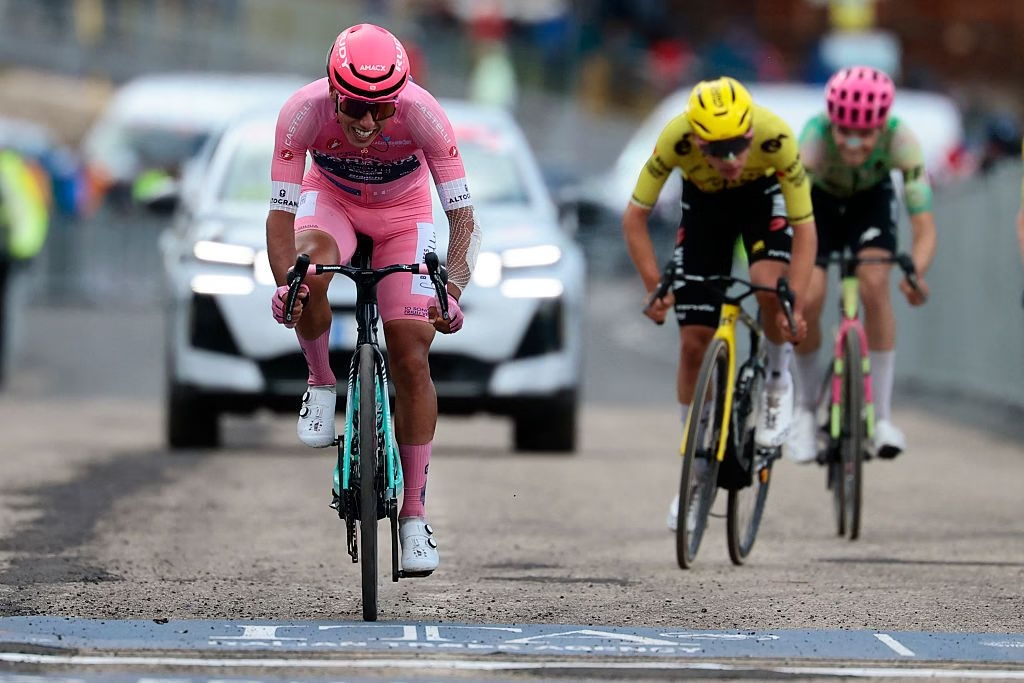
Jonas Vingegaard’s Blockhaus victory has changed the tone of the race. Afonso Eulálio remains in pink after stage 7, but his advantage has been cut, and Vingegaard now sits close enough to make every hard day feel more dangerous. Stage 8 is unlikely to produce Blockhaus-sized time gaps, but it could still catch out anyone who has not recovered properly.
When does Giro d’Italia 2026 stage 8 start?
Stage 8 takes place on Saturday, 16th May.
The stage is expected to start at around 12:15pm BST, with the finish expected at approximately 4:04pm BST. The exact finish time will depend on race speed, weather, breakaway strength and how hard the peloton races through the final climbs.
For UK viewers, the key live window should begin from around 2:45pm BST. That should bring the race into the decisive final 60km, where the route leaves the easier coastal section behind and starts to build towards Montefiore d’Aso, Monterubbiano, Capodarco and the final climb into Fermo.
How to watch Giro d’Italia 2026 stage 8 in the UK
UK viewers can watch the Giro d’Italia through TNT Sports and HBO Max. HBO Max is the main streaming option for full live access in the UK, with TNT Sports also carrying coverage for subscribers.
The stage will also be followed through the official race centre, which provides live text updates, timing and race information during the day. For live pictures, though, UK viewers should use the rights-holder coverage.
There are free live streams available in some territories, including Italy, Australia and Switzerland, but those services are territory-based. For UK viewers, TNT Sports and HBO Max remain the proper routes for live coverage.
What time should UK viewers tune in?
The most important part of stage 8 should come from around 2:45pm BST onwards. That should cover the point where the race begins to leave the more straightforward early rhythm and enters the hilly final phase.
This is not a stage where the final kilometre alone will tell the story. The finale is built in layers. Montefiore d’Aso and Monterubbiano should begin the selection, Capodarco can launch a late attack, and the last rise into Fermo gives the stage a punchy, Classics-style finish.
The final 10km are likely to be tense. Teams with GC riders will want position rather than panic, while stage hunters will know that hesitation after the final climbs could be enough to let a small move survive.
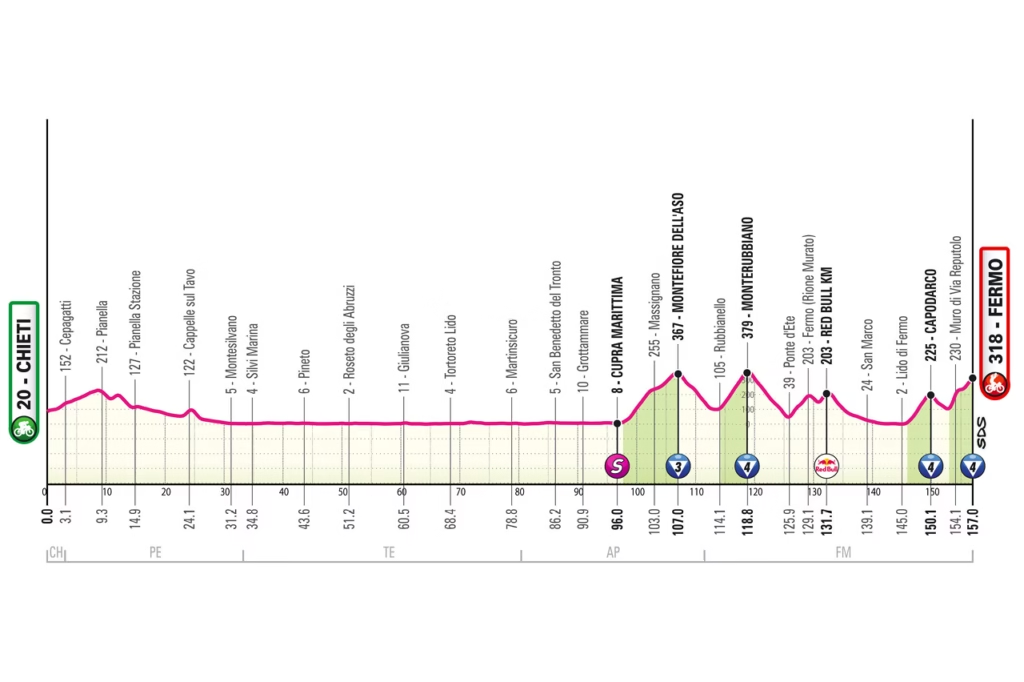
The stage 8 route
Stage 8 runs from Chieti to Fermo over 156km. The route begins inland before moving towards the Adriatic coast, then turns back into hillier terrain for the final hour.
The first part of the stage should allow a breakaway to form. It is not flat in a perfect sense, but it is manageable enough for the peloton to establish control if a major team wants to chase.
The character changes after the race reaches the Adriatic coast and turns inland. Montefiore d’Aso starts the harder final phase, followed by Monterubbiano. Neither climb is huge, but both arrive at a point where the legs will still be carrying the effort from Blockhaus.
Capodarco is the last named climb before the finish. It is short, punchy and close enough to Fermo to make it tactically important. A strong rider can attack there, especially if the breakaway is still ahead or if the reduced peloton begins watching each other.
The finish into Fermo is the feature that makes the stage stand out. The road rises through the old town, with steep sections, cobbles and narrow streets. It is the kind of finish where positioning can count almost as much as pure climbing strength.
Why stage 8 matters after Blockhaus
Blockhaus gave the Giro its first proper GC hierarchy. Vingegaard looked strongest, Felix Gall came closest, and riders such as Jai Hindley, Giulio Pellizzari and Ben O’Connor kept themselves in the race. Eulálio survived in pink, but the margin is now much less comfortable.
Stage 8 is dangerous because it comes immediately afterwards. A rider who lost time on Friday may want to stabilise. A rider who looked strong may want to stay out of trouble. A rider still chasing the top 10 may see this as a chance to attack while others are thinking about recovery.
The stage is not hard enough to guarantee a GC showdown, but it is awkward enough to punish poor positioning. The final climb into Fermo could create small splits, and even a handful of seconds can feel meaningful after the race tightened on Blockhaus.
For Eulálio, the main job is to avoid another visible wobble. For Vingegaard, the priority may simply be safety and control. For riders such as Ciccone, Zana, Hindley, O’Connor and Pellizzari, the finale offers a chance to test the race without committing to a full mountain-stage attack.
-
 Photo Credit: Arkea-B&B Hotels
What kind of rider can win stage 8?
Stage 8 suits a punchy all-rounder rather than a pure climber or pure sprinter. The winner needs to survive the final sequence of climbs, handle technical roads, position well before the steep finish and still have a sharp acceleration left in the final few hundred metres.
A breakaway has a strong chance. After the effort of stage 7, the GC teams may not want to control all day. The pure sprint teams have little reason to chase hard, and the finale is too difficult for many of the fastest riders in the race.
If the GC group contests the stage, Giulio Ciccone looks like one of the more natural fits. The finish is steep, irregular and explosive, which suits his profile better than a long, steady climb. Filippo Zana is another strong candidate if he can get into the right move. He has the strength for the short climbs and the finishing punch to win from a reduced group.
Vingegaard cannot be ruled out on any hard finish, but this may be a day where he prefers not to spend more energy than necessary. Gall may find the finale less suited to him than Blockhaus, while Hindley, O’Connor and Pellizzari will want to stay alert rather than allow a small split to open in the final kilometre.
Prediction
Stage 8 looks like a breakaway day. The route is too hard for the sprinters, awkward for the GC teams to control, and placed directly after a major summit finish. That combination often gives attackers their best chance.
The final 60km should reduce the front group, and the steep finish in Fermo will reward whoever has timed the day best. If the favourites bring it back, Ciccone is a serious threat. But the more likely outcome is that a strong breakaway survives into the final climb.
Prediction: Filippo Zana to win in Fermo from a reduced breakaway, with the GC favourites arriving close behind after a tense but contained finale.