
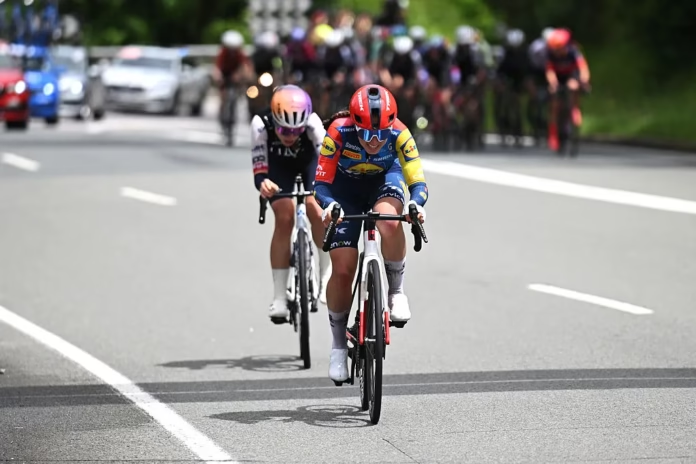
Itzulia Women 2026 reaches its final day with the general classification still close enough to invite attacks, but now with a different level of pressure around the yellow jersey. Dominika Wlodarczyk’s stage 2 victory in Amorebieta-Etxano changed the race’s shape, not only because it gave UAE Team ADQ a major WorldTour win, but because it showed that the favourites cannot afford to wait for one obvious final move.
Mischa Bredewold still has the yellow jersey after two stages, but the race is not secure. Wlodarczyk is now firmly in the overall picture, Shirin van Anrooij has moved into a stronger position, and riders such as Yara Kastelijn, Riejanne Markus, Antonia Niedermaier, Liane Lippert and Usoa Ostolaza still have terrain on which to make the final day uncomfortable.
Stage 3 starts and finishes in Donostia-San Sebastián, using a route that borrows heavily from the modern Clásica San Sebastián pattern. At 113.1km, it is shorter than stage 2, but it is packed with meaning. Jaizkibel, Gurutze and Mendizorrotz arrive close enough to the finish to make this a genuine final-stage decider. The race is still compressed, the climbs are selective, and the descent towards Donostia gives attackers one last chance to turn seconds into the overall title.
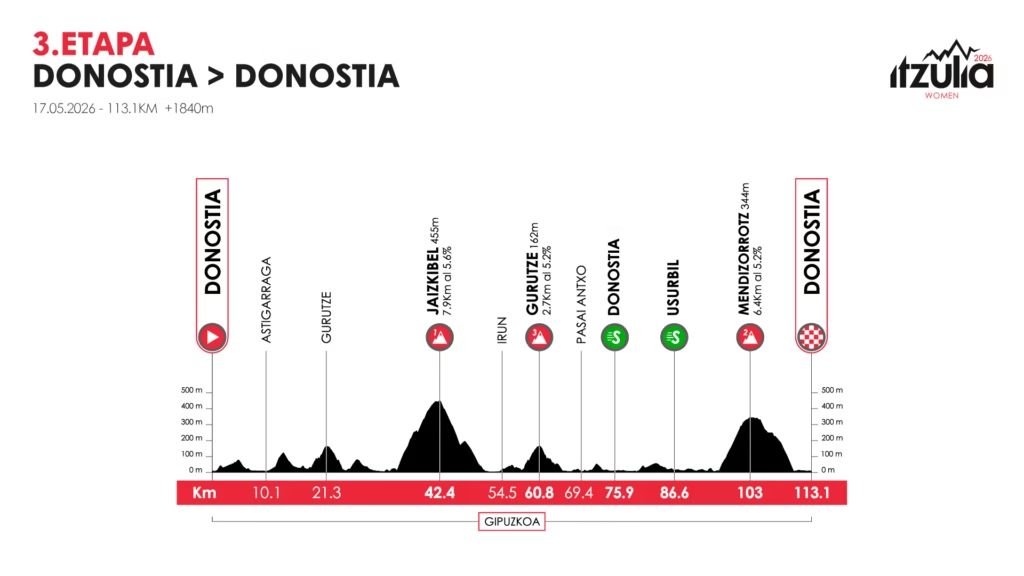
Itzulia Women 2026 stage 3 route
The final stage begins in Donostia and loops through the roads that have become familiar from the Clásica San Sebastián and the women’s Donostiako Klasikoa. The shape is simple enough on paper: a shorter final stage, three main climbs, then a fast run back into the city. In practice, it is exactly the kind of Basque route where the general classification can break apart late.
Jaizkibel is the first major reference point. It is the most famous climb on the route and still one of the clearest places for teams to begin serious pressure. At around 7.9km at 5.6 per cent, it is not savage by pure gradient, but it has enough length to reduce the group and force teams into decisions.
That is important because the stage is short. There is less time to wait, less road to correct mistakes, and less space for a leader’s team to recover if the race becomes stretched. A hard pace on Jaizkibel can remove support riders early and make the final climbs much harder to control.
Gurutze follows as the bridge between the famous climb and the decisive final phase. It may not carry the same headline weight as Jaizkibel or Mendizorrotz, but on a final day, that kind of middle climb often matters. It keeps the pressure on, interrupts any regrouping and gives teams another chance to send a rider ahead before the favourites are forced to act.
Mendizorrotz is the key climb. The climb is around 6.4km at 5.2 per cent, but that average does not fully capture its tactical role. It comes late, it comes when the race should already be thinned, and it is close enough to Donostia for a committed move to survive.
After the top, the descent and run-in towards Donostia become a final test of nerve. A solo rider can make the gap count. A small group can cooperate. A larger group can hesitate and lose the race through indecision.
What’s on offer
- Stage: 3
- Date: Sunday 17th May
- Route: Donostia to Donostia
- Distance: 113.1km
- Main climbs: Jaizkibel, Gurutze and Mendizorrotz
- Vertical metres: around 1,700 to 1,800 metres
- Likely winner type: GC climber, puncheur or late attacker
- Main tactical point: Mendizorrotz and the descent back towards Donostia
Why stage 3 should decide the race
The first two stages have already shown that this Itzulia Women is not waiting politely for a final-day showdown. Stage 1 split the favourites in the rain, with Bredewold winning from a reduced group in Zarautz. Stage 2 then produced a late winning move from Wlodarczyk, with Van Anrooij second and Bredewold third after the yellow jersey group nearly brought the attackers back before the line.
That pattern makes stage 3 more volatile. Everyone has now seen that small moves can survive. Everyone has also seen that Bredewold is hard to beat in a reduced sprint. That changes the incentives. Her rivals cannot simply tow her to Donostia and hope to come past her in the final metres.
The route gives them the tools to change the race. Jaizkibel can make the first selection, Gurutze can keep the race broken, and Mendizorrotz can force the decisive move. Because the stage is only 113.1km, there is a strong case for racing early rather than waiting for the final climb.
Team SD Worx-Protime have the jersey, but defending it on this route will not be easy. They need to keep Bredewold protected over the climbs, cover attacks from riders close on GC, and avoid being forced into a long chase before Mendizorrotz. If they reach the final kilometres with a small group, Bredewold has a very strong hand. The challenge is getting there without allowing the race to become too chaotic.
How the stage could unfold
The first part of the stage should be nervous rather than explosive. A breakaway may go, but it will be difficult for any group containing a serious GC threat to get much space. The final day leaves little room for generosity.
The race should begin to sharpen on the approach to Jaizkibel. Teams with multiple cards, particularly Lidl-Trek, Canyon-SRAM zondacrypto and FDJ United-SUEZ, have an incentive to make SD Worx-Protime work before the final climb. Jaizkibel is the obvious place to reduce the yellow jersey group and remove domestiques.
If the race is still together after Jaizkibel, Gurutze becomes a key pressure point. It may be used for attacks from riders who are close enough to be dangerous but not so close that everyone immediately panics. This is where a rider like Ricarda Bauernfeind, Évita Muzic or Usoa Ostolaza could become tactically important.
The most likely decisive move comes on Mendizorrotz. The climb is hard enough to split the race, but close enough to the finish that nobody can afford hesitation. A rider who crests with 15 or 20 seconds may be extremely difficult to bring back if the chase group starts looking at Bredewold.
The descent and run-in could be just as important as the climb itself. A rider who commits fully over the top can extend the gap, while a small group behind may struggle if too many teams are represented and nobody wants to work for the fastest finisher.
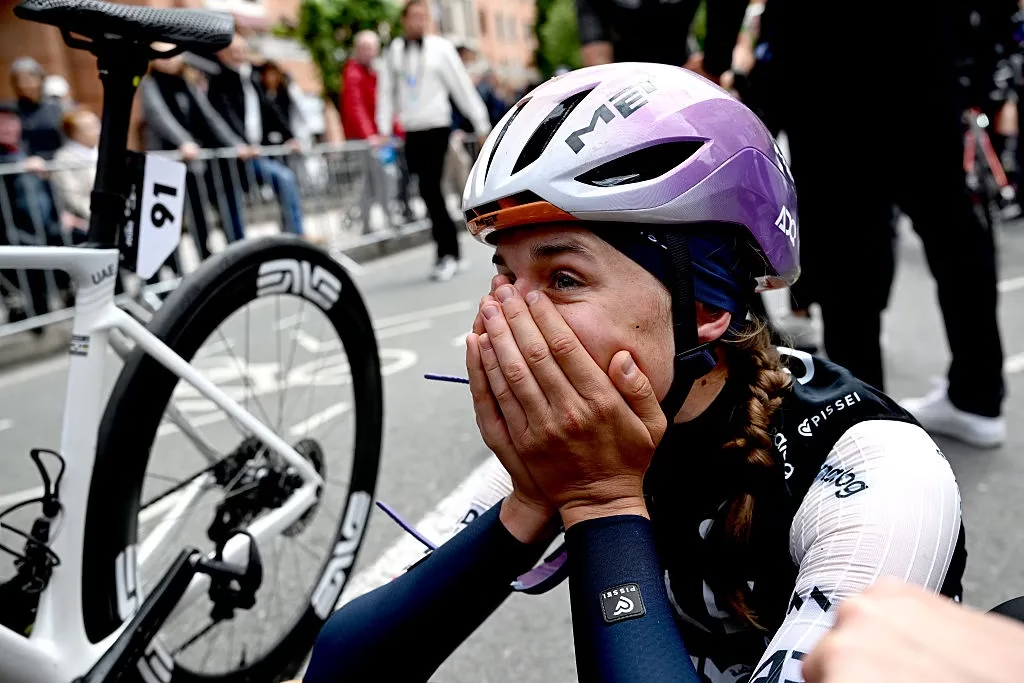 Photo Credit: Getty
The GC contenders
Bredewold remains the rider everyone else must solve. She has already won a stage, defended well on stage 2 and shown that she can sprint after a hard Basque route. If she reaches Donostia in a reduced group, she will be one of the hardest riders to beat. Her weakness, if there is one, is that the yellow jersey makes her team responsible for controlling a stage that invites disorder.
Wlodarczyk’s stage 2 win was a huge statement. She timed her move perfectly and showed the blend of strength and nerve required to win at WorldTour level. Stage 3 gives her another opportunity, but the challenge is different. She will now be marked much more closely, and UAE Team ADQ may need to decide whether to race for the stage again or gamble on a move that can affect the overall.
Van Anrooij is one of the most dangerous riders for this route. She has the climbing ability for Mendizorrotz, the technical quality for the descent and enough finishing speed to win from a small group. Lidl-Trek also have Markus and Bauernfeind as cards to play, which could be crucial if they try to isolate Bredewold before the final climb.
Kastelijn remains a major threat because she thrives when the race becomes hard to organise. She was second on stage 1 and has the aggressive instincts needed for a final day like this. If Fenix-Premier Tech can place her near the front before Mendizorrotz, she is one of the riders most likely to attack rather than wait.
Niedermaier may prefer a harder selection. She has the climbing strength to make the final climb more than a reduced sprint, and Canyon-SRAM zondacrypto need to use that. If she waits until a flat finish against faster riders, the race probably slips away from her. If she attacks on Mendizorrotz, she can force the others to respond.
Lippert and Ostolaza are both better than their GC positions might suggest after the opening two days. Lippert has the punch and experience for a route like this, while Ostolaza has the Basque racing instinct and climbing strength to make the final day difficult. Both may need to attack from further out if they want more than a minor placing.


The key tactical question
The final stage turns on one question: can Bredewold’s rivals separate her before Donostia?
If they cannot, she is the obvious favourite to seal the overall. She has already proved her sprint from a reduced group, and her confidence should be high after two excellent stages. A defensive ride does not mean a passive one. She can follow, cover and still win if the race comes back together.
But if the final climb becomes selective enough, the whole race changes. Van Anrooij, Niedermaier, Kastelijn, Wlodarczyk and Lippert all have reasons to make the race hard before the descent. None of them should want a simple group finish against Bredewold.
That makes Mendizorrotz the decisive point, not just physically but tactically. The strongest attack may not come from the rider who looks most dangerous on GC. It may come from a teammate or a rider close enough to force SD Worx-Protime into a chase. Once the race is stretched, the favourites can move again over the top.
Prediction
The final stage should be the most tactical day of Itzulia Women 2026. Jaizkibel will begin the selection, Gurutze should prevent a full reset, and Mendizorrotz is close enough to the finish to decide both the stage and the overall.
Bredewold has the best finishing speed among the leading GC riders, but the route gives her rivals too many chances to avoid a clean sprint. Lidl-Trek look especially dangerous because they have several riders who can shape the finale, while Wlodarczyk’s stage 2 victory will give UAE Team ADQ confidence that late aggression can pay off.
Prediction: Shirin van Anrooij to win stage 3 from a small group after an attack over Mendizorrotz, with Mischa Bredewold doing enough to hold the overall title if she can limit the gaps on the descent back into Donostia.

