
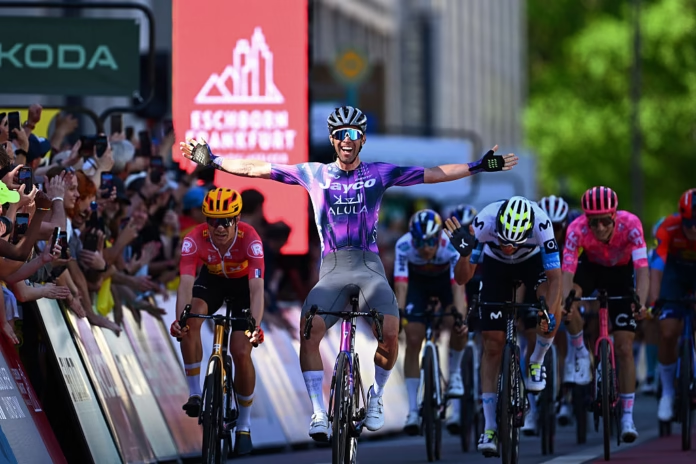
Eschborn-Frankfurt is one of the defining races in German cycling, a one-day Classic that has managed to keep both a strong local identity and a real place on the international calendar. First held in 1962, it began as a promotional event tied to the newly built Henninger Tower in Frankfurt and grew into a race that now sits on the UCI WorldTour. It has long been held on the 1st May, which gives it a distinctive place in the season and in German sporting culture.
What makes Eschborn-Frankfurt interesting historically is that it has never tried to be a German copy of the Tour of Flanders or Paris-Roubaix. Its identity comes from the roads around Frankfurt and the Taunus hills, especially climbs such as the Große Feldberg, the Kittelhütte and the Mammolshainer Stich. Those roads have shaped the race for decades, giving it a character that often sits somewhere between a sprinter’s Classic and a harder, more selective hilly one-day race.
For readers moving through the wider one-day calendar, this sits naturally alongside ProCyclingUK’s Beginner’s guide to Eschborn-Frankfurt 2026, A brief history of Paris-Roubaix and the broader Men’s cycling history, races, riders and teams hub.
How Eschborn-Frankfurt began
The race was launched in 1962 and was originally known as Rund um den Henninger Turm, reflecting its connection to the Henninger brewery and its landmark tower in Frankfurt. The first winner was Belgium’s Armand Desmet, who became the opening name on a winners list that would later include some of the biggest riders in the sport.
That early link to the Henninger Tower mattered because it rooted the event in Frankfurt itself. Even as the route evolved and the race changed names over time, it remained tied to the same wider region. That continuity is a large part of why Eschborn-Frankfurt still feels like a real local sporting institution rather than just another stop on the WorldTour.
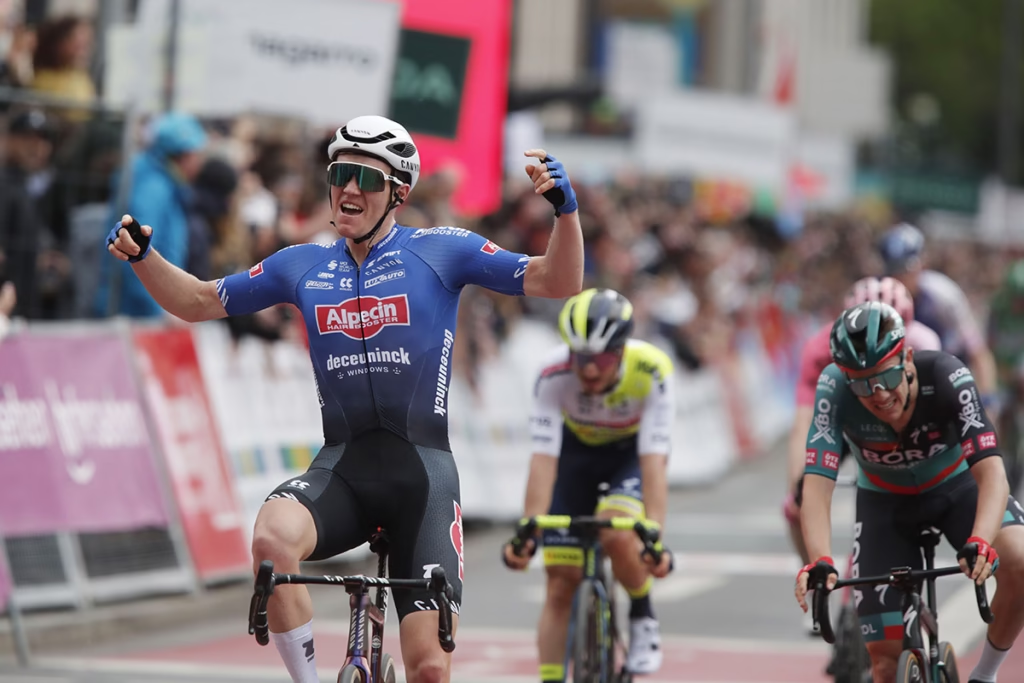 Photo Credit: Rothfoto
A race shaped by German cycling culture
For much of its life, Eschborn-Frankfurt was one of the key dates in German road cycling. The winners list reflects that domestic importance. German riders such as Rudi Altig, Erik Zabel, Kai Hundertmarck, Fabian Wegmann, John Degenkolb and Pascal Ackermann all won the race, helping give it a strong national thread alongside its international reach.
That national importance never meant the race lacked international prestige. Quite the opposite. Over the years, riders such as Eddy Merckx, Jean Stablinski, Michele Bartoli and Alexander Kristoff added their names to the honours list, which helped keep the race relevant well beyond Germany.
The route gave the race its own personality
Unlike the flatter northern sprint races, Eschborn-Frankfurt usually asks a more complicated question. The Taunus climbs are not long enough to turn it into a mountain race, but they are selective enough to put real pressure on the pure sprinters. That tension has shaped the race for years. Some editions have come back to a fast finish, others have been won by riders with a stronger climbing punch, and that uncertainty has become one of the event’s strengths.
The Mammolshainer Stich in particular became one of the race’s best-known features, often acting as the place where the route became most volatile. Along with the Große Feldberg and Kittelhütte, it helped make Eschborn-Frankfurt feel tougher and more distinctive than a straightforward city-centre Classic.
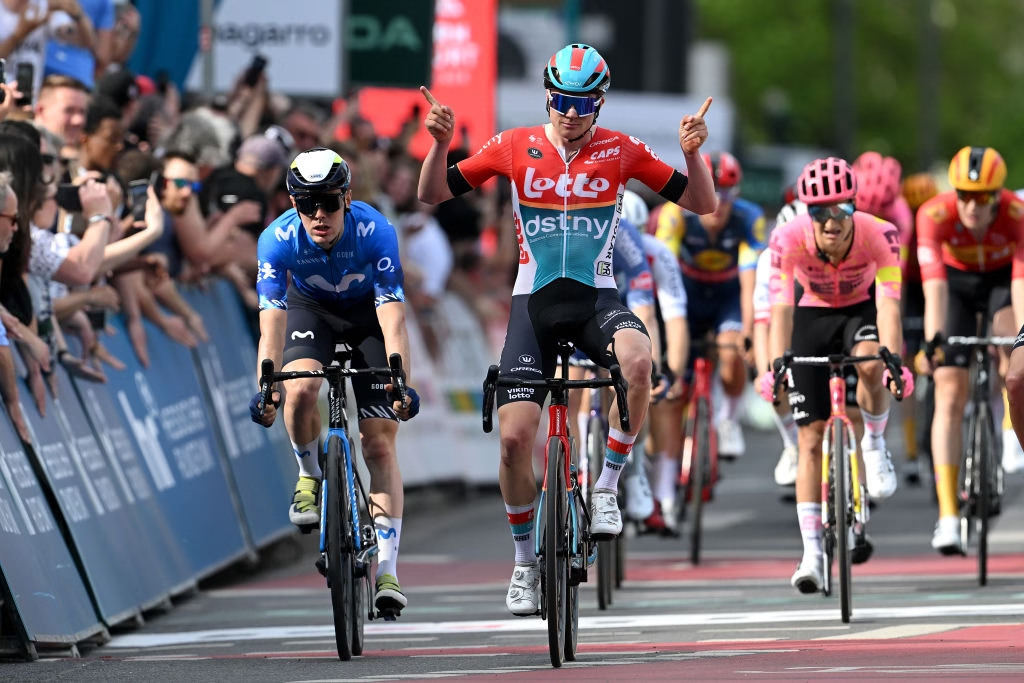 Photo Credit: Rothfoto
The many names of Eschborn-Frankfurt
Part of the race’s history is told through its changing title. It began as Rund um den Henninger Turm, later became Rund um den Finanzplatz Eschborn-Frankfurt, and is now known simply as Eschborn-Frankfurt. Those changes reflect shifting sponsors and branding, but the core event remained the same, a major one-day race through Eschborn, Frankfurt and the Taunus.
That is worth noting because some races lose their identity when the title changes too often. Eschborn-Frankfurt largely avoided that problem. The place stayed central, the date stayed central, and the roads stayed recognisable.
Alexander Kristoff became the modern specialist
If one rider stands out in the race’s more recent history, it is Alexander Kristoff. He won the race four times, in 2014, 2016, 2017 and 2018, which made him the record holder.
Kristoff’s run captured the race’s modern character quite well. He was strong enough to survive the climbs, fast enough to finish from a reduced group, and smart enough to manage a race that rarely falls cleanly into one type of rider’s hands. His dominance also gave the event a recognisable modern reference point, in much the same way some other Classics are linked to one defining champion.
Cancellations and change
Like much of cycling, Eschborn-Frankfurt has had interruptions. The 2015 edition was cancelled, and the 2020 edition also did not take place. The race then returned and remained part of the top-level calendar.
Since 2017, the race organisation has been part of the Amaury Sport Organisation group, the company behind the Tour de France. That marked another step in the event’s continued development and helped underline that Eschborn-Frankfurt was not simply surviving on tradition. It was still evolving.
-
 Photo Credit: Tomasso Pelagalli/SCA/Cor Vos

Eschborn-Frankfurt today
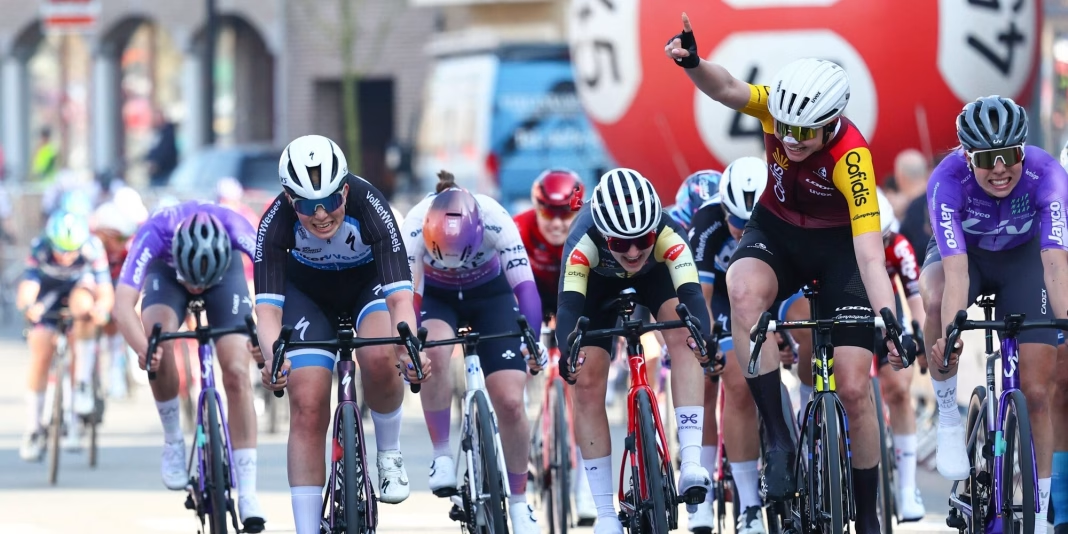
Today, Eschborn-Frankfurt is a UCI WorldTour race and remains one of the key one-day events of the German season. That status matters because it confirms the race’s broader significance. Eschborn-Frankfurt is not just historically important inside Germany. It is now fully part of the global top tier, attracting the best teams in the world while still holding onto the regional character that made it valuable in the first place.
That has helped the race keep its relevance in a crowded calendar. It may not carry Monument status, but it still feels like an important marker in the spring, especially for riders and teams looking for a hilly Classic that does not fit neatly into the usual categories.
Why Eschborn-Frankfurt still matters
Eschborn-Frankfurt matters because it has done something quite difficult in modern cycling. It has stayed recognisable while still evolving. The name changed, the sponsors changed, and the sport around it changed, but the race kept its place on the 1st May and kept its connection to Frankfurt and the Taunus roads.
That is why its history feels bigger than a simple winners list. Eschborn-Frankfurt represents a strand of cycling culture that is both local and international, shaped by German tradition but open to the world’s best riders. It is not one of the Monuments, and it does not need to be. Its importance comes from endurance, identity and the way it has carried German road racing through more than sixty years of change.
For related reading, this also pairs well with ProCyclingUK’s Beginner’s guide to Eschborn-Frankfurt 2026, A brief history of Paris-Roubaix, A brief history of the Men’s Tour of Flanders and the wider Men’s cycling history, races, riders and teams hub.

