Gent-Wevelgem Women has always been slightly harder to define than it first appears, and that is one of the reasons it matters.
For years it was often called a sprinters’ Classic, but that was never quite the full story. Yes, the finish in Wevelgem could still favour speed. But the race has always asked much harder questions than a straightforward bunch sprint would suggest. Wind, exposed roads, the plugstreets, the climbs through Heuvelland, and above all the Kemmelberg have made sure of that. The riders who win here are usually the ones who can still sprint, or still attack, after the race has already started to break apart.
That identity remains in place in 2026, even if the name changes. The wider event now moves under the In Flanders Fields banner, and the women’s race takes on the new title In Flanders Fields – In Wevelgem. It is a significant change on paper, but the race itself still belongs to the same sporting space it always has: one of the key women’s one-day races of the Flemish spring, balanced between speed, toughness and tactical disorder. For readers wanting the broader beginner-friendly context for why these races matter, ProCyclingUK’s guide to the best women’s cycling races in 2026 for new fans is a useful starting point.
How the women’s race began
The women’s edition first took place in 2012, which means the 2026 running will be the 15th edition. That makes it relatively young by Belgian Classics standards, but it found its place quickly because of where it sat on the calendar and because it offered something slightly different from the other major spring races.
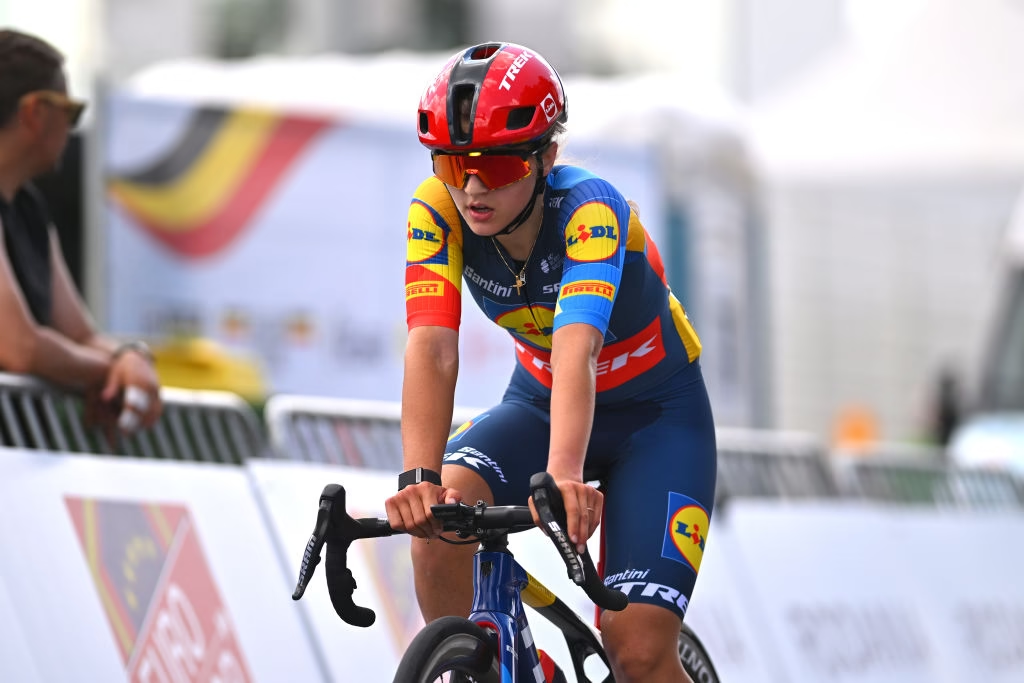
Its first winner was Lizzie Armitstead, later Lizzie Deignan, and that result felt like an early clue to the race’s true character. This was never really going to be a race for riders who only needed a calm day and a flat finish. It was going to reward those who could survive the climbs, read the wind and still finish strongly after a hard afternoon.
 Photo Credit: Getty
Gent-Wevelgem Women winners
- 2012 – Lizzie Armitstead
- 2013 – Kirsten Wild
- 2014 – Lauren Hall
- 2015 – Floortje Mackaij
- 2016 – Chantal Blaak
- 2017 – Lotta Lepistö
- 2018 – Marta Bastianelli
- 2019 – Kirsten Wild
- 2020 – Jolien D’Hoore
- 2021 – Marianne Vos
- 2022 – Elisa Balsamo
- 2023 – Marlen Reusser
- 2024 – Lorena Wiebes
- 2025 – Lorena Wiebes
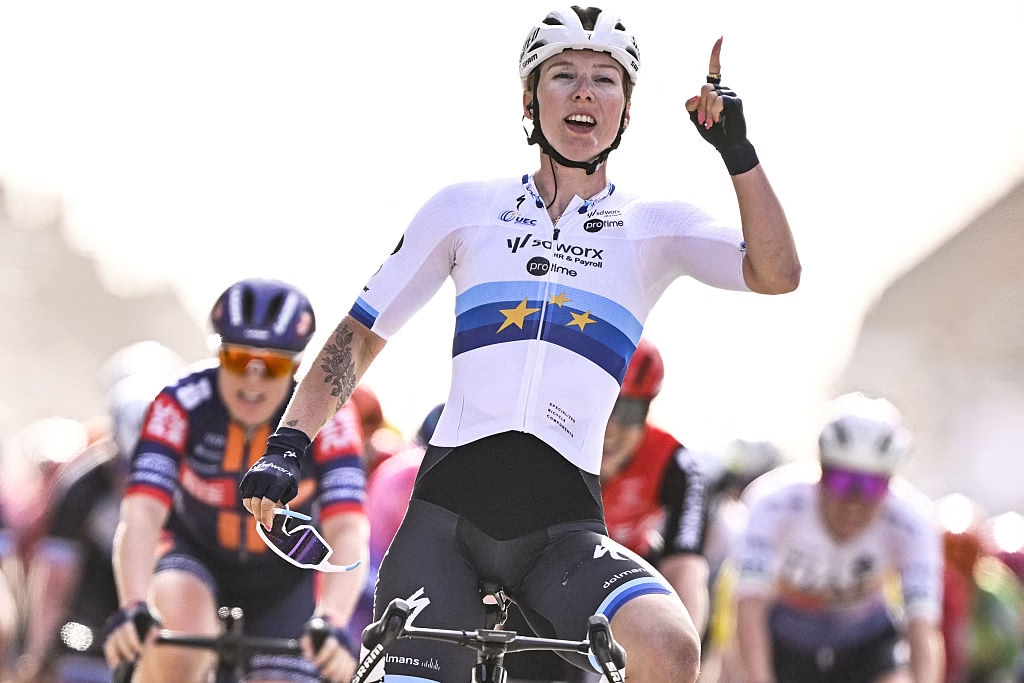
Even that winners list tells you a lot about the race. Kirsten Wild, Marianne Vos, Elisa Balsamo and Lorena Wiebes all reflect the value of a durable sprint here. But riders such as Floortje Mackaij, Chantal Blaak and Marlen Reusser are just as important to understanding it. Their victories show that Gent-Wevelgem Women has never belonged solely to the fastest rider on paper. Strength, timing and selective race craft have always mattered too.
-
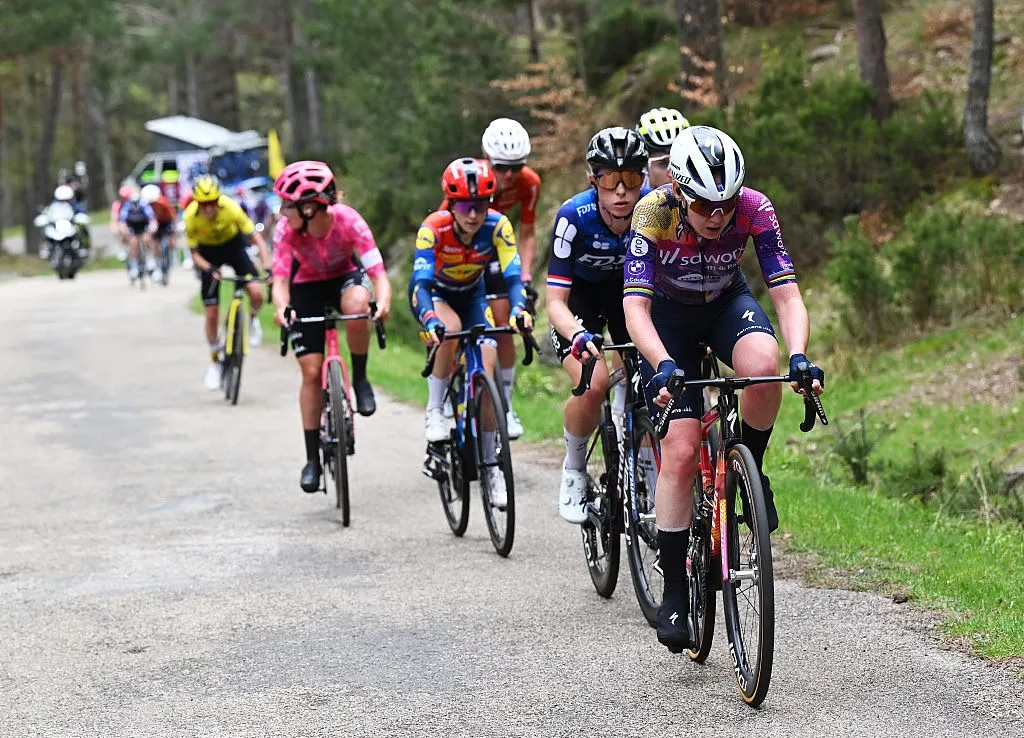 Photo Credit: Getty
 -
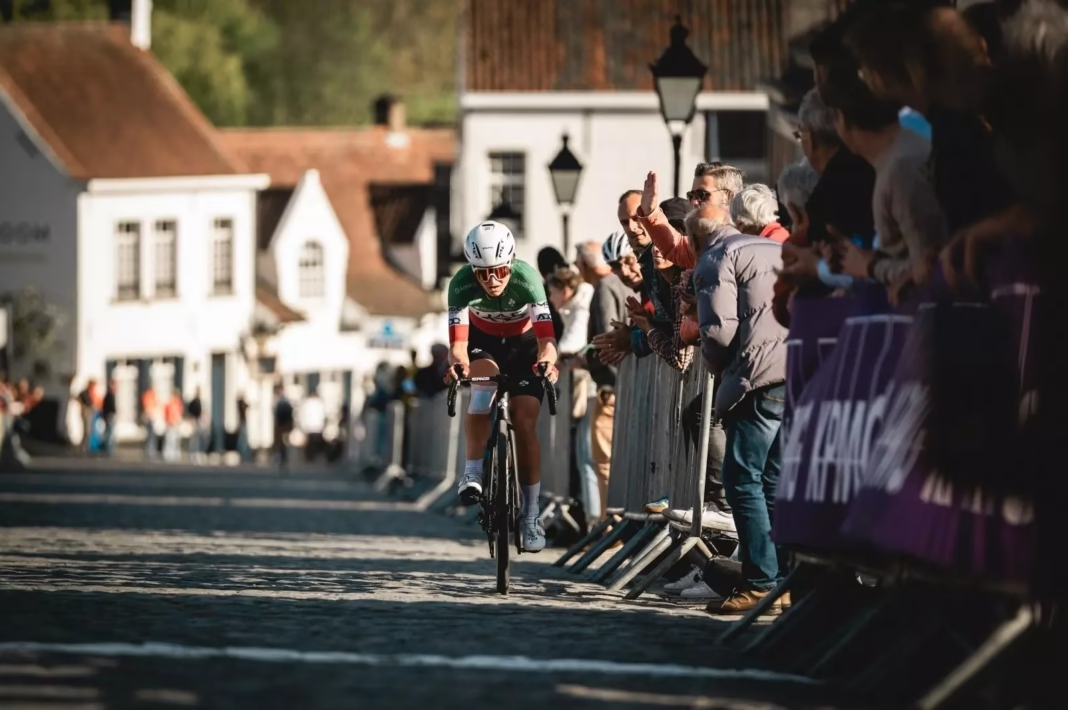 Photo Credit: Flanders Classics
What made the race distinctive
The route has always given the race a character of its own within the Flemish block.
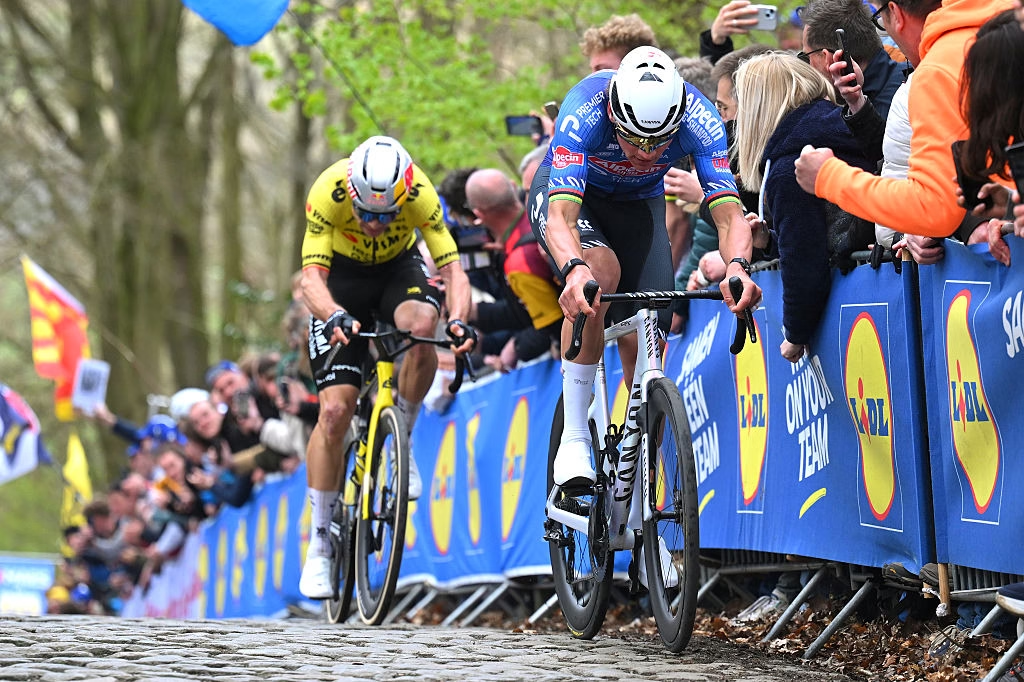
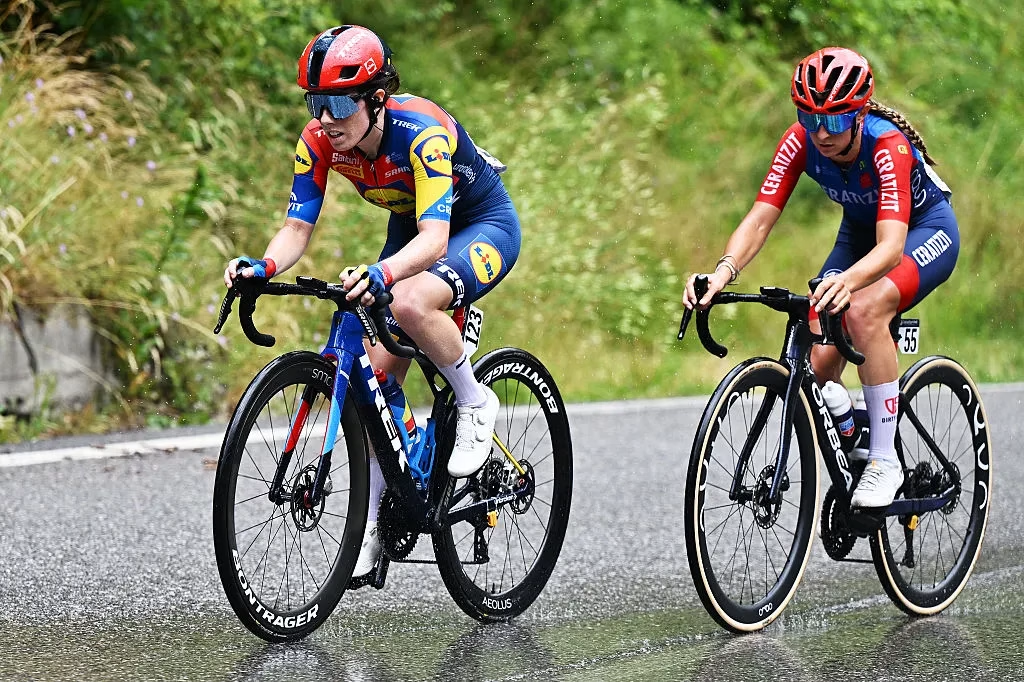
Unlike races built more directly around the Flemish Ardennes, Gent-Wevelgem heads into terrain where open roads and wind can matter as much as the climbs. That is what has always made the race so awkward to control. The Heuvelland hills, particularly the Kemmelberg, are crucial, but they do not tell the whole story. The flatter stretches before and after them often shape the race just as much.
Then there are the plugstreets. Those gravel sectors gave the race a visual signature that separated it from other Belgian one-day events and deepened its connection to the First World War landscape around Ypres. That connection has always been there in the route and in the atmosphere of the event. The new In Flanders Fields name does not invent that identity. It leans into something the race had already been carrying for years.
If you want to see how this race fits alongside the other major Belgian one-day events, ProCyclingUK’s Beginner’s guide to Dwars door Vlaanderen Women 2026 and Nokere Koerse Women 2026 route guide both help show the different flavours of spring racing in the region.
Why the new name matters in 2026
This is not just a cosmetic rebrand.
From 2026, the wider event becomes In Flanders Fields – from Middelkerke to Wevelgem. For the women, the official race title becomes In Flanders Fields – In Wevelgem, reflecting the fact that the women’s event still starts and finishes in Wevelgem rather than following the men’s new Middelkerke start.
That matters because Belgian race names usually mean something concrete. They describe geography and heritage rather than simply offering a label. In that sense, the old Gent-Wevelgem name had already become slightly stretched by history, because the race had not actually started in Gent for quite some time. The new title is longer and less instinctive, but it is more direct about what the organisers now want the event to represent.
There is a useful parallel here with another 2026 rebrand. ProCyclingUK’s brief history of Women’s Ronde van Brugge explains how route and geography changes have also reshaped the identity of the former Classic Brugge-De Panne.
What stays the same
For all the change in branding, the sporting argument remains very familiar.
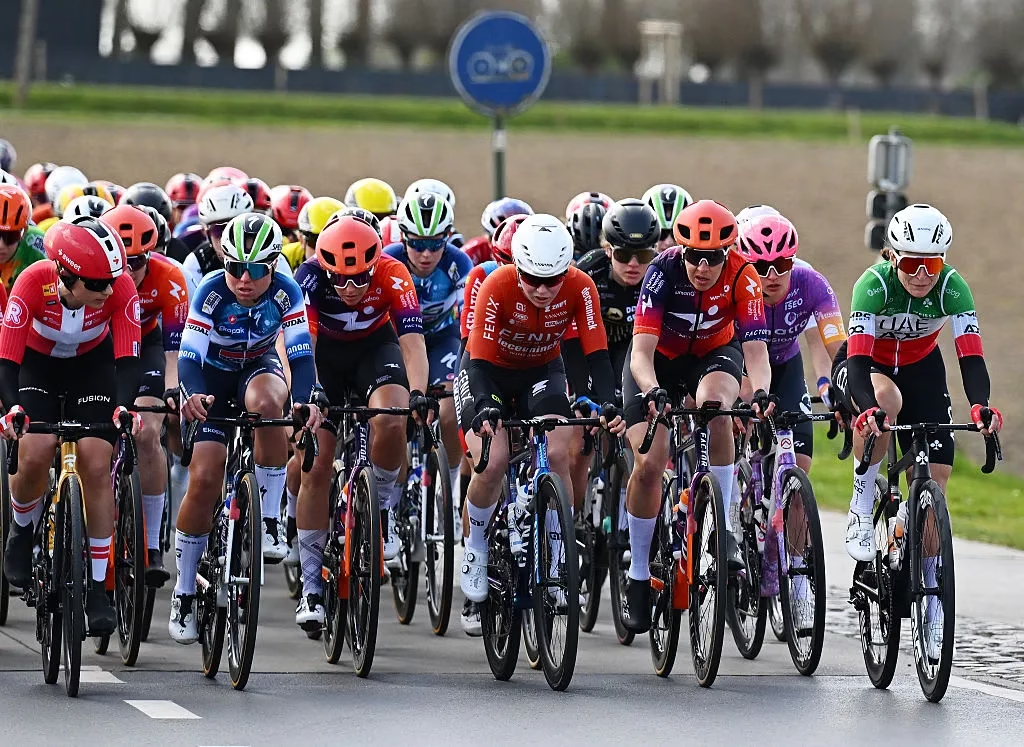
This is still a race where several rider types can believe in their chances deep into the day. It is still too hard for some pure sprinters, not selective enough to belong only to climbers, and often just disorderly enough to reward the rider who judges the race best rather than the one with the cleanest theoretical route to victory.
That is why Gent-Wevelgem Women has always been so useful as a spring marker. It reveals which riders can handle classics pressure without needing the most extreme terrain. It also reminds people that flat does not mean simple, and that a sprint finish can still be the result of hours of selective racing beforehand.
Why the race still matters
The title changes in 2026, but the reason the race matters does not.
It remains one of the clearest tests of the Belgian spring, a race where wind and positioning matter just as much as climbing and where the final result often says something real about a rider’s toughness, not just their speed.
So yes, Gent-Wevelgem Women now enters a new naming era as In Flanders Fields – In Wevelgem. But the core of the race is still the same. It is still one of the key women’s one-day races of the spring, still one of the most tactically interesting, and still one of the best examples of how Belgian racing can be hard long before the winning move is made.