
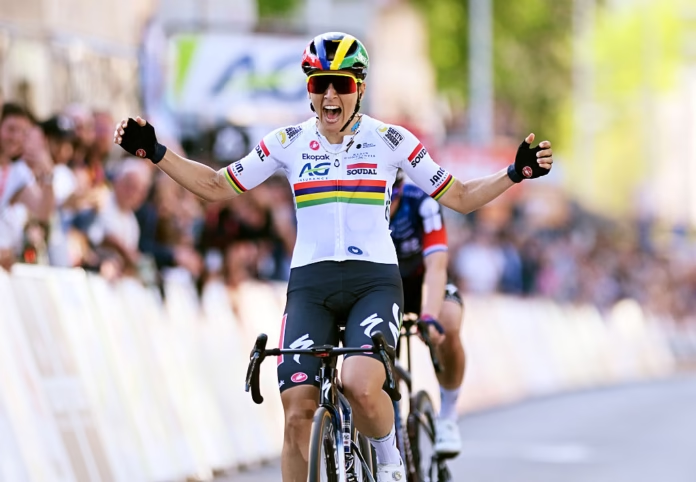
Liège-Bastogne-Liège Femmes is still a relatively young race by the standards of the sport’s biggest one-day events, but it has already become one of the defining tests in women’s cycling. First held in 2017, it gave the women’s calendar a full Ardennes trio alongside Amstel Gold Race Women and La Flèche Wallonne Féminine, and from the beginning, it felt like a serious addition rather than a symbolic one.
That mattered straight away. The women’s spring no longer built only towards the Mur de Huy, but towards a deeper, harder sequence of races that rewarded endurance, climbing punch and tactical patience. Liège-Bastogne-Liège Femmes quickly became the toughest and most complete of the three, the race where strength still needed to be matched by judgement.
For readers following the wider Ardennes story, ProCyclingUK’s history of the Amstel Gold Race Women and history of La Flèche Wallonne Femmes work naturally alongside Liège, because the three races now form the clearest late-April test of the sport’s best puncheurs and climbers.
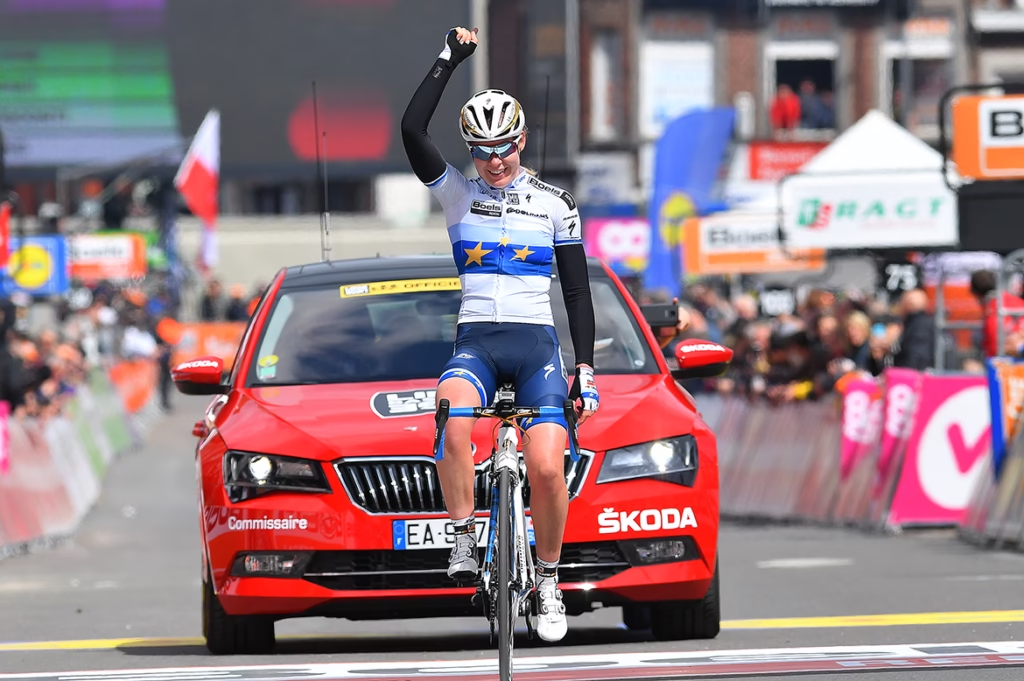 Photo Credit: Tim de Waele
2017 – Anna van der Breggen wins the first edition
The first edition of Liège-Bastogne-Liège Femmes took place in 2017 and was won by Anna van der Breggen. That result felt immediately fitting. Van der Breggen was already the outstanding Ardennes rider of her generation, and she would go on to define the race’s early years. Lizzie Deignan finished second and Kasia Niewiadoma third, which also told you something about the route from the start.
This was not a race for pure sprinters or opportunists. It immediately rewarded riders who could handle steep climbing, selective racing and a hard finish. The inaugural route finished in Ans, like the men’s race at the time, and used a shorter but recognisably Liège-style structure with key climbs that made the race feel like a proper Ardennes Classic from the beginning.
2018 – Van der Breggen confirms her control
Van der Breggen won again in 2018, becoming the race’s first repeat winner and immediately setting the tone for its early history. She beat Amanda Spratt and Kasia Niewiadoma, and with that second straight victory she effectively made Liège-Bastogne-Liège Femmes part of her wider Ardennes legacy rather than simply another new race on the calendar.
Those first two editions also helped establish a broader truth about the event. Liège was not just another hilly one-day race. It was already becoming the hardest and most selective event in the women’s spring sequence, the race where the strongest all-round climber or smartest late attacker would usually emerge.
2019 – the finish moves to Liège
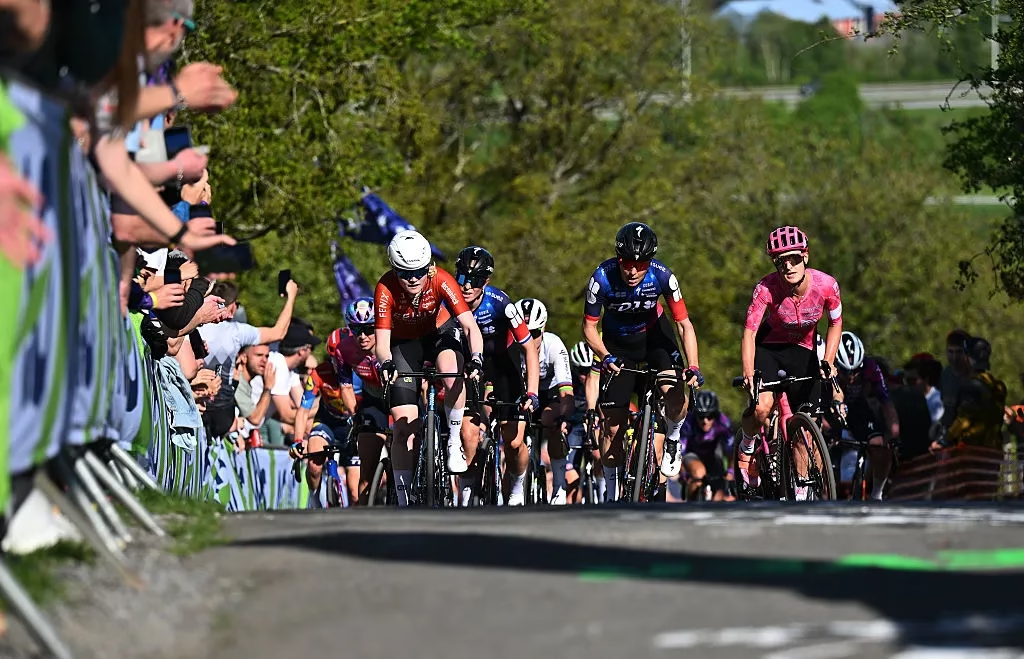
The 2019 edition marked an important route change. From that year onward, the race finished in Liège rather than Ans, mirroring the men’s route update and removing Côte de Saint-Nicolas from the finale. Annemiek van Vleuten won that edition, ahead of Floortje Mackaij and Demi Vollering, and the race began to feel slightly different tactically as a result.
That shift mattered because finishing in Liège rather than on the drag to Ans changed the rhythm of the closing phase. The race became a little more open after Roche-aux-Faucons, with greater room for late solo moves and small-group decision-making. Van Vleuten’s victory fit that pattern well. It also introduced the second major figure in the race’s history after Van der Breggen.
2020 – Lizzie Deignan adds her name
Lizzie Deignan won the 2020 edition, giving the race another winner who already had deep Ardennes and Monument-level credibility. She had been second in the inaugural edition back in 2017, so her victory three years later also gave the race one of its first neat pieces of continuity.
By this point, Liège-Bastogne-Liège Femmes had already started to look like a race with a very specific type of winner. Van der Breggen, Van Vleuten and Deignan were all complete one-day riders with climbing ability, endurance and tactical judgement. The race was not producing strange results. It was building a roll of honour that already looked worthy of its place on the calendar.
2021 – Demi Vollering breaks through
The 2021 edition felt like the start of a new phase. Demi Vollering won for the first time, ahead of Annemiek van Vleuten and Elisa Longo Borghini, and in doing so moved from being one of the most promising riders in the peloton to one of the defining Ardennes names of her generation.
That result now looks especially important in retrospect, because it marked the beginning of Liège becoming part of Vollering’s own race story. Just as Van der Breggen had used the race to underline her control of the Ardennes, Vollering would later do something similar for the next era.
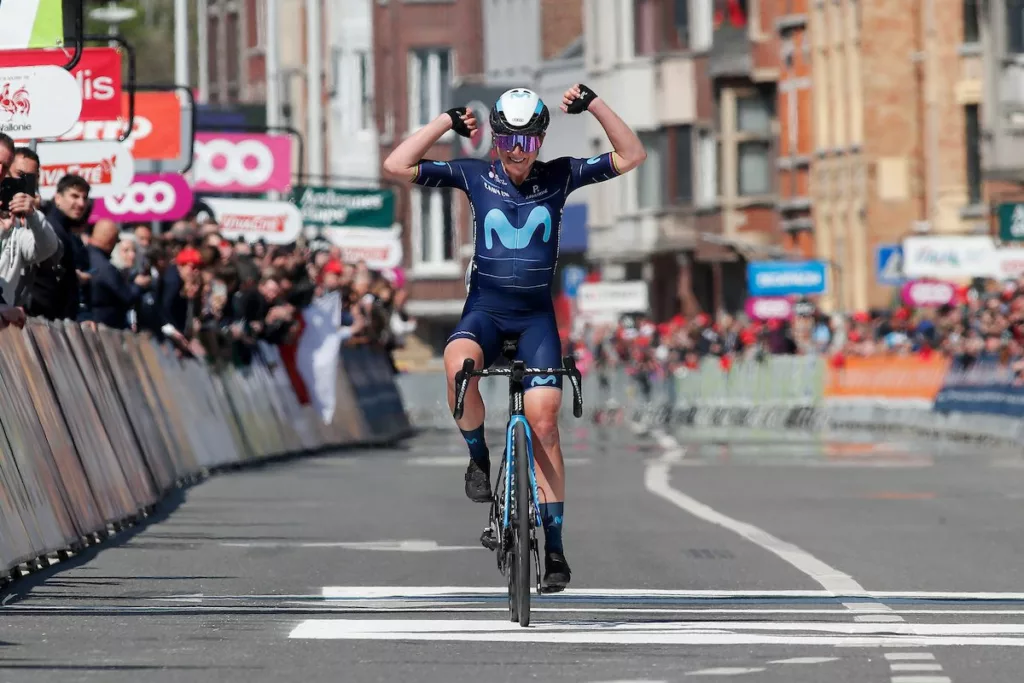 Photo Credit: Sprint Cycling Agency
2022 – Van Vleuten wins again
Annemiek van Vleuten took her second Liège-Bastogne-Liège Femmes title in 2022, beating Demi Vollering and Silvia Persico. That gave the race another multiple winner and reinforced the sense that Liège was becoming a race shaped by genuine greats rather than simply annual form riders.
It also added another layer to the Van Vleuten-Vollering sequence that came to define several major races in the early 2020s. Liège was now regularly functioning as a direct contest between the sport’s strongest Classics climbers and most complete one-day stage-race crossover riders. That combination is part of what makes the race so compelling.
2023 – Vollering completes the Ardennes treble
The 2023 edition is one of the race’s biggest historical markers so far because it completed Demi Vollering’s Ardennes treble. She had already won Amstel Gold Race Women and La Flèche Wallonne Féminine, and Liège gave her the third leg, crowning one of the most dominant spring campaigns in recent women’s cycling.
That victory also gave Vollering her second Liège title, placing her alongside Van der Breggen and Van Vleuten as a double winner. In a race this young, that is already enough to shape its identity. By 2023, Liège-Bastogne-Liège Femmes no longer looked like a new race finding its feet. It looked like a major Classic with clear dynasties already forming inside its history.
For the wider context around that sort of Ardennes dominance, ProCyclingUK’s history of the Amstel Gold Race Women and history of La Flèche Wallonne Femmes show how rare it is for one rider to control this block of races so completely.
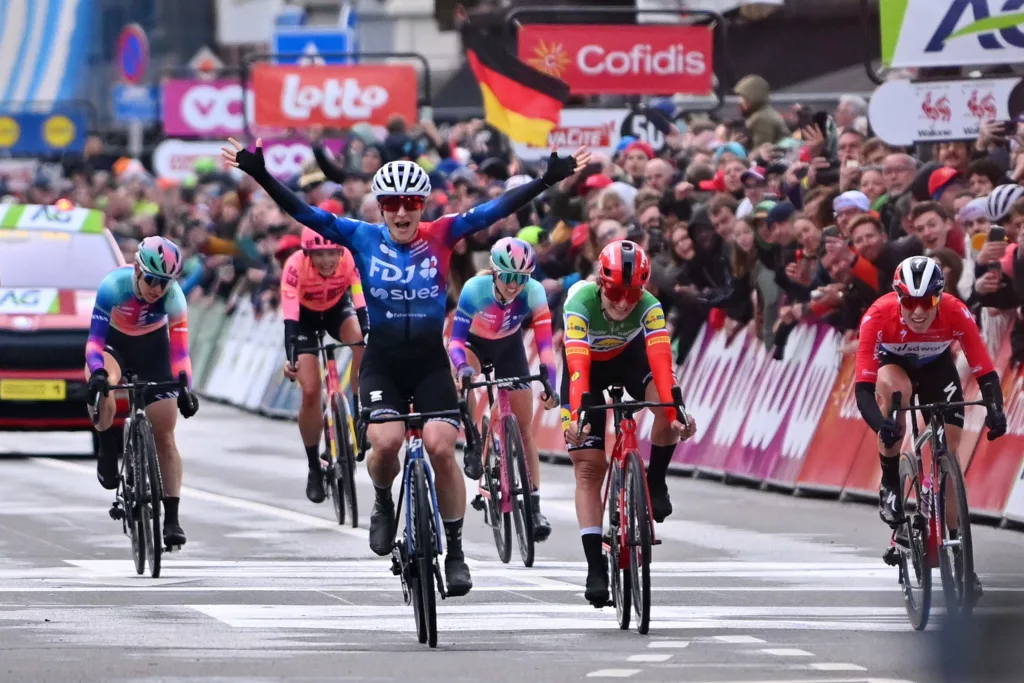
2024 – Grace Brown wins in the final spring of her career
Grace Brown won the 2024 edition ahead of Elisa Longo Borghini and Demi Vollering. That result stood out because Brown was already in the final chapter of her road career, and it gave the race a different sort of winner. This time it was not one of the established Ardennes serial champions, but a rider using form, timing and toughness to take one of the biggest prizes available.
Brown’s win was a useful reminder that Liège-Bastogne-Liège Femmes, while often won by repeat champions, is not completely closed to new stories. The route is hard enough to reward the strongest rider, but still open enough that an exceptional day can break the usual hierarchy.
2025 – Kim Le Court makes history
The 2025 edition added another major first to the race’s history. Kim Le Court won and, in doing so, became the first African rider to win a Women’s WorldTour Classic.
That mattered well beyond the result itself. Liège-Bastogne-Liège Femmes had already established itself as a race for the very best, but Le Court’s victory showed that its history can still expand in meaningful new directions. The roll of honour is not only becoming more prestigious. It is becoming broader and more globally significant too.
-
 Photo Credit: A.S.O./Billy Ceusters
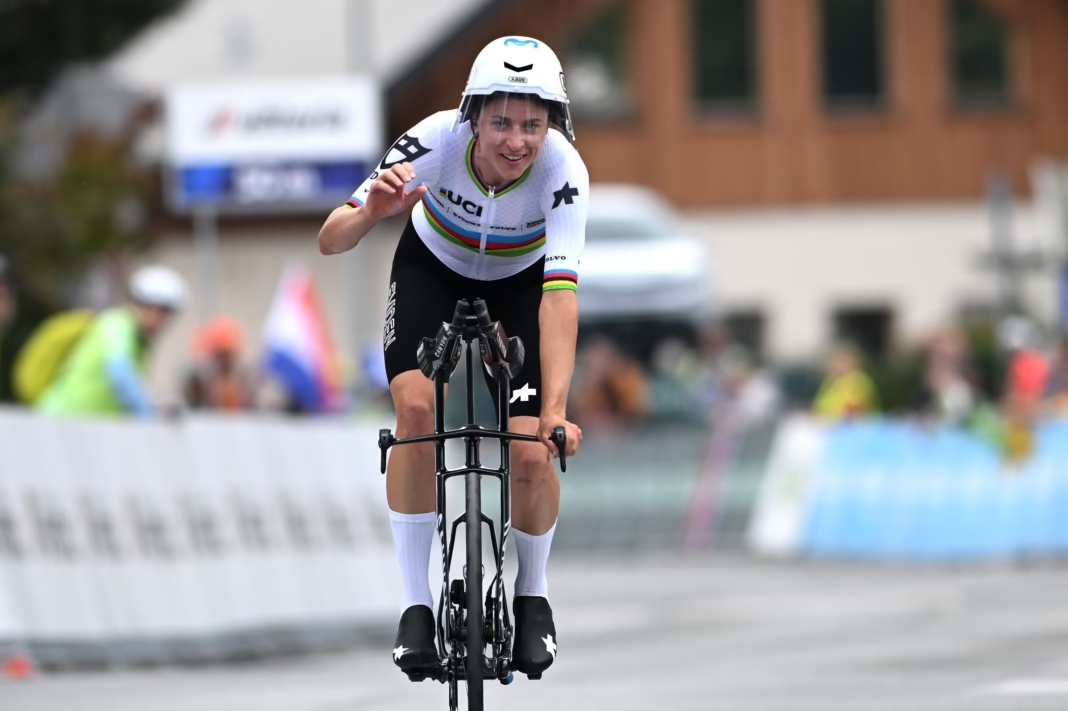

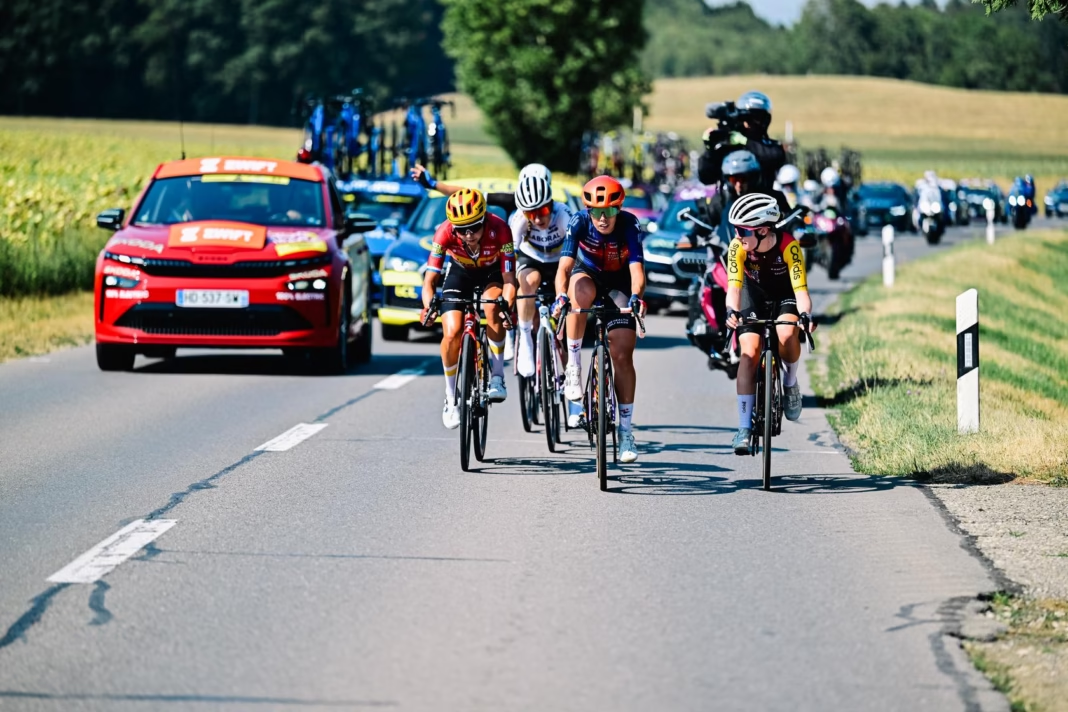
The winners so far
The winners list already gives a strong sense of the race’s identity:
- 2017 – Anna van der Breggen
- 2018 – Anna van der Breggen
- 2019 – Annemiek van Vleuten
- 2020 – Lizzie Deignan
- 2021 – Demi Vollering
- 2022 – Annemiek van Vleuten
- 2023 – Demi Vollering
- 2024 – Grace Brown
- 2025 – Kim Le Court
That is a serious list for a race that only began in 2017. It is full of world champions, Monument-level riders and some of the defining names of modern women’s cycling. In that sense, Liège-Bastogne-Liège Femmes has not needed decades to build prestige. The winners have done much of that work very quickly.
What Liège-Bastogne-Liège Femmes now represents
Liège-Bastogne-Liège Femmes now feels like the natural closing chapter of the women’s spring Classics, the race where the strongest climbers, puncheurs and one-day tacticians are finally sorted on the hardest terrain of the sequence. It is younger than many of the sport’s best-known events, but it no longer feels new. It feels established.
That is probably the clearest sign of how quickly it has grown. In less than a decade, it has moved from new arrival to one of the races that genuinely defines a rider’s spring. The history is still short, but it is already rich, and almost every edition has added something distinct – Van der Breggen’s early control, Van Vleuten’s authority, Vollering’s treble, Brown’s late-career highlight, and Le Court’s breakthrough for African cycling.
For readers moving through the Ardennes block as a whole, ProCyclingUK’s Amstel Gold Race Women 2026 route guide and Brabantse Pijl Women 2026 route guide also help frame how Liège sits at the hardest end of that progression.
That is already a strong history. And for a race still this young, it suggests the next decade could be even more important.

