Men’s Dwars door Vlaanderen is one of the most revealing races of the Flemish spring, even if it has never quite carried the same Monument weight as the Tour of Flanders or Paris-Roubaix. First held in 1945, it began as Dwars door België and only took on the Dwars door Vlaanderen name in 2000. That change matters because it reflects the race’s gradual shift from a broader Belgian event into one more clearly tied to Flanders and the cobbled spring identity it now embodies.
For modern fans, the easiest way to understand Men’s Dwars door Vlaanderen is as a race that sits in the shadow of bigger Classics while still shaping them. It is held in the days before the Tour of Flanders, on terrain that overlaps heavily with the wider Flemish style of racing, and that has made it one of the best form guides of the season. It is not just a warm-up, though. Over time, it has built enough prestige of its own to become a major target in the spring calendar.
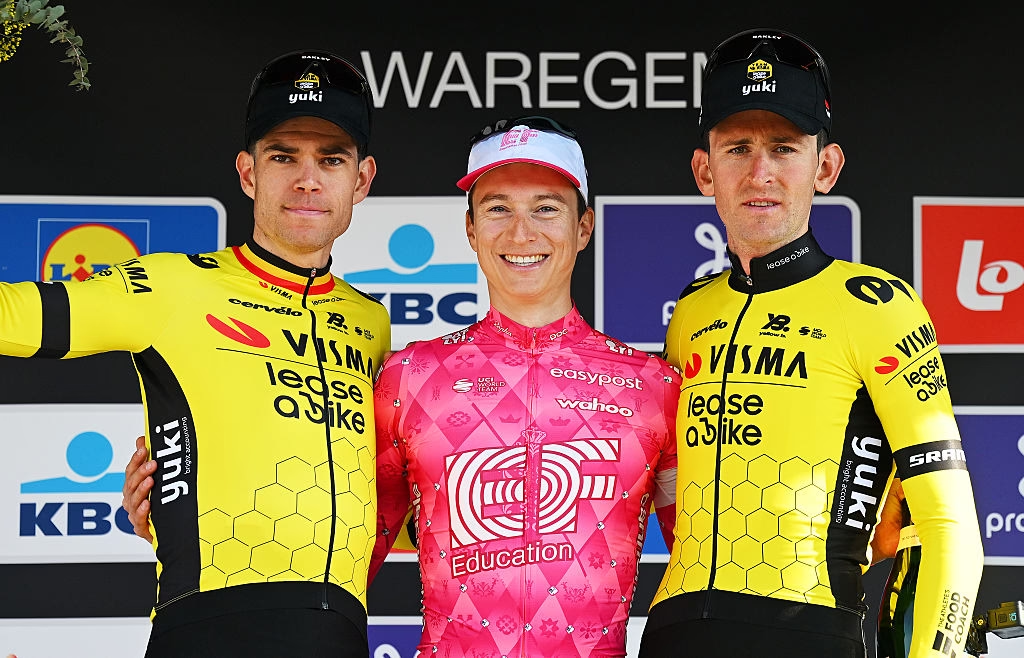 Photo Credit: Flanders Classics
From Dwars door België to Dwars door Vlaanderen
The original race in 1945 was won by Rik Van Steenbergen and was known as Dwars door België. In its early years, it was not always a one-day race. From 1946 to 1964, with one exception, it was run as a two-day stage race before settling into the one-day format from 1965 onwards. That older structure is worth remembering because it shows how the event evolved gradually rather than arriving fully formed as the midweek cobbled classic people know now.
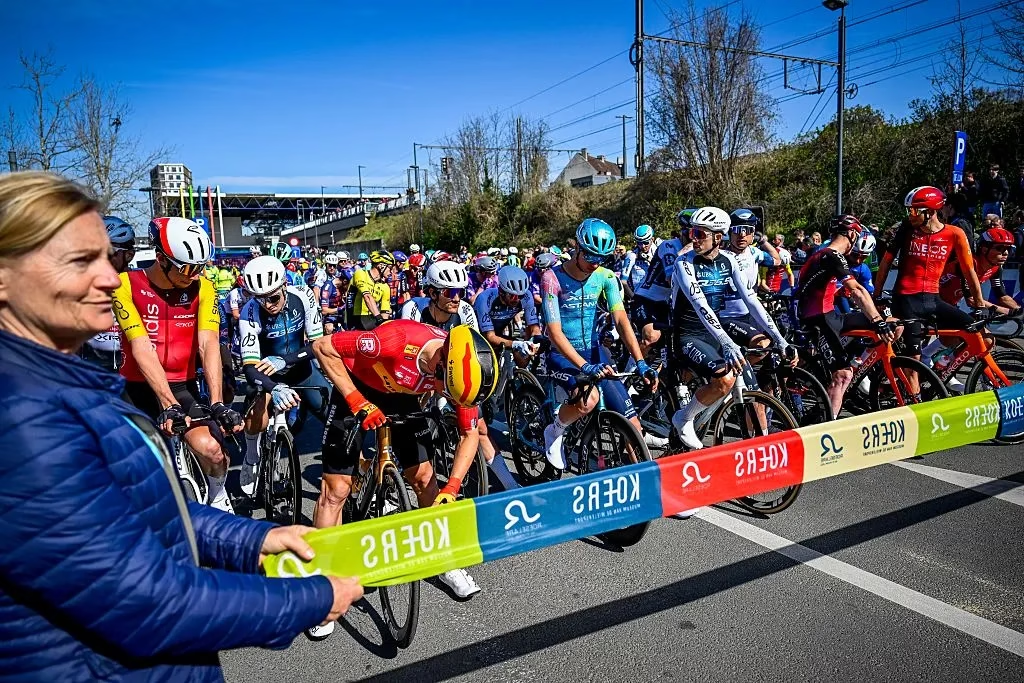
The renaming in 2000 was a significant moment. Dwars door Vlaanderen was a much clearer expression of what the race had become: a Flemish one-day test built around hills, cobbles, positioning and race craft rather than a broader national route concept. Roeselare also became the start location in that modern era, while Waregem remained the finish, helping lock in the race’s current geographical identity.
Why the race matters in the spring
What gives Men’s Dwars door Vlaanderen its importance is not simply its age, but its place. It arrives in the final stretch before the Tour of Flanders, which means every performance here is read through two lenses at once. Riders want to win, but teams are also looking for signs – of form, of weakness, of tactical sharpness, of who is ready for the bigger battle still to come.
That timing has helped give the race a very particular feel. It is often raced aggressively because there is less room for caution than in a Monument, yet it also carries strategic tension because not every team wants to reveal everything before Sunday. That mix makes Dwars door Vlaanderen one of the more tactically interesting races of Flanders week.
If you want the route and race identity alongside the history, ProCyclingUK’s Beginner’s guide to Men’s Dwars door Vlaanderen 2026 is the natural companion piece.
The move to the WorldTour
A major step in the race’s development came in 2017, when Men’s Dwars door Vlaanderen was promoted to the UCI WorldTour. That formalised its place among the most important races on the calendar. The following year, in 2018, it moved to its now familiar slot on the Wednesday before the Tour of Flanders, replacing the old position it had held after Milano-Sanremo. Those two changes did a lot to elevate the race’s profile.
This was not just a bureaucratic upgrade. It changed how the race was seen. WorldTour status guaranteed stronger fields and made the results more meaningful in the wider spring narrative. The move in the calendar then sharpened its identity even more, turning it into the penultimate major checkpoint before Flanders.
Previous winners of the men’s race
The roll of honour helps explain what sort of race this is. It is not dominated by one rider or one era. In fact, no man has won it more than twice. That tells you something important straight away: Men’s Dwars door Vlaanderen has often been open, tactical and slightly less predictable than some of the biggest cobbled events.
Recent winners are:
- 2025 – Neilson Powless
- 2024 – Matteo Jorgenson
- 2023 – Christophe Laporte
- 2022 – Mathieu van der Poel
- 2021 – Dylan van Baarle
- 2020 – race not held
- 2019 – Mathieu van der Poel
- 2018 – Yves Lampaert
- 2017 – Yves Lampaert
- 2016 – Jens Debusschere
- 2015 – Jelle Wallays
- 2014 – Niki Terpstra
- 2013 – Oscar Gatto
- 2012 – Niki Terpstra
- 2011 – Nick Nuyens
- 2010 – Matti Breschel
That list is quite revealing. You see riders who were genuine cobbled specialists, such as Terpstra, Van Baarle and Laporte. You also see winners who were smart opportunists or who hit form at exactly the right time. More recently, Mathieu van der Poel’s wins in 2019 and 2022 underlined how well the race suits riders who can handle repeated climbs and violent accelerations, while Neilson Powless’s 2025 victory showed there is still room for ambush as well as domination.
-
 Photo Credit: Getty
What kind of race its history points to
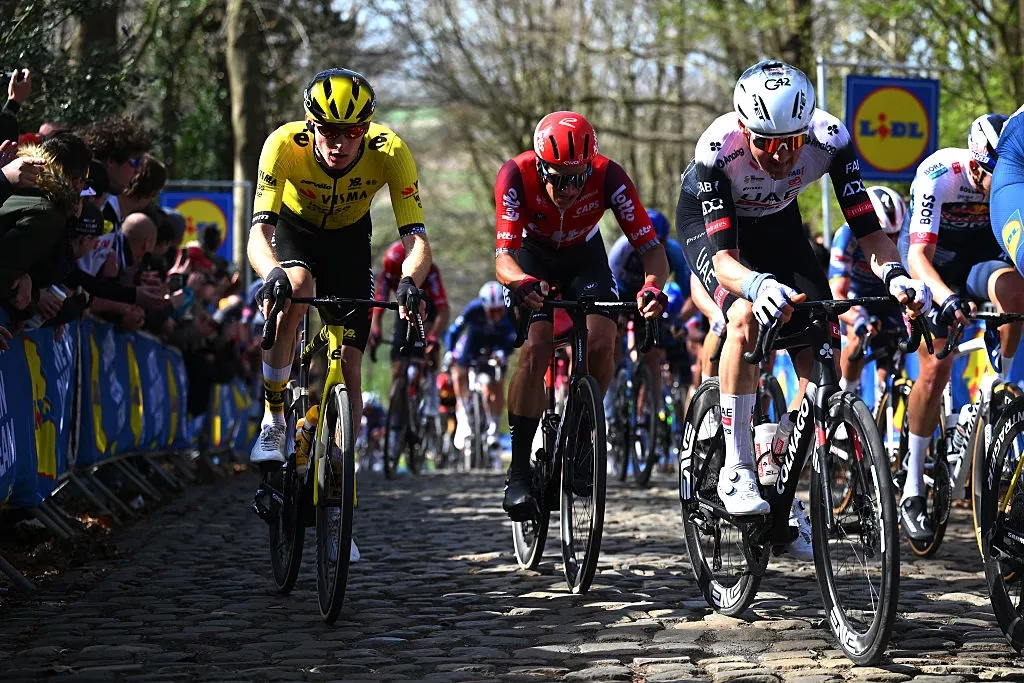
The history of Men’s Dwars door Vlaanderen suggests a race that rewards strength, but not strength alone. It has always favoured riders who can cope with the demands of Flemish racing – short climbs, cobbles, narrow roads and constant fights for position – but it also tends to reward good judgment. That is one reason so many of its winners feel slightly different from each other.
Unlike some races where one famous sector dominates the memory, Dwars door Vlaanderen is more often shaped by accumulation. Its history is full of selections made in waves rather than one single decisive blow. That gives the race a slightly more tactical and slightly less mythic feel than Flanders, but also makes it one of the more honest indicators of who is really handling the spring well.
What Men’s Dwars door Vlaanderen represents now
Today, Men’s Dwars door Vlaanderen sits in an ideal place between heritage and utility. It has the depth of a race first held in 1945, but it also feels very modern in how it functions. It is a WorldTour event, a major Wednesday fixture in Flanders week, and one of the clearest tests before the Tour of Flanders itself.
That is what makes its history worth knowing. Men’s Dwars door Vlaanderen is not just a smaller Flemish race that happens to sit near bigger ones. It is a race that has carved out its own place by being selective enough to matter, open enough to surprise, and perfectly positioned to tell you which riders are truly ready for what comes next.
For more on how it fits into the broader spring, ProCyclingUK’s Beginner’s guide to E3 Saxo Classic 2026 and Beginner’s guide to Men’s Ronde van Vlaanderen 2026 are the best next reads.