Men’s In Flanders Fields is new in name, but not in lineage. The 2026 race is the direct successor to Gent-Wevelgem, one of the defining Belgian spring classics, first held in 1934. The rebrand for 2026 is the first time the men’s race has changed name since its creation, with the event now titled In Flanders Fields – from Middelkerke to Wevelgem.
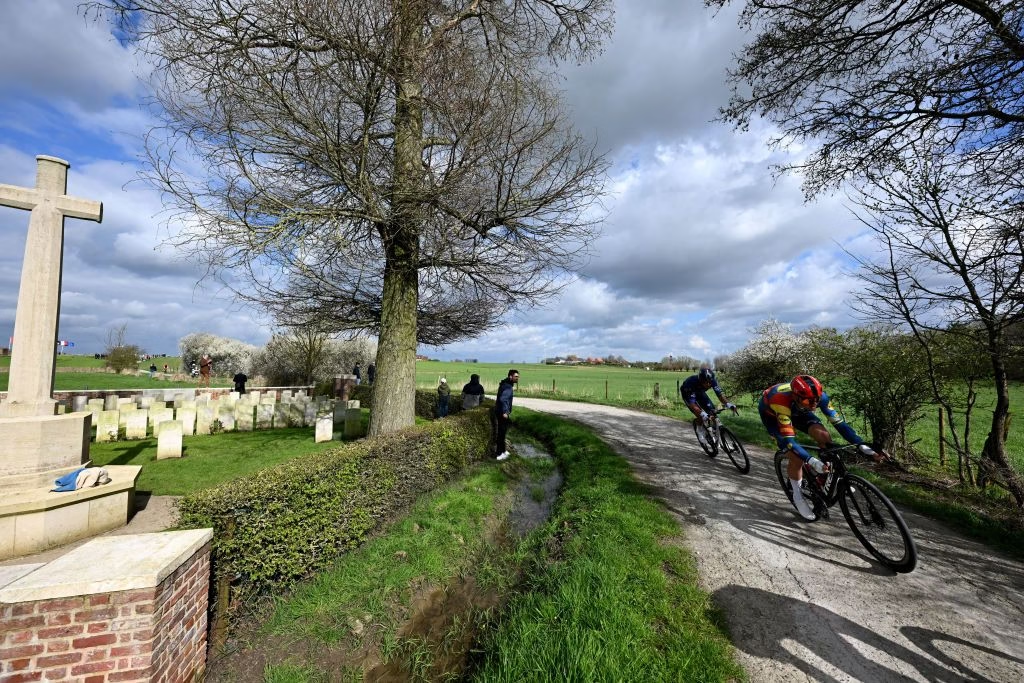
That matters because this is not simply a race losing its past. It is a race trying to express it more directly. For years, Gent-Wevelgem already carried the subtitle in Flanders Fields, tying the event to the First World War history of the region around Ypres, the plugstreets and the roads that shape its identity. The new name brings that historical layer to the front rather than leaving it in the background.
From local tribute to major spring classic
The first edition in 1934 was organised as a tribute to Gaston Rebry, one of the early Belgian cycling stars from Wevelgem. It began as a local event and only later developed into the elite men’s race that would become a permanent fixture of the spring calendar. That origin matters because it explains why Wevelgem has always felt like the race’s real home, even as the start locations shifted over the decades.
As the race matured, it grew far beyond those beginnings. Gent-Wevelgem developed into one of the central races of the Flemish spring, with a place that was never quite identical to Tour of Flanders, Paris-Roubaix or E3. It borrowed elements from all of them, but it always had its own tone. It could be a wind race, a hills race, a reduced sprint or, in the right conditions, a brutal war of attrition. That flexibility is a big part of why its history feels so rich.
Why the race became so distinctive
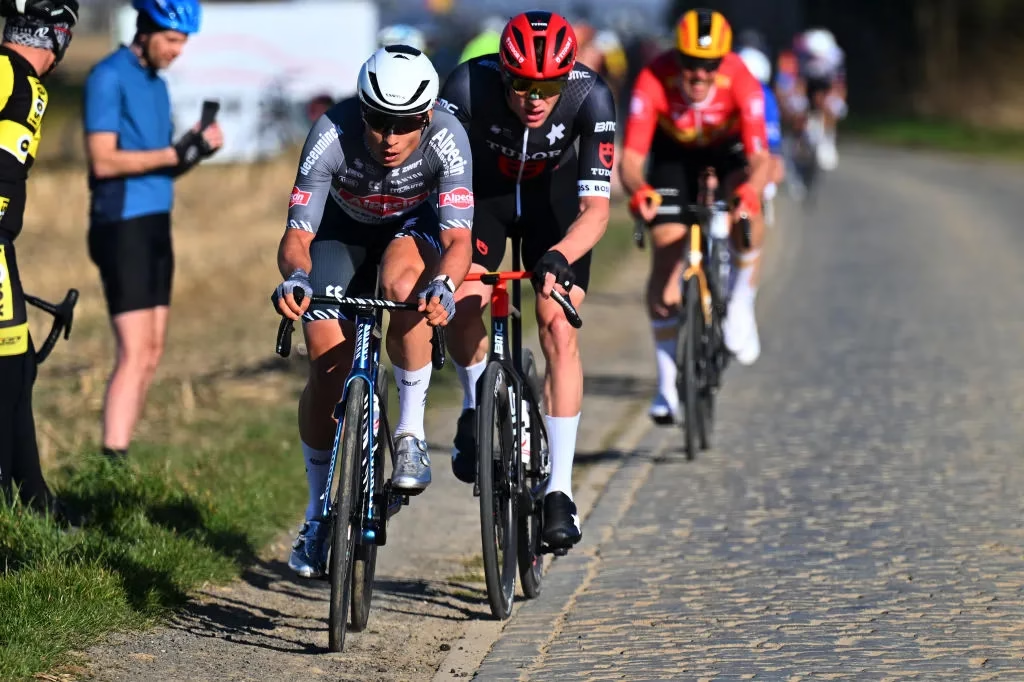
What makes Men’s In Flanders Fields different is not just one climb or one sector. It is the combination of features. The Moeren can turn the race into chaos if the wind is right. The plugstreets add a layer of roughness and symbolism. Heuvelland gives the race its climbing backbone. And the Kemmelberg remains the climb that most often forces the favourites into proper decisions.
That combination has always made the race harder to reduce to one neat category. It is flatter than Tour of Flanders, but more selective than many sprint classics. It can reward powerful fast men, but only if they can survive the middle of the race first. It can also reward attackers who understand that this is often a race of timing rather than pure force. That is why Gent-Wevelgem, and now Men’s In Flanders Fields, has always felt like a race where multiple types of rider can believe.
If you want the broader route identity behind the rebrand, ProCyclingUK’s Beginner’s guide to In Flanders Fields 2026 is the natural companion piece.
Previous winners of the men’s race
Because Men’s In Flanders Fields is the direct successor to Gent-Wevelgem, its honours list should be read as one continuous men’s history rather than as a new race starting from zero.
Recent winners are:
- 2025 – Mads Pedersen
- 2024 – Mads Pedersen
- 2023 – Christophe Laporte
- 2022 – Biniam Girmay
- 2021 – Wout van Aert
- 2020 – Mads Pedersen
- 2019 – Alexander Kristoff
- 2018 – Peter Sagan
- 2017 – Greg Van Avermaet
- 2016 – Peter Sagan
The deeper history is just as revealing. Seven riders share the record with three wins each:
- Robert Van Eenaeme
- Rik Van Looy
- Eddy Merckx
- Mario Cipollini
- Tom Boonen
- Peter Sagan
- Mads Pedersen
That list says a lot about the race. It has crowned pure sprinters, classic strongmen and complete one-day riders, but they all had one thing in common – they could handle a race that keeps changing shape.
-
 Photo Credit: Getty


The winners who shaped its reputation
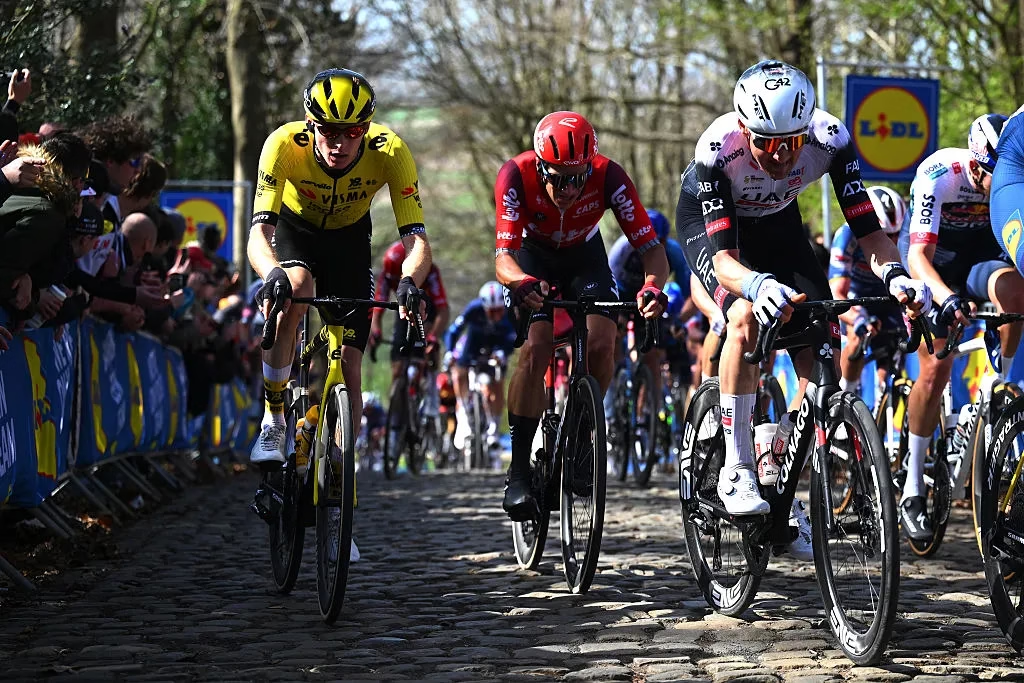
The winners list explains the race almost as well as the route. The modern era alone includes Peter Sagan, who won three times, and Mads Pedersen, whose victories in 2020, 2024 and 2025 showed again how well this race suits riders who can combine resilience with finishing speed.
That history is important because this race has never been only a stepping stone. It sits before Tour of Flanders, which naturally encourages people to read it as a pointer to what comes next, but Gent-Wevelgem built its prestige by being worth winning in its own right. The best riders did not just use it. They targeted it.
Why the 2026 name change matters
The 2026 shift to Men’s In Flanders Fields is significant because it changes how the race presents itself without stripping away the elements that made it matter. The men’s route still keeps the Kemmelberg and the race’s historical core, even though the start now moves to Middelkerke. The youth races remain based in Ypres, which helps preserve the event’s deeper local and historical connections.
That makes this more than a branding exercise, but less than a total reinvention. The race is still recognisably the same classic in sporting terms. What has changed is the framing. The old name told you the towns. The new name tells you the meaning the organisers want to emphasise.
What Men’s In Flanders Fields now represents
Men’s In Flanders Fields now sits at an interesting junction between heritage and repositioning. The race still belongs to the same lineage that began in 1934. It still occupies a central place in Flanders week. It still revolves around the same decisive terrain. But the 2026 title makes the event sound more like what it has long been underneath, a race shaped not only by roads and tactics, but by memory and landscape as well.
That is what makes the history worth understanding now. This is not a story of Gent-Wevelgem disappearing. It is a story of Gent-Wevelgem being reframed. The old name built the reputation. The new one is trying to explain it.
For more on how the race works on the road, ProCyclingUK’s Beginner’s guide to In Flanders Fields 2026 and Beginner’s guide to Tour of Flanders Men 2026 are the natural next reads.