
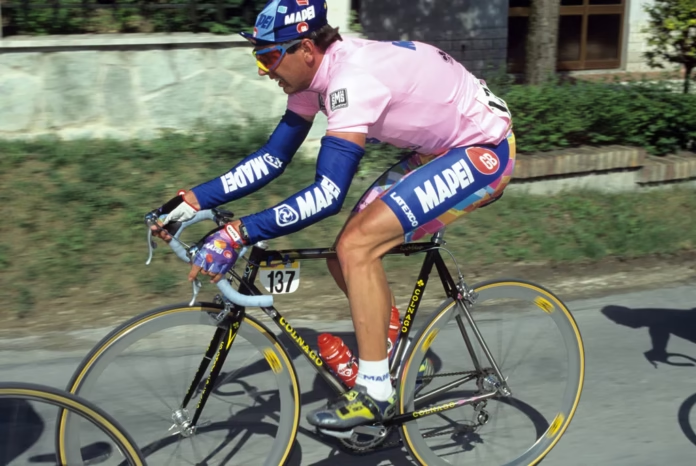
The Giro d’Italia has always felt slightly different from the other Grand Tours. It has the prestige and scale of one of cycling’s defining races, but it also carries a very particular Italian identity. The race moves through Alpine passes, Adriatic coastlines, city centres, volcanic roads, industrial regions and hill towns, and in doing so it became part sporting contest, part national theatre. Since its first edition in 1909, it has grown into one of cycling’s three Grand Tours and one of the most symbolically important races in the sport.
For readers looking to place it in wider context, it sits naturally alongside the broader Grand Tour conversation and ProCyclingUK’s coverage of the Giro d’Italia Women, as well as the sport’s other major stage races.
How the Giro d’Italia began
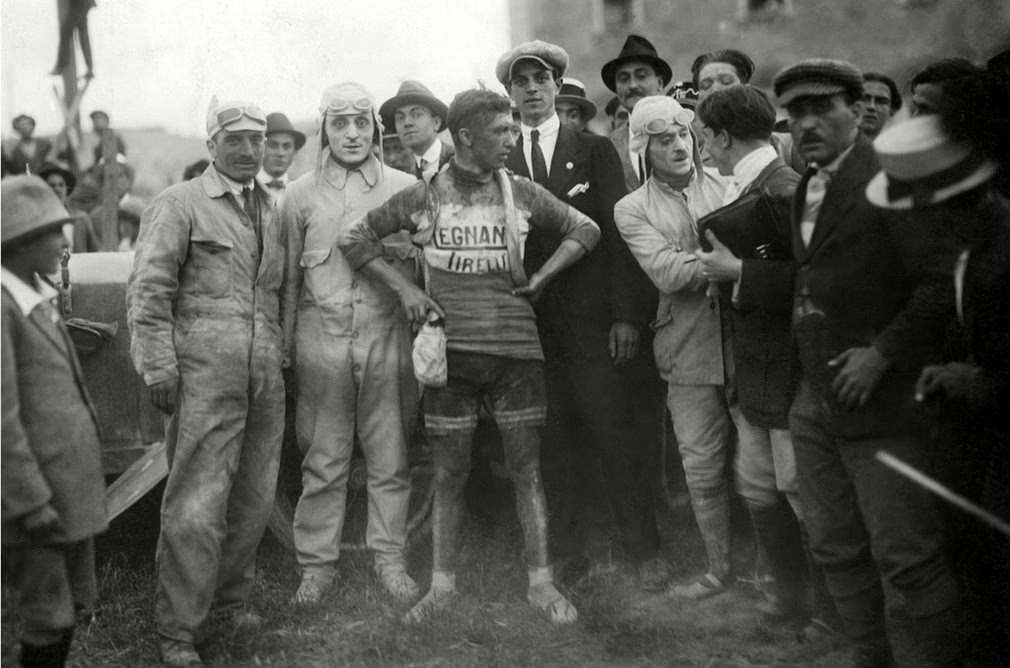
The first Giro d’Italia was held in 1909, created by La Gazzetta dello Sport in the same newspaper-race tradition that had already helped build the Tour de France. The opening edition was won by Luigi Ganna, and it looked nothing like the modern Giro. There were only eight stages, but they were enormous by today’s standards, often run over dreadful roads and with very limited support. Riders were dealing with exhaustion, darkness, mechanical problems and the basic difficulty of travelling across Italy at speed on fragile machinery.
The Giro’s identity was formed early. It was never just a race of time gaps and neat tactical control. It was a race of survival, improvisation and endurance. Even now, when the organisation is far more polished and the riders far more specialised, the event still trades on the idea that the terrain and the race itself can impose a kind of disorder that other races sometimes smooth out.
The pink jersey and the race becoming part of Italy
As the race expanded, it became part of Italy’s national identity. In a country with strong regional loyalties, the Giro created an annual story that moved from place to place while still feeling national in scale. The maglia rosa, introduced in 1931 to match the pink paper of La Gazzetta dello Sport, became one of cycling’s clearest symbols. It gave the race a visual and emotional centre in the same way the yellow jersey does for the Tour de France.
This was also the point when the Giro became something more sophisticated than a test of pure endurance. The mountains gained more strategic weight, the general classification became more important, and winning the Giro started to mean not just surviving Italy but mastering it. The race was no longer only a heroic slog. It was becoming a contest of climbing, time trialling, team strength and nerve.
The champions who defined the race
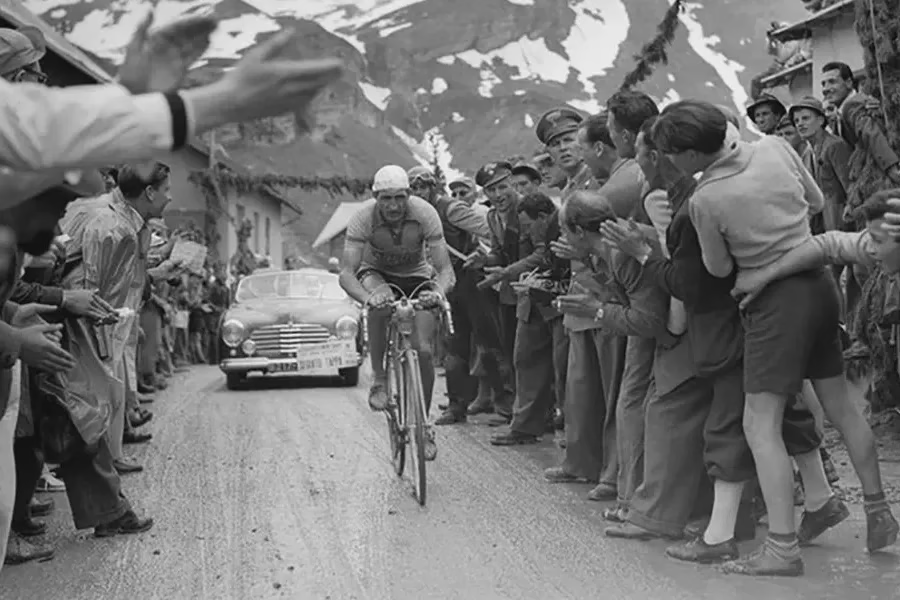
The Giro’s history is easiest to understand through the riders who shaped whole periods of it. Alfredo Binda was the first great dominant force, winning five times between 1925 and 1933. That set a standard that only two other riders have matched: Fausto Coppi and Eddy Merckx, who also finished their careers with five Giro victories each. Binda established what serial Giro dominance looked like, Coppi turned the race into myth, and Merckx dragged it fully into the era of the all-conquering international superstar.
Coppi’s place in Giro history is especially important. He won the race for the first time in 1940 at just 20 years old, making him the youngest Giro winner, and later became one of the central figures in the race’s defining rivalry with Gino Bartali. Their rivalry was not just sporting. It came to represent different moods, generations and political-cultural instincts in Italy. The Giro became one of the arenas in which that deeper national story played out.
Merckx gave the race another sort of authority. His five wins between 1968 and 1974 made the Giro part of a broader European story rather than only an Italian one. When Merckx won, it reinforced the sense that the Giro was not simply a great national race, but one of the absolute prizes in world cycling. Later champions such as Bernard Hinault, Miguel Indurain and Alberto Contador sustained that international prestige, each bringing a different style of control to the race.
That long line of champions is one reason Giro history overlaps so naturally with wider race history and rider features. The event has produced too many defining names to be treated as just another stage race.
The editions people still talk about
Some editions matter because of who won. Others matter because of how they were won. The 1956 Giro remains one of the race’s most famous because Charly Gaul took control in extraordinary weather on Monte Bondone, in conditions so cold and wet that the stage passed into cycling folklore. It is one of the clearest examples of the Giro at its harshest, where weather and terrain combined to reshape the entire race.
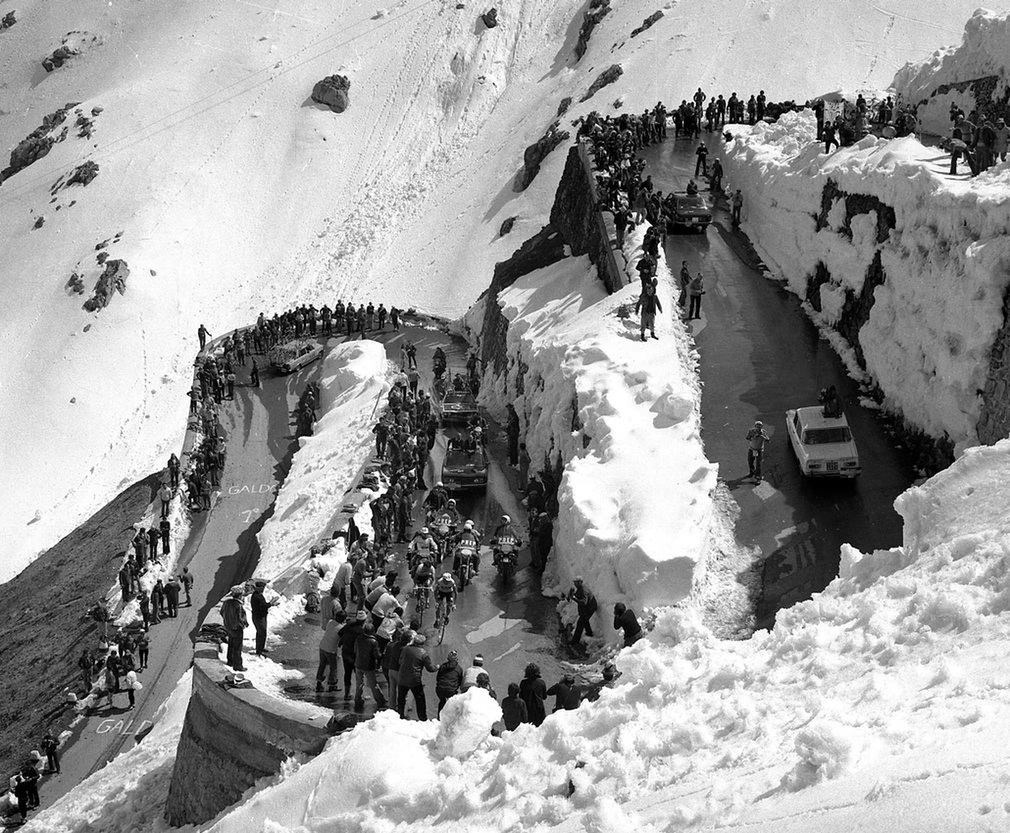
The 1988 edition is another of the race’s landmark years. Andy Hampsten became the first and still only American to win the Giro, but what made that edition famous was the Gavia stage, raced through extreme snow and freezing conditions. Hampsten took the maglia rosa there and never lost it. That stage became shorthand for the Giro’s capacity to produce near-apocalyptic mountain drama.
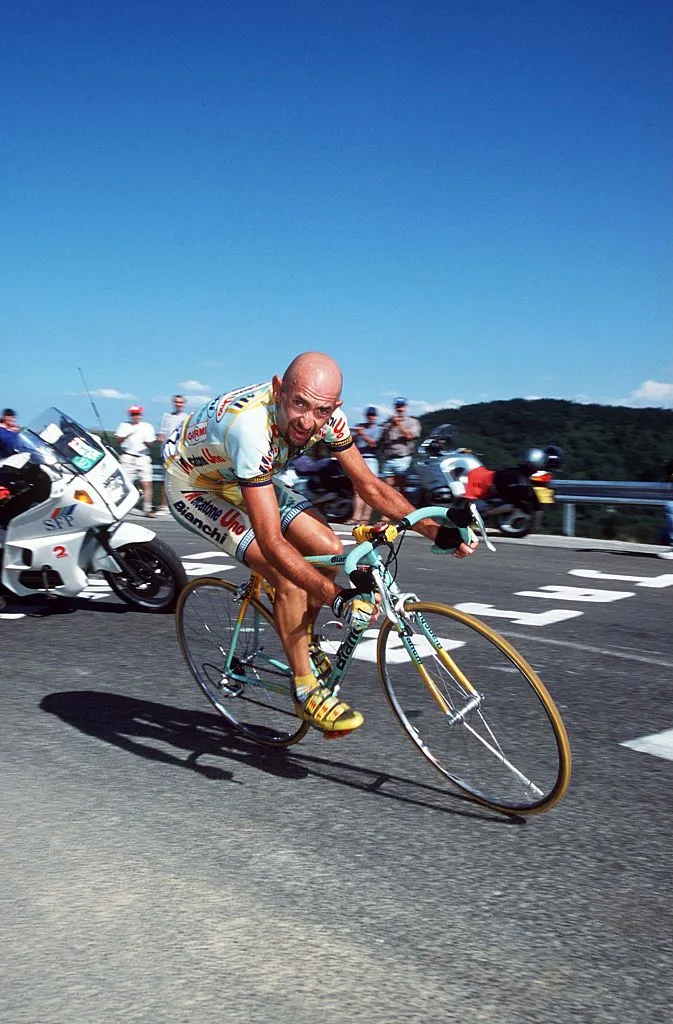
The 1998 Giro is remembered for Marco Pantani at full force. Pantani was already an electrifying climber, but that year fixed him in Giro legend because of the way he lit up the mountains and then went on to complete the Giro-Tour double in the same season. For many fans, that remains one of the most emotionally charged editions of the modern race, even though the era around it is also complicated by cycling’s later credibility crises.
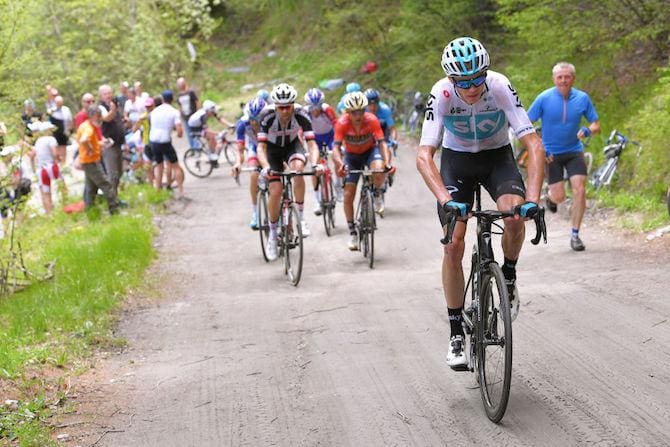
More recently, the 2018 Giro produced one of the great modern Grand Tour turnarounds when Chris Froome launched a long-range attack over the Colle delle Finestre and overturned a deficit that had seemed too large to recover. It was the sort of raid that felt almost old-fashioned in ambition but modern in execution, and it remains one of the clearest examples of how the Giro can still reward boldness rather than only controlled racing.
Then there was the 2020 Giro, when Tao Geoghegan Hart won overall on the final time trial, drawing level on time with Jai Hindley before the closing test and then taking the race in dramatic fashion. It was an edition that showed another side of the Giro, less about one overwhelming champion and more about instability, opportunity and nerve deep into the third week.
Even the most recent editions have continued to add to that sense of scale. Tadej Pogačar’s 2024 win came with the kind of dominance that placed him in the line of the race’s most commanding champions, while Simon Yates won the 2025 edition, extending the Giro’s modern pattern of mixing established stars with fresh storylines.
Mountains, weather and why the Giro feels different
A major reason those editions stay so vivid is the terrain. The Giro’s mythology is built around the Alps and Dolomites, and around climbs that feel less like route features than recurring characters. The Stelvio, Gavia, Mortirolo, Pordoi and Monte Zoncolan all helped shape the race’s identity. These roads gave the Giro a different emotional texture from the Tour de France. It could look grand and beautiful, but also severe, unstable and slightly uncontained.
That sense of volatility has often been the race’s real strength. The Giro can be elegant, but it is rarely too neat. A summit finish might decide everything, or weather might blow apart the script. A steep ramp in the third week can matter as much as a famous Alpine pass. The race has often been more willing than its rivals to lean into difficult terrain and unusual stage design, and that has helped preserve its personality.
This is also why Giro history continues to sit comfortably beside modern route analysis. The race’s past and present are linked by the same core features – mountains, weather, risk and the possibility of sudden reversals.
Crisis, controversy and the race surviving its worst years
No honest history of the Giro can ignore the sport’s doping era. Like the Tour and the Vuelta, the Giro passed through decades in which some of its greatest performances became harder to read clearly. Riders were celebrated, then doubted. Results that once seemed definitive became more fragile. The race did not escape the credibility damage that affected cycling more broadly.
Yet the race endured. Its prestige survived scandal, changing media, route debates and generational shifts inside the peloton. The modern Giro exists in a sport with far greater scrutiny, different training science and a different relationship with public trust. It still carries the scars of earlier eras, but it also remains one of the events through which cycling continually reasserts its relevance.
The modern Giro
In the current era, the Giro d’Italia remains one of the central prizes in men’s road cycling. It may not always pull exactly the same field as the Tour de France, but that often makes it more open and more interesting. Some riders see it as their best chance to win a Grand Tour. Others target it because its route style, steep climbs, technical racing and room for improvisation suit them better.
Modern editions still mix tradition with experimentation. The race remains rooted in mountain prestige, but organisers also use medium mountain stages, punchy uphill finishes, time trials and awkward transition days to keep the general classification unstable. That can sometimes make the Giro feel messy, but it also means the race rarely becomes sterile.
-
 Photo Credit: Canyon SRAM (supplied media release)
 -
 Photo Credit: Park Tool


Why the Giro still matters
The Giro d’Italia still matters because it has never been only a list of winners. It is a race that has produced Binda, Coppi and Merckx, then Pantani, Froome and Pogačar. It is a race of the maglia rosa, of the Gavia in the snow, of Gaul on Monte Bondone, of Hampsten in survival mode, of Pantani dancing uphill, and of late reversals that can turn an entire three-week narrative upside down.
That is what gives the Giro its weight. It reflects Italy, but it also reflects cycling itself, at its grandest, harshest and most emotionally complicated. From Luigi Ganna in 1909 to the modern era of global broadcast and highly specialised preparation, the Giro has remained one of the sport’s most expressive races. It does not tell the whole story of cycling, but you cannot tell the sport’s history properly without it.

