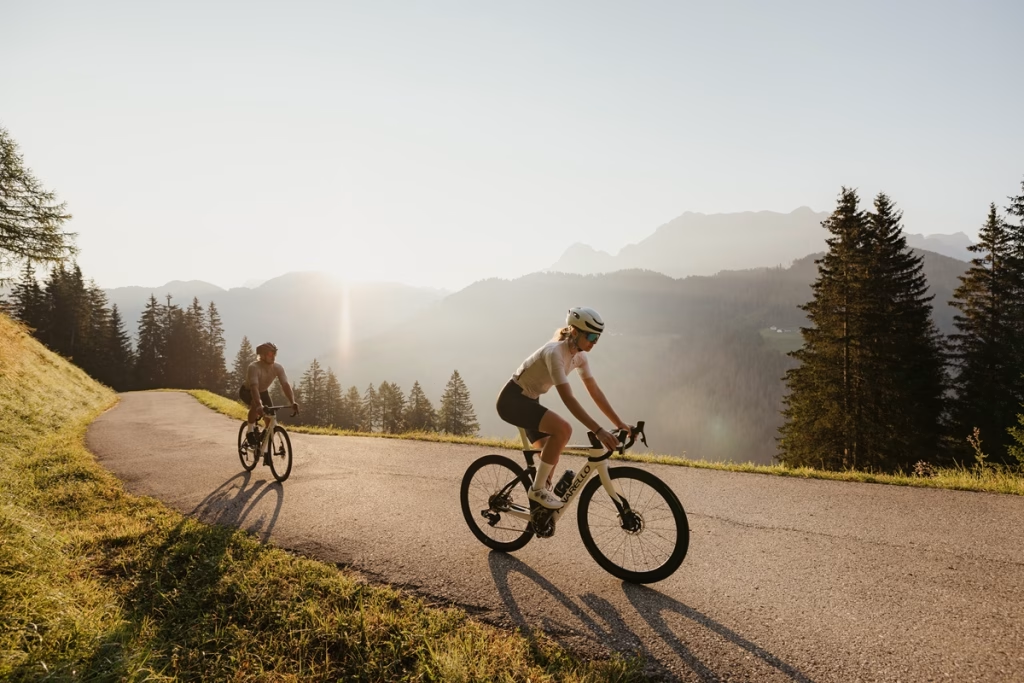
Alta Badia, cradled in the heart of the Italian Dolomites, stands as one of Europe’s most spectacular cycling destinations. Here, where vertical limestone walls soar above green alpine valleys, lies the Sella Ronda, a legendary loop connecting four mountain passes around the Sella Group massif. Within 30 kilometres of the valley towns of Corvara, La Villa, and Badia, you can tackle the Pordoi, Sella, Gardena, Campolongo, Giau, Fedaia, Valparola, and Falzarego passes, names that echo through Giro d’Italia history with the same reverence Europeans reserve for their greatest climbs. For those who view cycling not merely as sport but as a pilgrimage through landscape, the Dolomites offer an unparalleled journey where pale limestone peaks glow pink at sunrise and sunset, creating the famous alpenglow (Enrosadira in Ladin) that has captivated mountaineers and cyclists for generations.
Much like exploring iconic cycling destinations across continents, the Dolomites reward those willing to embrace the challenge of sustained climbing through landscapes that differ dramatically from any other mountain range, where the rock itself tells a story of ancient coral reefs thrust skyward millions of years ago.
The Dolomites: Geography and Character
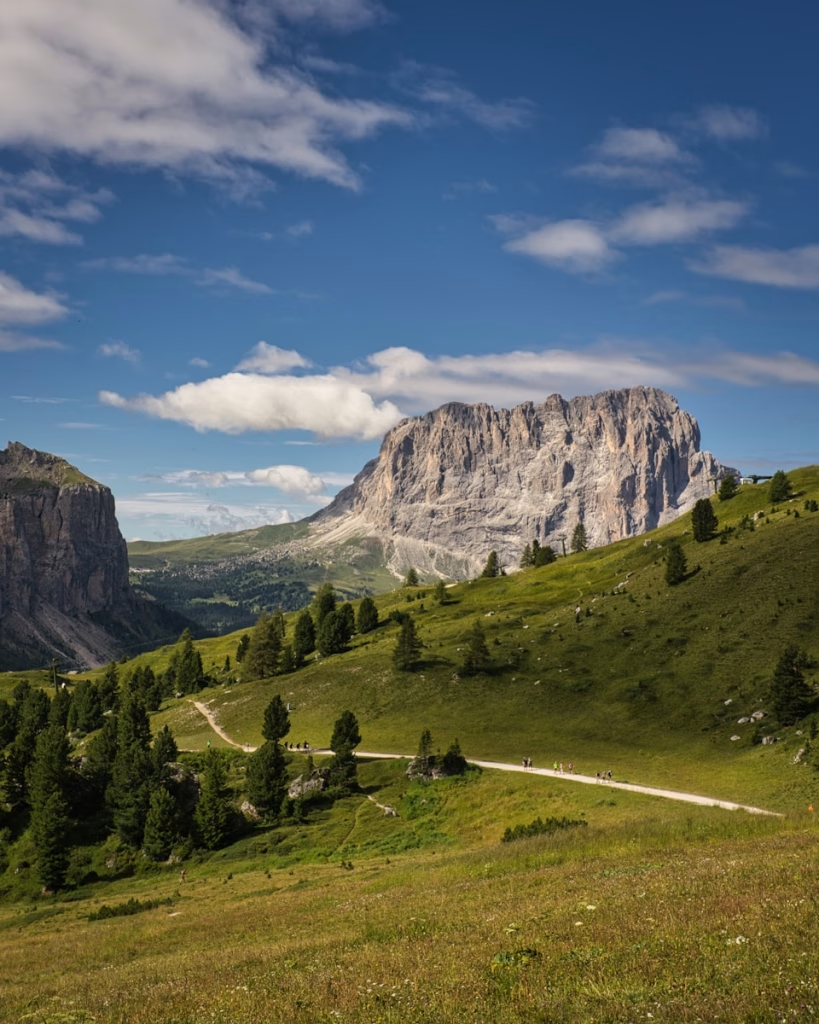
The Dolomites form part of the Southern Limestone Alps, spreading across three Italian regions: Trentino, Veneto, and Alto Adige (South Tyrol). The range comprises 15 distinct mountain groups, each rising to approximately 3,000 metres, covering an area roughly 90 kilometres north to south and 100 kilometres east to west. Unlike the granite Alps with their rounded, ice-sculpted forms, the Dolomites present a startling vertical character, with sheer walls rising hundreds of metres from alpine meadows. This unique geology, recognised by UNESCO World Heritage status, creates a landscape of almost otherworldly drama.
The rock itself, dolomite limestone, derives from ancient coral reefs formed 250 million years ago in tropical seas. Subsequent tectonic forces thrust these sedimentary layers skyward, whilst erosion carved the distinctive towers, spires, and walls that define the range today. The pale grey-pink colour, varying with light conditions, creates the famous alpenglow phenomenon, when the setting sun transforms the peaks into glowing monuments of rose and orange before fading to purple twilight.
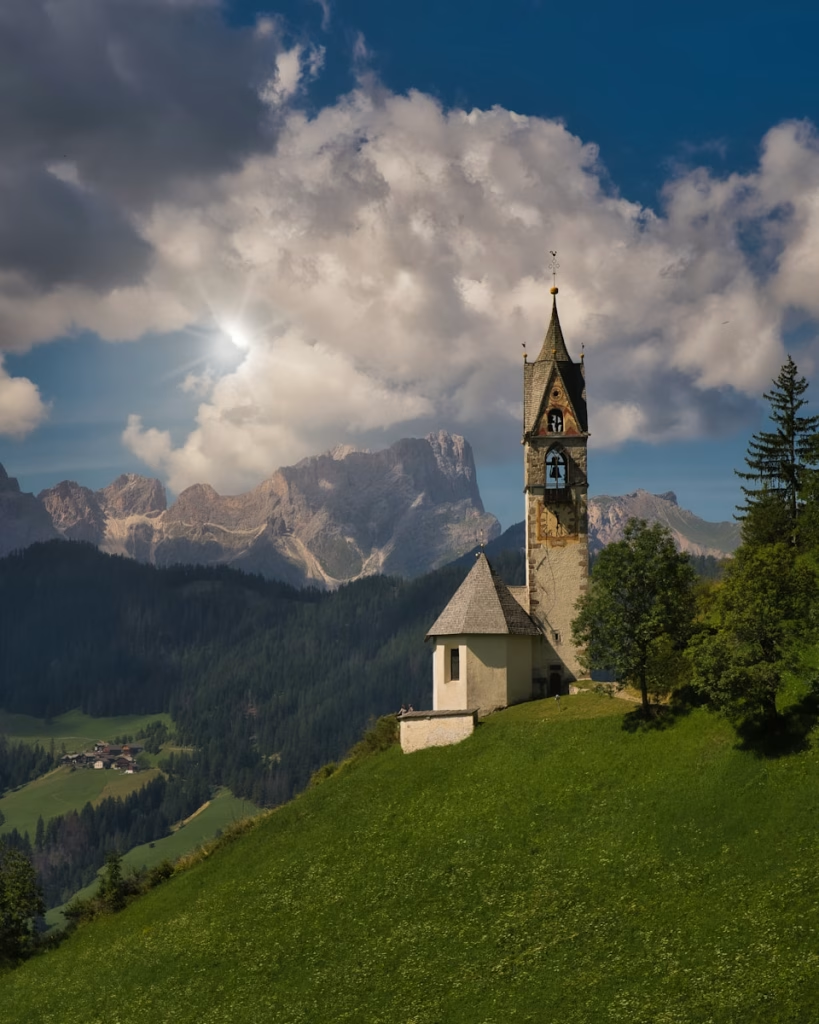
The cultural landscape reflects the region’s complex history. Alto Adige (South Tyrol) belonged to Austria until 1919, creating a bilingual region where German and Italian coexist, alongside Ladin, an ancient Romance language spoken in the valleys around Sella. This tri-lingual character manifests in place names (Corvara/Corvara, Gardena/Gröden) and cultural traditions that blend Italian, Austrian, and distinct Ladin elements. The valley architecture reflects this heritage, with traditional wood-and-stone farmhouses (masi in Italian, Höfe in German) dotting meadows beneath the peaks.
Alta Badia: The Cyclist’s Valley
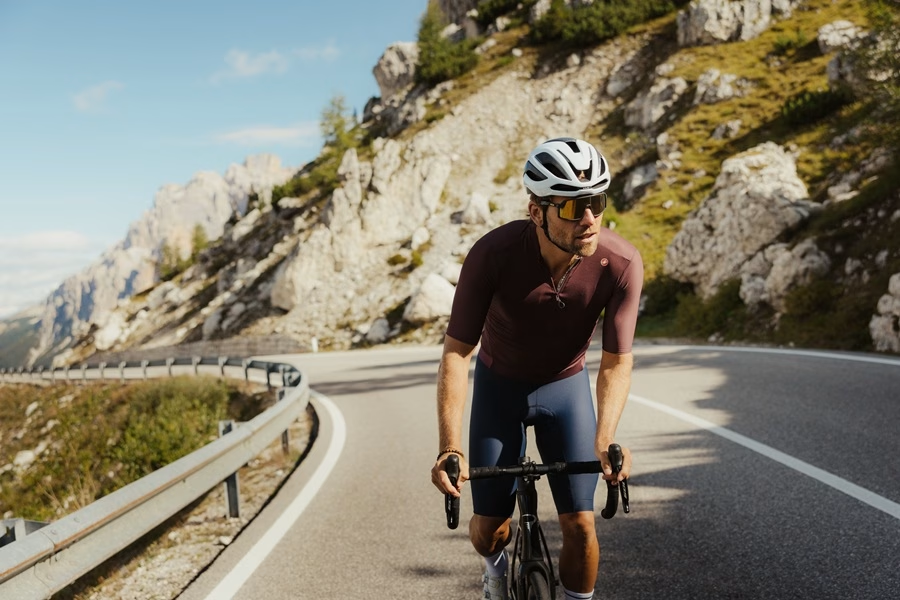
Alta Badia comprises four main villages strung along the valley floor between 1,300 and 1,600 metres elevation: Corvara (1,568m), Colfosco (1,645m), La Villa (1,484m), and Badia (formerly San Leonardo, 1,324m). Corvara, the largest with a population of around 1,300 permanent residents (swelling to several thousand in peak season), functions as the natural base for cyclists exploring the region.
Why Alta Badia?
The valley’s strategic position offers unparalleled access to the Dolomites’ greatest passes. The Sella Ronda loop starts and finishes in Corvara, making it the epicentre of the circuit. Passo Campolongo rises just 6 kilometres from town, Passo Gardena 12 kilometres, whilst Passo Giau lies 25 kilometres distant via valley roads. Passo Pordoi requires a longer valley approach through Arabba but remains easily reachable for a day’s riding. This concentration of legendary climbs within such compact geography makes Alta Badia uniquely efficient as a cycling base.
Beyond geography, Corvara and surrounding villages have developed exceptional cycling infrastructure over decades. The valley hosted its first cycling tourism in the 1980s, evolving into one of Europe’s most cyclist-friendly destinations. Hotels understand cyclists’ needs, offering secure bike storage, early breakfast, drying rooms for rain-soaked kit, and packed lunches for all-day rides. Restaurants accommodate cycling schedules, serving substantial meals that fuel hard days in the mountains. The local culture embraces cycling, with drivers accustomed to sharing roads with riders, creating a safer environment than many European mountain regions.
The valley maintains an authentic alpine character despite tourism development. Traditional Ladin culture persists in language, cuisine, and customs. The Thursday market in Corvara fills the main square with local produce: speck (smoked prosciutto), Alpine cheeses, fresh bread, and seasonal vegetables. The local cuisine blends Italian and Austrian influences, creating distinctive dishes like cajincì (half-moon ravioli filled with spinach and cheese), turtres (fried pastries with spinach or sauerkraut filling), and canederli (bread dumplings in broth), providing the substantial fare cycling demands whilst offering culinary interest beyond standard pasta and pizza.
The Valley System and Approach Routes
Understanding Alta Badia’s position within the Dolomite valley network clarifies route planning. The valley runs roughly north-south, with the main road (SS244) connecting to Bruneck (Brunico) in the north via Passo Campolongo (though this pass also connects westward to Arabba). Southward, roads lead through Badia toward the Gardena Valley (Val Gardena) over Passo Gardena. Eastward, Passo Valparola and Passo Falzarego provide routes toward Cortina d’Ampezzo, whilst westward approaches via Arabba access Passo Pordoi and the Marmolada region.
This central position makes Alta Badia the natural hub for exploring the greatest concentration of Dolomite passes. No other valley provides such direct access to so many legendary climbs within a single compact area. This geography enabled the creation of the Sella Ronda loop, which simply would not function as coherently from any other base.
The Legendary Climbs: Dolomite Icons
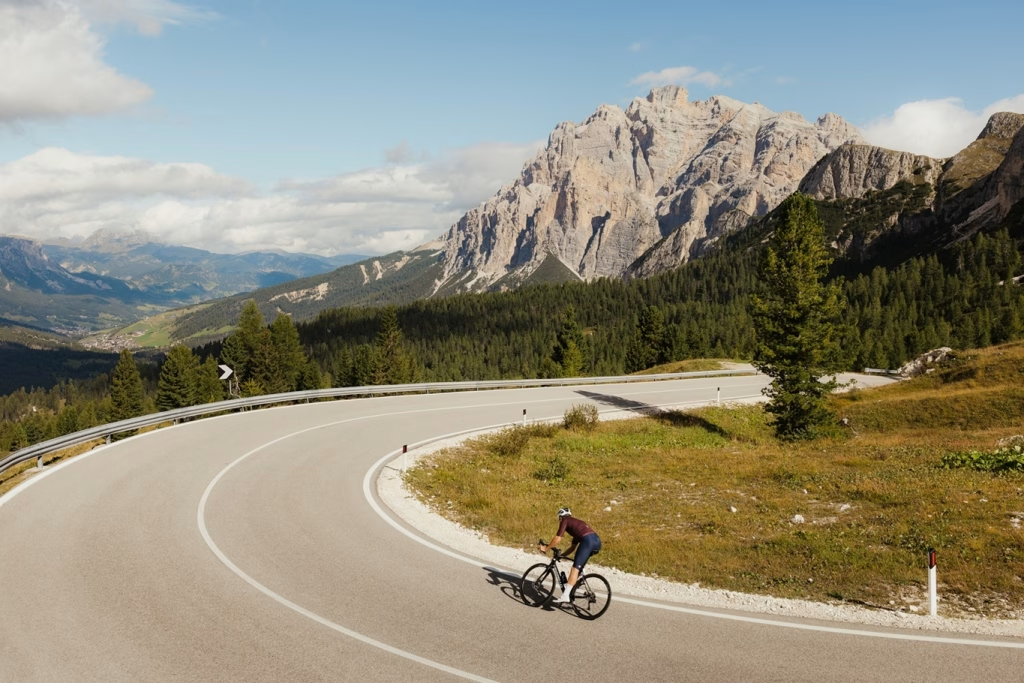
The Dolomites’ reputation rests on a collection of passes that rank amongst cycling’s most celebrated ascents. Understanding their profiles, history, and character transforms these from mere roads into deeply meaningful experiences connected to Giro d’Italia legend and cycling pilgrimage.
The Sella Ronda: The Four Passes Loop
The Sella Ronda represents the Dolomites’ signature cycling experience, a 55-kilometre loop gaining 1,780 metres of elevation through four passes circling the Sella Group massif. This compact mountain block, rising to 3,152 metres, sits surrounded by valleys like a massive fortress, with the four passes providing the only road crossings. The loop typically starts and finishes in Corvara, though riders can join from any valley village.
Route specifics:
- Distance: 55 kilometres complete loop
- Elevation gain: 1,780 metres
- Four passes: Campolongo (1,875m), Pordoi (2,239m), Sella (2,244m), Gardena (2,121m)
- Direction: Typically ridden clockwise (Campolongo, Pordoi, Sella, Gardena) for more favourable gradients
- Time: 3-5 hours depending on fitness and stops
The beauty of the Sella Ronda lies not just in the individual passes but in their combination into a flowing circuit. Each climb delivers distinct character, yet they connect seamlessly, creating a natural loop that rewards sustained effort across the full distance. The passes themselves remain relatively moderate by Alpine standards, averaging 6-8% with few sections exceeding 10%, making the loop accessible to strong intermediate riders whilst still challenging for everyone.
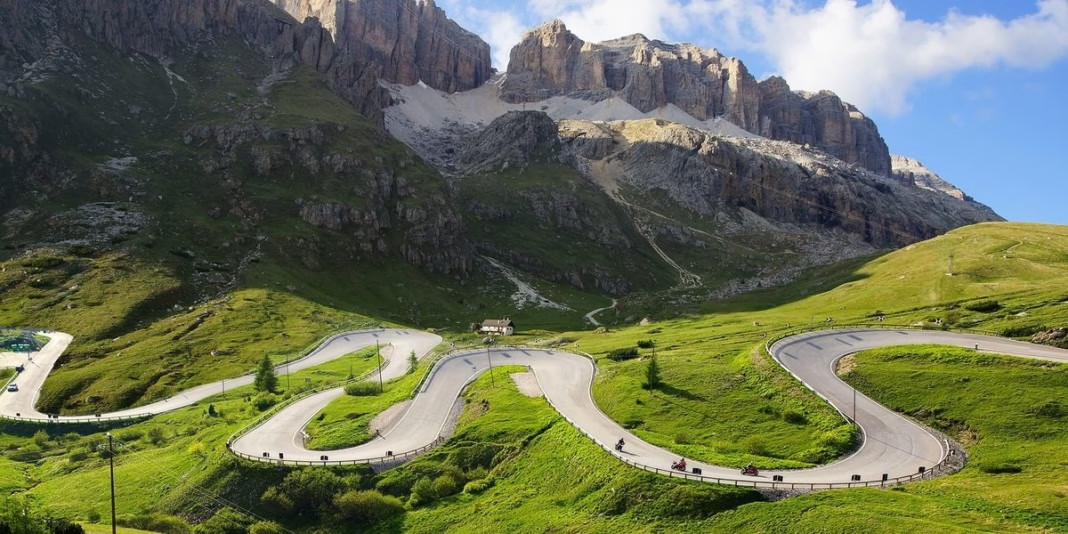
Passo Campolongo (1,875m) provides the gentlest introduction, climbing just 6 kilometres from Corvara with 307 metres of elevation gain at approximately 5% average. The gradient remains consistent without vicious ramps, winding through open meadows with views back toward Corvara and forward to the impressive Sella walls. The summit offers first views across to Pordoi’s serpentine switchbacks, visible in the distance.
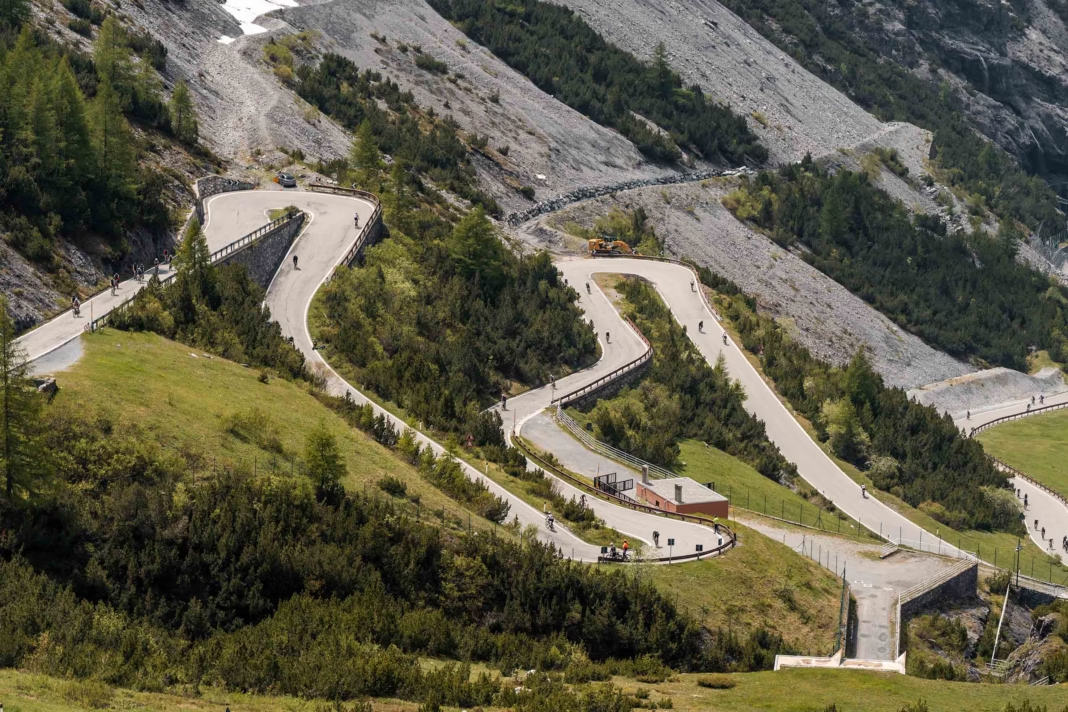
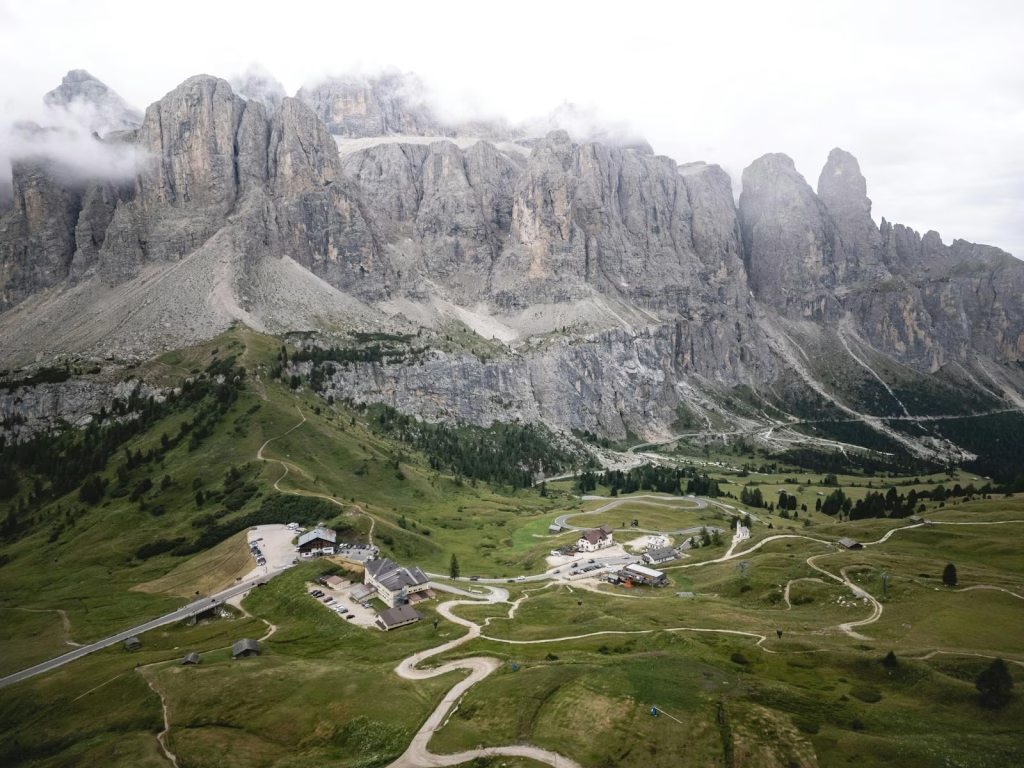
Passo Pordoi (2,239m), at 9.3 kilometres from Arabba with 678 metres gain averaging 7.3%, delivers the loop’s highest point and most dramatic scenery. The western approach features spectacular switchbacks carved into the mountainside, each hairpin offering expanded views of the Marmolada glacier (3,343m, the Dolomites’ highest peak) to the south. The gradient steepens toward the summit, with the final kilometres ramping to 9-10%, before reaching the summit area where the cable car ascends to Sass Pordoi (2,950m). The views from the summit reward magnificently: north toward Sella’s vertical walls, south to Marmolada’s gleaming ice, east across layer upon layer of Dolomite peaks.
Passo Sella (2,244m) offers the shortest climb of the four passes, ascending 5.3 kilometres from the valley floor at Plan de Gralba with 450 metres gain at 8.5% average. However, riders approaching from Pordoi must first descend approximately 500 metres to Canazei, then descend further to Plan de Gralba before climbing back up, creating additional work. The gradient remains moderate once climbing begins, winding through forest before emerging onto the open mountainside with stunning views of the Sella’s north face, perhaps the range’s most impressive vertical wall, rising 900 metres of sheer limestone.
Passo Gardena (2,121m) completes the circuit, descending from Sella before climbing 10.2 kilometres from the valley floor (Plan de Gralba) with 613 metres gain at 6% average. This gentlest of the four passes winds through scenic meadows and forest, with occasional glimpses of the Gardena Valley’s distinctive peaks. The gradient rarely exceeds 8%, providing an opportunity for rhythm after three harder passes. The summit offers views northward toward Gardena Valley and southward back toward Sella, before the final descent returns to Corvara.
Passo Giau: The Savage Beauty
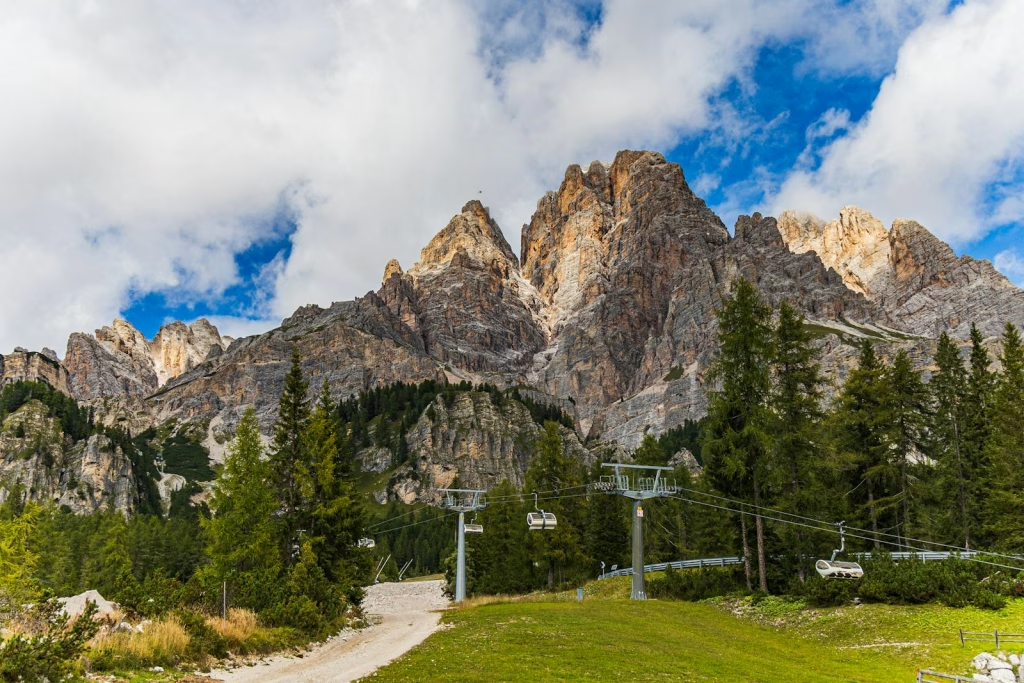
Passo Giau (2,236m) stands apart from the Sella Ronda passes, both geographically and in character. From Corvara, reaching Giau requires descending to the valley junction, then climbing from Selva di Cadore, a 10-kilometre ascent gaining 854 metres at a brutal 8.5% average. The gradient rarely eases below 7%, with numerous ramps exceeding 10% and some sections touching 12%. The relentless nature makes Giau one of the Dolomites’ toughest ascents, testing even strong climbers.
The scenery rewards the suffering spectacularly. The road climbs through increasingly sparse forest before emerging onto a completely exposed mountainside, winding through rock gardens and alpine meadows beneath jagged peaks. The views encompass an extraordinary panorama of Dolomite groups: north toward the Fanes massif, east to Croda da Lago, south toward the Civetta group. The summit, marked by the Rifugio Passo Giau, sits surrounded by pinnacles and spires in perhaps the Dolomites’ most dramatic high-mountain setting.
The Giro d’Italia has featured Giau multiple times, creating legendary moments. The combination of savage gradient, high elevation, and spectacular exposure makes it a race-defining climb, where differences emerge that cannot be hidden. For cyclists, conquering Giau represents a significant achievement, proof of climbing strength and mental resilience against one of the region’s toughest tests.
Passo Fedaia: The Marmolada Approach
Passo Fedaia (2,057m) provides the approach to the Marmolada glacier, the Dolomites’ queen mountain at 3,343 metres. From Canazei, the climb measures 13.6 kilometres, gaining 629 metres at 4.6% average, making it one of the more moderate ascents. However, this average conceals the notorious Malga Ciapela section, a 3-kilometre stretch averaging 12% with stretches at 14-15% that has destroyed countless riders’ legs.
The road follows the valley alongside Lago di Fedaia, an artificial reservoir created by damming the valley, before steepening dramatically for the Malga Ciapela ramps. This section has entered Giro legend, with Vincenzo Nibali, Nairo Quintana, and most recently Jai Hindley using these vicious ramps to attack for stage victories and overall classification gains. The gradient’s sustained nature, combined with the elevation above 2,000 metres where air thins noticeably, creates suffering that seems disproportionate to the mere 3 kilometres distance.
The summit area offers a unique character, sitting in the shadow of the Marmolada’s massive south face. The glacier, sadly shrinking due to climate change, nonetheless dominates views, whilst the cable car ascending to 3,269 metres provides access for non-cyclists to appreciate the high-mountain environment. The rifugio at the summit serves hearty mountain fare, offering an opportunity to refuel before descending or continuing rides.
Passo Valparola and Passo Falzarego: The Eastern Connections
These twin passes, whilst individually less celebrated than Giau or Pordoi, form an essential connection between Alta Badia and Cortina d’Ampezzo, and when combined create an excellent day’s riding. Passo Valparola (2,192m) climbs 11 kilometres from Corvara gaining 613 metres at 5.6% average, following a relatively gentle gradient through meadows with views of Lagazuoi’s distinctive peak. The pass played significant military role during World War I, with extensive fortifications still visible.
Passo Falzarego (2,105m) sits just 6 kilometres beyond Valparola, dropping slightly before climbing a final 2 kilometres. The short distance and moderate gradients make these passes excellent training rides or warm-ups for harder efforts, whilst the spectacular scenery and historical significance (extensive WWI museum at Lagazuoi) provide interest beyond pure climbing. Many riders combine Valparola and Falzarego with Giau, creating a demanding 80-kilometre loop with over 2,500 metres of climbing.
Beyond the Major Passes: The Valley Riding
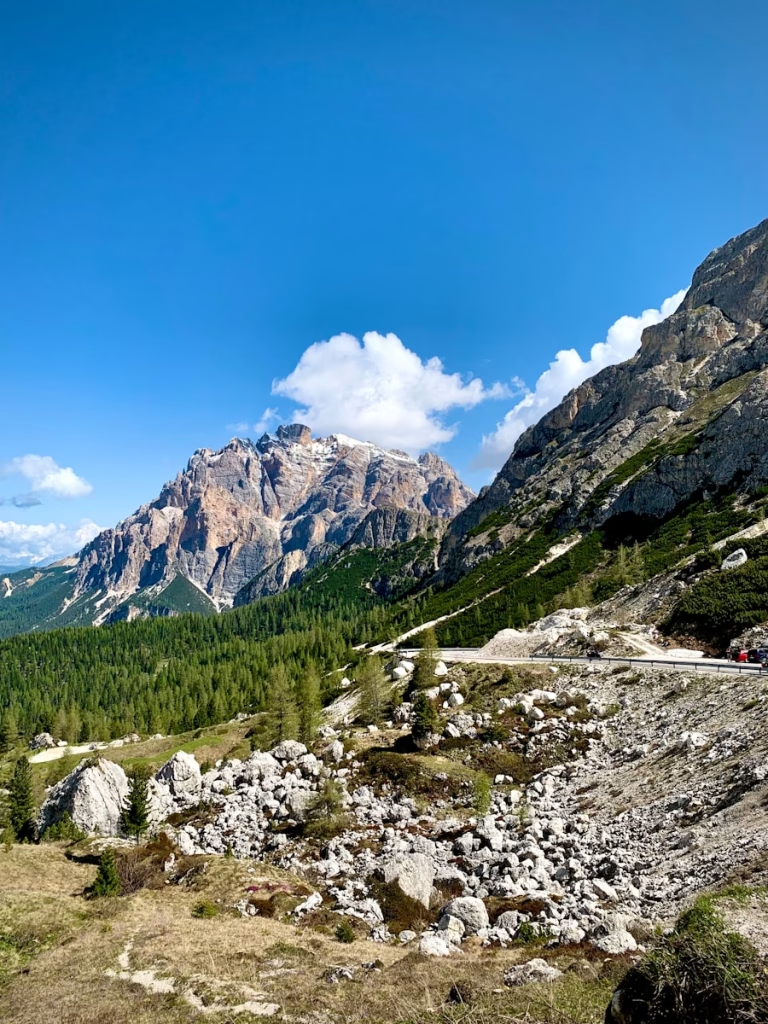
Whilst the celebrated passes dominate attention, the valley roads themselves offer beautiful cycling that rewards exploration. The Val Badia road south from Corvara through La Villa and Badia to the Gardena Valley junction provides a gentle 20-kilometre ride through traditional Ladin villages, with minimal climbing and maximum cultural immersion. The road toward Bruneck via Passo Campolongo’s valley approach offers similar character, winding through farmland and forest with consistent moderate gradients ideal for recovery days or warming up before harder efforts.
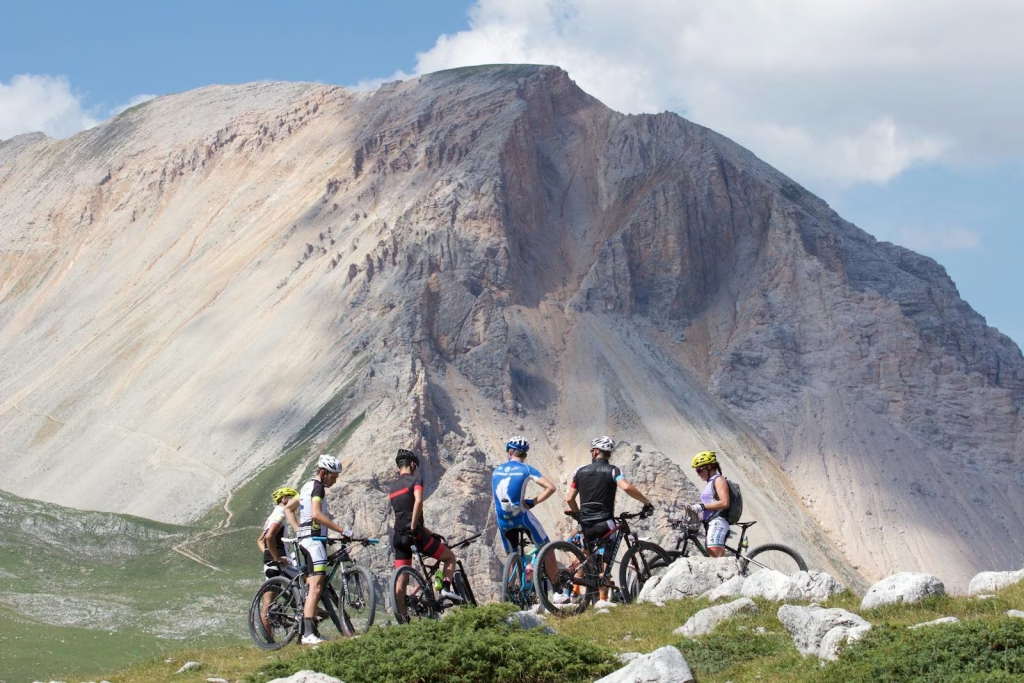
The network of farm roads and forest tracks provides additional options for gravel bikes or mountain bikes, though the Dolomites’ primary appeal for road cyclists remains the legendary passes. For those seeking off-road adventure, the valley offers extensive mountain bike trail networks accessing high-altitude riding via cable car, including the famous Sellaronda MTB circuit that mirrors the road loop on dirt trails and singletrack.
The Maratona dles Dolomites: Europe’s Premier Gran Fondo
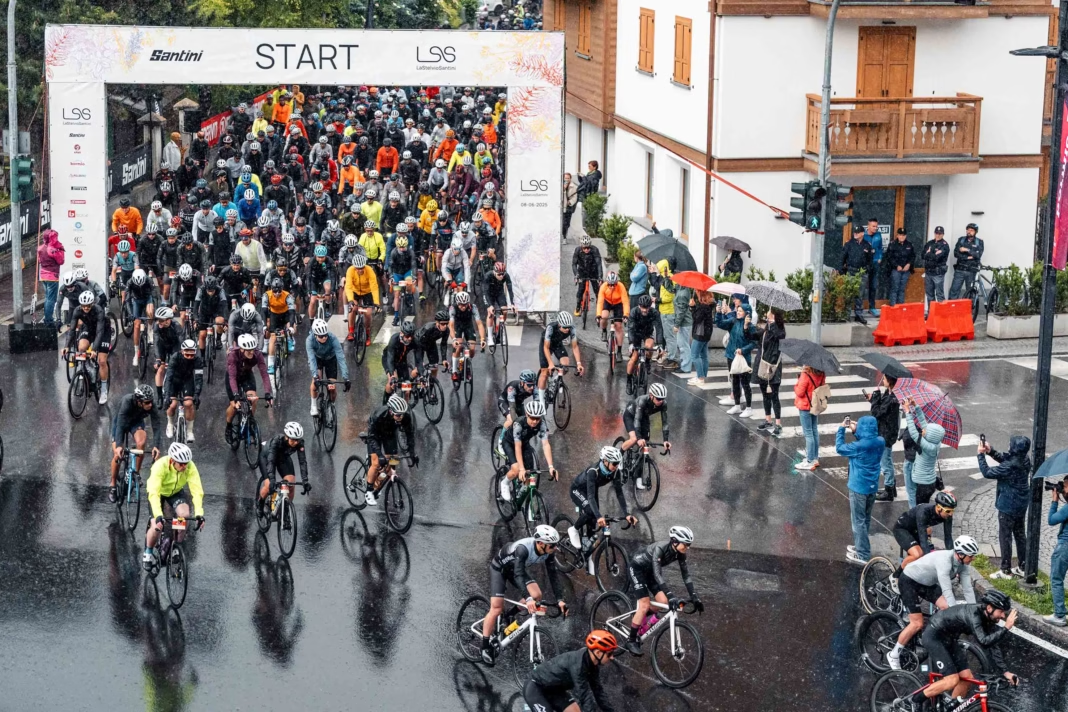
The Maratona dles Dolomites, held annually on the first Sunday of July, stands as one of cycling’s most prestigious amateur events. With 32,400 applications from 85 countries for 9,000 starting positions, the Maratona attracts cyclists from across the world to tackle the closed roads of Alta Badia and surrounding valleys. The event offers three routes: the full Maratona (138km, 4,230m elevation gain) crossing Campolongo, Sella, Pordoi, Gardena, Giau, Falzarego, and Valparola passes, the Medium route (106km, 3,130m gain), and the Sella Ronda route (55km, 1,780m gain).
The Maratona’s appeal extends beyond the physical challenge. Riding closed roads through the Dolomites, without traffic, transforms the experience entirely. The support from local communities, with villages turning out to cheer riders, creates an extraordinary atmosphere. The organisation rivals professional races, with mechanical support, feed stations every 20 kilometres, and medical coverage throughout the course. For many cyclists, completing the Maratona represents a career highlight, combining serious physical challenge with stunning scenery and exceptional event management.
The 2026 edition centres on the theme of “Pax” (Peace), reflecting the event’s philosophy that cycling transcends competition, bringing together thousands of riders in shared pursuit of personal goals against a spectacular mountain backdrop. For those unable to secure one of the coveted race entries, the week surrounding the event offers numerous other riding opportunities, including guided tours and training rides on the same routes.
Sellaronda and Dolomites Bike Days: Car-Free Pass Riding
For cyclists unable to attend the Maratona, the Sellaronda Bike Day and Dolomites Bike Day events provide similar experiences of car-free pass riding. These non-competitive events, held in June and September, close major passes to motorised traffic from 8:30am to 3-4pm, allowing cyclists of all abilities to ride without traffic concerns. The events require no registration, offering spontaneous participation for anyone visiting the region during event dates.
The Sellaronda Bike Day (held June 6th and September 12th) closes all four Sella Ronda passes, creating the complete 53-kilometre traffic-free loop. The atmosphere resembles a giant party, with thousands of cyclists sharing the roads, cafés and rifugios overflowing with riders, and a celebratory mood throughout the valley. The official merchandise, designed by local artist Manuel Bottazzo and produced by Sportful, creates additional event character.
The Dolomites Bike Day (June 20th) features a different route, closing Campolongo, Falzarego, and Valparola passes for a 51-kilometre loop with 1,370 metres gain. This route explores the eastern connections toward Cortina, offering a different character from the Sella circuit whilst maintaining the traffic-free appeal. For riders planning visits around these dates, the Bike Days provide extraordinary opportunities to experience the passes at their absolute best.
Training and Tactical Approaches
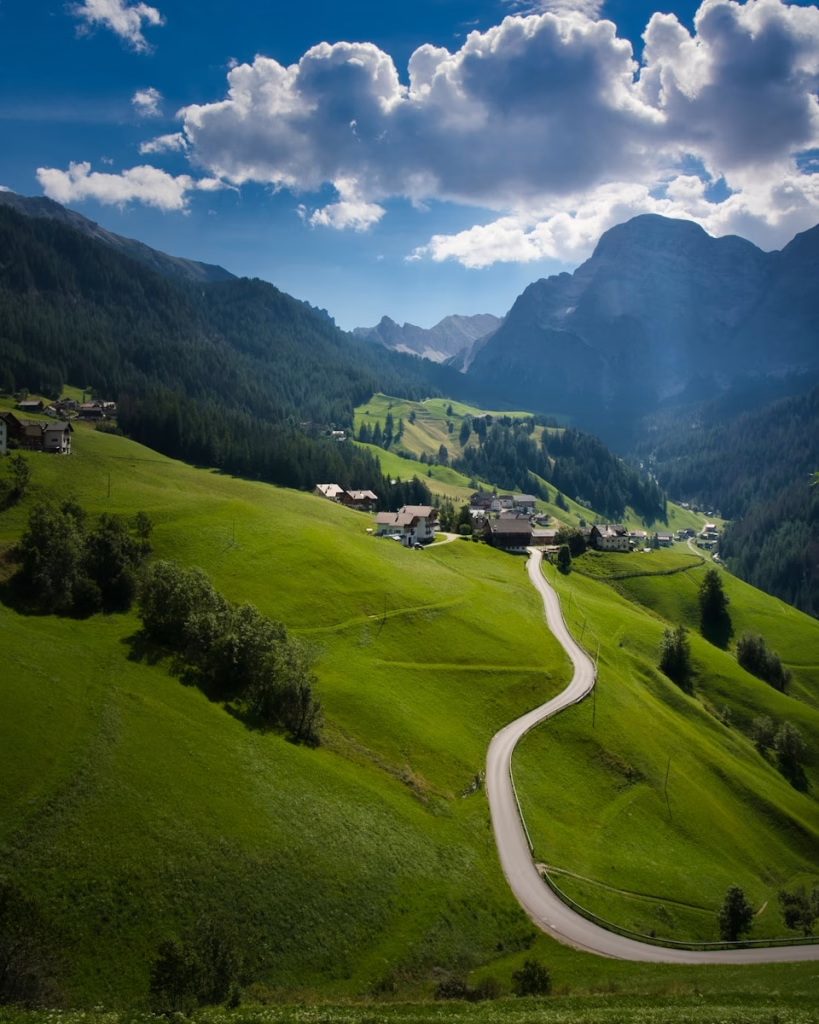
Successfully cycling the Dolomites requires more than fitness. Understanding mountain rhythm, pacing strategy, and altitude effects separates memorable experiences from survival suffering, much like approaching long-distance cycling challenges with appropriate strategy.
Gradient Management and Pacing
Dolomite passes demand a different pacing from shorter, steeper climbs. The Sella Ronda’s 55 kilometres with 1,780 metres gain requires 3-5 hours of sustained effort, demanding careful energy management throughout. Starting conservatively on Campolongo, saving energy for Pordoi’s steeper sections, managing through Sella and Gardena with reserves remaining proves crucial to finishing strong rather than merely surviving.
The passes’ moderate average gradients (6-8% typical) create a temptation to ride harder than sustainable, particularly when feeling fresh early. Maintaining conversational pace through the first third of any climb, establishing sustainable rhythm in the middle third, and permitting slightly increased intensity only in the final third maximises enjoyment whilst minimising suffering. Professional riders targeting 4-5 watts per kilogram for hard Dolomite efforts, whilst strong amateurs should aim for 3-3.5 w/kg, moderate climbers 2.5-3 w/kg, and developing riders 2-2.5 w/kg for sustained passes.
Multi-Pass Day Strategy
The compact geography enables legendary multi-pass days, but planning proves essential. The classic Sella Ronda represents a perfect day for strong amateurs, whilst adding Giau to the circuit (approximately 80km, 2,600m climbing) creates a serious challenge demanding 5-7 hours riding time. Combining Fedaia with the Sella passes or exploring the eastern connections via Valparola and Falzarego provides additional options.
Success on multi-pass days demands early starts (7-8am) to avoid afternoon heat and mountain weather, substantial breaks between major climbs (20-30 minutes at rifugios for food and recovery), aggressive fuelling (60-80g carbohydrates per hour whilst riding), proper hydration (750ml-1L per hour in summer), and realistic self-assessment with willingness to shorten plans if struggling. The valley’s compact nature provides easy bail-out options, with descent roads leading back to accommodation from every pass.
Weather Patterns and Seasonal Timing
The Dolomites’ weather patterns create distinct seasonality affecting ride planning. Summer (July-August) delivers the warmest temperatures (20-28°C valleys, 12-18°C summits) and most stable conditions, though afternoon thunderstorms commonly develop, typically building between 2-4pm. These storms, whilst brief, can dump heavy rain and create dangerous lightning conditions on exposed passes. Starting climbs before 9am avoids this risk entirely, with most storms clearing by early evening to reveal spectacular alpenglow on the peaks.
Spring (late May-June) offers cooler temperatures (15-22°C valleys, 8-15°C summits), wildflower displays in alpine meadows, generally good weather despite occasional unsettled spells, and fewer tourists than peak summer. Roads are typically clear of snow by mid-May, though higher passes (Pordoi, Sella, Giau) may not fully open until early June, depending on winter snowpack. Autumn (September-early October) provides ideal conditions for many: comfortable temperatures (12-20°C valleys, 6-14°C summits), dramatically reduced traffic post-summer season, autumn colours in the larch forests, and generally stable weather despite increasing rain probability.
Practical Logistics
Getting There
The nearest airports serving Alta Badia include Innsbruck (Austria, 150km, 2 hours drive), Verona (200km, 2.5 hours), Venice (160km, 2 hours), and Bolzano (60km, 1 hour, limited connections). Most cyclists fly to Innsbruck, Verona, or Venice, then rent cars for the drive through spectacular mountain scenery. Alternatively, trains connect to Bruneck (30km from Corvara), from where local buses or taxis complete the journey.
Accommodation
Alta Badia offers extensive cyclist-focused accommodation, from family-run guesthouses to four-star hotels, all understanding cyclists’ needs. The valley’s “Bike Friendly” and “Bike Expert” certification programmes ensure accommodation meets specific standards: secure bike storage with washing and repair areas, early breakfast options (typically from 7am), energy snacks in the afternoon, laundry service, and staff knowledgeable about local routes and conditions. Book well in advance for July (Maratona week) and Bike Day dates, with accommodation filling months ahead for these peak periods.
Bike Rental and Services
Multiple high-quality rental shops in Corvara provide road bikes, e-bikes, and mountain bikes with appropriate specifications for local riding. BreakOut Sport operates as the valley’s leading bike shop, offering Specialized and Cube test centre status with premium rentals ranging €50-120 per day, depending on specification. Bike Rental Corvara provides additional options with expert mechanical support. All shops understand local pass requirements, providing compact gearing (50/34 or 48/32 chainrings with 11-32 or wider cassettes) essential for enjoying rather than merely surviving the climbs.
When to Visit
The optimal window runs late May through September, with June and September offering the best conditions for most cyclists. July-August provide most reliable weather but coincides with peak tourism and the highest accommodation costs. The Maratona (first Sunday July) creates an exceptional atmosphere but also maximum crowding. The Bike Days (June 6th, June 20th, September 12th) offer traffic-free riding without Maratona intensity. Avoid May (roads may still have snow) and October onwards (increasing precipitation, many facilities closing for season).
Comparing the Dolomites to Other Mountain Ranges
The Dolomites occupy unique space amongst cycling’s mountain destinations. Compared to the French or Swiss Alps, they offer more compact geography with higher density of spectacular passes within smaller area, generally better road surfaces and wider shoulders on major routes, less severe maximum gradients but equally stunning scenery through utterly distinct geology, and different cultural character blending Italian, Austrian, and Ladin influences. The vertical limestone architecture creates a landscape unlike anywhere else in the Alps, with the pale rock’s colour changes through the day adding visual drama absent from granite ranges.
Against other Italian regions, the Dolomites present more challenging climbing than Tuscany or Umbria’s rolling hills, more varied and interesting terrain than single-mountain destinations, better developed cycling infrastructure than many southern Italian regions, and cooler summer temperatures, making riding pleasant when coastal Italy swelters. For cyclists exploring European cycling destinations, the Dolomites represent a distinct experience combining serious climbing with extraordinary scenery and exceptional infrastructure that welcomes cyclists of all abilities.
Conclusion: The Dolomite Experience
Alta Badia, positioned at the heart of the Dolomites, transcends typical cycling destinations. This is hallowed ground where Giro d’Italia legends have written their stories, where the Sella Ronda loop provides one of cycling’s most perfect circuits, and where pale limestone peaks glow pink at sunrise and sunset in displays that have captivated generations. The compact geography enables extraordinary cycling density: four passes in a single loop, multiple legendary climbs within 30 minutes of town, and infrastructure built specifically around cycling culture that welcomes riders with genuine enthusiasm.
This is not casual touring. The passes demand respect, appropriate fitness, and willingness to suffer through sustained efforts at elevation. But for those who embrace the challenge, who understand that cycling’s deepest rewards come through persistent effort beneath spectacular peaks, the Dolomites offer transformation. You descend from Pordoi or Giau not just tired but changed, having joined the lineage of riders who’ve pedalled these same roads since cycling tourism began here decades ago.
Whether you’re a serious amateur seeking world-class mountain passes, a cycling tourist wanting spectacular scenery with manageable challenges, or simply someone who loves mountains and the purity of climbing toward distant summits, Alta Badia and the Dolomites deliver an unforgettable experience. The question isn’t whether the passes will challenge you, but how you’ll remember those climbs years hence: as suffering endured or as strength discovered beneath the pale towers of stone that define the Dolomites’ singular character.
For more inspiration exploring cycling’s greatest destinations worldwide, visit our guide to cycling around the world.
Frequently Asked Questions
What is the best time of year to cycle Alta Badia and the Dolomites?
The optimal period is late May through September, with June and September offering ideal conditions for most cyclists. June provides cooler temperatures (15-22°C valleys, 8-15°C summits), wildflower displays, fewer tourists, and the Sellaronda and Dolomites Bike Days when major passes are closed to traffic. July-August deliver warmest temperatures (20-28°C valleys, 12-18°C summits) and most stable weather but coincides with peak tourism, the Maratona dles Dolomites (first Sunday July), and the highest accommodation costs. September offers comfortable riding (12-20°C valleys, 6-14°C summits), dramatically reduced traffic, autumn colours in larch forests, and the second Sellaronda Bike Day. Avoid May (roads may still have snow on the highest passes) and October onwards (increasing rain, many facilities closing).
How difficult is the Sella Ronda loop compared to other famous cycling routes?
The Sella Ronda (55km, 1,780m elevation gain) presents a moderate-to-challenging ride accessible to strong intermediate cyclists, whilst still testing for everyone. The four passes average 6-8% gradients with few sections exceeding 10%, making them less severe than Alpine monsters like Mortirolo or Angliru but still demanding due to sustained length. Compared to a single Alpine pass, the Sella Ronda requires greater endurance as you chain four climbs together with limited recovery between. Strong amateur riders complete the loop in 3-4 hours, whilst moderate cyclists need 4-5 hours. Critical requirements include appropriate gearing (compact chainrings with 11-32+ cassette), ability to ride 4-5 hours continuously, comfort with sustained climbing, and proper pacing to finish strong rather than merely surviving.
Can I ride the Sella Ronda in one day, and what else can I combine it with?
Yes, the Sella Ronda is perfectly designed as a single-day ride for most cyclists with reasonable fitness. The 55km loop with 1,780m climbing typically requires 3-5 hours, including brief stops, making it achievable starting by 8-9am and finishing by early afternoon. For stronger riders seeking additional challenge, Passo Giau can be added to the circuit, creating an 80km loop with approximately 2,600m climbing, requiring 5-7 hours. Other options include exploring Valparola and Falzarego passes on the same day, or combining the Sella Ronda with valley riding to extend the total distance without additional major climbing. The compact geography permits multiple days of varied riding, tackling different pass combinations each day whilst returning to the same accommodation in Alta Badia.
Do I need to bring my own bike or can I rent in Alta Badia?
High-quality rental options exist throughout Alta Badia, making travelling without a bike entirely feasible. Shops like BreakOut Sport and Bike Rental Corvara offer premium road bikes, e-bikes, and mountain bikes with appropriate gearing for local passes. Rental rates range €50-120 per day depending on specification (aluminium vs carbon, standard vs electronic shifting), with multi-day discounts available. All rental bikes include compact or sub-compact gearing (50/34 or 48/32 chainrings with 11-32 or wider cassettes), essential for sustained climbing. However, serious cyclists planning multiple hard days often prefer their own bikes for precise fit, familiar handling, and personalised setup. Consider rental duration, airline bike fees (typically €100-200 each way), and riding goals when deciding.
What’s the difference between cycling the Dolomites versus the French or Swiss Alps?
The Dolomites offer a distinctly different experience from other Alpine regions. The vertical limestone architecture creates a landscape unlike the granite Alps, with pale rock towers rising dramatically from green valleys rather than rounded, glaciated peaks. The climbing character differs: Dolomite passes feature more consistent moderate gradients (6-8% typical) over longer distances rather than Alps’ sometimes brutal sustained steepness, making them slightly more accessible whilst still seriously challenging. The geography proves more compact, with a higher density of spectacular passes within a smaller area (the Sella Ronda connects four passes in 55km). Cultural influences differ, blending Italian, Austrian, and Ladin traditions rather than purely French or Swiss character. Road surfaces generally exceed Alpine standards, with better maintenance and wider shoulders on major passes. Both offer world-class cycling, but the Dolomites suit those prioritising unique scenery, compact itinerary planning, and slightly less extreme gradients over maximum altitude and pure climbing severity.